
Synthetic biology combines engineering and biology to redesign living organisms, helping you develop sustainable solutions. By modifying DNA, you can create organisms with new functions—like lab-grown tissues or biodegradable materials—that reduce environmental impact. Techniques like biofabrication allow for building structures from living cells, opening avenues for eco-friendly medicines and sustainable products. If you continue exploring, you’ll discover how these advancements are shaping a greener, more innovative future.
Key Takeaways
- Synthetic biology combines engineering and biology to redesign organisms for environmentally sustainable solutions.
- Genetic engineering enables customization of organisms to produce eco-friendly medicines, materials, and biofuels.
- Biofabrication techniques create sustainable materials and lab-grown tissues, reducing reliance on traditional manufacturing.
- These technologies promote environmental conservation by developing biodegradable and eco-friendly products.
- The field offers innovative solutions for global challenges like climate change, healthcare, and resource scarcity.

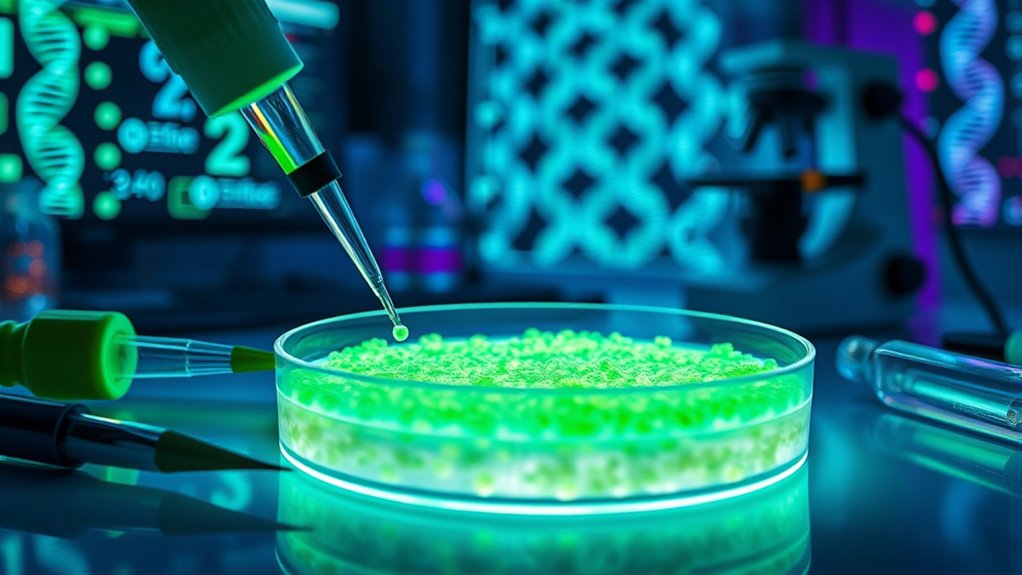
Have you ever wondered how scientists can redesign living organisms to solve real-world problems? It’s a fascinating process rooted in synthetic biology, a field that combines biology, engineering, and technology to create new or improved biological systems. At its core, synthetic biology involves techniques like genetic engineering, where you alter an organism’s DNA to give it new capabilities. Imagine customizing bacteria to produce medicines more efficiently or modifying plants to withstand harsh climates. This precision allows you to harness nature’s potential in innovative ways. Another essential aspect is biofabrication, which involves building biological materials and structures from scratch or reassembling existing ones to serve specific purposes. Think of biofabrication as 3D printing with living cells, where you can craft tissues, organs, or even entire biological systems tailored for particular functions. Through biofabrication, you can produce sustainable materials, biodegradable plastics, or lab-grown tissues, minimizing reliance on traditional manufacturing and reducing environmental impact. Additionally, understanding the high fiber content in sources like chia seeds illustrates how biological components can promote health and sustainability, inspiring biofabrication approaches.
Frequently Asked Questions
How Does Synthetic Biology Impact Global Biodiversity?
Synthetic biology impacts global biodiversity by altering genetic diversity within species, which can either support or threaten ecosystem balance. When you engineer organisms carefully, you may enhance resilience and sustainability. However, if unchecked, it could lead to reduced genetic diversity, making ecosystems fragile. Your actions in designing synthetic organisms influence how well ecosystems maintain their balance, emphasizing the importance of responsible engineering to preserve biodiversity and prevent unintended ecological disruptions.
What Are the Ethical Concerns Surrounding Synthetic Organism Creation?
Imagine you’re in a sci-fi movie, playing God with new life forms; that’s what creating synthetic organisms feels like. Ethical concerns revolve around genetic ownership, as who controls these creations? You risk unforeseen consequences, disrupting natural balance and raising questions about moral responsibility. These issues make it essential to carefully consider the implications of your actions, ensuring you don’t cross boundaries that could threaten both society and the environment.
Can Synthetic Biology Address Climate Change Effectively?
Yes, synthetic biology can effectively address climate change by using genetic engineering to develop eco-restoration solutions. You can create organisms that absorb more carbon dioxide, clean pollutants, or restore damaged ecosystems. These innovations help reduce greenhouse gases and improve environmental health. By harnessing synthetic biology, you actively contribute to sustainable solutions, making a tangible difference in combating climate change and fostering a healthier planet.
What Are the Risks of Biosecurity Threats From Synthetic Organisms?
Imagine a double-edged sword, where synthetic organisms can heal or harm. You face biosecurity risks as these life forms might escape containment, challenging safety protocols. The containment challenges grow as engineered microbes could spread uncontrollably, threatening ecosystems and human health. You must vigilantly monitor and regulate to prevent malicious use or accidental release, balancing innovation with responsibility. Failure to do so could release unpredictable consequences on our world.
How Accessible Is Synthetic Biology Technology to Developing Countries?
Synthetic biology technology is becoming more accessible to developing countries, but you might face cost barriers that limit access. Additionally, knowledge disparity can hinder your ability to effectively use these tools, as advanced training and expertise are often required. While efforts are underway to democratize the technology, you’ll need support, resources, and capacity-building initiatives to fully leverage synthetic biology for local solutions.
Conclusion
As you explore synthetic biology, you realize its immense potential for creating sustainable solutions. Imagine a future where we can design organisms to clean our environment or produce renewable energy. Isn’t it exciting to think that you could be part of this groundbreaking revolution, shaping a healthier planet for generations to come? By harnessing the power of biology, you hold the key to transforming our world—are you ready to embrace this innovative future?