
Innovative waste management practices like hydrochar, biochar, and circular economy models help you turn waste into valuable resources while reducing environmental harm. Hydrochar and biochar are made from organic waste, enriching soils and sequestering carbon. Circular economy strategies focus on recycling plastics and organic waste, minimizing landfills and conserving resources. These methods promote sustainability, create economic opportunities, and contribute to a healthier planet. Keep exploring to discover how these innovations can reshape waste handling in your world.
Key Takeaways
- Hydrochar and biochar convert organic waste into soil-enhancing, carbon-sequestering materials, supporting sustainable agriculture.
- These biochars help close resource loops by transforming waste into valuable products, aligning with circular economy principles.
- Waste-to-resource innovations reduce landfill overflow, methane emissions, and dependence on virgin materials.
- Integrating plastic recycling with organic waste conversion fosters comprehensive circular waste management systems.
- Such innovations promote environmental sustainability, economic growth, and resilience by reimagining waste as a resource.
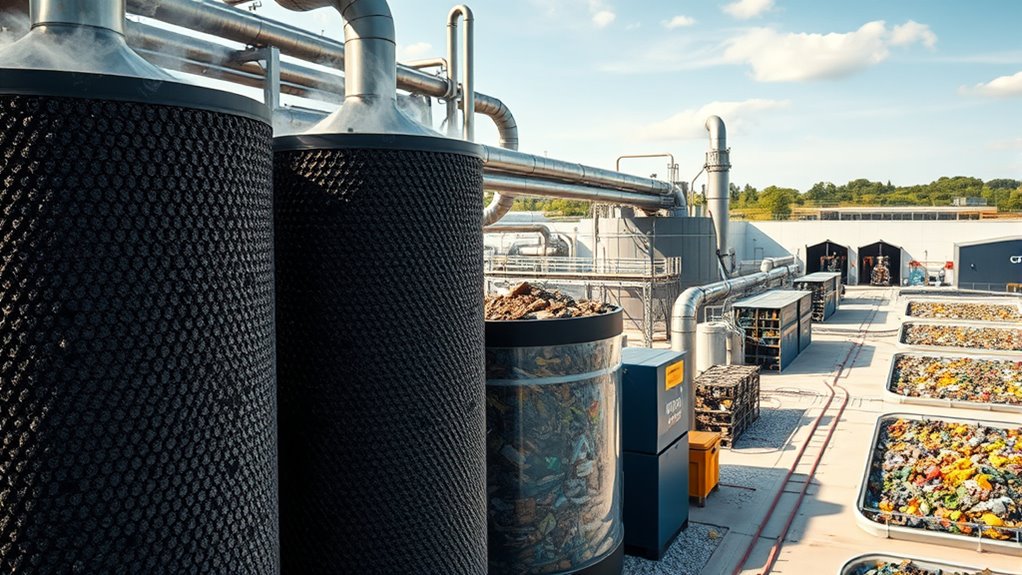
Have you ever wondered how waste management is evolving to meet modern challenges? Today, innovative approaches are transforming the way we handle waste, making processes more sustainable and efficient. One key development is the focus on plastic recycling, which is essential in reducing plastic pollution. Advanced recycling technologies now allow us to break down plastics into their basic components, enabling the production of high-quality materials that can be reused multiple times. This not only cuts down on landfill overflow but also diminishes the demand for virgin plastic, helping to preserve natural resources. Alongside plastic recycling, organic waste conversion has gained prominence. Instead of sending food scraps and biodegradable waste to landfills, new methods like composting and bioenergy production convert organic material into valuable products such as compost or biogas. These processes reduce methane emissions from decomposing waste and create renewable energy sources, aligning with the principles of a circular economy.
Speaking of circular economy, the concept promotes minimizing waste by keeping resources in use for as long as possible. Waste management innovations like hydrochar and biochar exemplify this shift. Hydrochar, produced through hydrothermal carbonization, involves treating wet organic waste under high pressure and temperature to create a coal-like substance. This material can be used as a soil amendment, improving agricultural productivity while sequestering carbon. Biochar, on the other hand, is created by pyrolyzing organic waste in the absence of oxygen. It’s a stable form of carbon that enhances soil health, retains nutrients, and reduces greenhouse gases. Both hydrochar and biochar exemplify how waste can be transformed into valuable, sustainable products, closing the loop in resource use. Additionally, these innovations benefit from understanding the role of carbon in soil health, which is crucial for maximizing their effectiveness.
These innovations are not just about waste reduction—they’re about redefining waste as a resource. By integrating plastic recycling and organic waste conversion into circular economy models, waste management becomes more than just disposal; it becomes a system for resource recovery and reuse. This shift helps communities lower their environmental impact, decrease reliance on finite resources, and foster economic opportunities in new green industries. As you look around, it’s clear that these breakthroughs are paving the way toward a more sustainable future. Every step forward in waste management innovation, from advanced recycling techniques to converting organic waste into useful products like hydrochar and biochar, brings us closer to a world where waste is no longer simply discarded but reimagined as an essential part of a regenerative cycle.
Frequently Asked Questions
How Cost-Effective Are Hydrochar and Biochar Production Processes?
Hydrochar and biochar production processes can be quite cost-effective if you focus on their economic feasibility and production scalability. As you scale up operations, you benefit from lower per-unit costs and improved efficiency. While initial investments may be significant, the long-term savings and environmental benefits make these processes financially viable, especially when you consider potential revenue from soil amendments and carbon credits, enhancing overall profitability.
What Are the Environmental Impacts of Large-Scale Biochar Use?
Imagine a green armor shielding the Earth’s surface. When you use biochar at scale, it enriches soil, boosting plant life and locking carbon deep underground through sequestration. This reduces greenhouse gases, helping fight climate change. However, if mismanaged, it could lead to unintended soil toxicity or land use issues. Overall, large-scale biochar use mostly benefits the environment, acting as a powerful tool for soil enhancement and carbon storage.
Can Circular Economy Models Be Applied to All Waste Types?
Yes, you can apply circular economy models to most waste types. By promoting recycling initiatives and waste segregation, you make it easier to reuse and repurpose materials, minimizing landfill use. While some waste streams may need specialized processes, a focus on proper sorting and innovative recycling strategies helps extend resource life. This approach benefits the environment and fosters sustainable practices across various industries and communities.
How Do Hydrochar and Biochar Compare in Energy Efficiency?
Imagine choosing between two engines: hydrochar and biochar. Hydrochar typically offers higher energy yield and conversion efficiency, making it more effective for energy production. Biochar, while excellent for soil enhancement, has lower energy output. You find that hydrochar converts waste into usable energy more efficiently, similar to a well-tuned engine, maximizing the energy you get from your waste. This makes hydrochar the better choice for energy-focused applications.
What Are the Challenges in Integrating These Innovations Globally?
You face challenges like policy barriers that slow adoption and technological disparities that hinder global integration. Different countries have varying regulations, making standardization tough. Additionally, access to advanced technology is uneven, creating gaps in implementation. Overcoming these obstacles requires coordinated policies and investment in technology transfer. By addressing policy barriers and bridging technological disparities, you can promote wider adoption of hydrochar and biochar innovations worldwide, supporting a more sustainable circular economy.
Conclusion
So, after all these innovative waste solutions like hydrochar, biochar, and the circular economy, you might think we’re finally on the right track. But don’t be fooled—while technology advances, our habits often stay the same. It’s ironic how we chase new methods to fix old problems, only to overlook simple changes that could make a real difference. Maybe, just maybe, the biggest waste is our reluctance to change.