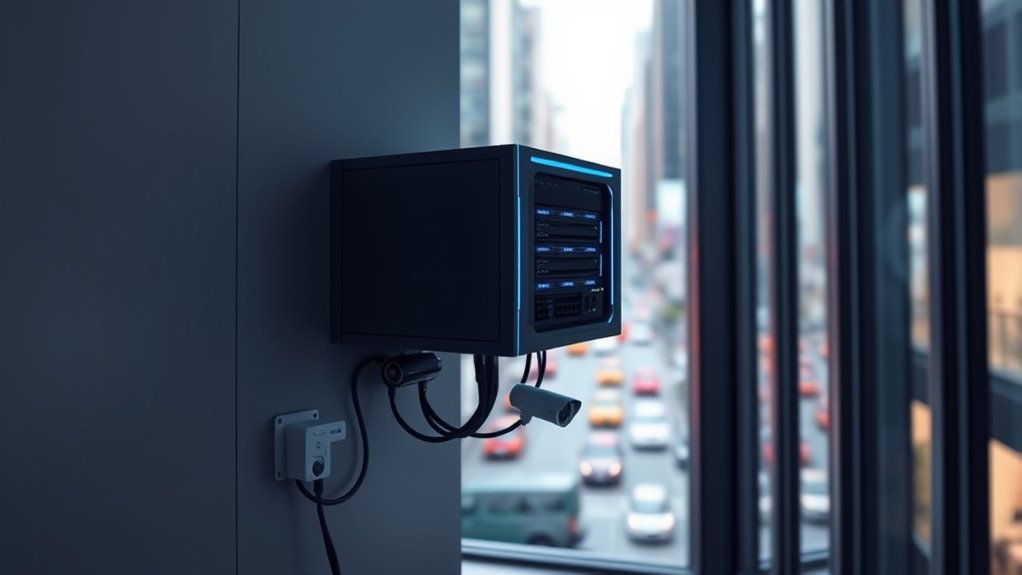

Edge computing moves data processing closer to your devices and sensors, reducing delays and improving real-time responses. By handling data locally, it minimizes reliance on distant cloud servers, boosting security and efficiency. This setup is essential for applications like autonomous vehicles, industrial automation, and IoT devices, ensuring quick responses and continuous operation even without internet. As you explore further, you’ll uncover how this technology enhances device performance and safeguards your data.
Key Takeaways
- Edge computing processes data near data sources, reducing reliance on centralized cloud servers.
- It enables faster response times and real-time decision-making for connected devices.
- Local processing enhances data privacy by minimizing sensitive information transmission.
- It improves network efficiency and device responsiveness, especially during internet outages.
- Implementing edge computing requires robust security measures to protect device and data integrity.

Have you ever wondered how your smart devices process data so quickly? The answer lies in edge computing, a technology that shifts data processing closer to where the data is generated. Instead of sending everything to a central cloud or data center, edge computing allows your devices—like smart cameras, sensors, and voice assistants—to handle much of their own data locally. This setup improves response times and reduces network congestion, making your devices smarter and more efficient. When it comes to IoT integration, this becomes essential. With countless IoT devices connected in homes, factories, and cities, processing data at the edge ensures that these devices can communicate seamlessly and act swiftly without waiting for cloud-based commands. It’s like giving your devices a brain of their own, enabling real-time decision-making and automation.
However, with this increased processing power at the edge, data privacy becomes a significant concern. Since sensitive data—such as your personal conversations, health information, or security footage—stays closer to the source, it reduces the risk of exposure during transmission. But it also means that safeguarding that local data becomes necessary. You need robust security measures at the edge, including encryption, secure boot processes, and strict access controls, to prevent unauthorized access or tampering. It’s up to you to guarantee that your devices are configured securely and that firmware updates happen regularly to patch vulnerabilities. Edge computing therefore offers a double-edged sword: faster, more responsive devices that handle data more locally, but also a responsibility to protect that data from breaches. Additionally, understanding vibrational energy and how it influences device performance can enhance your ability to optimize edge solutions.
Implementing edge computing means you’ll see less reliance on distant cloud servers, which not only accelerates processing but also minimizes latency. This is essential for applications like autonomous vehicles, industrial automation, or health monitoring systems—where milliseconds matter. The local processing keeps your devices functioning smoothly even if internet connectivity drops temporarily. Yet, it’s important to remember that the security of your data at the edge depends heavily on the design of the device and the network it’s connected to. You should be aware of how your devices handle data privacy and whether they comply with relevant regulations. Overall, edge computing empowers your devices to be more autonomous and responsive, but it also places a greater emphasis on secure IoT integration and data privacy. Staying informed and proactive about these factors guarantees you get the benefits of this cutting-edge technology without compromising your security.
Frequently Asked Questions
How Does Edge Computing Impact Data Privacy and Security?
Edge computing enhances your data privacy and security by processing data locally, reducing exposure to potential breaches. You can implement data encryption at the device level, safeguarding sensitive information. Additionally, it allows for quicker threat detection, enabling you to respond faster to security threats before they escalate. By keeping data closer to the source, you minimize risks associated with transmitting information to distant data centers, strengthening your overall security posture.
What Industries Benefit Most From Edge Computing Solutions?
You benefit from edge computing most in industries like industrial automation and healthcare innovation. It enables real-time data processing, which improves factory efficiency and safety in automation. In healthcare, it supports faster diagnostics and patient monitoring. By bringing computing closer to devices, you get reduced latency, enhanced security, and better decision-making, making these industries more responsive and effective in addressing critical needs.
How Does Edge Computing Compare to Cloud Computing in Cost?
You’ll find that edge computing generally costs less than cloud computing for real-time, localized processing because it reduces data transmission and storage expenses. With edge, you avoid hefty cloud service fees and bandwidth costs, especially for large data volumes. However, consider expense considerations like hardware setup and maintenance at the edge. Overall, for specific use cases, edge can be more cost-effective, but evaluate your needs carefully before choosing.
What Are the Main Challenges in Deploying Edge Infrastructure?
You face challenges like managing edge latency and infrastructure complexity. Ensuring low latency requires deploying nearby, reliable hardware, which can be costly and tricky to maintain. The infrastructure complexity increases as you scale, needing seamless coordination across diverse devices and locations. Additionally, securing data and updating systems across dispersed sites demands robust strategies. Overcoming these hurdles is essential to successfully deploy and maintain effective edge infrastructure.
How Scalable Is Edge Computing for Large Enterprise Deployments?
You’ll find that edge computing scales well for large enterprises, with a projected compound annual growth rate of 18.4% through 2027. However, scalability challenges remain, especially when it comes to infrastructure expansion. As your network grows, you’ll need to manage increased complexity, ensure consistent performance, and invest in robust infrastructure. While scalable, it demands careful planning to handle the expanding edge ecosystem effectively.
Conclusion
As you embrace edge computing, you’re bridging the gap between chaos and control, speed and delay. While it brings processing closer to devices, it also reminds you that technology isn’t just about efficiency—it’s about connection. In a world rushing forward, you hold the power to make every moment count, turning distant data into immediate action. With each step forward, you’re not just improving systems—you’re shaping a future where technology feels more personal, more present.