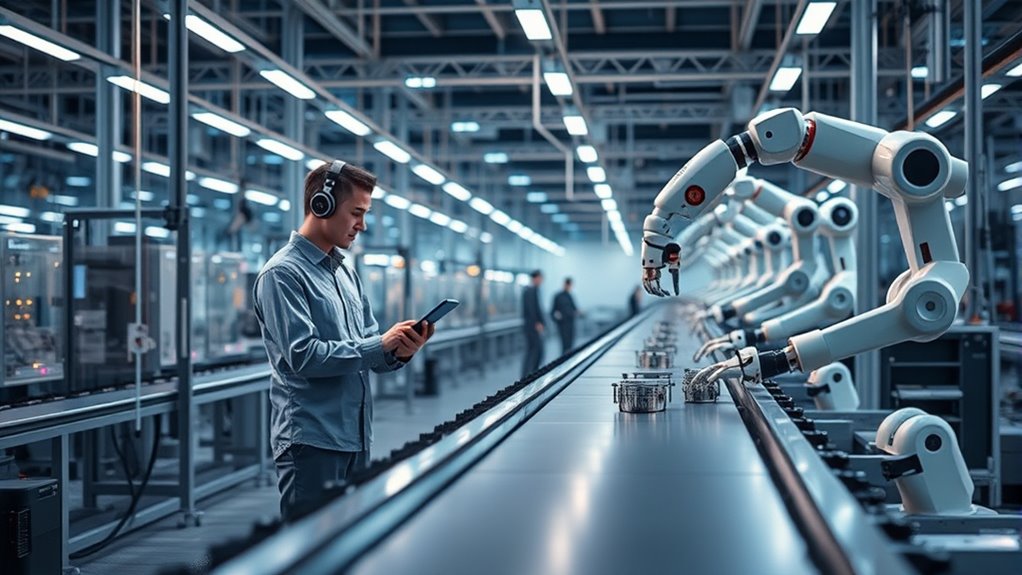

Industry 5.0 transforms manufacturing by shifting focus from just automation to human-centered collaboration. You’ll see humans working alongside cobots that are safe, intuitive, and enhance flexibility. This approach allows you to handle complex tasks while robots take care of repetitive work, making production faster and more personalized. It also promotes a safer environment and fosters continuous learning. Keep exploring to discover how this new wave of manufacturing can empower your workforce and improve your processes.
Key Takeaways
- Industry 5.0 emphasizes human-robot collaboration, integrating cobots for safer and more intuitive manufacturing processes.
- It focuses on enhancing worker roles by enabling creative, judgment-based tasks alongside automation.
- Personalized production becomes more efficient through flexible, quick-switching collaborative robotics.
- The approach promotes safer workplaces with cobots detecting human presence and reducing accidents.
- Overall, Industry 5.0 transforms manufacturing into a more adaptable, innovative, and human-centered environment.
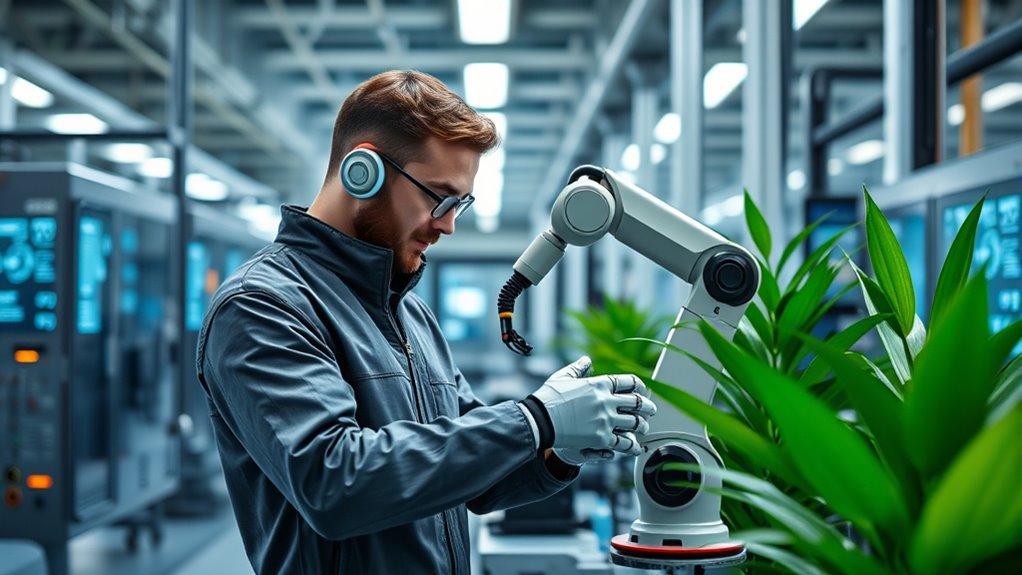
As Industry 5.0 emerges, it shifts the focus from solely automation and efficiency toward placing humans at the center of technological advancements. This new paradigm emphasizes the importance of human-robot collaboration, where innovative tools like collaborative robotics enable you to work alongside machines seamlessly. These cobots are designed to be safe and intuitive, allowing you to interact with them directly without barriers or extensive safety measures. This collaboration creates a more flexible manufacturing environment, where humans handle complex, creative, or judgment-based tasks, while robots take care of repetitive, precision-driven processes. The result is a more dynamic workflow that leverages the strengths of both humans and machines, making your work more engaging and less monotonous.
Industry 5.0 emphasizes human-robot collaboration for flexible, engaging, and efficient manufacturing workflows.
One of the key benefits of this approach is personalized production. Instead of mass-producing identical items, you can now tailor products to meet individual customer preferences efficiently. Collaborative robotics enable you to switch between tasks quickly, customizing output without sacrificing speed or quality. This flexibility means you can respond to market demands faster, creating bespoke products that truly meet customer needs. By integrating advanced AI and sensor technologies, cobots can adapt to different materials or specifications, allowing you to produce unique items without extensive reprogramming. Personalized production enhances customer satisfaction and can give your business a competitive edge in a rapidly changing market.
Furthermore, human-centric automation encourages a shift in workplace culture. You’re no longer just operating machinery; you’re engaging with intelligent systems that support your skills and creativity. This approach promotes continuous learning, as you develop new technical competencies and adapt to evolving technologies. It also fosters a safer work environment because collaborative robotics are designed to detect human presence and adjust their movements accordingly, reducing accidents and injuries. As a result, your role becomes more meaningful, focusing on oversight, problem-solving, and innovation rather than manual labor.
Industry 5.0’s emphasis on human-centric automation transforms manufacturing into a more adaptable, responsive, and personalized process. You benefit from smarter workflows, greater customization options, and safer working conditions. By working alongside collaborative robotics, you not only improve productivity but also enjoy a more fulfilling role that values your skills and creativity. This evolution isn’t about replacing humans but empowering you through technology, creating a future where manufacturing is more human-centered, flexible, and innovative.
Frequently Asked Questions
How Does Industry 5.0 Impact Job Security?
Industry 5.0 enhances job security by encouraging workforce adaptation rather than causing job displacement. You’ll find new roles that leverage human creativity and problem-solving, making your skills more valuable. While some tasks may change, employers focus on upskilling employees, ensuring you remain relevant. Embracing this shift empowers you to grow professionally, turning potential displacement into opportunities for advancement and a more secure future in manufacturing.
What Skills Are Essential for Workers in Industry 5.0?
You’ll need strong collaborative and adaptability skills to thrive in Industry 5.0. Emphasizing these abilities helps you work seamlessly alongside advanced automation and human-robot teams. Your capacity to adapt to rapid technological changes and communicate effectively guarantees you stay valuable. Developing these skills allows you to navigate evolving roles confidently, positioning you as an essential contributor in a human-centric manufacturing environment that values flexibility and teamwork.
How Does Industry 5.0 Address Ethical Concerns?
Industry 5.0 addresses ethical concerns by prioritizing AI ethics and data privacy. You’re encouraged to guarantee AI systems are transparent and fair, preventing bias and misuse. You also safeguard data privacy by implementing strict security protocols, respecting workers’ rights, and promoting trust. This human-centric approach emphasizes responsible innovation, where you balance technological advancement with ethical considerations, fostering a safe, respectful environment for all stakeholders involved.
What Are the Main Challenges in Implementing Human-Centric Automation?
Imagine guiding a ship through foggy waters, where unseen rocks threaten your voyage. The main challenges in implementing human-centric automation are like navigating this fog—you must ensure workforce adaptation and smooth technological integration. You need to train your crew for new tools and align systems seamlessly, or risks delays and missteps. Overcoming these hurdles requires careful planning, open communication, and a clear vision to steer your manufacturing journey safely.
How Does Industry 5.0 Influence Supply Chain Resilience?
Industry 5.0 boosts your supply chain resilience by enhancing supply chain transparency, allowing you to identify vulnerabilities early. It promotes better risk management through real-time data sharing and human-robot collaboration, which helps you respond swiftly to disruptions. By integrating human-centric automation, you create a flexible, transparent supply chain that adapts to challenges more effectively, reducing downtime and ensuring smoother operations in unpredictable times.
Conclusion
As Industry 5.0 ushers in a new era of human-centric harmony, you’ll witness a seamless symphony of smart systems and skilled souls working together. Embrace this empowering evolution where technology and human touch tango in tandem, transforming factories into fertile fields of innovation. By blending bold breakthroughs with personal purpose, you’ll build a brighter, more balanced blueprint for manufacturing’s future—where progress and people prosper side by side in perfect partnership.