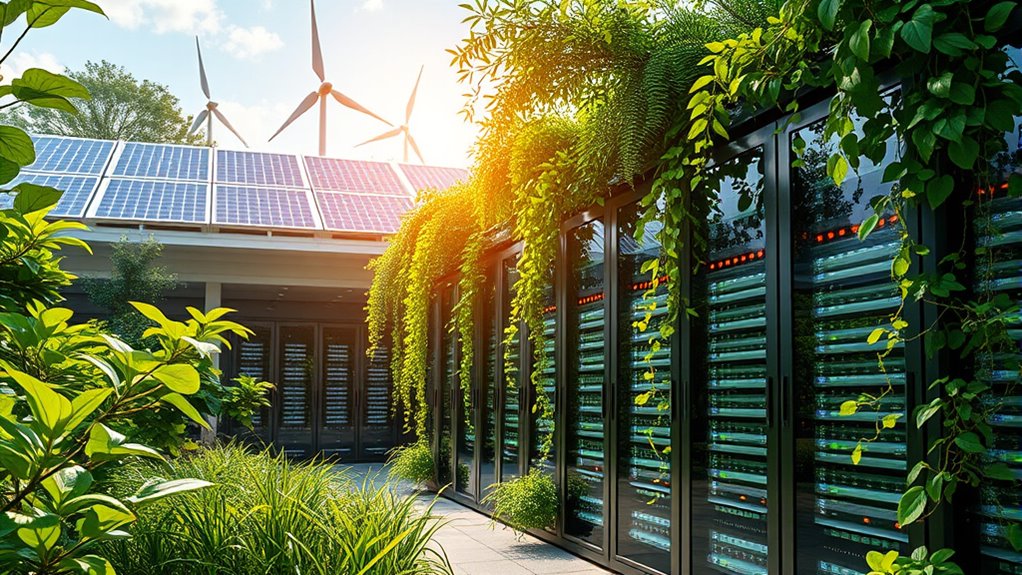

To reduce the carbon footprint of technology, focus on adopting sustainable IT practices like using green data centers powered by renewable energy and eco-friendly hardware that consumes less power and lasts longer. Support organizations that prioritize energy efficiency and recycling. Incorporate natural or liquid cooling methods to save energy. Making environmentally conscious choices helps you contribute to a healthier planet while maintaining efficient tech operations. Keep exploring how you can integrate these eco-friendly strategies into your digital routine.
Key Takeaways
- Implement green data centers that utilize renewable energy sources and advanced cooling techniques to reduce energy consumption.
- Develop and adopt eco-friendly hardware designed for energy efficiency, durability, and recyclability.
- Promote organizational policies that prioritize sustainable practices, such as energy management and waste reduction.
- Encourage innovation in cooling, power management, and hardware manufacturing to minimize environmental impact.
- Support personal choices and advocacy for eco-conscious technology products and sustainable digital behaviors.

Have you ever wondered how technology can help protect our planet? The answer lies in embracing sustainable practices within the tech industry, especially through innovations like Green Data Centers and eco-friendly hardware. These advancements are transforming how we manage data and power our digital world, making it easier to reduce our carbon footprint. Green Data Centers are designed to operate efficiently, using renewable energy sources such as wind or solar power. Unlike traditional data centers, which consume enormous amounts of electricity and generate significant heat, these eco-conscious facilities incorporate advanced cooling techniques and energy-efficient infrastructure to minimize waste. They often utilize natural cooling methods or liquid cooling systems, drastically reducing the energy needed for climate control. By choosing Green Data Centers, you’re supporting infrastructure that prioritizes sustainability and reduces greenhouse gas emissions, helping to curb the environmental impact of data processing and storage.
Eco-friendly hardware plays a crucial role in this shift. Modern devices are built with energy efficiency in mind, from servers and desktops to networking equipment. Manufacturers now focus on producing hardware that consumes less power without sacrificing performance. When you opt for eco-friendly hardware, you’re not just getting a device that’s less taxing on the environment—you’re also benefiting from longer-lasting products that require fewer replacements, further reducing waste. These devices often incorporate recycled materials and are designed for easy disassembly and recycling, ensuring they don’t end up in landfills. Implementing such hardware in your organization or personal use helps cut down on energy consumption and e-waste, making your digital activities more sustainable.
Furthermore, the adoption of Green Data Centers and eco-friendly hardware encourages a broader cultural shift towards sustainability within the tech industry. Companies are increasingly aware that reducing their environmental impact isn’t just good for the planet—it also enhances their reputation and aligns with consumer values. This shift promotes innovation, leading to more efficient cooling systems, smarter energy management, and greener manufacturing processes. As a user, you can support this movement by choosing products and services that prioritize sustainability, advocating for green practices, and staying informed about eco-friendly technology options. Every step you take toward using environmentally conscious hardware and supporting data centers committed to sustainable practices contributes to a healthier planet.
In essence, integrating Green Data Centers and eco-friendly hardware into your digital life is a powerful way to reduce your carbon footprint. It’s about making smarter choices that balance technological progress with environmental responsibility. The more we support these sustainable innovations, the more we push the industry toward greener, more efficient solutions. By doing so, you’re actively participating in a movement that protects our planet while still enjoying the benefits of modern technology. Sustainability isn’t just a trend—it’s a vital shift that ensures our digital future is cleaner, smarter, and more resilient for generations to come.
Top picks for "sustainable reduc carbon"
Open Amazon search results for this keyword.
As an affiliate, we earn on qualifying purchases.
Frequently Asked Questions
How Can Small Businesses Implement Sustainable IT Practices Effectively?
You can implement sustainable IT practices by starting with energy audits to identify areas for improvement. Educate your staff through training on eco-friendly tech usage and best practices. Switch to energy-efficient hardware, optimize server usage, and embrace cloud solutions where possible. Regularly monitor your energy consumption, set sustainability goals, and involve your team in eco-conscious initiatives. These steps make it easier to reduce your carbon footprint and promote a greener business.
What Are the Latest Innovations in Eco-Friendly Data Centers?
Did you know that new eco-friendly data centers are cutting energy consumption by up to 40%? You’ll find innovations like energy-efficient cooling systems that drastically reduce heat waste, and renewable energy integration powering operations with wind or solar. These advancements help data centers minimize their carbon footprint while maintaining performance. By adopting these cutting-edge solutions, you can support sustainability goals and reduce environmental impact effectively.
How Does Sustainable IT Impact Overall Business Profitability?
Sustainable IT boosts your business profitability by enhancing energy efficiency and cutting costs. When you adopt eco-friendly technologies, you reduce energy consumption, which lowers operational expenses. Additionally, sustainable practices attract environmentally conscious customers and investors, increasing your revenue potential. By integrating energy-efficient solutions, you not only contribute to environmental goals but also improve your bottom line, making your business more competitive and resilient in today’s eco-aware market.
What Policies Encourage Sustainable IT Adoption in Large Corporations?
They say “actions speak louder than words,” so setting clear policies encourages sustainable IT adoption in large corporations. Implement green procurement practices to prioritize eco-friendly equipment, and require transparent carbon reporting to track progress. These policies motivate responsible behavior, reduce environmental impact, and align with corporate sustainability goals, ultimately benefiting your business and the planet. Your commitment turns good intentions into meaningful change.
How Can Consumers Influence Companies’ Sustainable IT Initiatives?
You can influence companies’ sustainable IT initiatives through consumer activism by choosing brands that prioritize eco-friendly technology. Your purchasing decisions send a strong message about your values, encouraging companies to take greater responsibility for their environmental impact. Support brands that demonstrate brand responsibility through transparent sustainability practices. Additionally, sharing your expectations on social media and engaging in campaigns can pressure companies to adopt greener IT solutions and reduce their carbon footprint.
Conclusion
By embracing sustainable IT practices, you can substantially reduce your technology’s carbon footprint. Did you know that data centers alone account for about 1% of global electricity use? That’s equivalent to the energy consumption of entire countries like the Netherlands. By making smarter choices—like optimizing energy use and adopting green technologies—you not only lower costs but also contribute to a healthier planet. Your actions matter; together, we can create a more sustainable digital future.