
When searching for wireless studio microphones, the main challenge is balancing sound quality, range, and ease of use. The Hollyland Lark A1 stands out for its studio-grade audio and extensive range, making it ideal for professional content creators. For those on a budget, the Tonor Wireless Microphone System offers solid performance without breaking the bank. Meanwhile, the Maono PD200W Hybrid combines versatility with high-quality sound, perfect for streamers and podcasters. Buyers face tradeoffs between price, audio fidelity, and setup complexity, but this guide will help clarify the best choices. Continue reading for a detailed breakdown of each option.
Key Takeaways
- Top-tier models like the Hollyland Lark A1 deliver professional studio sound with extensive range, but come at a higher price.
- Budget-friendly picks such as the Tonor 2-Pack provide reliable performance for casual or semi-professional use.
- Hybrid microphones like the Maono PD200W offer versatility for both streaming and recording, though they may require additional accessories.
- Range varies dramatically, with some systems exceeding 200ft, perfect for large studios or outdoor use, while others focus on indoor convenience.
- Build quality and battery life are critical; models with rechargeable batteries and sturdy construction tend to last longer for frequent use.


| wireless studio microphone | Battery Life |
|---|---|
| Wireless Microphone | 40 hours |
| JBL Wireless Two Microphone Sy | — |
| JBL PartyBox Wireless Micropho | 20 hours |
| ZealSound Wireless Microphone | — |
| Hollyland Lark A1 Wireless Mic | 54 hours |
| MAONO PD100W Wireless USB Dyna | Up to 40 hours |
| Tonor Wireless Microphone Syst | — |
| Phenyx Pro Wireless Microphone | — |
| MAONO PD200W Hybrid Wireless P | Up to 60 hours |
| Wireless Microphone | Over 40 hours |
| Wireless Microphones | up to 30 hours |
| Maono PD200W Hybrid Wireless P | Up to 60 hours |
| Aveek Wireless Microphone Syst | 40 hours |
More Details on Our Top Picks
Wireless Microphone, Rechargeable Karaoke Microphones with 200ft Range, 40H Battery Life, LED Lights, and Stable Connection
This microphone stands out for its impressive 200ft range and 40-hour battery life, making it ideal for extended performances without constant recharging. Its noise reduction and cardioid pickup pattern deliver studio-quality sound, surpassing basic models like the Hollyland Lark A1 in sound clarity and stage presence features. While it offers vibrant LED effects for visual flair, it’s less compatible with laptops or phones via AUX, which could limit versatility for some users. Still, its stable, low-latency connection and ease of auto-pairing make it a strong choice for live singers and speakers who need reliable wireless coverage and professional sound quality.
Pros:- Excellent noise reduction and sound clarity
- Long 40-hour battery life for all-day use
- Stable, low-latency wireless connection
- Vibrant multicolor LED effects for stage presence
Cons:- Limited device compatibility—no direct AUX connection with phones or laptops
- Requires additional adapters for some setups
Best for: Performers and speakers needing a long-range, battery-powered microphone for stage or party environments
Not ideal for: Users seeking compatibility with laptops or mobile devices through standard AUX, since it requires specific input jacks
- Range:200ft
- Battery Life:40 hours
- Battery Capacity:1200mAh
- Charging:USB-C
- Connectivity:2.4GHz wireless, 6.35mm/3.5mm input
- LED Lights:Multicolor
Our verdict“This pick is perfect for stage performers who prioritize long-range, professional sound, and visual effects over device compatibility.”
JBL Wireless Two Microphone System with Dual-Channel Receiver, Black
The JBL Wireless Two Microphone System excels with its dual-channel UHF receiver, providing clear vocals and JBL’s signature Pro Sound. Compared to the Wireless Microphone with 200ft Range, it offers a more straightforward plug-and-play setup, making it ideal for small venues or quick setups. However, it’s limited to 6 hours of playback per charge and relies on replaceable AA batteries, which can be less convenient than rechargeable options. Its focus on high-quality vocal reproduction makes it a strong choice for singers and presenters in controlled environments, where ease of operation is valued over extended wireless range or visual effects.
Pros:- High vocal clarity with JBL Pro Sound
- Simple plug-and-play setup
- Two microphones included for duet or group performances
- Replaceable AA batteries for easy replacement
Cons:- Limited to 6 hours of operation per charge
- Requires battery replacements, less eco-friendly than rechargeable units
Best for: Small to medium event hosts or singers who prioritize sound clarity and simplicity
Not ideal for: Performers needing ultra-long range or visual stage effects, as it lacks those features and longer battery life
- Color:Black
- Channels:Dual-Channel
- Battery:Replaceable AA batteries
- Playback Time:Up to 6 hours
Our verdict“Ideal for users seeking reliable, high-quality vocal microphones with straightforward operation in small venues.”
JBL PartyBox Wireless Microphone (2 Pack) with Rechargeable Battery and 2.4GHz Wireless Connection
The JBL PartyBox Wireless Microphone set offers 20 hours of continuous use per charge, making it perfect for energetic events. Its 2.4GHz wireless connection provides a stable link up to 30 meters, and it’s designed to work seamlessly with all JBL PartyBox speakers, ensuring easy setup. Compared with the Rechargeable Karaoke Microphones, it’s more specialized for party environments, but it’s limited to use only with JBL series speakers and offers a shorter wireless range when using the wireless dongle. The long-lasting battery and plug-and-play operation make it ideal for spontaneous, lively singing sessions or karaoke parties.
Pros:- Long 20-hour battery life
- Stable 2.4GHz wireless connection up to 30 meters
- Plug-and-play compatibility with all PartyBox models
- Simple operation for party settings
Cons:- Battery life reduces to about 12 hours when using wireless dongle
- Limited to JBL PartyBox ecosystem
Best for: Party hosts and entertainers using JBL PartyBox speakers who need easy, long-lasting microphones
Not ideal for: Users who want universal compatibility beyond JBL speakers or require longer wireless range with dongle use
- Battery Life:20 hours
- Battery Capacity:700mAh
- Connection:2.4GHz wireless
- Compatibility:All JBL PartyBox speakers
Our verdict“Best suited for party environments with JBL speakers where ease of use and long battery life are priorities.”
ZealSound Wireless Microphone for PC, Podcast, Streaming, and Mobile Devices
The ZealSound K66 offers a balanced mix of studio-quality sound, noise cancellation, and adjustable features, making it ideal for podcasters, streamers, and online creators. Its hybrid wired and wireless operation broadens compatibility far beyond typical microphones, outperforming basic wireless mics like the JBL Dual Microphone System in control features. However, it’s less straightforward for beginners due to its multiple controls and lacks specific battery life details. The onboard gain, echo, and mute controls allow for professional sound tuning, but the complexity might be a barrier for casual users aiming for quick, simple setups.
Pros:- Studio-quality sound with noise cancellation
- Versatile wireless and wired modes
- On-mic controls for gain, echo, and monitoring
- Broad device compatibility including phones and computers
Cons:- No explicit battery life information given
- Potentially complex for users unfamiliar with sound adjustments
Best for: Podcast hosts, streamers, and online creators who want professional sound with flexible device connectivity
Not ideal for: Beginners or casual users who prefer plug-and-play simplicity without extensive controls
- Connectivity:Wireless 2.4GHz, Wired USB
- Frequency Response:40Hz–18kHz
- Sampling Rate:46kHz
- Sensitivity:–45dB ±3dB
- Included Adapters:USB-C, Lightning
- Control Features:Gain, Mute, Echo, Headphone Monitoring
Our verdict“Great for experienced content creators who need professional control and broad device support, but less suitable for quick, casual use.”
Hollyland Lark A1 Wireless Microphone for iPhone & Android, 48kHz/24-bit Studio Audio, 3-Level Noise Cancellation, 200m Range, Magnetic Mini Mic for Video Recording & Live Streaming (2TX + USB-C RX)
The Hollyland Lark A1 excels with its impressive 200-meter range and 54-hour battery life, making it ideal for on-the-go recording and streaming. Its 48kHz/24-bit audio and 3-level noise cancellation provide studio-like quality in a compact, magnetic mini mic designed specifically for smartphones. Compared to larger, more complex systems, it’s straightforward and easy to set up, but it’s limited to mobile devices like iPhone and Android, and does not support Bluetooth, requiring a physical connection. This makes it less flexible for users needing wireless convenience with laptops or tablets but perfect for mobile content creators seeking high-quality audio without fuss.
Pros:- High-quality 48kHz/24-bit audio recording
- Long 200-meter wireless range with anti-interference
- Extended 54-hour battery life
- Compact magnetic mini mic for easy use
Cons:- Requires physical connection, no Bluetooth support
- Limited to mobile device compatibility
- Higher cost compared to basic mini mics
Best for: Mobile video creators and streamers who need long-range, high-quality audio on smartphones
Not ideal for: Users who want Bluetooth connectivity or need compatibility with laptops and desktops
- Audio Quality:48kHz/24-bit
- Range:200 meters
- Battery Life:54 hours
- Compatibility:iPhone & Android
- Includes:2 transmitters, USB-C receiver, furry windshields
Our verdict“Designed for mobile creators needing high-fidelity audio and long-range wireless performance with minimal setup.”
MAONO PD100W Wireless USB Dynamic Microphone, Gaming PC Mic with Noise Reduction, Mute Button, RGB Lighting, 3.5mm Headphone Jack, Software, Podcast Streaming
The MAONO PD100W stands out for its dual wired and wireless connectivity, making it adaptable for gaming, streaming, and podcasting. Compared to the Phenyx Pro, which offers more professional-grade stability, the PD100W provides a more user-friendly setup for less technical users, though it sacrifices some advanced noise reduction precision. Its customizable RGB lighting adds aesthetic flair, while the long battery life ensures uninterrupted sessions. The tradeoff is that it’s not compatible with Xbox consoles and may be overwhelming for beginners due to its feature set. Still, this model makes the most sense for streamers or gamers who want a flexible, feature-rich mic without investing in professional equipment.
Pros:- Dual wireless and wired connectivity for maximum flexibility
- Smart noise reduction with adjustable levels enhances audio clarity
- Customizable RGB lighting to match gaming setups
- Long battery life with stable 50m wireless range
Cons:- Not compatible with Xbox consoles
- Requires a separate receiver for iPhone use
- Setup can be complex for beginners due to multiple features
Best for: Content creators and gamers needing a versatile, feature-packed microphone for multiple devices
Not ideal for: Hardcore studio engineers or Xbox users seeking console compatibility and ultra-precision audio
- Connectivity:Wireless 2.4G and USB wired
- Frequency Range:50 Hz–16 kHz
- Signal-to-Noise Ratio:82dB
- Maximum Sound Pressure Level:125 dB
- Battery Capacity:1500 mAh
- Battery Life:Up to 40 hours
- Wireless Range:50 meters (160 ft)
- Compatibility:Windows, iOS, Android, PS5 (not Xbox)
Our verdict“This pick is best suited for streamers and gamers wanting an all-in-one microphone with aesthetic and functional flexibility.”
Tonor Wireless Microphone System, 2-Pack, 15 Channels, UHF Cordless Dynamic Handheld Mics with Receiver for Karaoke, Meetings, Parties, Weddings, KTV, 60m/200ft, Silver
The Tonor 2-Pack UHF System delivers reliable, clear sound suitable for events like karaoke, weddings, and large meetings. Unlike the MAONO PD100W, which is more suited for single-user streaming, this system offers two microphones with automatic pairing, making it ideal for duo performances or interviews. Its 60-meter transmission range outperforms many competitors, providing ample coverage for big spaces. However, it requires connection to an external amplifier or PA system, and batteries are not included, adding an extra step for setup. This makes it a better fit for venues that already have sound systems but less ideal for casual users or solo streamers.
Pros:- High-quality sound with noise reduction for clear audio
- Long transmission range up to 60 meters
- Durable all-metal construction for impact resistance
- Easy automatic pairing for quick setup
Cons:- Requires connection to external amplifier or PA system
- Batteries not included, additional purchase needed
- Lacks integrated digital controls or advanced features
Best for: Event organizers or venues needing multiple microphones for large-scale live performances
Not ideal for: Solo content creators or casual users without existing sound systems
- Channels:15
- Transmission Range:60 meters / 200 feet
- Material:Metal
- Power:2 x AA batteries per mic (not included)
- Includes:2 microphones, 1 receiver, accessories
Our verdict“This system is ideal for venues or event hosts who need multiple microphones with reliable long-range performance.”
Phenyx Pro Wireless Microphone System, Dual UHF Handheld Microphones with Auto Scan, 2×1000 Channels, 328ft Range
The Phenyx Pro UHF System offers exceptional stability with its true diversity circuitry and 2,000 channels, making it a top choice for stage or studio use. Compared with the MAONO PD100W, which emphasizes versatility for streamers, the Phenyx Pro prioritizes interference resistance and long-range operation—up to 328 feet—ideal for large venues or complex setups. Its all-metal build reinforces durability, but the system’s complexity and need for four AA batteries might challenge less experienced users. This system is for professionals who need a reliable, interference-free signal over long distances, not casual or solo streaming applications.
Pros:- Interference-free UHF performance with true diversity circuitry
- Long-range operation up to 328 feet
- Durable all-metal construction
- Two microphones included with noise reduction features
Cons:- Requires four AA batteries, increasing maintenance
- Setup may be complex for novices
- Higher price point compared to simpler systems
Best for: Stage performers, studio engineers, or large venue operators requiring reliable, interference-free wireless audio
Not ideal for: Casual streamers or users seeking simple plug-and-play solutions without complex setup
- Frequency Range:530 – 580MHz
- Channels:2×1000
- Range:328ft
- Power Supply:4 x AA batteries (16hrs)
- Included Accessories:Antennas, audio cable, power adapter, user manual
Our verdict“This system is best suited for professionals demanding long-distance, interference-free wireless microphones in large settings.”
MAONO PD200W Hybrid Wireless Podcast Microphone with Boom Arm and Accessories
The MAONO PD200W provides a flexible setup with three connectivity options—wireless, USB, and XLR—making it ideal for podcasting, streaming, or home studio work. Unlike the Tonor system, which is primarily built for live performances, the PD200W’s focus on studio-quality sound and noise cancellation offers a more refined audio experience. Its support for dual microphones suits interviews or collaborative content, though the separate purchase of camera and lighting accessories may be a limitation for some. This model suits creators who want a professional sound profile without the complexity of multiple dedicated devices.
Pros:- Versatile three-way connectivity (wireless, USB, XLR)
- High-quality studio sound with noise cancellation
- Supports dual microphones for interviews or collaborations
- Long battery life up to 60 hours
Cons:- Camera and lighting accessories sold separately
- Setup complexity for multiple connection modes
- RGB lighting may be unnecessary for some users
Best for: Podcasters, streamers, and content creators seeking flexible, high-quality audio with multiple connection options
Not ideal for: Users needing a simple, plug-and-play microphone without multiple connection modes or those with limited studio space
- Microphone Type:Dynamic
- Connectivity:Wireless, USB, XLR
- Pickup Pattern:Cardioid
- Signal-to-Noise Ratio:82dB
- Maximum SPL:128dB
- Wireless Range:60 meters
- Battery Life:Up to 60 hours
Our verdict“This microphone is perfect for creators who need flexible connectivity and studio-grade sound in a professional or home setup.”
Wireless Microphone, Metal Dynamic Wireless Microphones with Rechargeable Receiver, 40H Duration, 200FT Range, Volume Control for Singing
The Wireless Metal Dynamic Microphones excels in durability and long-lasting battery life, making it ideal for singers, performers, and event hosts. Compared with the MAONO PD100W, which targets streaming and gaming, this model emphasizes robustness and simplicity, with a 200-foot range and 40+ hours of use. Its all-metal design ensures longevity, but it’s incompatible with laptops, phones, or tablets, limiting versatility outside dedicated sound systems. The straightforward plug-and-play setup benefits stage performers, although the lack of advanced features may disappoint users seeking customization or multi-mic configurations.
Pros:- Durable all-metal construction for longevity
- Long battery life with fast USB-C charging
- Stable, ultra-reliable wireless connection
- Modern two-tone design adds style
Cons:- Not compatible with laptops, iPads, or phones
- Limited to specific audio equipment types
- Lacks advanced onboard controls or customization
Best for: Stage performers or event hosts needing a reliable, durable microphone with extensive range and battery life
Not ideal for: Content creators or streamers who prefer multi-platform flexibility or integrated features
- Build Material:All-metal
- Range:200ft (60m)
- Battery Life:Over 40 hours
- Charging Port:USB-C
- Included:2 microphones, rechargeable receiver, accessories
Our verdict“This microphone suits performers and event organizers prioritizing durability, long range, and ease of use in live settings.”
Wireless Microphones, Dual Wireless Microphone System with 240 ft Range and Studio-Grade Sound
This dual wireless microphone system stands out for its robust 2.4G connection, offering a reliable 240-foot range that surpasses most competitors like the Aveek system. Its studio-grade sound quality paired with low latency makes it ideal for professional performances and recordings. The all-metal construction ensures durability, while features like auto-pairing and USB-C charging enhance usability. Compared to systems like the Maono PD200W, it excels in long-range stability but requires initial setup for pairing, which could be a hurdle for some users. Its basic accessory bundle might also mean additional purchases for a complete setup. Overall, this system is a strong choice for performers needing dependable range and sound clarity, with tradeoffs in accessory inclusions and setup complexity.
Pros:- Stable 2.4G wireless connection with long 240-foot range
- Studio-grade sound with very low latency
- Long-lasting rechargeable batteries with fast USB-C charging
- All-metal, durable design with stylish dual-tone finish
Cons:- Requires initial setup for pairing, which may be complex for some users
- Includes only basic accessories; additional adapters might be needed
Best for: Performers and presenters who need a durable, long-range wireless system with studio-quality sound.
Not ideal for: Casual users or small home studios where shorter range and simpler setup are sufficient.
- Range:240 feet
- Transmission Rate:3ms
- Battery Capacity:1200mAh
- Battery Life:up to 30 hours
- Charging Port:USB-C
- Microphone Head Diameter:30mm
- Design:All-metal, dual-tone (grey and cyan)
Our verdict“This system is best suited for professionals who prioritize range and sound quality over plug-and-play simplicity.”
Maono PD200W Hybrid Wireless Podcast Microphone for PC, Dynamic XLR USB Mic with Desktop Stand, Noise Cancellation, for Vocal Recording, Streaming, Content Creation, Home Studio, Voiceover
The Maono PD200W offers impressive flexibility, combining wireless, USB, and XLR connectivity, making it suitable for a wide range of recording environments. Its noise cancellation and customizable sound profiles via the MaonoLink app help produce clear, professional-quality audio, especially for streamers and podcasters. Unlike the Aveek system, which excels in range, the Maono’s strength lies in its versatility and digital customization, though it’s less suited for large live venues. The app-based controls add complexity, which might challenge beginners, and accessories like camera adapters are sold separately. This model makes the most sense for content creators needing multiple connection options and advanced sound control, accepting some extra setup and accessory costs.
Pros:- Versatile connectivity (wireless, USB, XLR) for different setups
- Effective noise cancellation for clear vocals
- Supports dual wireless mics for interviews or duo podcasts
- Long battery life with stable wireless range
Cons:- Camera/Lightning accessories sold separately
- Requires app for full customization, which may be complex for some users
Best for: Content creators, streamers, and podcasters who value flexible connectivity and advanced sound tailoring.
Not ideal for: Live performers or large venues where ultra-long-range stability is less critical than in the Aveek system.
- Connectivity:Wireless, USB, XLR
- Microphone Type:Dynamic, Cardioid
- Signal-to-Noise Ratio:82dB
- Maximum SPL:128dB
- Wireless Range:60 meters
- Battery Life:Up to 60 hours
- Included Accessories:Desktop stand, cables, receiver
Our verdict“This microphone is ideal for digital content creators seeking flexible, high-quality sound options with a learning curve for customization.”
Aveek Wireless Microphone System with 4 Microphones, 262ft Range, 40-Hour Battery, Studio Sound
The Aveek system excels in environments requiring multiple microphones and long-range coverage, with four handheld mics capable of reaching up to 262 feet. Its 40-hour rechargeable batteries and simple plug-and-play operation make it ideal for live performances, karaoke nights, and outdoor events. Compared to the more feature-rich Maono PD200W, Aveek’s focus on multiple channels and extended range makes it less versatile for studio or streaming use, but more suited for large-scale events. Its compatibility with various audio setups and noise reduction features provide reliable sound, though manual channel adjustments are sometimes necessary. If you need a dependable, multi-mic system for group events, this model delivers, with the tradeoff of limited digital customization options.
Pros:- Includes four microphones suitable for group performances
- Long wireless range of up to 262 feet
- Extended 40-hour rechargeable battery life
- Compatible with a wide variety of audio equipment
Cons:- Not compatible with laptops, iPads, or smartphones
- Requires 4 AA batteries, which may need frequent replacement
Best for: Event organizers and performers who require multiple microphones with extensive range for live, outdoor, or large venue use.
Not ideal for: Solo content creators or small studios where fewer mics and shorter range suffice, and digital customization is preferred.
- Connectivity Technology:6.35 mm Jack, UHF, XLR
- Special Features:Built to Last, Memory Switch, Noise Reduction
- Range:262 feet
- Battery Life:40 hours
- Number of Microphones:4
- Microphone Form Factor:Handheld
- Signal-to-Noise Ratio:85 dB
Our verdict“This system is tailored for large-scale live applications and group performances, with tradeoffs in digital features and battery management.”
How We Picked
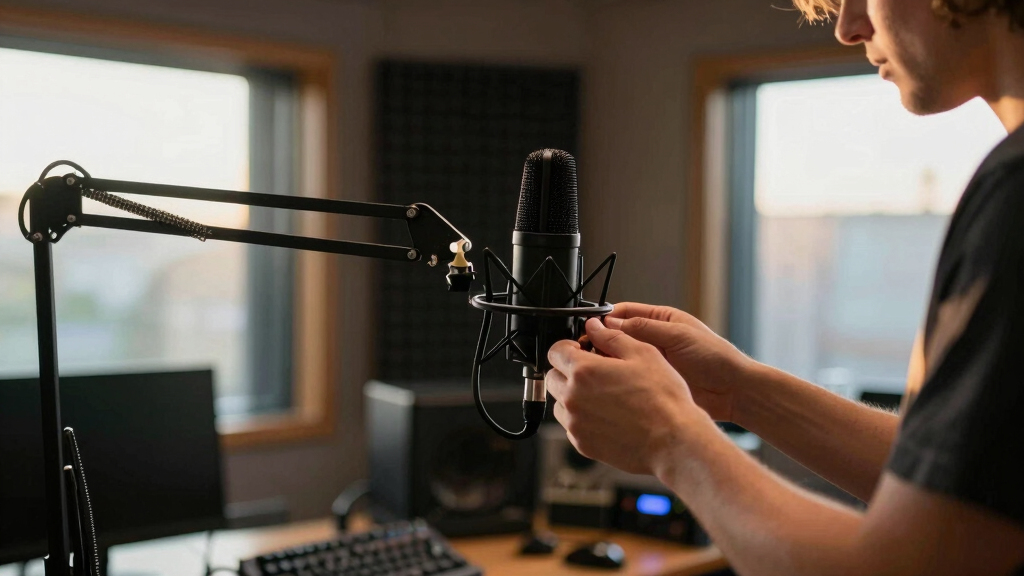
To determine the best wireless studio microphones, I evaluated each product based on sound quality, range, battery life, build durability, ease of setup, and value for money. Priority was given to models that excel in professional audio reproduction, especially for studio or content creation environments. We also considered versatility—whether the mic supports multiple devices or includes useful accessories—and user feedback on reliability and ease of use. Products were ranked to balance performance with affordability, highlighting options suitable for different skill levels and studio needs.
Factors to Consider When Choosing Wireless Studio Microphones
Choosing the right wireless studio microphone involves more than just specifications. It’s essential to consider how the microphone fits into your workflow, whether you prioritize sound fidelity, mobility, or budget. Understanding the key factors involved can help you avoid common pitfalls, such as overpaying for unnecessary features or selecting a system that doesn’t match your environment. Here are some of the most important aspects to keep in mind.
Sound Quality and Frequency Response
Sound fidelity is the core reason for investing in a quality microphone. Look for models with broad frequency response and low latency to ensure your recordings or broadcasts sound clear and natural. Hybrid or digital systems often provide better noise suppression, which is vital in studio settings. Remember, higher-priced models typically deliver more accurate sound reproduction, but some budget options still offer decent quality for less demanding applications.
Range and Connectivity
The distance a microphone can reliably transmit is crucial, especially for larger studios or outdoor setups. Systems with ranges over 200ft enable freedom of movement without signal dropouts. Also, consider compatibility; some microphones connect via Bluetooth, UHF, or 2.4GHz, each with tradeoffs in stability and interference susceptibility. For professional use, UHF or dedicated 2.4GHz systems tend to be more reliable than Bluetooth options.
Battery Life and Durability
Long-lasting batteries reduce interruptions during recording or live sessions. Rechargeable batteries with 20+ hours of life are preferable, especially for frequent use. Build quality also matters—metal casings and reinforced components withstand daily wear and tear better. Cheaper plastic models may save money initially but often fail sooner, leading to additional replacement costs.
Ease of Use and Setup
Simplicity in pairing, controlling, and maintaining the microphone influences overall user experience. Features like automatic channel scanning, intuitive controls, and quick pairing options save time and frustration. For beginners, plug-and-play systems with minimal configuration are ideal, while advanced users may appreciate customizable settings and multiple channel options.
Accessories and Compatibility
Additional accessories such as boom arms, carrying cases, or multiple microphones can enhance usability. Compatibility with various devices—smartphones, cameras, or professional audio interfaces—is a crucial consideration. Some models include software for fine-tuning audio or integrating into streaming setups, which can be a significant advantage for content creators.
Frequently Asked Questions
Do I need a special receiver for wireless studio microphones?
Most wireless microphones come with a dedicated receiver designed for that specific system, ensuring compatibility and optimal performance. When choosing a system, verify that the receiver matches the microphone’s frequency range and connection type. Some models include dual or multiple receivers, enabling the use of several microphones simultaneously without interference. Investing in a compatible receiver simplifies setup and guarantees reliable signal transmission.
Can I use a wireless studio microphone outdoors?
Many wireless microphones are capable of outdoor use, especially those with long-range capabilities and robust construction. However, environmental factors like interference, weather, and signal obstacles can impact performance. For outdoor recordings or performances, select a model with a high range, secure connection, and weather-resistant features if available. Testing your setup beforehand helps ensure reliable operation during critical sessions.
Is higher frequency response always better in wireless microphones?
While a broader frequency response generally indicates better sound quality, it isn’t the only factor to consider. Other elements like noise suppression, signal stability, and compatibility play vital roles. For studio use, focus on models that balance frequency response with low latency and interference resistance. Sometimes, a narrower response can be sufficient if it’s tailored for vocal clarity or studio recording, making the choice more about overall system quality than just specs.
How important is battery life in a wireless studio microphone?
Battery life is essential, especially during long recording or streaming sessions. A microphone with short battery life can cause interruptions and reduce productivity. Rechargeable batteries with at least 20 hours of operation are ideal for most professional setups. Additionally, consider whether the system supports quick charging or spare batteries to avoid downtime during extended use.
Should I prioritize built-in noise cancellation or external accessories?
Built-in noise cancellation features greatly improve audio clarity, especially in noisy environments. However, external accessories like pop filters, windshields, or noise-reducing mounts can further enhance sound quality. For studio applications, a microphone with effective internal noise suppression simplifies setup, but combining it with quality accessories yields the best results. Evaluate your typical environment and choose accordingly to avoid unnecessary upgrades later.
Conclusion
For professional content creators or studio setups, the Hollyland Lark A1 offers unmatched sound clarity and range, making it the best overall choice. Budget-conscious users or those starting out will find the Tonor Wireless Microphone System provides reliable performance at a lower cost. Content creators seeking versatility should consider the Maono PD200W Hybrid, which covers streaming, podcasting, and recording needs. Beginners or casual users may prefer plug-and-play options with minimal setup, while large studios benefit from systems with extensive range and multiple microphones. Ultimately, your choice depends on your specific environment, budget, and professional needs.”