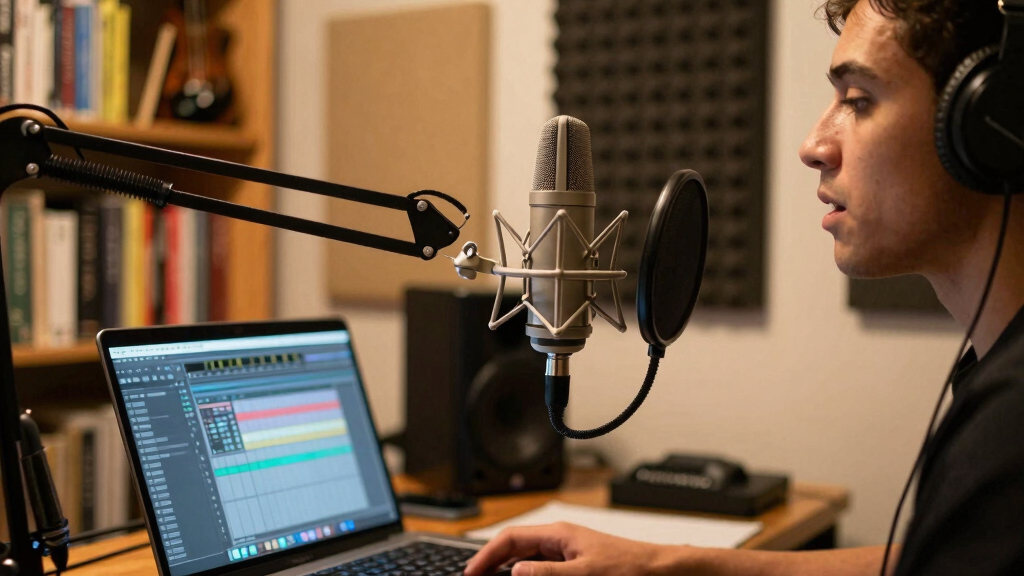

When choosing high-quality podcast microphones, the options range from simple USB models to professional XLR setups. The Audio-Technica AT2035 stands out as the overall best for its balance of sound quality and versatility, while the Shure MV6 offers excellent features for streaming and recording. On the other hand, some microphones sacrifice build or ease of use for lower prices, making it essential to weigh performance against budget. To find the right fit, you need to consider factors like connectivity, sound clarity, and intended use. Keep reading for a detailed breakdown of the top picks and what sets each one apart.

Get audio and creator gear delivered free with Prime
- Fast, free delivery on millions of items
- Prime Video, Amazon Music and more included
- Member-only deals all year
Complete the kit

Key Takeaways
- The best podcast microphones balance sound quality, ease of use, and connectivity options.
- USB microphones are ideal for beginners, while XLR models suit professionals seeking higher fidelity.
- Features like noise cancellation, gain control, and monitoring significantly impact recording quality.
- Price often correlates with durability and advanced features, but budget options can still deliver good results.
- Choosing a microphone depends heavily on your recording environment and future upgrade plans.
| AKG Pro Audio P120 – 2/3-Inch Diaphragm Cardioid Condenser Microphone, 20-20kHz, XLR, Black |  | Best Budget-Conscious Choice for Clear Audio | Polar Pattern: Cardioid | Frequency Range: 20 – 20000 Hz | Equivalent Noise Level: 19 dB-A | VIEW LATEST PRICE | See Our Full Breakdown |
| Audio-Technica AT2035 Cardioid Condenser Microphone with Shock Mount and Pouch |  | Best for Serious Studio Sound with Versatility | Connectivity Technology: XLR | Polar Pattern: Unidirectional | Audio Sensitivity: 33 Decibels | VIEW LATEST PRICE | See Our Full Breakdown |
| FIFINE K688 Podcast Microphone Kit with Boom Arm, USB/XLR Dynamic Microphone for Streaming and Recording |  | Best Versatile Setup for Streamers and Content Creators | Connection Types: USB and XLR | Microphone Pattern: Cardioid | Maximum SPL: 130dB | VIEW LATEST PRICE | See Our Full Breakdown |
| Logitech Blue Yeti USB Microphone for PC, Mac, Gaming, Streaming, Podcasting, Studio, and Computer – Blackout |  | Best for All-in-One Streaming and Podcasting with Multiple Patterns | Pickup Patterns: Cardioid, Omni, Bidirectional, Stereo | Connectivity: USB | Software: Blue VO!CE effects | VIEW LATEST PRICE | See Our Full Breakdown |
| ZealSound Podcast Microphone for PC, Noise Cancellation USB Mic with Gain, Volume Adjustment & Mute Button, Monitoring & Echo, for YouTube, TikTok, Podcasting, Streaming, iPhone, iPad, Android, Mac |  | Best for All-in-One Content Creation Across Devices | Frequency Response: 40Hz–18kHz | Sampling Rate: 46kHz | Sensitivity: –45dB ±3dB | VIEW LATEST PRICE | See Our Full Breakdown |
| AKG Pro Audio Ara USB-C Condenser Microphone, Dual Pattern for Podcasting, Streaming, Gaming |  | Best Overall USB Microphone for Versatility and High-Resolution Audio | Audio Resolution: 24-bit/96kHz | Capture Modes: Dual pattern (cardioid and omni) | Connectivity: USB-C | VIEW LATEST PRICE | See Our Full Breakdown |
| Shure MV6 USB Gaming Microphone for Streaming, Podcasting & Recording |  | Best for Voice Isolation and Customization in Gaming and Streaming | Connectivity: USB-C | Microphone Type: Dynamic cardioid | Features: Voice Isolation, Auto Level Mode, Real-Time Denoiser | VIEW LATEST PRICE | See Our Full Breakdown |
| Sennheiser XS Lav USB-C Condenser Microphone |  | Best Compact USB Lavalier for Content Creation and Conferencing | Microphone Type: Condenser | Connectivity: USB-C | Color: Black | VIEW LATEST PRICE | See Our Full Breakdown |
| FIFINE USB/XLR Dynamic Microphone for Podcast Recording, Gaming, Streaming with RGB Light, Mute Button, Headphones Jack, Desktop Stand |  | Best Versatile Microphone with Dual Connectivity and User Controls | Frequency Response: 50Hz-16KHz | Connection Types: USB, XLR | RGB Lighting: Yes, 3 modes, 10+ colors | VIEW LATEST PRICE | See Our Full Breakdown |
| Audio-Technica AT2020 Cardioid Condenser Studio XLR Microphone, Black |  | Best Budget High-Performance XLR Microphone for Home Studios | Connectivity Technology: Wired | Connector Type: XLR | Special Feature: Cardioid polar pattern | VIEW LATEST PRICE | See Our Full Breakdown |
| FIFINE XLR/USB Gaming Microphone Set with Boom Arm and RGB Lighting |  | Best Versatile Streaming and Gaming Microphone | Connectivity: USB and XLR | Polar Pattern: Cardioid | Sensitivity: -50dB | VIEW LATEST PRICE | See Our Full Breakdown |
| Sennheiser Professional Profile USB Cardioid Condenser Microphone with Table Stand |  | Best Premium USB Microphone for Voice Clarity | Microphone Type: Cardioid condenser | Connectivity: USB-C | Cable Length: 1.2 meters | VIEW LATEST PRICE | See Our Full Breakdown |
| Maono PD200W Hybrid Wireless Podcast Microphone for PC, Dynamic XLR USB Mic with Desktop Stand, Software, Noise Cancellation, for Vocal Recording, Streaming, Content Creation, Home Studio, Voiceover |  | Best Wireless Microphone with Long Battery Life | Connectivity: Wireless, USB, XLR | Microphone Type: Dynamic | Pickup Pattern: Cardioid | VIEW LATEST PRICE | See Our Full Breakdown |
| Audio-Technica AT2040 Hypercardioid Dynamic Podcast Microphone |  | Best Natural Sound for Podcasters | Type: Dynamic | Polar pattern: Hypercardioid | Features: Large diaphragm, foam windscreen, shock mount | VIEW LATEST PRICE | See Our Full Breakdown |
| high-quality podcast microphone | Connectivity |
|---|---|
| AKG Pro Audio P120 | — |
| Audio-Technica AT2035 Cardioid | — |
| FIFINE K688 Podcast Microphone | — |
| Logitech Blue Yeti USB Microph | USB |
| ZealSound Podcast Microphone f | USB-C, Lightning adapters |
| AKG Pro Audio Ara USB-C Conden | USB-C |
| Shure MV6 USB Gaming Microphon | USB-C |
| Sennheiser XS Lav USB-C Conden | USB-C |
| FIFINE USB/XLR Dynamic Microph | — |
| Audio-Technica AT2020 Cardioid | — |
| FIFINE XLR/USB Gaming Micropho | USB and XLR |
| Sennheiser Professional Profil | USB-C |
| Maono PD200W Hybrid Wireless P | Wireless, USB, XLR |
| Audio-Technica AT2040 Hypercar | — |
More Details on Our Top Picks
AKG Pro Audio P120 – 2/3-Inch Diaphragm Cardioid Condenser Microphone, 20-20kHz, XLR, Black
The AKG Pro Audio P120 stands out for delivering professional-quality sound at an accessible price point, making it ideal for newcomers and hobbyists who want decent clarity without a steep investment. Compared with the Audio-Technica AT2035, it offers a more basic feature set, lacking switchable filters or pads, but compensates with a durable build and high SPL handling. This makes it well-suited for home studios or live recording, but its limited frequency response and absence of advanced controls could be a drawback for those needing nuanced sound shaping or studio-grade flexibility. Its straightforward XLR connection and solid construction make it a reliable workhorse for casual recording or entry-level projects, though it’s less suited for professional broadcast or complex editing scenarios.
Pros:- Affordable price with professional-grade sound quality
- Durable build suitable for both studio and live use
- High SPL handling for loud sources
Cons:- Limited frequency response for specialized recording needs
- Requires phantom power, adding setup complexity
Best for: Beginners or hobbyists seeking a reliable, affordable microphone for general podcasting and instrument recording.
Not ideal for: Advanced audio engineers or professional broadcasters needing extensive control and nuanced sound quality.
- Polar Pattern:Cardioid
- Frequency Range:20 – 20000 Hz
- Equivalent Noise Level:19 dB-A
- Sensitivity:24 mV/Pa
- Maximum SPL:150 dB
- Connector:XLR
Our verdict“This microphone is a solid choice for entry-level users prioritizing affordability and durability over advanced features.”
Audio-Technica AT2035 Cardioid Condenser Microphone with Shock Mount and Pouch
The Audio-Technica AT2035 excels in delivering natural, detailed recordings thanks to its large diaphragm and low noise floor. Compared to the AKG P120, it offers greater flexibility with switchable high-pass filters and a 10dB pad, making it more adaptable for different recording environments and louder sources. While its XLR-only connectivity and lack of built-in controls make it less convenient for beginners or mobile use, it’s a top choice for those wanting a professional-grade sound with low noise and high SPL handling. Its included shock mount and pouch add value, but the higher price point might be a barrier for casual users who don’t need such advanced features.
Pros:- Large diaphragm for natural, detailed sound
- Switchable high-pass filter and pad for versatility
- Includes shock mount and protective pouch
Cons:- Requires XLR connection, less portable
- No built-in preamp or onboard controls
Best for: Professional podcasters, voice-over artists, or musicians seeking high-fidelity audio with flexible controls.
Not ideal for: Beginners or mobile content creators needing a simple, USB-based setup without additional equipment.
- Connectivity Technology:XLR
- Polar Pattern:Unidirectional
- Audio Sensitivity:33 Decibels
- Signal-to-Noise Ratio:70 dB
- Power Source:Corded Electric
- Special Features:Switchable 80Hz high-pass filter, 10dB pad
Our verdict“This microphone suits advanced users who prioritize sound quality and flexibility over plug-and-play simplicity.”
FIFINE K688 Podcast Microphone Kit with Boom Arm, USB/XLR Dynamic Microphone for Streaming and Recording
The FIFINE K688 offers a flexible solution with both USB and XLR options, making it an appealing choice for users who want adaptability across different setups. Its included boom arm and intuitive controls streamline the recording experience, especially compared to simpler USB-only mics like the Blue Yeti. However, the functionality of XLR controls is limited when connected via XLR, and some users might find the desk clamp incompatible with thicker desks. The noise reduction features and sturdy build make it suitable for streaming, voice-overs, and casual music recording, though it might lack the refined sonic detail of professional studio mics.
Pros:- Dual connectivity with USB and XLR options
- Sturdy boom arm for stable positioning
- Effective noise reduction features
Cons:- Function keys only active via USB connection
- XLR control features are limited
- Desk mount compatibility issues with thicker desks
Best for: Content creators and streamers who need a versatile microphone system with both USB convenience and XLR expandability.
Not ideal for: Professional studios or users requiring ultra-high fidelity or advanced sound shaping controls.
- Connection Types:USB and XLR
- Microphone Pattern:Cardioid
- Maximum SPL:130dB
- Included Accessories:Boom arm, windscreen, shock mount
Our verdict“This kit is ideal for streamers and content creators who want flexibility and ease of use without sacrificing decent sound quality.”
Logitech Blue Yeti USB Microphone for PC, Mac, Gaming, Streaming, Podcasting, Studio, and Computer – Blackout
The Blue Yeti is renowned for its versatility, offering four pickup patterns—cardioid, omni, bidirectional, and stereo—making it suitable for a wide range of uses from podcasting to music. Its plug-and-play setup simplifies installation, and the onboard Blue VO!CE effects add fun customization for streamers and broadcasters. Compared with the ZealSound K66, the Yeti’s multiple patterns and software features provide more creative options, at the expense of size and desk space. Its bulkier design can be cumbersome on cluttered desks, and some may find the premium price less justified if they only need basic recording capabilities.
Pros:- Multiple pickup patterns for versatile recording
- Customizable controls and Blue VO!CE effects
- Simple plug-and-play setup
Cons:- Bulkier design takes up more desk space
- Requires USB connection, limiting mobility
- Higher price for features some may not need
Best for: Content creators, gamers, and streamers seeking a versatile, all-in-one microphone with onboard effects and easy setup.
Not ideal for: Users with limited desk space or those preferring more compact, specialized microphones for studio use.
- Pickup Patterns:Cardioid, Omni, Bidirectional, Stereo
- Connectivity:USB
- Software:Blue VO!CE effects
- Controls:Headphone volume, pattern selection, mute, mic gain
Our verdict“This microphone suits users who want a flexible, feature-rich USB solution for streaming and podcasting in a single package.”
The ZealSound K66 excels in delivering studio-quality audio combined with noise cancellation, making it a top contender for multi-platform content creators. Its plug-and-play USB-C and Lightning adapters provide broad compatibility, unlike the Blue Yeti, which is limited to USB. The real-time monitoring, adjustable gain, echo, and mute controls give users a high degree of flexibility, although some may find the array of features complex to master initially. Build quality details are scarce, which could raise concerns about long-term durability, but for quick setup and multi-device use, it’s a compelling option.
Pros:- High-quality studio sound with noise reduction
- Multi-device compatibility including mobile and PC
- Real-time monitoring with customizable sound controls
Cons:- Features may require a learning curve
- Build quality not specified, potential durability concerns
Best for: Streamers, YouTubers, and podcasters who need a versatile microphone with noise reduction and broad device compatibility.
Not ideal for: Professional audio engineers or those looking for high-end studio microphones with detailed sound shaping controls.
- Frequency Response:40Hz–18kHz
- Sampling Rate:46kHz
- Sensitivity:–45dB ±3dB
- Connectivity:USB-C, Lightning adapters
- Device Compatibility:Windows, Mac, iPhone, iPad, Android
Our verdict“This microphone is well-suited for multi-platform content creators who need convenience and noise reduction in a single device.”
AKG Pro Audio Ara USB-C Condenser Microphone, Dual Pattern for Podcasting, Streaming, Gaming
The AKG Ara stands out for delivering professional-grade 24-bit/96kHz audio quality, making it ideal for podcasters, streamers, and musicians seeking clarity. Its dual pickup patterns, cardioid and omni, provide adaptable recording options—better suited than the single-pattern Sennheiser XS Lav for varied environments. The plug-and-play USB-C connection ensures broad compatibility, but may pose challenges for users with older devices lacking USB-C ports. Its bulkier design provides stability but compromises portability, unlike more compact options like the Sennheiser XS Lav. It includes a headphone output for real-time monitoring, making it a comprehensive choice for those who prioritize sound fidelity and ease of use. However, users should be aware that its size might limit mobility and space-constrained setups.
Pros:- High-resolution 24-bit/96kHz audio quality suitable for professional use
- Dual pickup patterns for flexible recording scenarios
- Plug-and-play setup with broad device compatibility
- Includes monitoring headphone jack
Cons:- Requires USB-C connection, may need adapters for some devices
- Bulkier design may be less portable
Best for: Podcasters and streamers who need versatile, high-resolution audio with multiple pickup patterns and real-time monitoring.
Not ideal for: Travelers or mobile content creators who prefer a lightweight, compact microphone for portability.
- Audio Resolution:24-bit/96kHz
- Capture Modes:Dual pattern (cardioid and omni)
- Connectivity:USB-C
- Compatibility:Mac, PC, iOS, Android
- Included Accessories:USB cable, USB software
- Mounting Options:Base stand, desktop boom arm, microphone stand
Our verdict“This microphone makes the most sense for users who need professional quality with flexible recording options and don’t mind a larger form factor.”
Shure MV6 USB Gaming Microphone for Streaming, Podcasting & Recording
The Shure MV6 excels at reducing background noise through its voice isolation technology, making it ideal for noisy gaming environments or home studios. Its dynamic cardioid capsule focuses on the speaker’s voice, outperforming condenser microphones like the Audio-Technica AT2020 in noisy settings. The built-in DSP processing and auto level mode simplify setup, especially for users who want professional sound without complicated adjustments. Its zero-latency monitoring and tap-to-mute feature add convenience for live interactions. On the downside, the microphone’s higher price may deter budget-conscious buyers, and its USB-C compatibility limits use on older devices. The absence of XLR connectivity means it’s less suitable for those seeking studio-grade, expandable setups.
Pros:- Excellent voice isolation technology reduces background noise
- Easy plug-and-play setup with USB-C
- Built-in DSP features for customizable sound
- Zero-latency monitoring improves live audio feedback
Cons:- Higher price point compared to basic USB mics
- Limited to USB-C devices, not compatible with XLR setups
Best for: Gamers, streamers, and podcasters who prioritize clear voice isolation and quick setup on USB-C devices.
Not ideal for: Audio engineers or musicians requiring XLR input for advanced studio workflows.
- Connectivity:USB-C
- Microphone Type:Dynamic cardioid
- Features:Voice Isolation, Auto Level Mode, Real-Time Denoiser
- Includes:Stand, USB-C Cable
Our verdict“This mic is perfect for users who want a straightforward, noise-reducing voice solution with customization options for streaming or gaming.”
Sennheiser XS Lav USB-C Condenser Microphone
The Sennheiser XS Lav offers clear, natural sound quality in a compact design, making it well-suited for on-the-go content creators and video conferencing. Its omnidirectional pattern captures audio from all directions, providing convenience but potentially picking up background noise—less ideal in noisy environments compared to the AKG Ara‘s dual pattern versatility. The included accessories, like the windscreen and mic clip, enhance portability and ease of use, but its omnidirectional nature means it’s less suited for focused voice recording in noisy settings. Its 6.6-foot cable offers flexible placement, yet the size and pattern limit its use in environments with significant background sounds.
Pros:- Clear, natural sound quality suitable for content and conferencing
- Compact, portable design with included accessories
- Flexible 6.6-foot cable for versatile placement
Cons:- Limited to omnidirectional pickup, prone to background noise
- USB-C only, restricting compatibility with older devices
Best for: Content creators and remote workers needing a portable, easy-to-use microphone for interviews and video calls.
Not ideal for: Podcasters recording in controlled studio environments where background noise reduction is important.
- Microphone Type:Condenser
- Connectivity:USB-C
- Color:Black
- Cable Length:6.6 feet (2 m)
- Included Accessories:Mic clip, windscreen, storage pouch
Our verdict“This microphone makes sense for users prioritizing portability and convenience over noise isolation in controlled environments.”
FIFINE USB/XLR Dynamic Microphone for Podcast Recording, Gaming, Streaming with RGB Light, Mute Button, Headphones Jack, Desktop Stand
The FIFINE AM8 offers flexible connectivity with both USB and XLR options, catering to entry-level and semi-professional users. Its dynamic capsule is better suited for noisy environments than condenser mics, particularly in gaming and streaming setups, outperforming the Audio-Technica AT2020 in background noise rejection. The RGB lighting and mute button add visual flair and convenience, but they become inactive when using XLR, which could frustrate users expecting full feature access regardless of connection type. The included desktop stand and windscreen add value, but the absence of an XLR cable and limited features on the XLR side mean it’s less ideal for high-end studio use. Overall, it’s a versatile choice for users who want both USB simplicity and XLR expandability.
Pros:- Dual USB and XLR connectivity for versatile use
- RGB lighting with adjustable modes for personalization
- Mute button and headphones jack for real-time control
- Includes desktop stand and windscreen
Cons:- RGB lighting and mute are inactive on XLR connection
- XLR cable not included, limiting XLR setup
Best for: Streamers and podcasters seeking multi-connection flexibility with added user controls and aesthetic customization.
Not ideal for: Professional studio engineers or musicians requiring high-end, dedicated XLR microphones with advanced features.
- Frequency Response:50Hz-16KHz
- Connection Types:USB, XLR
- RGB Lighting:Yes, 3 modes, 10+ colors
- Mute Button:Yes, USB only
- Headphones Jack:Yes
- Stand Mounting:3/8” and 5/8” threads
Our verdict“This microphone suits users who want adaptable connectivity and user-friendly controls in streaming or podcasting environments.”
Audio-Technica AT2020 Cardioid Condenser Studio XLR Microphone, Black
The Audio-Technica AT2020 provides a compelling balance of sound quality and affordability, making it a popular choice for project and home studios. Its low-mass diaphragm delivers extended frequency response and fast transient response, outperforming many budget condenser mics. The cardioid polar pattern helps focus on vocals while reducing side and rear noise, but it still requires phantom power, which may be a hurdle for users with limited equipment. Unlike the AKG Ara, it lacks USB connectivity and built-in monitoring, making it less convenient for plug-and-play use but more suitable for those aiming for a dedicated XLR setup. Its durable metal body ensures longevity, though it doesn’t include any accessories, requiring additional purchases for mounting or pop filtering.
Pros:- Excellent sound quality with extended frequency response
- High SPL handling for versatile recording
- Durable metal construction ensures long-term use
- Reduces background noise with cardioid polar pattern
Cons:- Requires phantom power, not compatible with all audio interfaces
- Limited to XLR connection, no USB option
- No included stand or accessories
Best for: Home studio enthusiasts and content creators seeking a high-quality, budget-friendly XLR microphone for detailed vocal recordings.
Not ideal for: Users looking for a USB microphone or those without access to phantom power supplies.
- Connectivity Technology:Wired
- Connector Type:XLR
- Special Feature:Cardioid polar pattern
- Frequency Response:20 Hz
- Impedance:200 Ohms
- Power Source:Phantom Power
Our verdict“This microphone makes sense for those who want a professional-quality XLR mic on a budget and have suitable equipment to power it.”
FIFINE XLR/USB Gaming Microphone Set with Boom Arm and RGB Lighting
This microphone set stands out for its flexible connectivity options, combining both USB and XLR for users who want to switch between streaming and professional recording. Compared to the Sennheiser Profile, it offers more versatility, but the XLR cable is not included, adding an extra step for users needing professional sound quality. The customizable RGB lighting enhances gaming aesthetics, while the included boom arm simplifies setup. However, the RGB controls may be basic for advanced users, and the lack of an XLR cable could be a drawback for those seeking a complete professional setup. This pick makes the most sense for streamers and gamers who value adaptability and visual flair without sacrificing core features.Pros:- Dual USB and XLR connectivity for versatile use
- Includes adjustable boom arm and accessories for easy setup
- Customizable RGB lighting enhances gaming setup
- Built-in mute button and gain control for precise adjustments
Cons:- XLR cable not included, requiring additional purchase
- RGB lighting control may be simple for advanced users
- No specific weight information provided
Best for: Streamers and gamers who want a flexible, visually striking microphone for both casual and semi-professional use
Not ideal for: Pure studio professionals who need high-end XLR features and cable options for maximum sound quality
- Connectivity:USB and XLR
- Polar Pattern:Cardioid
- Sensitivity:-50dB
- RGB Lighting:Yes, customizable
- Included Accessories:Boom arm stand, C-clamp, USB-C cable
- Microphone Type:Dynamic
Our verdict“Ideal for gamers and streamers seeking a flexible, visually engaging microphone with solid basic features.”
Sennheiser Professional Profile USB Cardioid Condenser Microphone with Table Stand
The Sennheiser Profile is distinguished by its plug-and-play ease and warm, natural sound, making it a top choice for podcasters who prioritize voice presence. Unlike the Audio-Technica AT2040, which offers more detailed control and a hypercardioid pattern, the Profile’s straightforward USB connection simplifies setup at the expense of limited flexibility—no XLR option or advanced sound shaping. Its sturdy metal housing and included table stand add durability, but it requires desk space and lacks a pop filter, which could be a concern for those needing cleaner recordings. This model makes the most sense for content creators who want high-quality sound with minimal fuss.Pros:- Easy plug-and-play setup with USB-C connection
- High-quality warm sound with voice emphasis
- Built-in controls for mute, gain, and volume
- Sturdy metal construction and included table stand
Cons:- Limited to USB connectivity, no XLR option
- No included pop filter or advanced sound shaping tools
- Requires desk space for the stand
Best for: Podcasters and streamers who need a reliable, easy-to-use microphone with excellent voice quality
Not ideal for: Advanced audio engineers or studio professionals requiring multiple connection options and extensive sound customization
- Microphone Type:Cardioid condenser
- Connectivity:USB-C
- Cable Length:1.2 meters
- Controls:Mute, gain, mix, volume
- Included Accessories:Table stand
- Material:Metal housing
Our verdict“Best suited for podcasters seeking high-quality, straightforward sound without the need for complex adjustments.”
Maono PD200W Hybrid Wireless Podcast Microphone for PC, Dynamic XLR USB Mic with Desktop Stand, Software, Noise Cancellation, for Vocal Recording, Streaming, Content Creation, Home Studio, Voiceover
The Maono PD200W offers remarkable flexibility with wireless, USB, and XLR options, making it ideal for content creators who need mobility and professional-grade sound. Its noise cancellation and customizable sound profiles deliver studio-quality audio, yet it requires additional accessories for video sync, which could complicate setup compared to the Audio-Technica AT2035’s dedicated studio features. The long battery life and broad wireless range make it suited for mobile recording or multi-location setups, but some advanced features depend on app configurations, which might challenge less tech-savvy users. This model is best for those who want a portable, all-in-one solution for varied recording environments.Pros:- Versatile connectivity including wireless, USB, and XLR
- High-quality studio sound with noise cancellation
- Supports dual microphones for interviews or duo recordings
- Long battery life up to 60 hours and 60-meter wireless range
Cons:- Requires separate accessories for video or camera sync
- Some features may need app configuration, adding complexity
- Bulkier setup compared to traditional wired mics
Best for: Mobile podcasters and streamers who need flexible, wireless, high-quality audio with long battery life
Not ideal for: Users primarily recording in fixed studio setups who prefer dedicated, plug-in microphones with fewer app dependencies
- Connectivity:Wireless, USB, XLR
- Microphone Type:Dynamic
- Pickup Pattern:Cardioid
- Signal-to-Noise Ratio:82dB
- Maximum SPL:128dB
- Battery Life:Up to 60 hours
Our verdict“Best for mobile content creators seeking flexibility without sacrificing professional sound quality.”
Audio-Technica AT2040 Hypercardioid Dynamic Podcast Microphone
The AT2040 is tailored for podcasters who want a warm, natural broadcast tone with minimal background noise, thanks to its hypercardioid pattern. It contrasts with the Sennheiser Profile by offering a more traditional dynamic design and internal shock mount, making it ideal for environments with ambient noise. However, it may require additional equipment like a mixer or audio interface for optimal use, and it’s less suited for users who need a simple plug-and-play experience. Its included accessories like the shock mount and pouch add value for portable setups. This microphone makes the most sense for podcasters prioritizing natural sound and noise rejection over onboard controls or USB convenience.Pros:- Delivers warm, natural broadcast sound
- Reduces background noise with hypercardioid pattern
- Includes accessories like shock mount and pouch
- Large diaphragm enhances vocal depth
Cons:- May require additional equipment for connection
- Primarily designed for podcasting, not studio recording
- Less convenient for quick setup without extra gear
Best for: Podcasters recording in less controlled environments who prioritize natural sound and noise rejection
Not ideal for: Beginners or those seeking a straightforward USB plug-and-play option without extra gear
- Type:Dynamic
- Polar pattern:Hypercardioid
- Features:Large diaphragm, foam windscreen, shock mount
- Includes:Pivoting stand mount, threaded adapter, pouch
Our verdict“Perfect for podcasters aiming for authentic vocal tone in challenging acoustic environments.”
How We Picked
This selection was based on comprehensive criteria including sound performance, build quality, ease of use, versatility, and value for money. We prioritized microphones that deliver clear, professional audio with minimal setup, considering both beginner-friendly and advanced options. The ranking reflects a balance between affordability and feature set, ensuring there are options for different budgets and use cases. We also examined user feedback, brand reputation, and adaptability to different recording environments. The goal was to highlight microphones that truly elevate podcast audio quality while remaining practical for everyday use.| high-quality podcast microphone | Connectivity |
|---|---|
| AKG Pro Audio P120 | — |
| Audio-Technica AT2035 Cardioid | — |
| FIFINE K688 Podcast Microphone | — |
| Logitech Blue Yeti USB Microph | USB |
| ZealSound Podcast Microphone f | USB-C, Lightning adapters |
| AKG Pro Audio Ara USB-C Conden | USB-C |
| Shure MV6 USB Gaming Microphon | USB-C |
| Sennheiser XS Lav USB-C Conden | USB-C |
| FIFINE USB/XLR Dynamic Microph | — |
| Audio-Technica AT2020 Cardioid | — |
| FIFINE XLR/USB Gaming Micropho | USB and XLR |
| Sennheiser Professional Profil | USB-C |
| Maono PD200W Hybrid Wireless P | Wireless, USB, XLR |
| Audio-Technica AT2040 Hypercar | — |
Factors to Consider When Choosing High-quality Podcast Microphones
Choosing the right podcast microphone involves more than just looking at specs. It’s important to evaluate how a microphone’s features align with your recording environment, technical skills, and future needs. A good microphone should complement your setup without requiring extensive technical knowledge, yet offer enough performance for professional-sounding audio. Budget considerations should also factor into your decision, as investing in quality can pay off with clearer, more consistent recordings. Let’s explore key factors to keep in mind before making your purchase.Connectivity Type
Microphones come primarily in USB and XLR formats, each with distinct advantages. USB mics are plug-and-play, making them ideal for beginners or those with minimal technical skills. XLR mics, however, require an audio interface but provide higher sound quality and more control, making them better suited for professional setups. Consider your current equipment and future upgrade plans—if you plan to expand your studio, investing in an XLR model makes sense. Conversely, if simplicity and portability are priorities, a USB microphone often offers enough quality at a lower setup complexity.
Sound Quality and Frequency Response
Clear, natural sound is essential for a high-quality podcast. Look for microphones with a broad frequency response (generally 20Hz-20kHz), which captures a full range of vocal nuances. Condenser microphones tend to excel in capturing detailed audio, making them popular for studio environments. Dynamic microphones, by contrast, are better at rejecting background noise, which is advantageous in less controlled spaces. Understanding your environment and recording style will help you choose the right type—professional podcasters usually prefer condenser mics, while streamers or on-the-go creators might favor dynamics.
Build Quality and Durability
Investing in a well-built microphone ensures longevity and consistent performance. Metal housings and sturdy mounts reduce the risk of damage and vibration noise, both of which can compromise audio quality. Cheaper models often feel flimsy or have fragile components that may not withstand regular use. If you plan to travel with your gear or record frequently, prioritizing durability can save you money and frustration over time. Remember, a microphone is an investment in your content—better build quality generally correlates with more reliable performance.
Additional Features and Controls
Features like gain control, mute buttons, headphone monitoring, and noise cancellation add flexibility and ease of use. Gain control allows you to adjust input levels without software, helping to prevent clipping. A mute button can be invaluable during live recordings or streaming, saving you from accidental noise. Built-in noise cancellation and monitoring ports improve your ability to produce clean, professional audio. However, these features often come at a higher price, so consider your specific needs—if you’re just starting, a basic microphone might suffice, but more advanced features benefit serious content creators.
Price and Value
While premium microphones often deliver superior sound and durability, they also come with higher costs. Budget options can still provide good quality, especially for beginners or casual podcasters. However, investing more usually grants better build quality, more features, and longer lifespan, which can be worthwhile if you’re committed to regular recording. It’s important to evaluate whether the additional features and performance justify the price difference for your specific use case. Sometimes, spending a bit more upfront results in a more satisfying and enduring audio setup.
Frequently Asked Questions
Should I choose a USB or XLR microphone for my podcast?
Choosing between USB and XLR depends on your current setup and future plans. USB microphones are straightforward, requiring only a connection to your computer, making them perfect for beginners or those who value simplicity. XLR microphones, however, need an audio interface but offer higher sound fidelity and more control over your audio. If you plan to expand your studio or want the best possible sound quality, starting with an XLR model might be more advantageous. For casual or mobile recording, USB is often more practical and cost-effective.
Is a condenser microphone better than a dynamic microphone for podcasting?
Condenser microphones generally produce more detailed and accurate sound, making them popular for studio-quality podcasts. They are sensitive and capture a broad frequency range, which helps produce a natural, rich vocal tone. Dynamic microphones, on the other hand, are less sensitive and excel at rejecting background noise, making them suitable for less controlled environments. The choice ultimately depends on your recording environment and personal preference—if your space is quiet and you want high fidelity, a condenser is usually the better option.
How important is build quality when choosing a podcast microphone?
Build quality is a key factor because it influences durability and consistent performance over time. A well-constructed microphone with a sturdy housing and reliable internal components reduces the risk of damage and minimizes unwanted noise caused by vibrations or handling. If you travel a lot or record in different locations, a durable microphone can prevent costly repairs or replacements. While high-end microphones tend to have better build quality, even budget models should feel solid and well-made to ensure they can withstand regular use without issues.
What features should I look for in a beginner podcast microphone?
For beginners, simplicity is essential. Look for a microphone that connects easily without complicated setup—USB models are ideal. Features like a built-in headphone jack for monitoring, gain control, and a mute button add convenience and can improve your recording quality. Additionally, a sturdy yet lightweight design makes it easier to handle and transport. While advanced features like multiple polar patterns or noise cancellation are useful, they are often unnecessary in initial setups. Focusing on good sound quality and ease of use will help you start creating professional-sounding content right away.
How much should I expect to spend for a high-quality podcast microphone?
High-quality podcast microphones generally range from around $100 to $300, with some premium models exceeding that. Budget models under $100 can still deliver decent sound, especially for casual use, but they may lack durability and advanced features. Investing in a mid-range microphone often strikes a good balance between cost and performance, providing clear audio and reliable construction. If you plan to produce professional-level content or have specific recording needs, spending more can yield noticeable improvements in sound fidelity, build, and additional controls. Ultimately, your budget should reflect your goals and how much you value audio quality.
Conclusion
For those starting out or seeking a reliable all-around performer, the Audio-Technica AT2035 offers a great balance of quality and affordability. If you want the best overall and are willing to invest, the Shure MV6 provides excellent features with user-friendly controls. Content creators on a tighter budget can turn to the FIFINE K688 or similar USB models for solid performance without breaking the bank. For professionals or serious streamers, investing in an XLR setup like the AKG Pro Audio P120 or Sennheiser XS Lav ensures top-tier sound. Ultimately, your choice should match your recording environment, technical comfort, and budget, ensuring your podcast sounds as polished as possible.
Halloween Picks
halloween
As an affiliate, we earn on qualifying purchases.