For most players seeking a full-size instrument for home practice, I’d start with the Yamaha P-143: its 88 weighted keys and included stand-and-bench bundle make it a strong all-around choice. The Yamaha P-45 and Yamaha P71 are simpler alternatives for players who want weighted keys without a larger accessory package, while the Yamaha PSR-EW320 suits those who prefer a lighter 76-key layout and more portable format. The main tradeoff is between piano-like weighted action and the lighter, more compact designs found on many beginner keyboards. Bundles can simplify setup, but they may include extras you do not need. Read on for how the 15 options compare and which fits your playing goals.

Get audio and creator gear delivered free with Prime
- Fast, free delivery on millions of items
- Prime Video, Amazon Music and more included
- Member-only deals all year
Complete the kit


Key Takeaways
Weighted 88-key models lead for piano practice. The Yamaha P-143, P-45, P71, and Donner DEP-20 are more suited to building full-range piano technique than the 61-key beginner kits.
The P-143 earns the overall pick through balance. It pairs a full-size weighted layout with a stand and bench bundle, while the P-45 and P71 offer a more stripped-back route to weighted keys.
Key count changes the use case. The 61-key models favor first lessons and compact setups; the 76-key PSR-EW320 provides a middle ground for players who want more range without a full 88-key instrument.
Included furniture is not the same as a better piano. Models such as the UISCOM weighted piano and KUMENG include desk-style setups and pedals, but buyers should weigh room space and assembly against the convenience of a ready-made package.
Bluetooth and lighted keys target different needs. The Egerget’s Bluetooth and MIDI/USB features support connected practice, while the JIKADA’s lighted keys are aimed at guided beginner learning rather than piano-action development.
| Yamaha P-143 88-Key Weighted Digital Piano Bundle with Stand and Bench |  | Best Complete Home-Practice Bundle | Keys: 88 | Key type: Weighted, touch-sensitive | Features: Built-in speakers, multiple voices, split mode | VIEW LATEST PRICE | See Our Full Breakdown |
| Egerget 88-Key Semi-Weighted Digital Piano with Stand, Built-In Speakers, Bluetooth, MIDI/USB, Sustain Pedal |  | Best Beginner Accessory Package | Keys: 88 | Key type: Semi-weighted | Skill level: Beginner | VIEW LATEST PRICE | See Our Full Breakdown |
| Alesis Recital Play 88-Key Portable Keyboard Bundle |  | Best for Feature-Rich Beginner Practice | Keys: 88 full-size, touch-sensitive | Built-in sounds: 480 | Rhythms: 160 | VIEW LATEST PRICE | See Our Full Breakdown |
| Yamaha PSR-E283 61-Key Portable Keyboard for Beginners |  | Best Compact Learning Keyboard | Keys: 61 full-sized | Skill level: Beginner | Learning features: Quiz Mode, Smart Chord, recording and playback | VIEW LATEST PRICE | See Our Full Breakdown |
| Yamaha P-45 88-Key Weighted Portable Digital Piano |  | Best Straightforward Weighted-Key Piano | Keys: 88 | Key action: Weighted, hammer action | Voices: 10 | VIEW LATEST PRICE | See Our Full Breakdown |
| RockJam RJ5061 61 Key Keyboard Piano Kit with Stand, Bench & Headphones |  | Best Complete Starter Kit | Keys: 61 | Skill level: Beginner | Panel features: 200 rhythms, 200 tones, and demo songs | VIEW LATEST PRICE | See Our Full Breakdown |
| UISCOM 88-Key Semi-Weighted Digital Piano Keyboard with Wooden Stand | 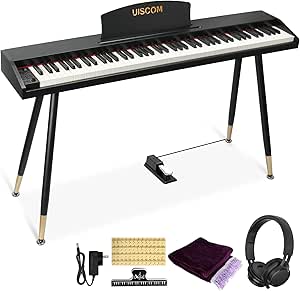 | Best for Features and Connectivity | Keys: 88 | Key type: Semi-weighted | Tones: 600 | VIEW LATEST PRICE | See Our Full Breakdown |
| Yamaha PSR-EW320 76-Key Touch-Sensitive Portable Keyboard |  | Best Mid-Range Key Count for Learning | Keys: 76 full-size touch-sensitive keys | Skill level: Beginner | Learning features: Step-by-step song lessons, Touch Tutor, and Smart Chord | VIEW LATEST PRICE | See Our Full Breakdown |
| Donner DEP-20 88-Key Weighted Digital Piano with Stand and 3-Pedal Unit | 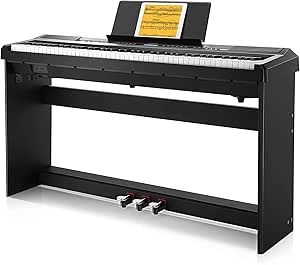 | Best for Piano-Style Key Action | Keys: 88 full-size weighted hammer-action keys | Touch response: Adjustable | Tones: 238 | VIEW LATEST PRICE | See Our Full Breakdown |
| Alesis Melody 61-Key Beginner Keyboard with Stand, Bench, Headphones, and Lessons |  | Best Lightweight Learning Bundle | Keys: 61 | Sounds: 300 | Rhythms: 300 | VIEW LATEST PRICE | See Our Full Breakdown |
| JIKADA 61-Key Portable Electronic Keyboard Piano Set with Lighted Keys |  | Best for Guided First Steps | Keys: 61 | Teaching modes: 3 | Tones and rhythms: 255 each | VIEW LATEST PRICE | See Our Full Breakdown |
| Yamaha P71 88-Key Weighted Action Digital Piano | | Best for Piano-Style Playing | Keys: 88 | Key action: Weighted hammer action | Voices: 10 | VIEW LATEST PRICE | See Our Full Breakdown |
| KUMENG 88-Key Weighted Digital Piano with Desk, USB-MIDI, and Accessories |  | Best for Sound Variety and Computer Integration | Keys: 88 full-size weighted keys | Key action: Progressive hammer action | Tones: 800 | VIEW LATEST PRICE | See Our Full Breakdown |
| UISCOM 88-Key Weighted Digital Piano with Wooden Desk and Triple Pedals |  | Best for Traditional Pedal Technique | Keys: 88 | Key action: Weighted progressive hammer action | Tones: 8 | VIEW LATEST PRICE | See Our Full Breakdown |
| RockJam RJ761 61-Key Digital Keyboard Piano Kit with Stand, Stool, Sustain Pedal, and Headphones |  | Best Complete Kit for Beginner Lessons | Keys: 61 full-size | Display: Touch display | Connectivity: 5-pin DIN MIDI and 3.5 mm audio jack | VIEW LATEST PRICE | See Our Full Breakdown |
| digital piano keyboard | Keys | Connectivity | Dimensions | Weight |
|---|---|---|---|---|
| Yamaha P-143 88-Key Weighted D | 88 | Bluetooth, USB, 3.5 mm headphone jack | 24 × 14 × 20.5 inches | 25 pounds |
| Egerget 88-Key Semi-Weighted D | 88 | Bluetooth, MIDI, USB | — | — |
| Alesis Recital Play 88-Key Por | 88 full-size, touch-sensitive | USB-MIDI, sustain pedal input, auxiliary input, headphone output | — | — |
| Yamaha PSR-E283 61-Key Portabl | 61 full-sized | Auxiliary, USB | 12.5 × 37 × 4.1 inches | 8.8 pounds |
| Yamaha P-45 88-Key Weighted Po | 88 | USB | 52.25 × 11.5 × 6 inches | 11.5 kg |
| RockJam RJ5061 61 Key Keyboard | 61 | — | 11.2 × 36.8 × 3.1 inches | 3.3 kg |
| UISCOM 88-Key Semi-Weighted Di | 88 | Bluetooth audio and USB-MIDI | 50.8 × 10.6 × 28.3 inches | — |
| Yamaha PSR-EW320 76-Key Touch- | 76 full-size touch-sensitive keys | — | 12.5 × 45.2 × 4.1 inches | 11.4 lb |
| Donner DEP-20 88-Key Weighted | 88 full-size weighted hammer-action keys | MIDI, USB, auxiliary input/output, and 6.35 mm headphone jack | 52.36 × 11.61 × 36.99 inches | 24.75 kg |
| Alesis Melody 61-Key Beginner | 61 | USB-MIDI, 1/8-inch auxiliary input, 1/8-inch headphone output, and 1/4-inch sustain input | — | 6.6 pounds |
| JIKADA 61-Key Portable Electro | 61 | 3.5 mm jack, auxiliary input/output, microphone jack, U-disk port | 36.4 × 13.4 × 3.5 inches | — |
| Yamaha P71 88-Key Weighted Act | 88 | USB and auxiliary | 52.25 × 11.5 × 6 inches | 25 lb |
| KUMENG 88-Key Weighted Digital | 88 full-size weighted keys | USB and MIDI | 12.4 × 53 × 30.3 inches | 24.49 kg |
| UISCOM 88-Key Weighted Digital | 88 | USB Type A or Type B; MIDI | — | — |
| RockJam RJ761 61-Key Digital K | 61 full-size | 5-pin DIN MIDI and 3.5 mm audio jack | 12.8 × 36.2 × 4.4 inches | 19.8 lb |
More Details on Our Top Picks
Yamaha P-143 88-Key Weighted Digital Piano Bundle with Stand and Bench
The Yamaha P-143 is the most ready-to-play choice here for someone who wants a full-range piano at home without assembling a separate furniture list. Its 88 weighted, touch-sensitive keys better support piano-style practice than the semi-weighted Egerget, while the included stand, bench, music rest, and sustain switch make setup more complete than the standalone-accessory package of the Yamaha P-45. Built-in speakers and several voices cover everyday playing, and split mode adds flexibility for practice. The tradeoff is that this is a home-oriented bundle: it needs corded power, and the 25-pound listed weight is less convenient to carry than the battery-capable Alesis Recital Play. Choose it for a furnished practice spot, not frequent travel or a large menu of learning games.
Pros:- 88 weighted, touch-sensitive keys support piano-style dynamics.
- Stand, bench, music rest, sustain foot switch, and adapter are included.
- Built-in speakers allow practice without a separate amplifier.
- Multiple voices and split mode add options beyond basic piano playing.
Cons:- Corded electric power limits use away from an outlet.
- At 25 pounds, it is less convenient to transport than the battery-capable Alesis Recital Play.
- Its included setup occupies more space than a bare portable keyboard.
Best for: Home learners who want 88 weighted keys and a stand-and-bench setup in one purchase.
Not ideal for: Players who need a battery-powered keyboard for regular travel or want extensive built-in lessons and game-based practice.
- Keys:88
- Key type:Weighted, touch-sensitive
- Features:Built-in speakers, multiple voices, split mode
- Connectivity:Bluetooth, USB, 3.5 mm headphone jack
- Power:Corded electric
- Included components:Stand, bench, music rest, sustain foot switch, AC adapter
- Weight:25 pounds
- Dimensions:24 × 14 × 20.5 inches
Our verdict“Choose the P-143 if you want a weighted 88-key home piano with the main furniture and playing accessories included.”
Egerget 88-Key Semi-Weighted Digital Piano with Stand, Built-In Speakers, Bluetooth, MIDI/USB, Sustain Pedal
The Egerget is a practical first keyboard for a learner who values a ready-made kit and device connections more than an acoustic-style key action. Its 88 semi-weighted keys provide a full note range, but feel lighter than the fully weighted Yamaha P-143 and P-45, making those Yamaha models a stronger fit for building technique aimed at acoustic piano. Egerget counters with a broad starter bundle: stand, pedal, headphones, music rest, carrying bag, and key stickers are listed, alongside Bluetooth, MIDI, and USB for lessons or recording setups. That makes it more beginner-oriented than the P-45, which focuses on piano basics. The compromise is clear: its semi-weighted action and beginner-focused feature set may feel limiting as playing ambitions grow.
Pros:- 88 keys provide a full keyboard range for beginner repertoire.
- Stand, sustain pedal, headphones, music rest, bag, and key stickers are included.
- Bluetooth, MIDI, and USB support connections to lesson and recording devices.
- Built-in speakers and included headphones offer speaker-based and private practice.
Cons:- Semi-weighted keys feel less like an acoustic piano than the Yamaha P-143 or P-45.
- The beginner-focused feature set may not satisfy more experienced players.
- The product information does not specify the number of voices or built-in practice tools.
Best for: New learners who want a full-size keyboard, basic playing accessories, and connectivity for app-based lessons.
Not ideal for: Students preparing for acoustic piano who need fully weighted keys, or experienced players seeking a more advanced piano-focused instrument.
- Keys:88
- Key type:Semi-weighted
- Skill level:Beginner
- Built-in speakers:Yes
- Connectivity:Bluetooth, MIDI, USB
- Included accessories:Stand, sustain pedal, music rest, power adapter, headphones, keyboard bag, key stickers
- Model:881+X (manufacturer part number P8)
Our verdict“Pick the Egerget for an accessory-rich beginner setup, but choose a Yamaha P-series model if weighted piano action matters more.”
Alesis Recital Play 88-Key Portable Keyboard Bundle
The Alesis Recital Play suits beginners who want built-in activities and sounds to keep practice varied. It pairs 88 full-size, touch-sensitive keys with Lesson, Record, Split, and metronome modes, plus 480 sounds, 160 rhythms, and 140 demo songs. That is a much broader practice-and-play menu than the Yamaha P-45’s 10 voices, though the P-45’s weighted hammer action is the more piano-specific choice for developing an acoustic-style touch. This Alesis bundle also includes a stand, tablet/music rest, pedal, headphones, case, and adapter. Its standout portability advantage is battery operation, unlike the cord-dependent Yamaha P-143. The tradeoffs are that its keys are not described as weighted, and its six AA batteries are not included.
Pros:- Full-size, touch-sensitive 88-key layout supports beginner practice.
- Lesson, Record, Split, and metronome modes offer structured ways to practice.
- Large library of sounds, rhythms, and demo songs supports varied playing.
- Can run from an adapter or six AA batteries and includes a carry case.
Cons:- The listed key type is not weighted, unlike the Yamaha P-45 and P-143.
- Six AA batteries are required for battery operation and are not included.
- The product data gives inconsistent wording for the headphone output size.
Best for: Beginner students who want built-in lessons and varied sounds, with the option to practice away from an outlet.
Not ideal for: Piano-focused learners who want weighted hammer action or anyone expecting battery power to be ready without buying batteries separately.
- Keys:88 full-size, touch-sensitive
- Built-in sounds:480
- Rhythms:160
- Demo songs:140
- Practice features:Split, Lesson, Record, Layer, metronome, transpose, adjustable reverb
- Connectivity:USB-MIDI, sustain pedal input, auxiliary input, headphone output
- Power:Power adapter or 6 AA batteries (not included)
- Included accessories:Adjustable stand, music/tablet stand, sustain pedal, headphones, carry case, power adapter
Our verdict“Choose the Recital Play for portable, feature-rich beginner practice; choose the P-45 instead if weighted piano action is your priority.”
Yamaha PSR-E283 61-Key Portable Keyboard for Beginners
The Yamaha PSR-E283 is the lineup’s clearest choice for a beginner who wants guided activities in a smaller, lighter instrument rather than a full piano range. Its 61 full-sized keys take less room than the 88-key Yamaha P-143, but they also leave out two octaves, which can become restrictive as repertoire expands. The PSR-E283 makes that compromise worthwhile for some learners with Quiz Mode for ear training, Smart Chord for one-finger chord playing, hundreds of songs, and recording and playback. Compared with the Alesis Recital Play, it offers fewer keys and does not list the same broad sound-and-rhythm counts, but its learning tools are especially approachable. It can use an adapter or batteries; it is not a substitute for weighted-key piano practice.
Pros:- 61 full-sized keys keep the instrument more compact than 88-key options.
- Quiz Mode supports ear-training practice.
- Smart Chord lets beginners play chords with one finger.
- Hundreds of songs and record-and-playback functions support self-guided practice.
Cons:- The 61-key range is more limiting for advanced repertoire than the 88-key Alesis Recital Play.
- Keys are not listed as weighted, so the instrument is less suited to piano-action training.
- It requires an AC adapter or batteries for power.
Best for: Younger beginners or casual learners who need a compact keyboard with built-in ear-training and simple chord tools.
Not ideal for: Students practicing full-range piano pieces or learners who want 88 weighted keys for acoustic-piano technique.
- Keys:61 full-sized
- Skill level:Beginner
- Learning features:Quiz Mode, Smart Chord, recording and playback
- Built-in songs:Hundreds
- Connectivity:Auxiliary, USB
- Power:AC adapter or batteries
- Weight:8.8 pounds
- Dimensions:12.5 × 37 × 4.1 inches
Our verdict“Choose the PSR-E283 for compact, guided beginner learning, not for full-range or weighted-key piano study.”
Yamaha P-45 88-Key Weighted Portable Digital Piano
The Yamaha P-45 is the piano-first pick for buyers who want 88 weighted hammer-action keys without the larger accessory package included with the P-143. Its touch-sensitive action is a closer match for acoustic-piano technique than the semi-weighted Egerget or the unspecified-weight action on the Alesis Recital Play. The P-45 keeps its feature list focused: 10 voices include a Yamaha grand piano sound, and built-in speakers, a headphone jack, USB, sustain foot switch, and music rest cover the essentials for home practice. Compared with the P-143 bundle, however, it does not list a stand or bench, and its USB-only listed connectivity is narrower than the P-143’s Bluetooth and USB. It also needs an AC adapter, so portability means moving the instrument, not playing without mains power.
Pros:- 88 weighted hammer-action keys support acoustic-piano-style technique.
- Includes a Yamaha grand piano voice among 10 instrument voices.
- Built-in speakers and a 3.5 mm headphone jack accommodate different practice settings.
- Sustain foot switch and music rest are included.
Cons:- A stand and bench are not listed among the included components, unlike the P-143 bundle.
- Requires an AC adapter for power.
- USB is the only listed connectivity, with no Bluetooth listed.
Best for: Learners and returning players who prioritize weighted hammer-action keys and straightforward piano practice over a full accessory bundle.
Not ideal for: Buyers who need a stand and bench included, wireless connectivity, or battery-powered playing.
- Keys:88
- Key action:Weighted, hammer action
- Voices:10
- Connectivity:USB
- Audio:Built-in speakers, 3.5 mm headphone jack
- Included components:AC adapter, sustain foot switch, music rest, owner’s manual
- Weight:11.5 kg
- Dimensions:52.25 × 11.5 × 6 inches
Our verdict“Choose the P-45 for a focused, weighted-key piano experience, and the P-143 if you want a stand and bench in the package.”
RockJam RJ5061 61 Key Keyboard Piano Kit with Stand, Bench & Headphones
The RockJam RJ5061 makes starting at home straightforward by bundling the keyboard with a stand, padded bench, headphones, note stickers, and access to Simply Piano lessons. Its 61 keys keep the setup lighter and more compact than the full-size Donner DEP-20, though they offer less range and do not provide its weighted hammer action. The LED panel’s 200 tones and 200 rhythms give beginners plenty of sounds to explore, while the pitch-bend wheel adds expressive control beyond a basic practice keyboard. Headphones support quiet sessions in shared rooms. The tradeoff is limited connectivity: the listed options do not include Bluetooth or wireless support, so buyers seeking broad device connections may prefer the Yamaha PSR-EW320 or Alesis Melody.
Pros:- Includes stand, padded bench, headphones, note stickers, and Simply Piano lesson access.
- LED panel provides 200 tones, 200 rhythms, and demo songs for varied practice.
- Pitch-bend wheel adds expressive control.
- Headphones make quiet practice easier in shared homes.
Cons:- The 61-key range is more limited than the 76-key Yamaha PSR-EW320 and 88-key models.
- Connectivity is limited, with no Bluetooth or wireless support listed.
- The supplied details do not specify weighted or touch-sensitive keys.
Best for: First-time players who want a ready-to-use home setup with a bench, stand, headphones, and included lesson access.
Not ideal for: Players learning full-range piano repertoire or seeking weighted keys and modern wireless connectivity.
- Keys:61
- Skill level:Beginner
- Panel features:200 rhythms, 200 tones, and demo songs
- Expressive control:Pitch-bend wheel
- Headphone connection:3.5 mm jack
- Included items:Keyboard, stand, bench, headphones, note stickers, and Simply Piano lessons
- Weight:3.3 kg
- Dimensions:11.2 × 36.8 × 3.1 inches
Our verdict“Choose the RockJam RJ5061 if a bundled beginner setup matters more than full-range keys or extensive connectivity.”
UISCOM 88-Key Semi-Weighted Digital Piano Keyboard with Wooden Stand
The UISCOM URS25 pairs a full 88-key layout with a broad set of sounds, rhythms, and practice tools, making it more feature-rich than the 61-key RockJam RJ5061 and Alesis Melody. Its Bluetooth audio and USB-MIDI connections support play-along audio and links to compatible software, while recording and playback give learners a way to review practice. The included wooden stand, pedal, headphones, and cover make this a substantial home package. Its key feel is the main compromise: semi-weighted keys are lighter than the hammer-action keys on the Donner DEP-20, so it is less suited to players prioritizing an acoustic-piano-like touch. App and software compatibility can also vary, and the large, corded setup is better suited to a fixed practice space than frequent transport.
Pros:- Full 88-key layout covers a wider repertoire than the 61-key RockJam RJ5061 and Alesis Melody.
- Bluetooth audio and USB-MIDI support compatible devices and music software.
- Includes a wooden stand, pedal, headphones, cover, and other practice accessories.
- Recording, playback, metronome, and extensive tone and rhythm selections support varied practice.
Cons:- Semi-weighted keys have a lighter feel than the Donner DEP-20’s hammer-action keys.
- USB-MIDI compatibility with apps and software may vary.
- Its full-size, corded setup is less convenient to move than compact portable keyboards.
Best for: Home learners who want all 88 keys, plentiful accompaniment options, Bluetooth audio, and USB-MIDI in one stand-based setup.
Not ideal for: Players focused on realistic weighted piano action, frequent portability, or guaranteed compatibility with a particular learning app.
- Keys:88
- Key type:Semi-weighted
- Tones:600
- Rhythms:800
- Demo songs:80
- Connectivity:Bluetooth audio and USB-MIDI
- Included components:Wooden stand, power adapter, music stand, pedal, headphones, piano cover, music clips, and key stickers
- Dimensions:50.8 × 10.6 × 28.3 inches
Our verdict“Pick the UISCOM URS25 for a well-equipped full-size practice station if connectivity and sound variety matter more than hammer-action feel.”
Yamaha PSR-EW320 76-Key Touch-Sensitive Portable Keyboard
The Yamaha PSR-EW320 sits between compact 61-key starter boards and full-size 88-key digital pianos: its 76 full-size, touch-sensitive keys give developing players more range without committing to the larger footprint of the Donner DEP-20. Touch response lets playing dynamics shape the sound, while step-by-step lessons, Touch Tutor, and Smart Chord add structured practice support. That combination makes it a more focused learning choice than the RockJam RJ5061, whose appeal leans more on its bundled stand, bench, and headphones. The PSR-EW320 includes a music rest and power adapter, but no bench or stand is listed. It can run on batteries or mains power, though batteries are not included, and the listed headphone jack is 6.35 mm, so check your headphones’ plug before buying.
Pros:- 76 full-size touch-sensitive keys offer more range than the RockJam RJ5061 and Alesis Melody.
- Step-by-step lessons, Touch Tutor, and Smart Chord provide built-in learning support.
- Can run from mains power or batteries for flexible placement.
- Includes a music rest, power adapter, and learning materials.
Cons:- It has fewer keys than the full-size UISCOM URS25 and Donner DEP-20.
- Batteries are not listed among the included components.
- The 6.35 mm headphone jack may require an adapter for headphones with a smaller plug.
Best for: Beginner or intermediate players who want touch-sensitive keys and extra range beyond 61 keys in a portable keyboard.
Not ideal for: Buyers who need a full 88-key piano, weighted action, or a bundled stand and bench.
- Keys:76 full-size touch-sensitive keys
- Skill level:Beginner
- Learning features:Step-by-step song lessons, Touch Tutor, and Smart Chord
- Headphone jack:6.35 mm
- Power source:Corded electric or battery powered
- Weight:11.4 lb
- Dimensions:12.5 × 45.2 × 4.1 inches
- Included components:Power adapter, music rest, and learning materials
Our verdict“Choose the PSR-EW320 if you want touch-sensitive keys and a broader range than 61 keys without moving to an 88-key instrument.”
Donner DEP-20 88-Key Weighted Digital Piano with Stand and 3-Pedal Unit
For buyers who care most about piano-style playing feel, the Donner DEP-20 has a clear advantage over the semi-weighted UISCOM URS25 and the unweighted key details listed for the 61-key RockJam RJ5061: it uses 88 full-size hammer-action keys with adjustable touch response. The full range and included three-pedal unit suit learners building technique and repertoire at home. Its 238 tones, 128-note polyphony, backlit LCD, MIDI recording, and MP3 player add useful practice and performance options, while two 25-watt amplifiers are specified. That capability comes with a substantial footprint and a 24.75 kg weight, making it far less convenient to move than the Yamaha PSR-EW320. Its feature set also asks for more space than a compact starter kit, so it fits a dedicated practice area better than a shared, frequently rearranged room.
Pros:- 88 full-size hammer-action keys provide a more piano-like touch than the UISCOM URS25’s semi-weighted keys.
- Adjustable touch response supports different playing preferences.
- Furniture stand and three-pedal unit are included.
- MIDI recording, MP3 playback, backlit LCD, and two 25-watt amplifiers add practice and playback options.
Cons:- At 24.75 kg, it is much harder to move than the Yamaha PSR-EW320 or 61-key starter keyboards.
- Its full-size dimensions require a dedicated area for the instrument and stand.
- The electric power source limits use away from a suitable outlet.
Best for: Learners developing piano technique who want 88 hammer-action keys, a three-pedal unit, and a permanent home practice setup.
Not ideal for: Musicians who need a lightweight portable keyboard or buyers with limited space for a full-size stand setup.
- Keys:88 full-size weighted hammer-action keys
- Touch response:Adjustable
- Tones:238
- Maximum polyphony:128 notes
- Amplifiers:Two 25 W amplifiers
- Connectivity:MIDI, USB, auxiliary input/output, and 6.35 mm headphone jack
- Included components:Furniture stand, three-pedal unit, and control panel
- Weight:24.75 kg
- Dimensions:52.36 × 11.61 × 36.99 inches
Our verdict“Choose the DEP-20 for a home setup centered on full-range hammer-action keys and pedals, not for frequent transport.”
Alesis Melody 61-Key Beginner Keyboard with Stand, Bench, Headphones, and Lessons
The Alesis Melody is a compact 61-key learning bundle with stand, bench, headphones, music rest, and power adapter, making it an easy home starter setup that can also be moved around at 6.6 pounds. Compared with the RockJam RJ5061, it offers USB-MIDI connectivity, 300 sounds and rhythms, and Skoove and Melodics lesson subscriptions; the RockJam instead includes note stickers and Simply Piano access. Split Mode can help a beginner play alongside a teacher, while the metronome and demo songs support routine practice. The main limitation is the keybed: the product details do not say whether the keys are weighted, and 61 keys provide less range than the Yamaha PSR-EW320’s 76. Optional battery operation adds flexibility, but batteries are sold separately.
Pros:- Includes a stand, bench, headphones, music rest, and power adapter.
- USB-MIDI supports connection to compatible music software and devices.
- 300 sounds, 300 rhythms, 30 demo songs, metronome, and Split Mode support varied practice.
- At 6.6 pounds, it is easier to reposition than the full-size Donner DEP-20.
Cons:- The 61-key layout has less range than the 76-key Yamaha PSR-EW320 and 88-key models.
- The product details do not specify whether the keys are weighted.
- Batteries for optional battery-powered use are sold separately.
Best for: New players who want a lightweight 61-key bundle with lesson access, USB-MIDI, and accessories for home or occasional travel.
Not ideal for: Players who need weighted keys, a wider playing range, or battery operation without buying extra batteries.
- Keys:61
- Sounds:300
- Rhythms:300
- Demo songs:30
- Learning features:Metronome, Split Mode, Skoove and Melodics subscriptions
- Connectivity:USB-MIDI, 1/8-inch auxiliary input, 1/8-inch headphone output, and 1/4-inch sustain input
- Power source:Corded electric or batteries sold separately
- Included accessories:Stand, bench, headphones, music rest, and power adapter
- Weight:6.6 pounds
Our verdict“Pick the Alesis Melody for a portable, lesson-focused beginner bundle if 61 keys and unspecified key weighting meet your needs.”
JIKADA 61-Key Portable Electronic Keyboard Piano Set with Lighted Keys
The JIKADA makes the most sense for beginners who want visual prompts and a ready-to-play kit rather than a piano-style keybed. Lighted keys and three teaching modes give new players a structured way to follow practice, while recording and playback can help them listen back to short pieces. Its 255 tones and rhythms offer more variety than the Yamaha P71, but that Yamaha is the stronger choice for someone focused on developing an acoustic-piano touch: it has 88 weighted keys, while the JIKADA has 61 standard keys. The included stand, stool, headphones, and microphone reduce the need to source basic accessories separately. The tradeoff is a broad feature set aimed at exploration, not a weighted piano feel. It also needs corded power and is listed for ages 12 and up.
Pros:- Lighted keys and three teaching modes support guided practice.
- Includes 255 tones, 255 rhythms, and 50 demo songs for sound variety.
- Recording, playback, and status memory add useful practice functions.
- Bundle includes a stand, stool, headphones, microphone, and music rest.
Cons:- 61 keys do not provide the range of a full-size 88-key digital piano.
- No weighted action is listed, so it is less suited to building acoustic-piano technique.
- Corded power limits where it can be played.
Best for: Beginners aged 12 or older who want light-guided lessons, varied sounds, and a bundled stand and stool.
Not ideal for: Piano students preparing for an 88-key weighted instrument, or anyone who needs a battery-powered keyboard.
- Keys:61
- Teaching modes:3
- Tones and rhythms:255 each
- Demo songs:50
- Display:LCD
- Speakers:2 built-in stereo speakers
- Connectivity:3.5 mm jack, auxiliary input/output, microphone jack, U-disk port
- Power:Corded electric
- Dimensions:36.4 × 13.4 × 3.5 inches
Our verdict“Choose the JIKADA for light-guided beginner practice and a generous accessory bundle, not for weighted-key piano training.”
Yamaha P71 88-Key Weighted Action Digital Piano
The Yamaha P71 earns its place by prioritizing the feel and layout of a traditional piano over a large sound library. Its 88 weighted hammer-action keys give players the full range and resistance needed for piano repertoire, a clear contrast with the 61-key JIKADA and RockJam RJ761. The P71 offers just 10 voices, but Dual Mode lets players layer two sounds without turning the instrument into a menu-heavy arranger. Built-in speakers make it usable without extra amplification, and the included sustain pedal covers a basic part of piano practice. Compared with the KUMENG, the P71 is much lighter and simpler, though the KUMENG adds USB/MIDI and a desk-style cabinet. The P71’s main limits are its narrow feature set and lack of MIDI connectivity; its 25-pound weight also makes frequent carrying less convenient.
Pros:- Full 88-key layout with weighted, hammer-action keys.
- Dual Mode layers two of its 10 voices for added tonal options.
- Built-in speakers and a headphone jack support shared-room and quiet practice.
- Includes a sustain pedal and power supply.
Cons:- No MIDI connectivity is listed.
- Ten voices offer less sound variety than the KUMENG’s 800 tones.
- At 25 pounds, it is less convenient to move frequently than a compact 61-key keyboard.
Best for: Learners and returning players who want a straightforward 88-key weighted piano for home practice.
Not ideal for: Buyers who want extensive tones, MIDI computer integration, or a keyboard that is easy to carry often.
- Keys:88
- Key action:Weighted hammer action
- Voices:10
- Sound mode:Dual Mode
- Connectivity:USB and auxiliary
- Headphone jack:3.5 mm
- Included components:Sustain pedal and power supply
- Weight:25 lb
- Dimensions:52.25 × 11.5 × 6 inches
Our verdict“Pick the P71 if a full weighted piano layout matters more than extensive sounds or computer connectivity.”
KUMENG 88-Key Weighted Digital Piano with Desk, USB-MIDI, and Accessories
The KUMENG pairs a full 88-key progressive hammer-action layout with an unusually broad selection of 800 tones, making it a more flexible sound-playground than the simpler Yamaha P71. Its 128-note polyphony gives layered or sustained passages room to ring, while USB/MIDI and recording support computer-based music work. The cabinet is another point of difference: it converts into a desk, with portable legs and a flip key cover, so it can serve a room in more than one way. That furniture-like setup comes with a real mobility cost, however: at 24.49 kg, this is not a keyboard to move around casually. The P71 is substantially lighter and more focused on straightforward piano practice; the KUMENG fits buyers who value tones, connectivity, and a cabinet setup. Corded power also limits placement.
Pros:- 88 full-size weighted keys with progressive hammer action.
- 800 tones and 128-note polyphony support varied sounds and sustained passages.
- USB/MIDI connectivity supports computer integration.
- Desk-convertible cabinet includes portable legs and a flip key cover.
Cons:- At 24.49 kg, the cabinet makes frequent relocation difficult.
- Corded power restricts placement away from an outlet.
- Its many tones and cabinet functions may be more than a piano-only learner needs.
Best for: Home players who want weighted keys, many selectable sounds, MIDI connection, and a desk-style cabinet in one instrument.
Not ideal for: Musicians who need a lightweight portable piano or prefer a simple, piano-first control layout.
- Keys:88 full-size weighted keys
- Key action:Progressive hammer action
- Tones:800
- Polyphony:128 notes
- Connectivity:USB and MIDI
- Headphone jack:3.5 mm
- Compatible operating systems:Windows, macOS, Linux
- Weight:24.49 kg
- Dimensions:12.4 × 53 × 30.3 inches
Our verdict“Choose the KUMENG for a feature-rich, computer-connected home setup, provided its heavy cabinet can stay mostly in one place.”
UISCOM 88-Key Weighted Digital Piano with Wooden Desk and Triple Pedals
The UISCOM stands apart from the Yamaha P71 by putting a triple-pedal unit at the center of its appeal. Sustain, sostenuto, and soft-pedal functions give developing pianists access to more traditional pedal techniques than a basic sustain pedal alone. It also has 88 weighted keys with progressive hammer action, plus tone layering, recording, playback, and adjustable reverb, chorus, and tempo. The tradeoff is a deliberately smaller palette: eight tones and 40 demo songs make it less versatile for sound exploration than the KUMENG’s 800 tones. Its wooden desk design can convert between desk and vanity, but the supplied data does not list weight, so buyers should not assume it is easy to relocate. The 6.35 mm headphone jack may also require an adapter for headphones with a smaller plug.
Pros:- 88 weighted keys with progressive hammer action.
- Triple pedals provide sustain, sostenuto, and soft-pedal functions.
- Recording, playback, tone layering, and adjustable effects support practice and customization.
- MIDI and USB playback offer ways to connect external devices.
Cons:- Eight tones provide less variety than the KUMENG’s 800-tone library.
- Requires corded electric power.
- The 6.35 mm headphone jack may need an adapter for common 3.5 mm headphones.
Best for: Home pianists who want a full weighted keyboard and three pedal functions for practicing traditional piano technique.
Not ideal for: Players seeking a broad sound library, a compact portable setup, or headphones that plug directly into a 3.5 mm jack.
- Keys:88
- Key action:Weighted progressive hammer action
- Tones:8
- Demo songs:40
- Pedals:Sustain, sostenuto, soft
- Connectivity:USB Type A or Type B; MIDI
- Headphone jack:6.35 mm
- Power:Corded electric
- Supported operating systems:Windows, macOS, Linux
Our verdict“Choose the UISCOM if triple-pedal practice matters more than a large sound selection or portable placement.”
RockJam RJ761 61-Key Digital Keyboard Piano Kit with Stand, Stool, Sustain Pedal, and Headphones
The RockJam RJ761 is the more lesson-oriented 61-key choice here: it combines a touch display, keynote stickers, and Simply Piano lessons with the practical basics of a stand, padded stool, headphones, and sustain pedal. That makes it a more guided starter kit than the Yamaha P71, which offers 88 weighted keys but a simpler, piano-centered feature set. The RJ761 also lists 5-pin DIN MIDI, giving it a connection option not listed for the P71. In exchange, its 61-key layout cannot cover the full range of an 88-key piano, and no weighted action is specified. Its 19.8-pound weight is manageable for occasional moves, but corded power still ties it to an outlet. This is best viewed as a supported entry point, not a substitute for a full weighted digital piano.
Pros:- Kit includes an adjustable stand, padded stool, headphones, and sustain pedal.
- Simply Piano lessons and keynote stickers offer beginner practice support.
- Touch display provides access to tones, rhythms, and functions.
- 5-pin DIN MIDI and a 3.5 mm audio jack provide connection options.
Cons:- The 61-key layout has less range than the Yamaha P71’s 88 keys.
- Weighted key action is not specified.
- Corded power limits use away from an outlet.
Best for: New players who want a bundled stand, stool, headphones, sustain pedal, and app-based lesson support.
Not ideal for: Piano students who need 88 weighted keys for full-range repertoire or want a more piano-like key action.
- Keys:61 full-size
- Display:Touch display
- Connectivity:5-pin DIN MIDI and 3.5 mm audio jack
- Included components:Stand, stool, headphones, sustain pedal, keynote stickers, sheet music stand
- Features:Built-in speaker, compact design, digital display, headphone jack
- Power:Corded electric
- Weight:19.8 lb
- Dimensions:12.8 × 36.2 × 4.4 inches
- Color:Black
Our verdict“Choose the RJ761 for a lesson-supported beginner kit with useful included accessories, but move to an 88-key weighted model for serious piano study.”
How We Picked
I compared these digital piano keyboards by the factors that most affect daily use: key count and action, ease of setup, portability, learning and connection features, and the practical value of included accessories. For players focused on piano technique, I gave more weight to a full 88-key layout and weighted action than to a long feature list. For beginner-focused models, I looked at whether their size, bundled learning aids, and straightforward controls make a first instrument easier to use.
The order reflects fit across common buyer needs, not a claim that one design suits everyone. The Yamaha P-143 ranks first for its balance of full-size weighted keys and useful bundle contents. Other weighted Yamaha models and the Donner DEP-20 follow for piano-oriented practice, while lighter 61- and 76-key options rank higher for portability, introductory lessons, or specific features. Bundle contents, connectivity, and furniture can add convenience, but they do not outweigh action and layout when the main goal is learning piano.
Factors to Consider When Choosing Digital Piano Keyboards
Before choosing among these keyboards, decide what kind of playing you want the instrument to support. The biggest differences are not simply brand or accessory count; they are how the keys feel, how much range you have, and whether the instrument suits your room and practice routine.
Choose Key Action for Your Playing Goal
Weighted keys are the closer fit for piano technique because they provide more resistance than typical lightweight keyboard keys. That feel can help players practice control and dynamics, though it may take more effort for young beginners or casual players. Semi-weighted designs offer a compromise, but they do not feel identical to a weighted piano action. If you are unsure, decide whether the keyboard will mainly support piano lessons or general music-making. Avoid choosing by the word “weighted” alone; compare the maker’s description of action and, where possible, try similar actions in person. A simpler weighted model can be a better learning tool than a feature-rich keyboard with keys that do not suit your goals.
Match Key Count to Music and Room
An 88-key layout provides the full standard piano range, which matters for advanced pieces and lessons that use the entire keyboard. A 76-key instrument cuts some range while remaining less imposing, and a 61-key model can be easier to place in a small room or carry between locations. New players often assume fewer keys will be a problem immediately, but the limitation depends on the music they plan to learn. Check the space available for both the keyboard and its stand, including room to sit comfortably and reach pedals. Consider how often you will move it: a keyboard that is technically portable may still be awkward once its stand and accessories are added. Choose enough keys for your intended repertoire without letting unused range dictate the whole purchase.
Separate Piano Practice from Keyboard Features
Extra sounds, lesson aids, and connectivity serve different purposes, so decide which will actually support your routine. MIDI or USB connections can link a keyboard to music software, while Bluetooth can make compatible wireless connections more convenient; check exactly what each connection supports before relying on it. Lighted keys may offer a visual learning cue, but they are not a substitute for reading notation or developing hand coordination. A beginner keyboard with many built-in functions can feel engaging, yet extra controls may go unused if your goal is traditional piano lessons. Conversely, a straightforward piano may feel limiting if you want to explore accompaniment or connect to apps. Prioritize the feature that solves a real practice need rather than treating a longer feature list as better.
Evaluate Bundles by What You Will Use
A stand, bench, pedal, and headphones can make setup easier, but bundle value depends on fit and usefulness. Check whether the stand is stable and adjustable enough for the intended player, and whether the bench height supports a comfortable playing posture. A bundled sustain pedal may be adequate for starting, while players advancing in piano repertoire may want a more piano-like pedal setup. Desk-style furniture can create a permanent practice station, but it takes more space and may be less convenient to move. Do not count accessories as an advantage if you already own suitable ones or plan to replace them. Compare the complete setup with the instrument alone, including what would need to be added later.
Plan for Sound, Headphones, and Shared Spaces
Built-in speakers are convenient for everyday practice, but their usefulness depends on the room and how loudly you need to play. Headphone support matters in shared homes, though the connection type and headphone compatibility deserve a quick check before purchase. A keyboard’s speakers and sound output should be judged as part of the full setup, not as a proxy for key feel. If you plan to connect external speakers, confirm the available audio outputs rather than assuming every model supports the same setup. Think about where the instrument will sit and whether cables, power access, and a music stand will be within reach. A quieter, well-positioned practice station may matter more to consistent use than adding another sound or accessory.
Frequently Asked Questions
Should I choose an 88-key weighted keyboard if I am a complete beginner?
Choose one if your aim is to learn piano technique and play standard piano repertoire; the full range and heavier action provide a more piano-oriented starting point. It is not mandatory for every beginner, especially if space, portability, or a younger player’s comfort matters more. A 61-key keyboard can work well for introductory lessons and simple songs, but some music will outgrow its range. Also think about whether the player can comfortably reach and press the keys. The best first instrument is the one that supports the lessons and practice habits you expect to maintain.
Is a semi-weighted keyboard a good substitute for a weighted digital piano?
Semi-weighted keys can be a useful middle ground for casual playing or buyers who want a less resistant feel. They are not a direct substitute if your priority is developing the touch used on an acoustic piano. The difference may matter more as a player works on control, dynamics, and repertoire that calls for varied touch. If piano lessons are the main plan, a weighted model is the safer match among this roundup’s options. If the keyboard will serve several general music uses, semi-weighted action may be a reasonable compromise.
Does a bundled stand and bench make a keyboard a better buy?
A bundle is useful when it supplies furniture you need and makes it easier to start practicing right away. It is less compelling if the stand is unstable, the bench does not suit the player, or you already own compatible equipment. Check the setup’s height and stability, since posture affects comfort during longer sessions. Larger desk-style packages can be convenient for a dedicated home station but may take up more room and be harder to relocate. Judge the instrument and the accessories separately before treating the bundle as a deciding factor.
Will 61 keys be enough for lessons, or should I get 76 or 88?
Many early lessons and simple songs can be played on 61 keys, so a compact model can be a practical starting point. The limitation appears when lesson material or repertoire uses notes outside that range. A 76-key keyboard offers more room while remaining shorter than a full-size instrument, making it a useful compromise for some homes. An 88-key model is the most straightforward choice for a long-term piano-learning setup. Ask the teacher which keyboard range their method expects before buying, especially if lessons are about to begin.
Are Bluetooth or lighted keys more useful for learning?
They address different learning preferences, rather than serving as interchangeable advantages. Bluetooth can help connect compatible devices for audio or practice tools, but its functions vary by model, so verify the intended connection before relying on it. Lighted keys provide a visual cue for following notes, which some beginners may find helpful at first. Neither feature replaces regular practice, listening, or learning how notes relate across the keyboard. If your priority is piano technique, key action and range should usually come before either feature.
Conclusion
For the best overall balance, I recommend the Yamaha P-143, particularly for home players who want 88 weighted keys and a practical stand-and-bench package. The Yamaha P-45 is a strong choice for buyers who want a more straightforward weighted piano, while the Yamaha P71 suits those seeking a similarly piano-focused format. For best value in a piano-oriented setup, compare the Donner DEP-20’s weighted keys and three-pedal unit with the furniture and accessories you actually need. Beginners who prefer a lighter, simpler starting point can look at the Yamaha PSR-E283 or Alesis Melody 61-Key bundle; players wanting a broader portable range should consider the PSR-EW320. For connected practice, the Egerget’s Bluetooth and MIDI/USB features stand out, while the JIKADA’s lighted keys target guided learning. Choose by the action, key range, and setup you will use consistently—not by the size of the bundle alone.