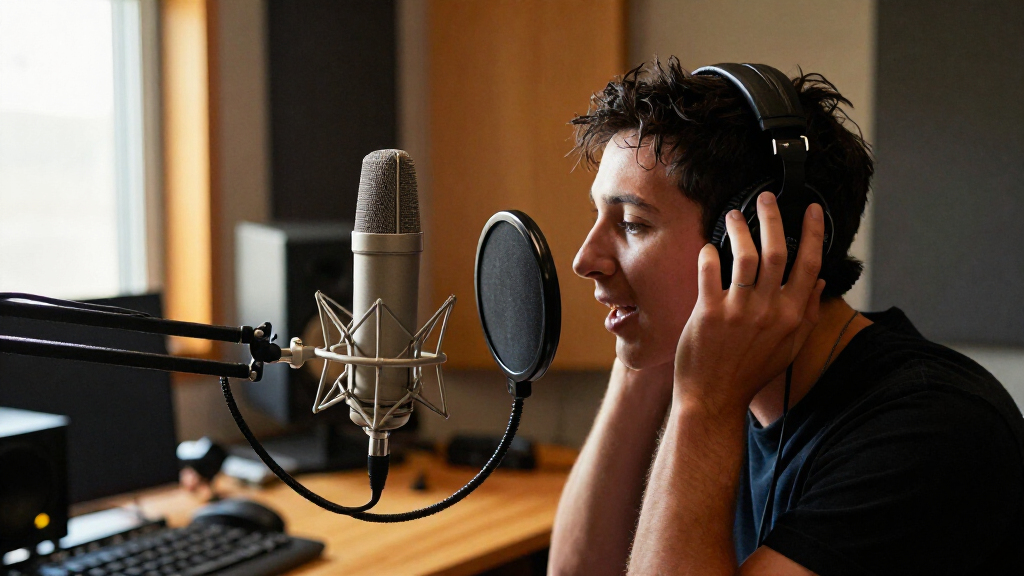
For most home studios, the RØDE NT1 5th Gen is the strongest all-around choice because it offers both XLR and USB-C connections, while the Audio-Technica AT2020 is a straightforward XLR pick and the Sennheiser Profile suits USB-only recording. Choosing between studio condenser microphones means weighing connection flexibility, room noise, included accessories, and how much control you want over your recording chain. XLR models call for an audio interface and phantom power, while USB models simplify setup but give you fewer upgrade paths. This roundup compares 15 options across those tradeoffs, including budget kits and several NT1 variants. Continue reading for the full breakdown and recommendations by recording setup.

Get audio and creator gear delivered free with Prime
- Fast, free delivery on millions of items
- Prime Video, Amazon Music and more included
- Member-only deals all year
Complete the kit


Key Takeaways
The RØDE NT1 5th Gen stands apart for connection flexibility: its XLR and USB-C options can suit both interface-based studios and simpler direct-to-computer recording.
The AT2020 and AKG P120 are focused XLR choices: they make more sense for buyers building around an audio interface than for anyone seeking a complete USB setup.
USB kits trade upgrade flexibility for convenience: the MAONO A04 Gen2, Sennheiser Profile, and FIFINE T669 reduce setup friction, but their appeal depends on the included connection and controls matching your workflow.
Included accessories change the starting point, not the room acoustics: boom arms, pop filters, and isolation shields can help with placement and plosives, but they cannot remove room reflections or background noise.
Several entries are variants rather than distinct microphone designs: the NT1 Signature Series appears in multiple colors, while the NT1 5th Gen appears in more than one finish; compare the generation and connection features before choosing by appearance.
| Audio-Technica AT2020 Cardioid Condenser XLR Studio Microphone |  | Best Overall for a First XLR Studio Mic | Microphone type: Condenser | Polar pattern: Cardioid (unidirectional) | Connectivity: Wired XLR; integral 3-pin XLRM | VIEW LATEST PRICE | See Our Full Breakdown |
| RØDE NT1 Signature Series Studio Condenser Microphone, Red |  | Best for Quiet, Detailed Vocal Recording | Microphone type: Large-diaphragm condenser | Capsule: HF6 1-inch true condenser | Polar pattern: Cardioid (unidirectional) | VIEW LATEST PRICE | See Our Full Breakdown |
| AKG Pro Audio P120 Cardioid Condenser Microphone |  | Best for Loud or Bass-Heavy Sources | Microphone type: Condenser | Polar pattern: Cardioid (unidirectional) | Frequency response: 20 Hz–20 kHz | VIEW LATEST PRICE | See Our Full Breakdown |
| MAONO A04 Gen2 USB/XLR Condenser Microphone Kit |  | Best for USB-to-XLR Flexibility | Microphone type: Studio condenser | Polar pattern: Cardioid | Capsule size: 16 mm | VIEW LATEST PRICE | See Our Full Breakdown |
| Mackie EM-91C EleMent Series Large-Diaphragm Condenser Microphone |  | Best Simple Vocal-and-Instrument Kit | Microphone type: Large-diaphragm condenser | Polar pattern: Cardioid, unidirectional | Connectivity: XLR | VIEW LATEST PRICE | See Our Full Breakdown |
| Shure SM4 XLR Studio Condenser Microphone Kit |  | Best for RF-Prone Recording Spaces | Connectivity: XLR | Capsule: 1-inch brass dual-diaphragm | Polar pattern: Cardioid | VIEW LATEST PRICE | See Our Full Breakdown |
| RØDE NT1 Signature Series Studio Condenser Microphone, White |  | Best for Low-Noise Vocal Recording | Microphone type: Large-diaphragm condenser | Capsule: HF6, 1-inch true condenser | Polar pattern: Cardioid | VIEW LATEST PRICE | See Our Full Breakdown |
| Tascam TM-80 Large-Diaphragm Condenser Microphone, Silver |  | Best for a Simple Home-Recording Setup | Microphone type: Condenser | Diaphragm: 18 mm aluminum | Polar pattern: Cardioid | VIEW LATEST PRICE | See Our Full Breakdown |
| Dejasound DJM5 USB Condenser Microphone Kit with Isolation Shield and Pop Filter |  | Best All-in-One USB Creator Kit | Connectivity: USB Type-B; 3.5 mm jack | Microphone type: Large-diaphragm condenser | Polar pattern: Listed as hypercardioid in specifications and cardioid in description | VIEW LATEST PRICE | See Our Full Breakdown |
| MAONO PM320S XLR Condenser Microphone Kit with Boom Arm and Pop Filter | 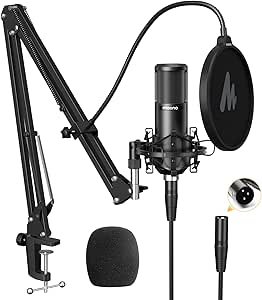 | Best XLR Starter Kit with Boom Arm | Connectivity: XLR | Capsule size: 16 mm | Polar pattern: Cardioid | VIEW LATEST PRICE | See Our Full Breakdown |
| RØDE NT1 5th Gen Large-Diaphragm Condenser Microphone with XLR and USB-C, Black |  | Best for Flexible Recording Setups | Microphone type: Large-diaphragm cardioid condenser | Connectivity: USB-C and XLR | Polar pattern: Unidirectional | VIEW LATEST PRICE | See Our Full Breakdown |
| Sennheiser Profile USB Cardioid Condenser Microphone with Table Stand |  | Best for Simple Voice Recording | Microphone type: Cardioid condenser | Connectivity: USB-C | Polar pattern: Unidirectional | VIEW LATEST PRICE | See Our Full Breakdown |
| FIFINE T669 USB Condenser Microphone Kit with Adjustable Boom Arm |  | Best Complete Desk Kit | Microphone type: USB condenser | Connectivity: USB Type-A and USB Type-C connectors | Polar pattern: Unidirectional | VIEW LATEST PRICE | See Our Full Breakdown |
| RØDE NT1 5th Generation Studio Condenser Microphone with XLR and USB-C, Silver |  | Best for High-Resolution Hybrid Recording | Microphone type: Large-diaphragm condenser | Connectivity: XLR and USB-C | Polar pattern: Cardioid (unidirectional) | VIEW LATEST PRICE | See Our Full Breakdown |
| RØDE NT1 Signature Series Studio Condenser Microphone, Black |  | Best XLR Studio Pick | Microphone type: Large-diaphragm condenser | Capsule: HF6 1-inch true condenser | Connectivity: XLR | VIEW LATEST PRICE | See Our Full Breakdown |
| studio condenser microphone | Polar pattern | Connectivity | Microphone type | Included accessories |
|---|---|---|---|---|
| Audio-Technica AT2020 Cardioid | Cardioid (unidirectional) | Wired XLR; integral 3-pin XLRM | Condenser | Stand mount, threaded adapter, soft protective pouch |
| RØDE NT1 Signature Series Stud | Cardioid (unidirectional) | XLR | Large-diaphragm condenser | Shock mount, pop filter, XLR cable |
| AKG Pro Audio P120 Cardioid Co | Cardioid (unidirectional) | — | Condenser | — |
| MAONO A04 Gen2 USB/XLR Condens | Cardioid | USB, USB Type-C, XLR | Studio condenser | Scissor arm, shock mount, pop filter, foam windscreen, boom arm base, USB cable |
| Mackie EM-91C EleMent Series L | Cardioid, unidirectional | XLR | Large-diaphragm condenser | Shock mount and XLR cable |
| Shure SM4 XLR Studio Condenser | Cardioid | XLR | — | Magnetic pop filter, shock mount, brass stand adapter, zippered carrying case |
| RØDE NT1 Signature Series Stud | Cardioid | XLR | Large-diaphragm condenser | SM6 shock mount, pop filter, 6 m XLR cable, dust cover |
| Tascam TM-80 Large-Diaphragm C | Cardioid | Wired XLR | Condenser | Tabletop stand, 6-foot XLR cable, elastic shock mount |
| Dejasound DJM5 USB Condenser M | Listed as hypercardioid in specifications and cardioid in description | USB Type-B; 3.5 mm jack | Large-diaphragm condenser | Five-panel shield, tripod, pop filter, headphones, adapters, cables, foam cover |
| MAONO PM320S XLR Condenser Mic | Cardioid | XLR | — | Boom arm, metal shock mount, pop filter, foam windscreen, XLR cable |
| RØDE NT1 5th Gen Large-Diaphra | Unidirectional | USB-C and XLR | Large-diaphragm cardioid condenser | Shock mount, pop filter, XLR cable, USB-C cable, dust cover |
| Sennheiser Profile USB Cardioi | Unidirectional | USB-C | Cardioid condenser | — |
| FIFINE T669 USB Condenser Micr | Unidirectional | USB Type-A and USB Type-C connectors | USB condenser | — |
| RØDE NT1 5th Generation Studio | Cardioid (unidirectional) | XLR and USB-C | Large-diaphragm condenser | — |
| RØDE NT1 Signature Series Stud | Cardioid (unidirectional) | XLR | Large-diaphragm condenser | SM6 shock mount with pop filter, 6 m XLR cable, dust cover |
More Details on Our Top Picks
Audio-Technica AT2020 Cardioid Condenser XLR Studio Microphone
The AT2020 is my pick for a first dedicated XLR condenser because it keeps the setup focused: a cardioid pattern for recording in front of the mic, a metal body, and a diaphragm designed for responsive capture. Its stated 20 Hz frequency-response figure is incomplete, so I would not use that spec alone to predict its tonal character. Compared with the AKG P120, it lacks a switchable pad and bass-cut filter, making the AKG more adaptable when sources are loud or bass-heavy. The AT2020 instead includes a stand mount, adapter, and pouch, which cover basic setup needs. It still requires phantom power and an audio interface or mixer, so it is less convenient than the USB/XLR MAONO A04 Gen2. Choose it for a straightforward home-studio XLR starting point, not for built-in USB recording or extra tone controls.
Pros:- Cardioid pickup helps focus recording on the sound source in front of the mic.
- Low-mass diaphragm is designed for extended frequency and transient response.
- Wide dynamic range and high SPL handling support a range of recording sources.
- Metal construction with stand mount, threaded adapter, and protective pouch included.
Cons:- Requires phantom power from a compatible interface, mixer, or preamp.
- No USB connection, pad, or bass-cut filter for adjusting the recording setup.
Best for: Home-studio beginners who already have, or plan to buy, an XLR interface and want a simple cardioid condenser for vocals, speech, and general recording.
Not ideal for: USB-only creators or owners of loud, bass-heavy sources who want onboard connection flexibility or the P120’s pad and bass-cut controls.
- Microphone type:Condenser
- Polar pattern:Cardioid (unidirectional)
- Connectivity:Wired XLR; integral 3-pin XLRM
- Frequency response:20 Hz (as specified)
- Signal-to-noise ratio:74 dB
- Impedance:200 ohms
- Power:Phantom power
- Included accessories:Stand mount, threaded adapter, soft protective pouch
- Warranty:2 years on parts and labor
Our verdict“Choose the AT2020 for a dependable, uncomplicated XLR starting point; pick the AKG P120 instead if you need onboard pad and bass-cut switches.”
RØDE NT1 Signature Series Studio Condenser Microphone, Red
The RØDE NT1 Signature Series stands out for its stated 4 dBA self-noise, a useful advantage when recording quiet vocals or sources where microphone hiss would be distracting. Its HF6 one-inch capsule, high SPL handling, and included shock mount, pop filter, and XLR cable make the package more recording-ready than the Audio-Technica AT2020, which supplies basic mounting accessories but no cable or pop filter. That lower-noise, more complete setup is still an XLR system: I would not choose it for a computer-only workflow without an interface or other compatible equipment. Its cardioid pattern also favors one primary source in front rather than a group arranged around the mic. Compared with the AKG P120, the NT1 emphasizes quiet capture and bundled vocal accessories rather than switchable pad and bass-cut controls.
Pros:- Very low stated self-noise of 4 dBA supports quiet recording.
- HF6 one-inch capsule and high SPL handling suit vocals and loud instruments.
- Includes a shock mount, pop filter, and XLR cable.
- Metal enclosure and 10-year warranty.
Cons:- Requires compatible XLR recording equipment and does not offer USB connectivity.
- Cardioid pattern is intended for a front-facing source, not broad group pickup.
Best for: Vocalists, voiceover artists, and home-studio recordists with an XLR interface who want low stated self-noise and a bundled shock mount and pop filter.
Not ideal for: USB-only creators, multi-person recordings needing broader pickup, or buyers who want onboard pad and bass-cut switches.
- Microphone type:Large-diaphragm condenser
- Capsule:HF6 1-inch true condenser
- Polar pattern:Cardioid (unidirectional)
- Connectivity:XLR
- Frequency response:Up to 20 kHz
- Self-noise:4 dBA
- Signal-to-noise ratio:77 dB
- Included accessories:Shock mount, pop filter, XLR cable
- Warranty:10 years
Our verdict“Choose the NT1 Signature if low stated self-noise and included vocal accessories matter more than USB convenience or onboard tone controls.”
AKG Pro Audio P120 Cardioid Condenser Microphone
The AKG P120 earns its place through two practical controls: a -20 dB pad for high-level sources and a switchable bass-cut filter for reducing low-frequency rumble. Its 150 dB maximum SPL rating makes it better equipped on paper for very loud recording than the Audio-Technica AT2020, whose listed features emphasize broad use rather than onboard adjustment. The filter and pad also give a home recordist ways to adapt without changing microphones. The tradeoff is that the P120 still needs phantom power and an XLR-compatible setup, just like the AT2020, and its 19 dB-A equivalent noise level is far above the RØDE NT1 Signature Series‘s stated 4 dBA self-noise. I would favor the RØDE for quieter vocal capture; the AKG makes more sense when input level and low-frequency buildup are the bigger concerns.
Pros:- Handles sound pressure levels up to 150 dB.
- Switchable -20 dB preattenuation pad helps with high-output sources.
- 300 Hz bass-cut filter can reduce unwanted low-frequency buildup.
- Metal construction and stand adapter included.
Cons:- Requires phantom power and compatible XLR recording equipment.
- 19 dB-A equivalent noise level is higher than the NT1 Signature’s stated self-noise.
- Includes a stand adapter but no listed shock mount, pop filter, or XLR cable.
Best for: Home-studio musicians recording loud amplifiers, percussion, or other high-output sources, and speakers who want a bass-cut option for rumble.
Not ideal for: Recordists prioritizing the lowest stated self-noise for quiet vocal work, or anyone seeking USB connectivity.
- Microphone type:Condenser
- Polar pattern:Cardioid (unidirectional)
- Frequency response:20 Hz–20 kHz
- Maximum sound pressure level:150 dB
- Equivalent noise level:19 dB-A
- Preattenuation pad:-20 dB
- Bass-cut filter:300 Hz, 6 dB/octave
- Power:Phantom power
- Included accessory:Stand adapter
Our verdict“Pick the P120 when loud-source headroom and onboard filtering matter more than the quieter stated self-noise of the RØDE NT1.”
MAONO A04 Gen2 USB/XLR Condenser Microphone Kit
The MAONO A04 Gen2 is the most flexible starting point here for someone who wants to record over USB now and keep an XLR route available later. USB mode supports up to 192 kHz/24-bit audio and MAONO Link controls, while the included arm, shock mount, pop filter, and windscreen make it a more complete desk setup than the Audio-Technica AT2020. Its 16 mm capsule and 30 Hz–16 kHz stated response differ from the large-diaphragm approach of the RØDE NT1 Signature Series, which lists a one-inch capsule and much lower self-noise. The MAONO’s convenience comes with limits: its software controls are USB-only, XLR mode needs phantom power, and no XLR cable is included. I would also check desk thickness before buying, since the clamp fits desks under 2.1 inches.
Pros:- USB and XLR connectivity support both direct computer recording and interface-based setups.
- USB mode supports up to 192 kHz/24-bit audio and MAONO Link controls.
- Kit includes an adjustable arm, shock mount, pop filter, and foam windscreen.
- Cardioid pattern focuses pickup toward the front of the microphone.
Cons:- MAONO Link audio controls are available only in USB mode.
- XLR use requires phantom power, and an XLR cable is not included.
- Desk clamp is limited to desktops less than 2.1 inches thick.
Best for: New podcasters, streamers, and voiceover creators who want a ready-to-mount USB mic with the option to use XLR equipment later.
Not ideal for: Recordists focused on the quietest vocal capture, users with desks thicker than the clamp limit, or XLR buyers who expect a cable in the box.
- Microphone type:Studio condenser
- Polar pattern:Cardioid
- Capsule size:16 mm
- Connectivity:USB, USB Type-C, XLR
- USB audio format:Up to 192 kHz/24-bit
- Frequency response:30 Hz–16 kHz
- Signal-to-noise ratio:70 dB
- Included accessories:Scissor arm, shock mount, pop filter, foam windscreen, boom arm base, USB cable
- Desk clamp compatibility:Desktops less than 2.1 inches thick
Our verdict“Choose the A04 Gen2 if USB convenience and a bundled desk setup outweigh the NT1’s lower stated self-noise and more traditional studio focus.”
Mackie EM-91C EleMent Series Large-Diaphragm Condenser Microphone
The Mackie EM-91C suits buyers who want a large-diaphragm cardioid condenser with two useful basics already included: a shock mount and XLR cable. That makes it easier to assemble a first studio chain than the Audio-Technica AT2020, whose supplied accessories cover mounting and storage but not a cable or shock mount. The cardioid pattern is intended to reduce ambient sound around a front-facing source, which is helpful for close vocal or instrument recording, though it does not replace a quiet room or careful mic placement. Unlike the AKG P120, the Mackie has no listed pad or bass-cut filter, so it offers fewer ways to adapt to loud sources or rumble. Its specs also omit frequency response and maximum SPL, leaving less published detail for matching it to demanding recording jobs.
Pros:- Large-diaphragm condenser design for studio vocals and instruments.
- Cardioid pickup helps reduce ambient sound from the sides and rear.
- Shock mount and XLR cable are included.
- Compact 0.2 kg body with a stainless-steel enclosure.
Cons:- Requires compatible XLR recording equipment and does not offer USB connectivity.
- No pad or bass-cut filter is listed for adapting to loud or bass-heavy sources.
- Published product data does not specify frequency response or maximum SPL.
Best for: First-time XLR studio owners who need a straightforward large-diaphragm mic, shock mount, and cable for close vocals or instrument recording.
Not ideal for: Recordists who need documented maximum SPL and frequency-response figures, onboard filtering, or USB connection.
- Microphone type:Large-diaphragm condenser
- Polar pattern:Cardioid, unidirectional
- Connectivity:XLR
- Signal-to-noise ratio:78 dB
- Enclosure material:Stainless steel
- Weight:0.2 kg
- Dimensions:6.1 × 1.85 × 1.85 inches
- Included accessories:Shock mount and XLR cable
- Warranty:1-year all-inclusive, nontransferable
Our verdict“Choose the EM-91C for a straightforward XLR vocal-and-instrument setup with a cable and shock mount included, but favor the P120 for onboard controls and clearer loud-source specifications.”
Shure SM4 XLR Studio Condenser Microphone Kit
The Shure SM4 stands out for home studios where wireless-device interference is a concern: its RF shielding is a practical distinction from the RØDE NT1 Signature Series, which instead emphasizes exceptionally low audible noise. The SM4’s 140 dB maximum SPL also gives it room to capture loud instruments without making this a vocal-only choice. A magnetic pop filter and shock mount come in the kit, so handling plosives and stand vibration takes less extra setup. Its stainless-steel enclosure adds a sturdy, stage-friendly feel, though the 2.5-pound weight is less convenient for a lightweight stand than the RØDE’s 313-gram body. This is an XLR condenser, not a plug-and-play USB mic: I’d choose it for a treated or interference-prone recording setup with phantom power, and skip it if I need a direct computer connection.
Pros:- RF shielding helps reduce interference from nearby wireless devices.
- Handles sound levels up to 140 dB, giving it flexibility with loud sources.
- Magnetic pop filter and shock mount are included.
- Stainless-steel construction suits regular studio or stage use.
Cons:- Requires phantom power and compatible XLR equipment.
- At 2.5 pounds, it is heavier than the RØDE NT1 Signature Series.
Best for: Home-studio vocalists and musicians recording near wireless devices who already have an XLR interface with phantom power.
Not ideal for: USB-only creators or anyone using a setup without phantom power; this microphone cannot connect directly to a computer over USB.
- Connectivity:XLR
- Capsule:1-inch brass dual-diaphragm
- Polar pattern:Cardioid
- Maximum SPL:140 dB
- Signal-to-noise ratio:60 dB
- Power:Phantom power required
- Enclosure:Stainless steel
- Weight:2.5 lb
- Included accessories:Magnetic pop filter, shock mount, brass stand adapter, zippered carrying case
Our verdict“Choose the SM4 if you need a rugged XLR condenser with RF shielding and loud-source capacity; skip it if you need USB simplicity or a particularly light mic.”
RØDE NT1 Signature Series Studio Condenser Microphone, White
For quiet vocal takes and detailed instrument recording, the RØDE NT1 Signature Series makes its case with 4 dBA audible noise and a 1-inch HF6 capsule. That low self-noise is its clearest advantage over the Shure SM4, whose appeal leans more toward RF shielding and rugged construction. The RØDE also handles loud sources and arrives with a shock mount, pop filter, and long XLR cable, reducing the list of essentials a new recording setup needs. Its cardioid pattern is focused rather than versatile: it captures sound from the front, so it is not the pick for room ambience or multiple performers around one mic. The XLR connection also calls for an interface or other compatible gear with phantom power. I’d put it ahead of simpler kits when clean, quiet studio capture is the priority.
Pros:- Very low 4 dBA audible noise supports quiet, detailed recordings.
- High SPL handling accommodates loud instruments as well as vocals.
- Includes an SM6 shock mount, pop filter, and 6 m XLR cable.
- Metal enclosure and 10-year warranty support long-term studio use.
Cons:- XLR connection requires compatible recording equipment and phantom power.
- Cardioid pickup is suited to one primary sound source, not broad room capture.
Best for: Vocalists, voice-over artists, and home-studio musicians seeking low-self-noise XLR recording with core accessories included.
Not ideal for: Creators who need USB connectivity, multi-directional pickup, or a microphone that works without an XLR interface and phantom power.
- Microphone type:Large-diaphragm condenser
- Capsule:HF6, 1-inch true condenser
- Polar pattern:Cardioid
- Connectivity:XLR
- Audible noise:4 dBA
- Signal-to-noise ratio:78 dB
- Frequency response:Up to 20 kHz
- Weight:313 g
- Included accessories:SM6 shock mount, pop filter, 6 m XLR cable, dust cover
Our verdict“Pick the NT1 Signature Series for low-noise, focused studio recording with useful accessories included, provided you have an XLR setup.”
Tascam TM-80 Large-Diaphragm Condenser Microphone, Silver
The Tascam TM-80 is a straightforward entry into XLR condenser recording: it includes a tabletop stand, cable, and elastic shock mount, making it less bare-bones than a mic-only purchase. Its 136 dB maximum SPL is useful if the same home setup will capture vocals one day and a guitar amp or drums the next. Compared with the RØDE NT1 Signature Series, the TM-80 offers a more modestly specified capsule and no listed audible-noise figure, so I would favor the RØDE for quiet, detail-focused vocal work. Tascam’s published frequency information only gives an upper limit of 20 kHz, leaving the response range less clearly documented. It still makes sense for a basic recording rig, but it requires XLR equipment and phantom power rather than connecting directly to a computer.
Pros:- Includes a tabletop stand, 6-foot XLR cable, and elastic shock mount.
- 136 dB maximum SPL supports recording loud sources such as guitar amps and drums.
- Cardioid pickup suits a single vocalist or instrument in a home setup.
- Compact 8-ounce body is easy to position and store.
Cons:- Requires XLR gear and phantom power, neither of which is built into the microphone.
- The published frequency response lists only 20 kHz, with no lower limit.
- No audible-noise figure is provided, unlike the RØDE NT1 Signature Series.
Best for: First-time home recordists who want a cardioid XLR condenser with a stand, cable, and shock mount in the box.
Not ideal for: Buyers prioritizing documented low self-noise, a fully specified frequency range, or plug-and-play USB recording.
- Microphone type:Condenser
- Diaphragm:18 mm aluminum
- Polar pattern:Cardioid
- Connectivity:Wired XLR
- Maximum SPL:136 dB
- Frequency response:Specified up to 20 kHz; lower limit not provided
- Weight:8 oz
- Dimensions:7 × 2 × 2 in
- Included accessories:Tabletop stand, 6-foot XLR cable, elastic shock mount
Our verdict“Choose the TM-80 for a basic XLR home-recording kit with useful accessories; look elsewhere if you need detailed noise and frequency specifications.”
Dejasound DJM5 USB Condenser Microphone Kit with Isolation Shield and Pop Filter
The Dejasound DJM5 is the clearest fit for creators who want a desktop kit rather than a traditional XLR studio mic. USB connectivity, headphone monitoring, mute and level controls, and included phone adapters make it easier to start recording than the MAONO PM320S, which depends on a separate 48V phantom-power source and XLR gear. The foldable five-panel shield, tripod, headphones, and pop filter also bundle several setup pieces, though the shield takes up more desk space than a conventional mic stand. I would not rank it alongside the dedicated XLR condensers for predictable studio specifications: the product data conflicts on whether its pattern is cardioid or hypercardioid, and its frequency-response details are also inconsistent. This is a convenience-first choice for streaming and basic home recording, not a dependable pick for buyers who need clearly documented mic characteristics.
Pros:- USB setup supports PCs, laptops, and compatible mobile devices.
- On-mic echo and volume controls, mute, and headphone monitoring aid solo recording.
- Includes a foldable five-panel isolation shield, tripod, pop filter, and headphones.
- Adapters and cables broaden compatibility with supported devices.
Cons:- Product information conflicts on the polar pattern and frequency-response details.
- The isolation shield and full kit require more desk space than a standalone microphone.
- Corded 5V power and USB connectivity make it a different fit from standard XLR studio equipment.
Best for: New podcasters and streamers recording on a PC, laptop, or compatible mobile device who want controls and accessories in one kit.
Not ideal for: Studio musicians who need consistent, well-documented polar-pattern and frequency-response specifications or an XLR signal chain.
- Connectivity:USB Type-B; 3.5 mm jack
- Microphone type:Large-diaphragm condenser
- Polar pattern:Listed as hypercardioid in specifications and cardioid in description
- Sampling rate and bit depth:192 kHz / 24-bit
- Frequency response:Conflicting listings: 30 Hz–16 kHz in description; 30 Hz in specifications
- Power:Corded electric, 5V
- Controls and monitoring:Echo control, volume control, mute, headphone monitoring
- Isolation shield dimensions:27.55 × 10.23 in
- Included accessories:Five-panel shield, tripod, pop filter, headphones, adapters, cables, foam cover
Our verdict“Pick the DJM5 for an accessory-packed USB recording station and convenient controls, but not when precise, consistent studio specifications are a priority.”
MAONO PM320S XLR Condenser Microphone Kit with Boom Arm and Pop Filter
The MAONO PM320S is aimed at buyers building an XLR vocal or streaming station who would rather get the boom arm and noise-control accessories in one package. Its included shock mount, pop filter, foam windscreen, and cable give it a more complete desk setup than the Tascam TM-80, which instead comes with a tabletop stand. The tradeoff is that the PM320S needs an interface, mixer, or preamp supplying 48V phantom power; it is not a direct USB microphone. Its 16 mm capsule and cardioid pattern suit a close, single-voice setup, but the listed specs do not provide a maximum SPL, making it harder to judge for loud instruments than the Shure SM4 or Tascam TM-80. I’d choose it for a dedicated desk position with XLR equipment, not for a portable or interface-free setup.
Pros:- Includes a foldable boom arm, metal shock mount, pop filter, and foam windscreen.
- Cardioid pickup focuses on a primary source in a desk recording setup.
- 98-inch XLR cable provides room to position the microphone.
- 20 Hz–18 kHz listed frequency range covers a broad vocal and instrument spectrum.
Cons:- Requires a separate device supplying 48V phantom power.
- XLR connection is not a direct USB solution for a computer or phone.
- No maximum SPL is listed, limiting source-level comparisons with the SM4 and TM-80.
Best for: New podcasters and voice-over creators with an audio interface who want a boom arm, shock mount, and pop filter included.
Not ideal for: USB-only creators, mobile recordists, or musicians who need a stated maximum SPL for loud-source recording.
- Connectivity:XLR
- Capsule size:16 mm
- Polar pattern:Cardioid
- Phantom power:48V required
- Frequency range:20 Hz–18 kHz
- Sensitivity:-34 dB ±3 dB
- Impedance:200 ohms
- Signal-to-noise ratio:75 dB
- Included accessories:Boom arm, metal shock mount, pop filter, foam windscreen, XLR cable
Our verdict“Choose the PM320S if you already have 48V XLR equipment and want a boom-arm recording kit; skip it if you need USB or clearly specified loud-source capacity.”
RØDE NT1 5th Gen Large-Diaphragm Condenser Microphone with XLR and USB-C, Black
The NT1 5th Gen suits a studio that may grow from computer-based recording to an interface-driven setup: its USB-C and XLR outputs let the same large-diaphragm condenser work in both. USB recording adds 32-bit float and onboard processing, while the stated 4 dB audible noise supports quiet vocal and acoustic-instrument capture. Unlike the NT1 Signature Series, which is XLR-only, this model can connect directly to a compatible computer without an interface. That flexibility comes with a little more setup complexity than the plug-and-play Sennheiser Profile, whose controls are built for straightforward voice recording. The NT1 includes a shock mount, pop filter, and both cables, but XLR use still needs compatible gear, and the supplied USB-C-to-USB-C cable may not fit every device.
Pros:- USB-C and XLR support computer recording and conventional studio connections.
- 32-bit float recording over USB helps accommodate changing recording levels.
- Low stated audible noise suits quiet vocals and acoustic instruments.
- Includes a shock mount, pop filter, and USB-C and XLR cables.
Cons:- XLR recording requires an audio interface or other compatible equipment.
- The included USB-C-to-USB-C cable may not connect directly to devices without USB-C.
Best for: Home-studio musicians and voiceover artists who want one condenser mic for direct USB recording now and an XLR interface setup later.
Not ideal for: Buyers seeking a simple podcast mic with on-body controls, or people whose computer lacks USB-C and who do not have an adapter or interface.
- Microphone type:Large-diaphragm cardioid condenser
- Connectivity:USB-C and XLR
- Polar pattern:Unidirectional
- USB recording:32-bit float
- Signal-to-noise ratio:80 dB
- Audible noise:4 dB
- Weight:308 g
- Included accessories:Shock mount, pop filter, XLR cable, USB-C cable, dust cover
Our verdict“Choose the NT1 5th Gen if you want a low-noise studio condenser that can switch between direct USB recording and an XLR chain.”
Sennheiser Profile USB Cardioid Condenser Microphone with Table Stand
The Sennheiser Profile is the most direct fit here for someone who wants a condenser mic for spoken voice without building an interface-based studio. Its USB-C connection needs no audio interface or extra software, and gain, mix, volume, and mute controls sit on the microphone itself. That hands-on setup is more convenient for streaming or podcast sessions than the XLR-only RØDE NT1 Signature, but the Profile does not offer that model’s XLR path for a conventional studio chain. Its cardioid capsule focuses on sound from the front, which suits one speaker at a desk but is less useful for recording several people around the microphone. A table stand is included, not a boom arm, so buyers who need to position the mic off the desk may need separate mounting hardware.
Pros:- USB-C setup does not require an audio interface or additional software.
- On-mic gain, mix, volume, and mute controls support quick adjustments.
- Built-in headphone jack allows direct monitoring.
- Metal enclosure and included tilting table stand suit a fixed desk setup.
Cons:- USB-C-only connectivity does not support a conventional XLR studio chain.
- Unidirectional pickup is not suited to capturing several voices from different directions.
- A boom arm is not listed among the included accessories.
Best for: Solo podcasters, streamers, and remote speakers who want USB-C recording with quick access to mute and level controls.
Not ideal for: Musicians building an XLR-based studio or multi-person recording setups that need broader pickup and a boom arm included.
- Microphone type:Cardioid condenser
- Connectivity:USB-C
- Polar pattern:Unidirectional
- Controls:Mute, gain, mix, and volume
- Headphone jack:Built-in
- Cable length:1.2 m
- Enclosure material:Metal
- Included stand:Table stand
Our verdict“Pick the Profile for uncomplicated single-speaker recording when built-in controls matter more than XLR expandability.”
FIFINE T669 USB Condenser Microphone Kit with Adjustable Boom Arm
The FIFINE T669 earns its place by supplying the desk hardware that many USB condenser mics leave to the buyer: a steel boom arm, shock mount, and double-layer pop filter are packed with the microphone. That makes it a more ready-to-position kit than the table-stand-only Sennheiser Profile, especially for a streamer who wants the mic close without taking up desk space. Its cardioid capsule is aimed at front-facing speech and helps reduce ambient pickup, while plug-and-play USB keeps setup simple on compatible computers. The tradeoff is that this is a USB-only recording setup, unlike the dual-connection RØDE NT1 5th Gen, so it cannot join an XLR studio chain. It also excludes Xbox compatibility, which rules it out for some gaming setups.
Pros:- Includes an adjustable steel boom arm, shock mount, and double-layer pop filter.
- Plug-and-play USB setup works with compatible computers without extra drivers.
- Cardioid pickup focuses on sound from the front.
- The 8.2-foot USB cable allows flexible placement.
Cons:- USB connection does not provide an XLR option for interface-based studio recording.
- Not compatible with Xbox.
- Requires a compatible USB device for recording.
Best for: New streamers, podcasters, and voiceover hobbyists who want a computer-connected condenser microphone with an arm and pop protection in the kit.
Not ideal for: Xbox users or studio musicians who need XLR connectivity and the flexibility to record through an audio interface.
- Microphone type:USB condenser
- Connectivity:USB Type-A and USB Type-C connectors
- Polar pattern:Unidirectional
- Frequency response:20 Hz–20 kHz
- Cable length:8.2 ft
- Boom arm reach:30 in
- Arm adjustments:180° up/down rotation; 135° forward/backward extension
- Compatibility limitation:Not compatible with Xbox
Our verdict“Choose the T669 if a complete desk-mounted USB kit matters more than XLR connectivity or broad gaming-console support.”
RØDE NT1 5th Generation Studio Condenser Microphone with XLR and USB-C, Silver
This silver-listed NT1 5th Generation combines a low-noise large-diaphragm capsule with both XLR and USB-C, making it a strong fit for recording vocals or instruments through either a computer or a studio interface. Its USB path supports 32-bit float recording and conversion up to 192 kHz; those options give computer-based workflows more recording flexibility than the XLR-only NT1 Signature Series. The core hybrid advantage resembles the black NT1 5th Gen in this roundup, so buyers should compare the listed color and specifications rather than assume a different recording role. The supplied shock mount, pop filter, and cables help with setup, but XLR still calls for compatible gear. Product information also conflicts on color, and lists a 12V battery in its power specifications, so check the exact package details before choosing.
Pros:- XLR and USB-C support both interface-based and direct computer recording.
- USB supports 32-bit float recording and conversion up to 192 kHz.
- Stated 4 dB self-noise suits quiet source recording.
- Includes a shock mount, pop filter, XLR cable, and USB-C cable.
Cons:- Listed color information conflicts: the title says silver while additional details say black.
- The listed power specifications call for a 12V battery.
- XLR use requires compatible audio equipment.
Best for: Home-studio vocalists and instrumentalists who want high-resolution USB recording alongside the option to use an XLR interface.
Not ideal for: Buyers who need verified color and power details before ordering, or who want a simpler USB-only microphone with built-in desk controls.
- Microphone type:Large-diaphragm condenser
- Connectivity:XLR and USB-C
- Polar pattern:Cardioid (unidirectional)
- Frequency response:20–20,000 Hz
- A/D conversion:Up to 192 kHz
- USB recording:32-bit float
- Self-noise:4 dB
- Listed body material:Aluminum with nickel plating and ceramic coating
Our verdict“Choose this NT1 variant for hybrid high-resolution recording if you are comfortable confirming its color and power details with the seller.”
RØDE NT1 Signature Series Studio Condenser Microphone, Black
The NT1 Signature Series is the straightforward choice for a studio that already has an audio interface and wants a dedicated XLR condenser. Its HF6 1-inch capsule, cardioid pickup, and stated 4 dB self-noise make it suited to close-miked vocals, voiceovers, and instruments, while high SPL handling accommodates louder sources. Unlike the USB-capable RØDE NT1 5th Gen, this model does not offer direct computer recording or 32-bit float USB capture; the payoff is a simpler XLR-only signal path for established recording gear. It also differs from the FIFINE T669, which includes a boom arm but is USB-based. Here, RØDE supplies an SM6 shock mount with pop filter and a long XLR cable, but buyers must provide an interface or other compatible XLR equipment.
Pros:- HF6 1-inch true condenser capsule and cardioid pattern suit focused studio capture.
- Stated 4 dB self-noise supports quiet recordings.
- High SPL handling accommodates loud sources.
- Includes an SM6 shock mount with pop filter, 6 m XLR cable, and dust cover.
Cons:- XLR connection requires an audio interface or compatible equipment.
- Does not offer the direct USB recording and 32-bit float feature set of the NT1 5th Gen.
Best for: Home-studio vocalists and instrumentalists who already own an audio interface and want a low-noise, XLR-only large-diaphragm condenser.
Not ideal for: Beginners seeking direct USB recording, or buyers who need an interface and boom arm included with the microphone.
- Microphone type:Large-diaphragm condenser
- Capsule:HF6 1-inch true condenser
- Connectivity:XLR
- Polar pattern:Cardioid (unidirectional)
- Self-noise:4 dB
- Signal-to-noise ratio:78 dB
- Weight:313 g
- Included accessories:SM6 shock mount with pop filter, 6 m XLR cable, dust cover
Our verdict“Pick the NT1 Signature Series if you already record through XLR gear and do not need USB connectivity.”
How We Picked
I ranked these microphones by how well their design fits real recording needs: connection type, ease of setup, flexibility for different sources, and the amount of supporting gear included. For XLR models, I weighed their role in an interface-based studio; for USB options, I looked at how directly they support computer recording and whether their kit components reduce setup work. I also considered whether the product offers a meaningful distinction from other entries, rather than treating color variants as separate performance tiers.
The order favors models with the broadest useful fit, then options with a clear advantage for a particular budget, workflow, or experience level. A microphone does not rank higher just because its package includes more accessories: room treatment, mic placement, and a suitable interface or USB workflow can matter more to the final recording. Because several products share a model family, I distinguish them by generation and connectivity rather than implying that finish alone changes their sound.
| studio condenser microphone | Microphone type | Polar pattern |
|---|---|---|
| Audio-Technica AT2020 Cardioid | Condenser | Cardioid (unidirectional) |
| RØDE NT1 Signature Series Stud | Large-diaphragm condenser | Cardioid (unidirectional) |
| AKG Pro Audio P120 Cardioid Co | Condenser | Cardioid (unidirectional) |
| MAONO A04 Gen2 USB/XLR Condens | Studio condenser | Cardioid |
| Mackie EM-91C EleMent Series L | Large-diaphragm condenser | Cardioid, unidirectional |
| Shure SM4 XLR Studio Condenser | — | Cardioid |
| RØDE NT1 Signature Series Stud | Large-diaphragm condenser | Cardioid |
| Tascam TM-80 Large-Diaphragm C | Condenser | Cardioid |
| Dejasound DJM5 USB Condenser M | Large-diaphragm condenser | Listed as hypercardioid in specifications and cardioid in description |
| MAONO PM320S XLR Condenser Mic | — | Cardioid |
| RØDE NT1 5th Gen Large-Diaphra | Large-diaphragm cardioid condenser | Unidirectional |
| Sennheiser Profile USB Cardioi | Cardioid condenser | Unidirectional |
| FIFINE T669 USB Condenser Micr | USB condenser | Unidirectional |
| RØDE NT1 5th Generation Studio | Large-diaphragm condenser | Cardioid (unidirectional) |
| RØDE NT1 Signature Series Stud | Large-diaphragm condenser | Cardioid (unidirectional) |
Factors to Consider When Choosing Studio Condenser Microphones
Before choosing a studio condenser microphone, match the connection and recording environment to the way you actually work. The most expensive or accessory-heavy option may not suit a small untreated room or a simple podcast setup. These factors can help narrow the field beyond the individual product differences above.
Choose the Connection Around Your Recording Chain
An XLR microphone needs an audio interface or mixer with a microphone preamp, and condenser models commonly need phantom power. That adds setup steps but gives you a more modular chain: you can change the interface, preamp, or microphone without replacing a USB device. USB is easier when you want to connect directly to a computer, but check that the microphone supports the software and device you plan to use. Hybrid XLR/USB models can bridge those approaches, though you should decide which connection you will actually use before paying for flexibility. A common mistake is buying an XLR mic first and only then discovering that the rest of the recording chain is missing.
Let the Room Influence the Microphone Choice
A condenser microphone can capture subtle vocal detail, but it can also pick up room reflections, computer fans, and nearby traffic. In an untreated space, moving closer to the mic and controlling reflections may help more than choosing a model with a longer feature list. Cardioid pickup focuses on sound from the front, but it does not make a noisy room disappear. Before upgrading, try recording in a quieter spot and placing soft furnishings or acoustic treatment around the recording position. Buyers often mistake room echo for a microphone problem and spend on new gear without changing the source of the issue.
Match the Mic to the Source and Performance
Vocal recording is not one uniform job: spoken voice, singing, acoustic instruments, and close-miked sources place different demands on a microphone. Think about how loud the source gets, how close you need to work, and whether plosives or sibilance are recurring problems. A pop filter and suitable mic position can reduce harsh bursts of air, while careful gain setting helps avoid clipping. If you plan to record more than one type of source, prioritize a versatile setup and learn placement techniques rather than expecting one microphone to solve every recording challenge. For a single recurring job, a simpler setup tailored to that source may be easier to manage.
Separate Useful Accessories From Bundle Bulk
A boom arm can improve placement and free desk space, while a pop filter helps manage plosives; neither changes the microphone’s capsule or fixes room acoustics. Check what a bundle actually includes and whether its mounting hardware fits your desk and mic position. Small stands and lightweight arms can be convenient for starter setups, but may not provide the stability or reach a growing studio needs. An isolation shield can reduce some reflections near the mic, yet it is not a substitute for treating the room. Decide which accessories you need now, then compare bundles against buying those pieces separately.
Plan for Growth, Not Just First-Day Setup
If this is your first recording system, a USB microphone can get you working with fewer separate components. If you expect to add microphones, instruments, or external processing, an interface-based XLR setup may offer a clearer upgrade path. Hybrid models can leave both doors open, but their extra connectivity only pays off if you expect to use it. Also check practical details such as desk space, mounting compatibility, cable routing, and whether your computer has the required ports. A useful rule is to spend on the part of the chain you will keep using, rather than buying features that duplicate equipment you already own.
Compare Generations Before Comparing Finishes
When a lineup includes multiple colors or closely related model names, confirm the generation and connection options before treating them as separate choices. A finish can suit a studio’s look, but it does not by itself indicate a different recording capability. The NT1 Signature Series and NT1 5th Gen entries in this roundup should be compared by their stated model and connectivity, not just by color. Read the exact product listing for included cables and accessories, since bundles can vary. This check helps prevent paying attention to cosmetic differences while missing a feature that affects your workflow.
Frequently Asked Questions
Do I need an audio interface for an XLR condenser microphone?
Yes, an XLR condenser microphone needs a compatible device with a microphone input, such as an audio interface or mixer. Condenser models generally also require phantom power from that device. Check for both before choosing an XLR option; a cable alone will not connect it to a computer as a working recording input. If you want to avoid buying or configuring extra gear, a USB model such as the Sennheiser Profile may be a simpler fit. If you already own an interface, XLR choices like the AT2020 can fit naturally into that setup.
Is USB or XLR better for recording vocals at home?
Neither connection is automatically better for vocals; the right choice depends on your recording setup and plans. USB is convenient for direct computer recording and can keep a beginner’s setup compact. XLR needs an interface but makes it easier to change or expand parts of the signal chain over time. A hybrid model such as the RØDE NT1 5th Gen offers both routes, which can be useful if your workflow may change. In either case, mic position and room sound have a major effect on the recording.
Will a condenser microphone work well in an untreated room?
It can, but a condenser may pick up more of the room than you want, including reflections and background noise. Try recording in the quietest part of the room and positioning the microphone close enough to keep your voice prominent without compromising comfort or sound. Soft furnishings and modest acoustic treatment can reduce reflections, while a pop filter addresses plosive bursts rather than echo. An included isolation shield may help with nearby reflections, but it cannot fully treat the room. If the recording sounds roomy, improve placement and the recording space before assuming a different mic is the answer.
Are microphone kits with boom arms and pop filters a good choice for a first setup?
A kit can make a first setup easier by grouping practical items such as a mount, boom arm, or pop filter. Its value depends on whether those accessories fit your desk, microphone, and intended position. Check what is actually included rather than assuming every kit supplies an interface, cable, or stable arm. Bundled accessories can reduce initial setup effort, but they do not replace a suitable recording connection or room control. If you already own a sturdy stand and pop filter, a microphone-only option may better match your needs.
Should I choose an RØDE NT1 Signature Series or an NT1 5th Gen?
Start by comparing the exact model’s connection options and the way you plan to record, rather than choosing by finish. The NT1 5th Gen listed here offers XLR and USB-C, making it a fit for buyers who want a direct computer option alongside an interface-based setup. The Signature Series entries are separate listings in this roundup and appear in multiple colors, so check their product details and included items before buying. If you already have an interface and want a fixed XLR workflow, hybrid connectivity may matter less. Confirm the generation and model name on the listing to avoid confusing closely named versions.
Conclusion
For a flexible studio setup, I recommend the RØDE NT1 5th Gen as best overall, especially if you want both USB-C and XLR available. The Audio-Technica AT2020 is my best value-style XLR pick for buyers who already have an interface, while the RØDE NT1 Signature Series is the premium-leaning choice for someone focused on a dedicated studio microphone rather than USB convenience. Beginners who want a direct computer connection should look at the Sennheiser Profile or MAONO A04 Gen2, checking the controls and included setup pieces against their needs. For an accessory-led starter bundle, compare the FIFINE T669 and MAONO PM320S; for a compact USB workflow, consider the Dejasound DJM5 or the direct-connect options. If you already own recording gear, prioritize the microphone and connection that fit it instead of paying for accessories or features you will not use.