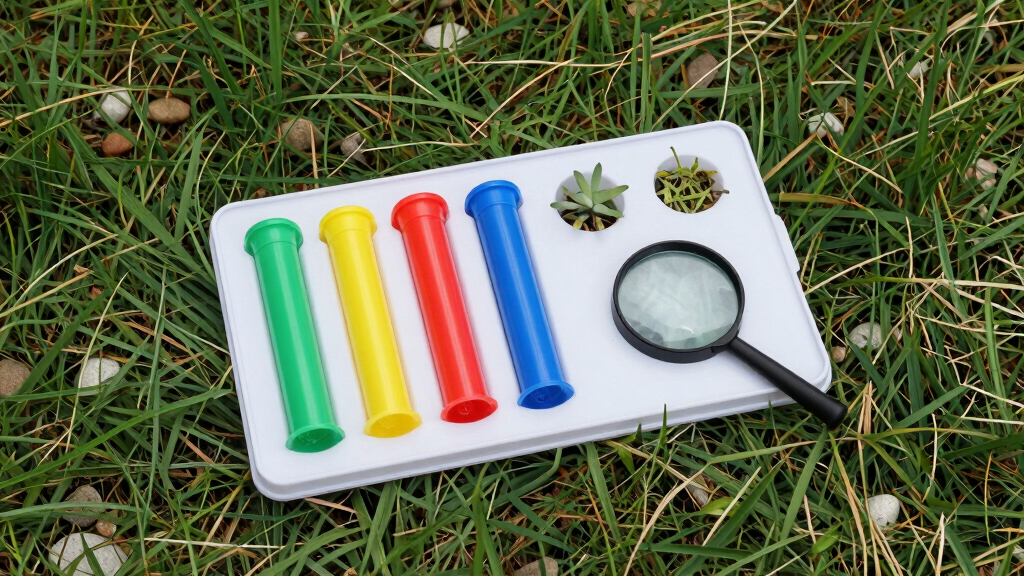

Finding the right outdoor science experiment kit depends on a child’s age, interest level, and the type of experiments they enjoy. The National Geographic Earth Science Kit stands out as the best overall for its wide range of activities, from crystal growing to volcano making. For those interested in physics, the 4M Water Rocket Kit offers exciting launch experiments that teach Newton’s laws. Meanwhile, the Be Amazing! Backyard Science Kit provides a comprehensive set for active outdoor exploration. Each option balances fun and education but comes with tradeoffs like complexity, price, or scope. Keep reading for a detailed breakdown to find the perfect fit for your child’s outdoor science adventures.
Key Takeaways
- The most versatile kits combine multiple science disciplines for well-rounded learning.
- Simpler kits are better for younger kids, but they may lack the depth older children seek.
- Price often correlates with the number and complexity of experiments included.
- Outdoor-specific features like weather stations or water rockets enhance hands-on learning.
- Durability and ease of cleanup are key factors influencing long-term value and usability.
| National Geographic Earth Science Kit – Crystal Growing, Volcano Experiments & Rock Collection STEM Toy for Kids (Amazon Exclusive) |  | Best Overall for Comprehensive Earth Science Exploration | Brand: National Geographic (Blue Marble) | Age Range: 8+ years | Experiments Included: Crystal growing, volcano eruption, tornado tubes, geologic digs | VIEW LATEST PRICE | See Our Full Breakdown |
| 4M Science in Action Water Rocket Kit – Bottle Launcher with Kinetic Energy & Newton’s Laws Learning |  | Best for Physics Enthusiasts and Outdoor Experimentation | Max Launch Height: 98 feet (30 meters) | Contents: 1 plastic bottle, 4 fins, fin support, bung, connectors, adapters, extension pipe | Learning Focus: Kinetic energy, Newton’s laws of motion, aerodynamics | VIEW LATEST PRICE | See Our Full Breakdown |
| Be Amazing! Toys Big Bag of Backyard Science Kit for Kids 8-12 |  | Best for Broad STEM Engagement and Creative Exploration | ASIN: B0871N2T7P | Age Range: 8-12 years | Pieces Included: 32-piece set | VIEW LATEST PRICE | See Our Full Breakdown |
| Thames & Kosmos Weather & Climate Lab STEM Experiment Kit, 5-in-1 Meteorology Station with Wind Vane, Compass, Rain Gauge, Anemometer & Thermometer for Ages 6+ |  | Best for Real-World Weather Monitoring and Observation Skills | Brand: Thames & Kosmos | Age Range: 6-12 years | Components: Wind vane, compass, rain gauge, anemometer, thermometer, outdoor stake | VIEW LATEST PRICE | See Our Full Breakdown |
| National Geographic Mega Science Lab Kit for Kids with 75 Experiments in Earth Science, Chemistry, and Magic STEM Projects |  | Best for Extensive, All-in-One Science Exploration | Brand: Blue Marble | Age Range: 8-12 years | Educational Objective: STEM | VIEW LATEST PRICE | See Our Full Breakdown |
| PLAYSTEM Outdoor Water-Powered Rocket Physics Learning Set with DIY Kit for Kids and Teens |  | Best for Active Outdoor Physics Play | Brand: PLAYSTEM | Age Range: 6-10 years | Model Number: XP00401US | VIEW LATEST PRICE | See Our Full Breakdown |
| 4M Green Science Weather Science DIY Mini Observatory Kit for Kids 5+ |  | Best for Young Weather Enthusiasts and Eco-Learners | Brand: 4M | Age Range: 5+ | Number of Experiments: 6 | VIEW LATEST PRICE | See Our Full Breakdown |
More Details on Our Top Picks
National Geographic Earth Science Kit – Crystal Growing, Volcano Experiments & Rock Collection STEM Toy for Kids (Amazon Exclusive)
This kit stands out for its wide array of over 15 experiments, including crystal growing, volcano eruptions, and geologic digs, making it ideal for young learners eager to explore earth science in depth. The inclusion of a detailed, full-color learning guide helps kids understand complex concepts independently, and the durable components support repeated experiments. Compared with the National Geographic Mega Science Lab, this kit offers more focused earth science activities but doesn’t include as many chemistry or physics experiments. The main tradeoff is that younger children under 8 may find some assembly tasks challenging, and the set’s scope is limited to earth sciences only. This is best suited for children aged 8+ who enjoy hands-on geology and rock collecting.
Pros:- Over 15 diverse earth science experiments for variety
- Includes a comprehensive educational guide for independent learning
- Durable components support multiple uses
Cons:- Minimum age of 8 may be challenging for some younger kids
- Some assembly required for volcano and tornado tubes
Best for: Kids 8 and older with a keen interest in earth science and geology
Not ideal for: Younger children under 8 or those seeking a focus on chemistry or physics without geological elements
- Brand:National Geographic (Blue Marble)
- Age Range:8+ years
- Experiments Included:Crystal growing, volcano eruption, tornado tubes, geologic digs
- Components:Learning guide, crystal kit, volcano plaster, tornado tubes, gemstone dig bricks
- UPC:816448027611
- ASIN:B082ZLM39R
Bottom line: This kit is perfect for young geology enthusiasts who want a thorough, hands-on earth science experience.
4M Science in Action Water Rocket Kit – Bottle Launcher with Kinetic Energy & Newton’s Laws Learning
This water rocket kit excels at demonstrating physics principles like kinetic energy and Newton’s third law through a fun, outdoor activity. It allows kids to build and launch rockets up to 98 feet, fostering creativity by customizing bottle designs. Compared to the Thames & Kosmos Weather & Climate Lab, which focuses more on environmental science, this kit offers a dynamic, physics-oriented experience. However, it requires an external pump (not included), and its outdoor-only use could be limiting for some. The need for adult supervision for younger children is also a consideration. This pick makes the most sense for older kids or teens interested in hands-on physics and aerodynamics experiments.
Pros:- Teaches key physics concepts through active experimentation
- Encourages creativity with customizable rocket designs
- Safe outdoor activity promoting teamwork
Cons:- Requires an external pump (not included)
- Limited to outdoor use, reducing flexibility
Best for: Older children or teens who enjoy outdoor science projects involving physics and engineering
Not ideal for: Younger children under 8 or those seeking indoor-friendly experiments without additional equipment
- Max Launch Height:98 feet (30 meters)
- Contents:1 plastic bottle, 4 fins, fin support, bung, connectors, adapters, extension pipe
- Learning Focus:Kinetic energy, Newton’s laws of motion, aerodynamics
Bottom line: Ideal for kids who love outdoor physics experiments and are ready for a slightly more involved build-and-launch activity.
Be Amazing! Toys Big Bag of Backyard Science Kit for Kids 8-12
This extensive kit offers over 50 backyard experiments, making it a versatile choice for children eager to explore multiple science disciplines. Equipped with tools like a microscope, magnifying glass, and collection jars, it encourages investigations across physics, biology, and chemistry. Compared with the National Geographic Mega Science Lab, which focuses more on earth science, this kit broadens the scope to include biology and chemistry, appealing to curious kids who want a comprehensive STEM experience. The main tradeoff is that it’s targeted at children 8-12, and some experiments may require adult supervision for safety and complexity. Its large variety makes it ideal for ongoing exploration but may be overwhelming for beginners or younger kids.
Pros:- Over 50 experiments across multiple science disciplines
- Includes educational tools like a microscope and collection jars
- Encourages independent exploration and creativity
Cons:- Designed mainly for ages 8-12, possibly too complex for younger kids
- Some projects may require adult supervision due to complexity
Best for: Children aged 8-12 with a broad interest in science and outdoor exploration
Not ideal for: Younger children under 8 or those seeking a more focused or simple experiment set
- ASIN:B0871N2T7P
- Age Range:8-12 years
- Pieces Included:32-piece set
Bottom line: This kit is perfect for active, curious kids who want a large variety of science activities outdoors.
Thames & Kosmos Weather & Climate Lab STEM Experiment Kit, 5-in-1 Meteorology Station with Wind Vane, Compass, Rain Gauge, Anemometer & Thermometer for Ages 6+
This weather station kit offers a practical, outdoor-focused approach, including five essential meteorological tools that enable kids to monitor weather conditions in real time. The durable outdoor stake allows for installation in gardens or on poles, providing ongoing outdoor observation. Compared to the National Geographic Earth Science Kit, which emphasizes geological experiments, this set emphasizes environmental science and weather tracking, fostering observational skills. Its minimum age of 6+ makes it accessible for younger children, though some experiments may require outdoor space and supervision. The main limitation is that it’s more about measurement than experimentation, so kids seeking chemical or biological projects might find it less engaging.
Pros:- Includes five weather-measuring tools in one station
- Encourages outdoor STEM learning and environmental awareness
- Durable outdoor stake for real-world measurement
Cons:- Requires outdoor setup and space
- Less interactive than kits focused on chemical or biological experiments
Best for: Children interested in environmental science and real-time weather observation, especially in outdoor settings
Not ideal for: Younger children under 6 or those looking for experimental chemistry or biology projects
- Brand:Thames & Kosmos
- Age Range:6-12 years
- Components:Wind vane, compass, rain gauge, anemometer, thermometer, outdoor stake
- Manual Pages:32 pages
Bottom line: Ideal for young meteorology enthusiasts who want to observe and record weather conditions outdoors.
National Geographic Mega Science Lab Kit for Kids with 75 Experiments in Earth Science, Chemistry, and Magic STEM Projects
This comprehensive kit offers a vast range of over 75 experiments spanning earth science, chemistry, and even magic tricks, making it perfect for kids who want variety and depth. It includes real rock specimens and encourages hands-on learning across multiple disciplines, unlike the more specialized National Geographic Earth Science Kit. However, its broad scope means some projects may be too complex for younger children, and the price might be a consideration given the extensive content. Its inclusion of magic tricks adds a fun, engaging element that can captivate kids who enjoy surprises in science, but it might be overwhelming for those who prefer focused activities.
Pros:- Includes over 75 experiments across multiple science areas
- Features real rock and mineral specimens for tactile learning
- Offers additional magic-themed activities for fun engagement
Cons:- Recommended for ages 8+, possibly too advanced for younger kids
- Price may be higher relative to simpler kits
Best for: Children 8 and up who love a diverse, multi-disciplinary science experience with a mix of earth science, chemistry, and magic tricks
Not ideal for: Younger children under 8 or those seeking a simpler, more targeted experiment set
- Brand:Blue Marble
- Age Range:8-12 years
- Educational Objective:STEM
- Set Name:bundle
- Model Number:NGMEGASCIKIT
- Unit Count:1.0
Bottom line: Best suited for dedicated young science enthusiasts eager for a large, varied experiment collection.
PLAYSTEM Outdoor Water-Powered Rocket Physics Learning Set with DIY Kit for Kids and Teens
This water rocket kit stands out for its engaging, hands-on approach to physics, making it ideal for children who thrive on outdoor active experiments. Unlike the 4M Water Rocket Kit, which is simpler but less durable, the PLAYSTEM set features sturdy materials and safety valves that allow for more consistent launches and safer operation. However, its dependence on outdoor space and water pressure consistency can limit spontaneity, especially in smaller yards or less predictable conditions. This kit is perfect for kids aged 6-10 who enjoy energetic outdoor activities and want to learn about forces and motion through direct play. The reusable bottles and eco-friendly design add a thoughtful touch, though the need for ample outdoor area might be a barrier for some users.
Pros:- Engages children with hands-on physics through water propulsion
- Durable construction with safety features like pressure release valves
- Eco-friendly use of recycled plastic bottles for customization
Cons:- Requires a sufficiently large outdoor area for safe launches
- Rocket height depends on water pressure consistency, which can vary
Best for: Children aged 6-10 who love outdoor physics experiments and active play
Not ideal for: Families with limited outdoor space or those seeking a more compact, indoor-compatible science activity
- Brand:PLAYSTEM
- Age Range:6-10 years
- Model Number:XP00401US
- Rocket Type:Water-powered
- Materials:Durable plastic
- Includes:Rocket body, tail, launcher, pump
Bottom line: This kit makes the most sense for active kids who have ample outdoor space and enjoy energetic science projects.
4M Green Science Weather Science DIY Mini Observatory Kit for Kids 5+
This weather science kit excels at breaking down complex weather phenomena into engaging, easy-to-understand experiments for young children. Compared to the National Geographic Earth Science Kit, which offers a broader scope of earth sciences, the 4M Weather Kit focuses specifically on climate and atmospheric processes, making it ideal for budding meteorologists. Its experiments—like creating static electricity and simulating the water cycle—are straightforward but provide meaningful lessons about environmental science and sustainability. However, younger children may need adult supervision to fully benefit, and older kids might find the activities less challenging. Still, this kit offers a balanced entry point for kids aged 5+ to explore weather and eco-related science in a fun, hands-on way.
Pros:- Simplifies complex weather concepts through engaging experiments
- Includes eco-focused activities like greenhouse effect and acid rain simulations
- Age-appropriate with clear, easy-to-follow instructions
Cons:- May require adult supervision for safety and guidance
- Limited depth for older or more advanced science learners
Best for: Parents of young children interested in weather, climate, and eco-friendly science projects
Not ideal for: Older students seeking advanced scientific experiments or more complex environmental topics
- Brand:4M
- Age Range:5+
- Number of Experiments:6
- Focus Areas:Weather phenomena, eco-science
- Materials:Reusable components, eco-friendly materials
- Educational Focus:Hands-on science and environmental awareness
Bottom line: This kit is perfect for young weather enthusiasts and eco-conscious families seeking early science engagement.
How We Picked
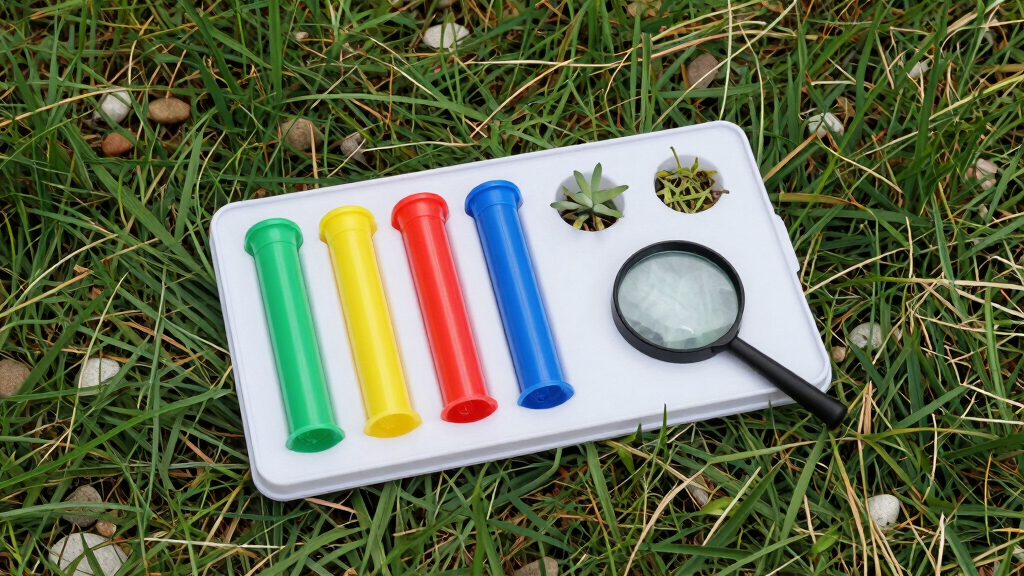
These kits were evaluated based on their educational value, outdoor suitability, ease of use, durability, and overall engagement level. Products with a broad variety of experiments and high-quality materials ranked higher, as they offered more sustained interest. Kits designed explicitly for outdoor use or weather-related experiments gained priority, since the focus was on outdoor science. Cost was also considered, balancing affordability with the richness of the experience. The goal was to identify kits that appeal to a range of ages and learning styles, ensuring they are practical and inspiring for outdoor science exploration.Factors to Consider When Choosing Outdoor Science Experiment Kits
Choosing the right outdoor science experiment kit requires balancing several factors to match your child’s age, curiosity, and outdoor environment. Beyond just the number of experiments, consider how easy the kit is to set up and clean, as well as its durability outside. Safety features and the scope of experiments should align with your child’s skill level and interests. Additionally, think about whether the kit promotes hands-on learning or conceptual understanding, and if it includes outdoor-specific tools like weather gauges or rockets. Making an informed choice can help maximize fun and educational value while minimizing frustration or safety concerns.Age Appropriateness and Safety
It’s important to select a kit suited to your child’s age to ensure safety and engagement. Kits designed for younger children typically feature larger parts and simpler experiments, reducing choking hazards and complexity. Older kids may enjoy more detailed, multi-step projects that challenge their problem-solving skills. Always check safety warnings and supervision requirements, especially when dealing with chemicals, rockets, or weather instruments. Precise age recommendations help avoid frustration or safety issues, making the learning process more enjoyable.
Number and Variety of Experiments
Look for kits that offer a variety of experiments to keep interest high and provide a comprehensive understanding of different scientific principles. A larger number of experiments often means more value, but quality matters more than quantity. Kits that combine earth science, physics, and weather concepts give a richer learning experience. Limited experiment sets might be cheaper but can quickly become repetitive or less engaging. Balance your child’s curiosity with the scope of activities offered in the kit.
Durability and Outdoor Suitability
Since these kits are intended for outdoor use, durability is critical. Weather-resistant components, sturdy containers, and materials that withstand rough handling make a significant difference. Kits that include outdoor-specific tools, such as weather gauges or water rockets, enhance hands-on learning but should be designed to endure outdoor conditions. Poorly made kits may break easily or require frequent replacements, leading to higher long-term costs and frustration.
Ease of Use and Cleanup
Choose kits that are straightforward to assemble and operate, especially if your child is just starting out. Clear instructions and minimal setup time foster confidence and independence. Since outdoor experiments can be messy, look for kits that include cleanup tools or disposable components. Kits with complicated assembly or hard-to-clean parts might detract from the fun and learning experience, especially after multiple uses.
Price and Long-Term Value
Pricing varies widely in this category, often reflecting the number of experiments, quality of materials, and brand reputation. Higher-priced kits tend to include more durable parts and a broader range of activities, making them suitable for serious budding scientists. Cheaper options may be perfect for casual exploration but could require replacement sooner. Consider your child’s interest level and your budget to find the best balance between cost and educational value.
Frequently Asked Questions
Are outdoor science kits safe for young children?
Most outdoor science kits are designed with safety in mind, especially those aimed at younger kids. Always check age recommendations and supervision instructions. Look for kits with non-toxic materials and large, child-safe parts. Supervision during experiments involving chemicals or rockets is recommended regardless of age, but many kits include safety gear or warnings to help guide responsible use. Proper safety measures ensure that outdoor science exploration remains fun and injury-free.
How do I choose a kit that will hold my child’s interest over time?
Opt for kits that include a variety of experiments across different scientific disciplines, which can keep your child’s curiosity piqued. Kits with expandable components or additional experiment packs can extend engagement. Consider their specific interests—whether they’re fascinated by weather, geology, or physics—and choose something that aligns with those passions. A kit that offers challenges suitable for their age and skill level encourages ongoing exploration and learning.
Are weather-related science kits suitable for outdoor use in all climates?
Weather kits are generally designed to withstand outdoor conditions, but their durability can vary depending on the climate. Kits with weather-resistant sensors and sturdy construction perform better in rainy or windy environments. In extreme climates—very cold or hot—it’s wise to check if the kit’s components can handle such conditions or if they require indoor storage during harsh weather. Proper maintenance and storage extend the lifespan of outdoor weather kits and ensure accurate readings.
Can these kits be used repeatedly or are they single-use?
Many outdoor science kits are designed for multiple uses, with durable parts that can be cleaned and reused. For example, weather instruments and rockets often withstand repeated experiments. However, kits with fragile components or chemical supplies might be limited to single or few uses. Consider your child’s enthusiasm and your willingness to replace parts when evaluating whether a kit offers good long-term value. Reusable kits tend to provide more bang for your buck and ongoing learning opportunities.
What should I look for in a weather or outdoor science kit?
Key features include durability, ease of use, and accuracy of measurements. Look for kits with weather-resistant components, clear instructions, and tools that are appropriate for your child’s age. Extra features like a wind vane, rain gauge, or thermometer can enhance learning and make experiments more meaningful. Also, check if the kit includes outdoor-friendly storage options to keep parts safe from the elements. These considerations help ensure the kit remains functional and educational over time.
Conclusion
For parents seeking a comprehensive, engaging experience, the National Geographic Earth Science Kit offers broad versatility and high-quality materials, making it the best overall choice. Budget-conscious buyers will appreciate the 4M Water Rocket Kit for its fun and educational physics experiments at a lower price point. For beginners or younger children, the 4M Green Science Weather Science DIY Mini Observatory provides simple, outdoor-friendly activities that foster curiosity without complexity. Serious STEM enthusiasts or those wanting advanced experiments should consider the National Geographic Mega Science Lab Kit for its extensive project options. Your ideal kit depends on your child’s age, interests, and how much you’re willing to invest in their outdoor science journey.