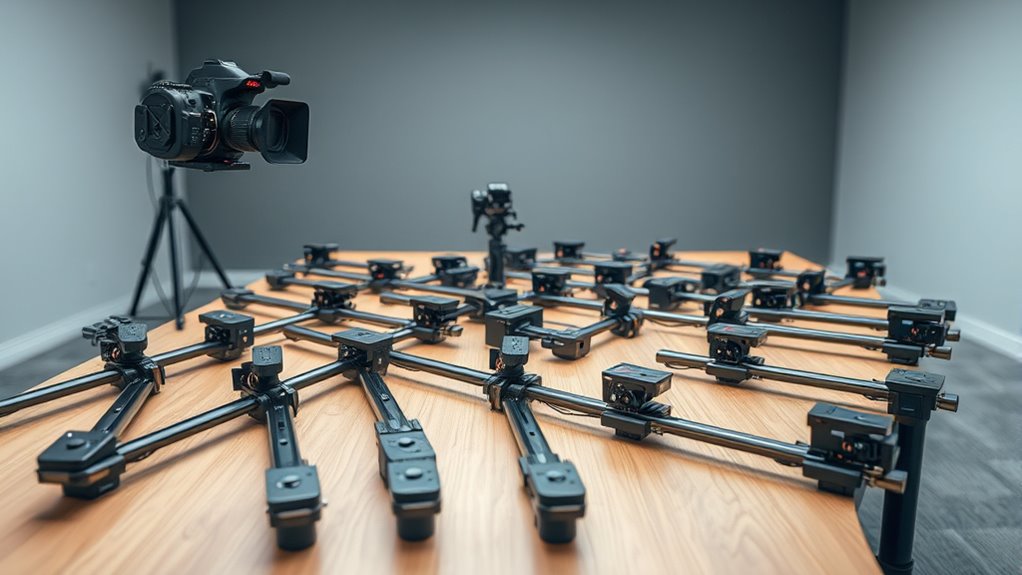

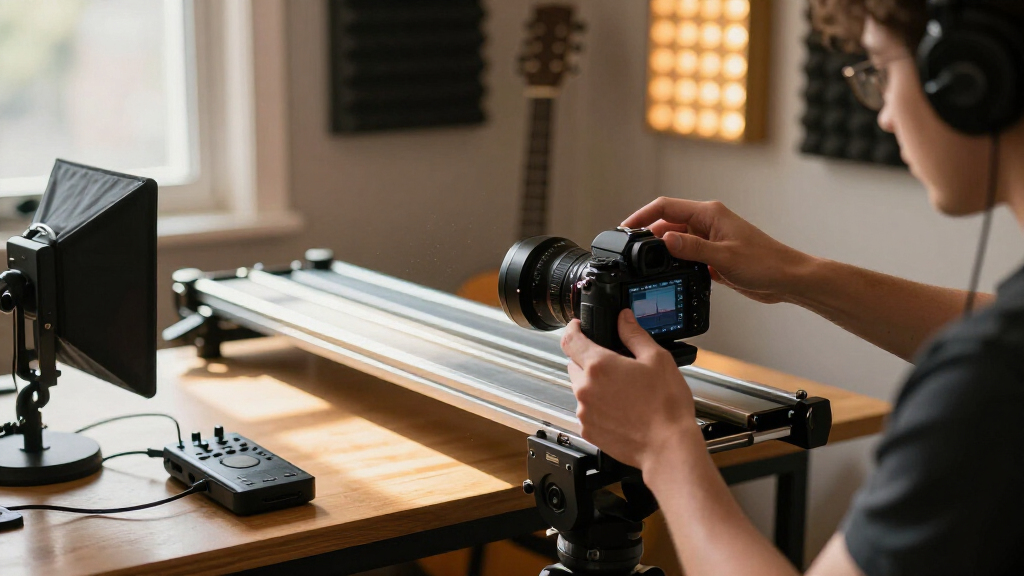
Motorized camera sliders turn static shots into smooth, repeatable motion for video, time-lapse, and product work, and the right model depends on how you balance reach, payload, and motion control. The GVM 48″/120cm Motorized Carbon Fiber Slider stands out as the best overall pick thanks to its combination of carbon fiber construction, app and remote control, and versatile shooting modes including tracking and 120-degree panoramic motion. If portability matters more than reach, the IFOOTAGE Shark Slider Pico is a compact two-axis alternative, while the NEEWER 31.5″/80cm ER1 hits a sweet spot of app control and battery life at a shorter, more travel-friendly length. The main tradeoffs in this category come down to track length versus weight, aluminum versus carbon fiber builds, and whether a slider offers true video-mode speed control or only stepped time-lapse intervals. Read on for the full breakdown of all fifteen sliders and which one fits your shooting style.

Get audio and creator gear delivered free with Prime
- Fast, free delivery on millions of items
- Prime Video, Amazon Music and more included
- Member-only deals all year
Complete the kit



Key Takeaways
- Carbon fiber GVM and NEEWER models dominated the top of the comparison because their lighter track weight makes 120cm sliders practical for solo shooters, while the aluminum GVM 27″ remains the value fallback.
- The GVM lineup’s shooting-mode variety — round trip, tracking, and 120-degree panoramic — separated it from NEEWER‘s ER1 series, which focuses on video mode and time-lapse with stronger battery capacity.
- Both IFOOTAGE picks trade length for precision: the Pico and Nano II suit desktop and interview work, not wide establishing moves, making them the clear picks for compact setups.
- NEEWER ER1 sliders ship with a 4400mAh F750 battery but no charger — a recurring hidden cost across the ER1 line that budget buyers should factor in.
- Duplicating lengths across brands (80cm and 120cm appear in nearly every line) means the real differentiators are motor noise, app reliability, and control modes rather than raw track size.
| NEEWER 47.2″/120cm Motorized Camera Slider ER1 with App Control |  | Best Overall | Slide Length: 47.2″ / 120cm | Material: Carbon fiber | Max Load: 11lb horizontal / 5.5lb at 45° tilt | VIEW ON AMAZON | See Our Full Breakdown |
| GVM 48″/120cm Motorized Camera Slider with Remote Controller |  | Best for Time-Lapse Photography | Slide Length: 48″ / 120cm | Material: Carbon fiber | Control: Included remote controller | VIEW ON AMAZON | See Our Full Breakdown |
| NEEWER ER1 47.2″/120cm Motorized Camera Slider with App Wireless Control |  | Best for Quiet Studio Video | Slide Length: 47.2″ / 120cm | Material: Carbon fiber | Max Load: 11lb horizontal / 5.5lb at 45° tilt | VIEW ON AMAZON | See Our Full Breakdown |
| GVM 48″/120cm Motorized Carbon Fiber Camera Slider with APP Control |  | Best Shooting-Mode Versatility | Slide Length: 48″ / 120cm | Material: Carbon fiber | Shooting Modes: 6-in-1 (tracking, 120° panoramic, time lapse, video, follow focus) | VIEW ON AMAZON | See Our Full Breakdown |
| GVM 48″/120cm Motorized Camera Slider with Battery, Remote, and Time Lapse Support |  | Best Complete Starter Kit | Slide Length: 48″ / 120cm | Material: Carbon fiber | Speed Range: 1%–100% | VIEW ON AMAZON | See Our Full Breakdown |
| IFOOTAGE Shark Slider Pico Motorized Mini Slider 15.7″ 2-Axis |  | Best for Phones and Pocket Cameras | Slider Length: 15.7 inches | Axes: 2-axis motorized | Max Payload: 2.4 lbs | VIEW ON AMAZON | See Our Full Breakdown |
| NEEWER 3 Wheels Wireless Video Camera Dolly, 3 Speed Motorized Slider |  | Best Budget Pick | Type: 3-wheel motorized dolly (no rail) | Speeds: 3 presets: 1.4 / 2.4 / 3.0 cm/s | Wheel Adjustment: 180° adjustable for straight or circular routes | VIEW ON AMAZON | See Our Full Breakdown |
| NEEWER 31.5″/80cm Motorized Camera Slider, App Wireless Control DSLR Carbon Fiber Dolly Rail Slider with 4400mAh F750 Battery, ER1-80 |  | Best Value Rail Slider | Slider Length: 31.5″ / 80cm | Material: Carbon fiber | Max Load (Horizontal): 11 lbs / 5kg | VIEW ON AMAZON | See Our Full Breakdown |
| Neewer ER1 31.5″/80cm Motorized Camera Slider with App Control |  | Best for Time-Lapse on a Tripod | Brand: Neewer | Model: ER1 | Slider Length: 31.5″ / 80cm | VIEW ON AMAZON | See Our Full Breakdown |
| IFOOTAGE Shark Nano II 860 Motorized Camera Slider 34″ |  | Best Premium Pick | Slider Length: 34″ / ~86cm | Axes: Dual-axis with 360° unlimited pan | Max Load (Horizontal): 11 lbs / 5kg | VIEW ON AMAZON | See Our Full Breakdown |
| GVM Carbon Fiber Motorized Camera Slider – 31″/80CM with Remote Control |  | Best Value for Traveling Creators | Track Length: 31″ / 80cm | Material: Carbon fiber | Control: Wireless remote control | VIEW ON AMAZON | See Our Full Breakdown |
| GVM 48″/120CM Carbon Fiber Motorized Camera Slider with Remote Control |  | Best for Long Slide Moves | Track Length: 48″ / 120cm | Material: Carbon fiber | Control: Remote controller | VIEW ON AMAZON | See Our Full Breakdown |
| GVM 27″ Motorized Camera Slider – Aluminum Alloy Track Dolly Rail |  | Best Budget Starter Slider | Track Length: 27 inches | Material: Aluminum alloy | Shooting Modes: Time-lapse, video, auto round trip | VIEW ON AMAZON | See Our Full Breakdown |
| GVM 32″/80cm Motorized Wireless Camera Slider with App Control |  | Best App-Controlled Workflow | Track Length: 32″ / 80cm | Material: 8-layer carbon fiber | Control: Bluetooth app (iOS/Android) | VIEW ON AMAZON | See Our Full Breakdown |
| GVM Motorized Camera Slider, 31″ Wireless Carbon Fiber Dolly Rail with APP Control |  | Best Compact Wireless All-Rounder | Track Length: 31″ / 80cm | Material: Carbon fiber | Control: Wireless app (iOS/Android) | VIEW ON AMAZON | See Our Full Breakdown |
| motorized camera slider | Material | Control | Mounting |
|---|---|---|---|
| NEEWER 47.2"/120cm Motorized C | Carbon fiber | NEEWER app and 2.4G remote (remote not included) | 1/4" and 3/8" threaded holes |
| GVM 48"/120cm Motorized Camera | Carbon fiber | Included remote controller | 1/4" and 3/8" screw ports |
| NEEWER ER1 47.2"/120cm Motoriz | Carbon fiber | NEEWER app; 2.4G RT-08 remote compatible (not included) | 1/4" and 3/8" threaded holes |
| GVM 48"/120cm Motorized Carbon | Carbon fiber | iOS/Android app | — |
| GVM 48"/120cm Motorized Camera | Carbon fiber | — | — |
| IFOOTAGE Shark Slider Pico Mot | — | — | — |
| NEEWER 3 Wheels Wireless Video | — | — | Convertible 1/4" to 3/8" screw |
| NEEWER 31.5"/80cm Motorized Ca | Carbon fiber | NEEWER app; 2.4G RT-08 remote (sold separately) | 1/4" and 3/8" threaded holes for tripod mounting |
| Neewer ER1 31.5"/80cm Motorize | Carbon fiber | App and 2.4G remote (remote not included) | — |
| IFOOTAGE Shark Nano II 860 Mot | — | IPS touchscreen and Moco app (iOS/Android) | — |
| GVM Carbon Fiber Motorized Cam | Carbon fiber | Wireless remote control | Multiple 1/4" and 3/8" screw ports |
| GVM 48"/120CM Carbon Fiber Mot | Carbon fiber | Remote controller | 1/4" and 3/8" screw ports |
| GVM 27" Motorized Camera Slide | Aluminum alloy | — | — |
| GVM 32"/80cm Motorized Wireles | 8-layer carbon fiber | Bluetooth app (iOS/Android) | 1/4" and 3/8" screw ports on sides and middle |
| GVM Motorized Camera Slider | Carbon fiber | Wireless app (iOS/Android) | Multiple 1/4" and 3/8" screw ports |
More Details on Our Top Picks
NEEWER 47.2″/120cm Motorized Camera Slider ER1 with App Control
This pick earns the top spot because it balances silent motor drive, a genuinely useful app-based control system, and a 120cm carbon fiber track without demanding professional budgets. Compared with the GVM 48″ Remote-Controlled Slider, the ER1’s slow start/stop video mode produces cleaner motion ramps, and its silent stepper motor matters more than most specs suggest — audible motor noise ruins interview and product footage in a way no editing fix resolves. The included 4400mAh NP-F750 battery outlasts the USB-power-only options in this lineup, and the 11lb horizontal load capacity comfortably handles a DSLR with a mid-size lens.
The tradeoffs are real, though. The 2.4G remote is sold separately, the charger is not included, and NEEWER itself flags minor shake during macro work — the IFOOTAGE Shark Nano II 860 handles precision close-ups better. Still, for the widest range of shooting scenarios, this is the most complete package.
Pros:- Silent stepper motor keeps audio takes clean without post-production fixes
- 4400mAh NP-F750 battery included, with USB-C fallback for all-day shoots
- App control allows precise setting of interval, shutter speed, and video length
- 11lb horizontal payload covers full-frame bodies with larger lenses
Cons:- 2.4G remote and charger are not included, adding hidden costs
- Minor shake during macro photography per the manufacturer’s own note
Best for: Solo video creators and hybrid shooters who need one slider that handles product b-roll, interviews, and time lapses equally well
Not ideal for: Macro photographers — the documented micro-shake at close focusing distances makes it a poor choice for jewellers or food shooters
- Slide Length:47.2″ / 120cm
- Material:Carbon fiber
- Max Load:11lb horizontal / 5.5lb at 45° tilt
- Control:NEEWER app and 2.4G remote (remote not included)
- Power:4400mAh NP-F750 battery (included) or 5V 2A USB-C
- Modes:Manual, video (slow start/stop), time lapse
- Shooting Angles:Horizontal, 45° tilt, tracking, 120° panorama
- Mounting:1/4″ and 3/8″ threaded holes
Our verdict“If you can only buy one motorized slider and shoot a mix of video and time lapse, this is the safest all-around choice.”
GVM 48″/120cm Motorized Camera Slider with Remote Controller
Time lapse is where this GVM remote-controlled slider separates itself from the pack. It supports up to 1000 programmable photos per sequence with precise step distances and auto round-trip between set start and end points — exactly the control a serious hyperlapse or construction-progress shooter needs. Where the NEEWER ER1 leans on its app, this GVM ships with a physical remote controller in the box, which is more reliable on cold mornings or long unattended shoots when you don’t want your phone tied up or its battery draining.
The bundle of six shutter release cables plus an extension cable is the standout convenience here — the app-only GVM 48″ (B09CL2XWY1) includes the same cables but no remote. The tradeoff: setup is menu-driven and less intuitive than app interfaces, and there’s no slow start/stop video ramping as refined as the ER1’s, so pure video shooters should look elsewhere first.
Pros:- Up to 1000 photos per time-lapse sequence with programmable step distance
- Physical remote controller included rather than sold separately
- Six shutter release cables plus extension cable covers most camera brands
- Auto round-trip with settable start and end points for repeatable moves
Cons:- Menu-based programming is less intuitive than modern app interfaces
- No refined slow start/stop ramping for demanding video work
Best for: Time-lapse specialists who run long, unattended sequences and want physical remote control plus camera-trigger cables included
Not ideal for: Smartphone-centric creators who prefer app control and don’t shoot time lapses — the menu system adds friction without payoff
- Slide Length:48″ / 120cm
- Material:Carbon fiber
- Control:Included remote controller
- Max Load:20lb
- Time Lapse:Up to 1000 photos per sequence
- Shooting Modes:Horizontal, tracking, 120° panoramic
- Included Cables:6 shutter release cables, 1 extension cable
- Mounting:1/4″ and 3/8″ screw ports
Our verdict“The strongest pick in this lineup if time lapse is your primary use case and you want everything — remote, cables, round-trip logic — in one box.”
NEEWER ER1 47.2″/120cm Motorized Camera Slider with App Wireless Control
This ER1 variant is nearly identical to the NEEWER ER1 (B0FX86HQ99) at the top of this list — same 120cm carbon fiber track, same silent stepper motor, same 4400mAh battery — but it’s positioned here as the quieter-focus option for studio videographers who don’t need the remote ecosystem at all. If your workflow lives entirely in the NEEWER app, with its manual, video, and time-lapse modes plus configurable frames, interval, and shutter speed, skipping the remote-ready framing saves you from paying for capability you won’t touch.
Where it beats the GVM 48″ app-controlled slider is motion quality: slow start/stop ramps and genuinely noiseless travel make it the better interview and product-filming tool. The honest downsides carry over — no charger in the box, no included remote, and the same macro-shake caveat. Compared with the shorter NEEWER ER1-80, the extra 40cm of track gives wider, more cinematic reveals, at the cost of portability.
Pros:- Silent motor drive ideal for audio-sensitive interview and studio work
- Slow start/stop video mode produces professional-looking motion ramps
- Full app control over frames, interval, shutter speed, and video length
- Lightweight carbon fiber build with 11lb horizontal capacity
Cons:- Charger not included with the 4400mAh battery
- Remote sold separately, limiting handheld control options out of the box
Best for: Studio-based product and interview videographers who control everything from their phone and prioritize silent, smooth motion
Not ideal for: Run-and-gun or outdoor shooters who need a physical remote in hand — you’ll have to buy one separately or rely on your phone
- Slide Length:47.2″ / 120cm
- Material:Carbon fiber
- Max Load:11lb horizontal / 5.5lb at 45° tilt
- Control:NEEWER app; 2.4G RT-08 remote compatible (not included)
- Power:4400mAh NP-F750 battery (included) or 5V 2A Type-C
- Modes:Manual, video, time lapse
- Shooting Angles:Horizontal, 45° tilt, tracking, 120° panorama
- Mounting:1/4″ and 3/8″ threaded holes
Our verdict“Choose this over the flagship ER1 if you’re an app-only shooter who values silent motion over remote flexibility.”
GVM 48″/120cm Motorized Carbon Fiber Camera Slider with APP Control
This is the most feature-dense slider in the batch: a 6-in-1 mode set covering tracking, 120° panoramic, time lapse, video, and follow-focus work, with adjustable motor torque — a rarity at this tier. Torque adjustment isn’t a gimmick; it lets you fine-tune how hard the motor drives the carriage, which affects both smoothness and noise depending on your payload. Compared with the remote-controlled GVM 48″ (B07W6VC3S1), this model trades the physical controller for smartphone app control with a 1%–100% speed range, which makes dialing in subtle crawl-speed moves far easier than pressing buttons through menus.
The bundle is generous — six shutter release cables, an extension cable, adjustable legs, and a carry bag — matching GVM’s remote version piece for piece. The catch: there’s no built-in controller, so a dead phone means a dead slider, and 48 inches of track is still awkward to transport even with the bag. The shorter GVM 32″/80cm app slider solves the portability problem if you don’t need the reach.
Pros:- 6-in-1 shooting modes including follow focus and 120° panoramic
- Adjustable motor torque lets you tune power to your payload
- Fine 1%–100% speed control for crawl-speed camera moves
- Complete accessory kit with 6 shutter cables, extension cable, legs, and carry bag
Cons:- No physical controller included; entirely dependent on a smartphone or tablet
- 48-inch track remains bulky to transport despite the carry bag
Best for: Experimental creators who want the widest menu of programmable motion types and don’t mind controlling everything from a phone
Not ideal for: Shooters who dislike phone-dependent gear — with no physical controller, a dead or missing phone stops production entirely
- Slide Length:48″ / 120cm
- Material:Carbon fiber
- Shooting Modes:6-in-1 (tracking, 120° panoramic, time lapse, video, follow focus)
- Speed Range:1%–100%
- Interval Range:0.1–999.9
- Max Photo Number:1000 per sequence
- Control:iOS/Android app
- Included:6 shutter release cables, extension cable, carry bag, adjustable legs
Our verdict“The most programmable slider here — pick it if you iterate on motion styles constantly and your phone is always in hand.”
GVM 48″/120cm Motorized Camera Slider with Battery, Remote, and Time Lapse Support
What makes this GVM the beginner-friendly entry is that nothing is left to buy: remote, battery, six shutter cables, and a portable bag all ship in the box. Compare that with either NEEWER ER1, which requires you to source a charger and possibly a remote, and the appeal for first-time buyers is obvious — you’re shooting the day it arrives. Programmability is strong for the money: settable start/end points, 1%–100% speed, interval and stop-time control, auto loop, and both manual and electric modes mean there’s room to grow into more advanced work.
The compromises are mostly about refinement rather than capability. The programming interface has a real learning curve compared with the app-driven GVM (B09CL2XWY1), and motion smoothness — while quiet — doesn’t match the ER1’s slow start/stop ramps for high-end product video. And like every 48-inch slider here, transport is a chore. As a learning platform that covers every shooting style, though, it’s hard to beat the out-of-box completeness.
Pros:- Everything included: remote, battery, shutter cables, extension cable, and carry bag
- Programmable start/end points, interval, stop time, and auto loop
- Manual and electric modes allow practice without motor assistance
- Adjustable feet for leveling on uneven surfaces
Cons:- Steep learning curve for the programming features
- Motion quality trails the NEEWER ER1 for polished product video
Best for: First-time motorized slider buyers who want a full kit with remote, battery, and cables included from day one
Not ideal for: Impatient setup-averse users — the programming menu takes real time to learn before advanced sequences work smoothly
- Slide Length:48″ / 120cm
- Material:Carbon fiber
- Speed Range:1%–100%
- Interval Range:0.1–999.9
- Photo Number:1–1000 per sequence
- Panorama Range:120 degrees
- Modes:Manual and electric
- Included:6 shutter cables, extension cable, remote, battery, portable bag
Our verdict“The most complete out-of-the-box package here — ideal if you’re starting from zero and don’t want to shop for accessories.”
IFOOTAGE Shark Slider Pico Motorized Mini Slider 15.7″ 2-Axis
Most sliders in this roundup are built around DSLRs and mirrorless bodies, but the Shark Slider Pico flips that assumption. Its 2.4 lb payload ceiling is deliberately matched to smartphones, DJI Osmo Pocket 3/4 units, and action cams — gear that bigger options like the NEEWER ER1-80 handle easily but with a lot of wasted capacity and bulk. The 2-axis design means you get slide plus a second motorized axis in a package small enough to toss in a backpack.
The tradeoff is simple physics: a 15.7-inch travel limits how long your moves can be, and mounting a full DSLR rig is off the table. This pick makes the most sense for mobile-first creators who value portability over reach, rather than photographers who need the 31.5-inch travel of the carbon fiber Neewer models.
Pros:- Two motorized axes in a compact body for more dynamic moves than single-axis rivals
- Purpose-built compatibility with phones, DJI Pocket 3/4, and action cameras
- Highly portable 15.7-inch footprint that fits in small bags
- Smooth motorized motion that replaces shaky handheld footage
Cons:- Payload capped at 2.4 lbs, excluding most DSLR and lens combos
- Short slide travel limits shot length compared to 31.5-inch and 47.2-inch models
Best for: Mobile-first creators and vloggers using iPhones, Osmo Pocket cameras, or action cams who want motorized moves in a travel-friendly size
Not ideal for: DSLR or mirrorless shooters with heavy lenses — the 2.4 lb payload rules out most full camera rigs
- Slider Length:15.7 inches
- Axes:2-axis motorized
- Max Payload:2.4 lbs
- Compatible Devices:Smartphones, DJI Osmo Pocket 3/4, action cameras, small cameras
- Build:Mini rail with motorized dolly carriage
- Use Case:Mobile video, vlogging, tabletop cinematography
Our verdict“If you shoot primarily on a phone, Osmo Pocket, or action cam, this is the slider built for you — everyone else should look at the larger Neewer or GVM options.”
NEEWER 3 Wheels Wireless Video Camera Dolly, 3 Speed Motorized Slider
Not everyone needs a rail system. This three-wheeled motorized dolly trades the fixed track of the Shark Slider Pico or the ER1-80 for flat-surface freedom — point the adjustable wheels straight for linear moves, or angle them up to 180° for circular arcs around a product. That flexibility is something no rail slider in this roundup can replicate, and it does so at an entry-level price point.
The compromises are real, though. You need a smooth, level surface, because there is no rail to guarantee a perfectly straight path, and the three fixed speed settings (1.4–3.0 cm/s) offer far less creative control than the app-programmed speeds on the Neewer ER1 sliders. For tabletop product work and social content, those limits rarely matter; for client cinematic work, they will.
Pros:- No track needed — works on any smooth table or floor surface
- Adjustable wheel angles enable straight lines, arcs, and circular moves
- Wireless remote with 6m range for speed, direction, and pause control
- Built-in 1800mAh battery runs up to 6 hours per charge
Cons:- Only three fixed speed presets with no fine adjustment
- Movement quality depends entirely on finding a smooth, level surface
Best for: Budget-conscious creators doing tabletop product shots, food videos, or social content on any flat surface
Not ideal for: Shooters who need perfectly straight, repeatable rail moves or fine speed control for cinematic work
- Type:3-wheel motorized dolly (no rail)
- Speeds:3 presets: 1.4 / 2.4 / 3.0 cm/s
- Wheel Adjustment:180° adjustable for straight or circular routes
- Remote Range:6m / 19.7ft wireless
- Battery:1800mAh rechargeable lithium-ion, up to 6 hours
- Mounting:Convertible 1/4″ to 3/8″ screw
Our verdict“The cheapest way into motorized camera movement — ideal for tabletop creators, as long as you accept surface-dependent results.”
NEEWER 31.5″/80cm Motorized Camera Slider, App Wireless Control DSLR Carbon Fiber Dolly Rail Slider with 4400mAh F750 Battery, ER1-80
This is the sweet spot of the roundup: a full carbon fiber rail slider with an 11 lb horizontal payload, app control, and time-lapse modes, at a size that still travels well. Compared with the 47.2-inch NEEWER ER1, the ER1-80 gives up about 16 inches of travel but stays dramatically easier to carry and mount on a single tripod — which is why it earns the value slot over its longer sibling.
Against the cheaper NEEWER three-wheel dolly, the difference is precision: four roller bearings and a silent stepper motor deliver the repeatable, jitter-free moves that rail systems exist for. The annoyances are modest but worth knowing — the RT-08 remote is not included (you control it via the free app or buy the remote separately), and the NP-F750 battery arrives without a charger.
Pros:- Carbon fiber build keeps the 31.5-inch rail light enough for outdoor and travel shoots
- Silent stepper motor suits sound-recorded video without motor noise
- App control with video, time-lapse, and slow start/stop modes
- 11 lb horizontal payload handles most DSLR and mirrorless rigs
- 4400mAh NP-F750 battery included in the box
Cons:- 2.4G RT-08 remote control sold separately
- No charger included for the NP-F750 battery
- Payload drops to 5.5 lbs when tilted 45°, limiting vertical-adjacent work
Best for: Enthusiast and semi-pro videographers who want a genuine carbon fiber rail system with app control without paying for extra length
Not ideal for: Shooters who want everything in the box — the missing charger and optional remote mean extra purchases
- Slider Length:31.5″ / 80cm
- Material:Carbon fiber
- Max Load (Horizontal):11 lbs / 5kg
- Max Load (45° Tilt):5.5 lbs / 2.5kg
- Battery:4400mAh NP-F750 (included, charger not included)
- Alternative Power:5V 2A USB-C
- Control:NEEWER app; 2.4G RT-08 remote (sold separately)
- Modes:Manual, video (constant speed / slow start-stop), time-lapse
- Mounting:1/4″ and 3/8″ threaded holes for tripod mounting
Our verdict“The best balance of length, build quality, and smart features for most hobbyist and semi-pro shooters — just budget for a charger.”
Neewer ER1 31.5″/80cm Motorized Camera Slider with App Control
Functionally, this is the same ER1 platform as the ER1-80 above — identical rail length, payload, battery, and carbon fiber construction — but this listing’s confirmed feature set makes it the one I’d point time-lapse shooters toward. The app lets you dial in frames, video length, interval, and shutter speed, which is exactly the parameter control that separates satisfying time-lapses from guesswork. The Neewer ER1 47.2-inch version offers more travel, but at 31.5 inches this one mounts more easily on a single tripod, which matters for multi-hour static time-lapse setups.
Be aware that reported minor shake during macro work means extreme close-ups may need a steady surface or a shorter lens. And like its sibling, the 2.4G remote is a separate purchase, so plan on controlling everything through your phone unless you add the handset.
Pros:- Detailed app control over frames, interval, shutter speed, and video length for time-lapse
- Lightweight carbon fiber build suitable for outdoor and location work
- Silent stepper motor keeps recorded audio clean
- Included 4400mAh NP-F750 battery with USB-C backup power option
Cons:- 2.4G remote control not included
- Minor shake may occur during macro photography
- Tracking and panorama shots are more basic than the multi-axis IFOOTAGE Nano II
Best for: Time-lapse and travel photographers who want precise interval and frame control from a phone and a tripod-friendly rail length
Not ideal for: Macro videographers — reported micro-shake at high magnification undermines razor-thin depth-of-field shots
- Brand:Neewer
- Model:ER1
- Slider Length:31.5″ / 80cm
- Max Load (Horizontal):11 lbs
- Max Load (45° Tilt):5.5 lbs
- Battery:4400mAh NP-F750 (included)
- Material:Carbon fiber
- Control:App and 2.4G remote (remote not included)
- Modes:Manual, Video, Time-lapse
Our verdict“A strong pick for app-driven time-lapse work at a manageable 80cm length — macro shooters and multi-axis seekers should look elsewhere.”
IFOOTAGE Shark Nano II 860 Motorized Camera Slider 34″
The Shark Nano II 860 plays in a different league from everything else here. Where the Neewer ER1 sliders offer one motorized axis, this adds 360° unlimited motorized pan, an AI dynamic tracking mode that follows faces and objects through the Moco app, and integration with DJI RS-series gimbals for synchronized multi-axis motion. The Multi-Target Mode even replicates a four-camera interview setup from a single rail — a genuine production-time saver none of the GVM or NEEWER options can match.
You pay for it twice over: once in price, and once in complexity. The PD 60W single-cable power scheme is elegant but demands a 60W+ supply for gimbal integration, and the gimbal itself is sold separately. Compared with the ER1-80, this is less a slider and more a motion-control system — overkill for simple slide shots, unmatched for ambitious ones.
Pros:- Dual-axis motorized control with unlimited 360° pan for complex cinematic moves
- Seamless DJI RS2/RS3 Pro/RS4 gimbal integration for synchronized multi-axis motion
- AI face and object tracking keeps solo-shot subjects in frame automatically
- Zero-jitter 1μm precision movement at up to 11 lbs horizontal load
- Single-cable USB-C PD 60W charging powers slider, gimbal, and camera together
Cons:- Premium price that far exceeds single-axis Neewer and GVM sliders
- Gimbal and 60W+ power supply required for full multi-axis setup are sold separately
- Feature depth means a steeper learning curve for casual users
Best for: Professional filmmakers and solo content producers who need synchronized slider-plus-gimbal motion and AI subject tracking
Not ideal for: Hobbyists wanting simple straight slides — the extra axes, app ecosystem, and power requirements add cost and complexity you won’t use
- Slider Length:34″ / ~86cm
- Axes:Dual-axis with 360° unlimited pan
- Max Load (Horizontal):11 lbs / 5kg
- Max Load (Vertical):5.5 lbs / 2.5kg
- Movement Precision:1μm with intelligent stabilization algorithm
- Materials:Aviation-grade aluminum and carbon fiber
- Control:IPS touchscreen and Moco app (iOS/Android)
- Power:USB-C PD 60W; compatible with F970 batteries or wall power
- Special Features:8 waypoints, AI tracking, Multi-Target Mode (4 preset points)
Our verdict“A motion-control system disguised as a slider — worth it for pros building multi-axis setups, excessive for anyone who just needs smooth linear moves.”
GVM Carbon Fiber Motorized Camera Slider – 31″/80CM with Remote Control
For shooters who want full motorized control without hauling a long rail, this 31-inch GVM carbon fiber slider hits a sweet spot between portability and capability. The adjustable motor torque is a feature most competitors at this length skip — it lets you tune power for heavier rigs or slower, whisper-quiet crawls during time-lapse sequences. Compared with the shorter GVM 27″ aluminum slider, the carbon build cuts weight noticeably and damps vibration better, which matters for long-exposure time-lapses. The bundled remote control plus 6 shutter cables means you can trigger most cameras out of the box rather than buying cables separately. The tradeoff: 31 inches limits your slide distance, so wide establishing moves will feel cramped next to a 48″ option like the GVM 120cm carbon fiber model.
Pros:- Adjustable motor torque handles both heavy rigs and ultra-slow time-lapse moves
- Carbon fiber construction keeps weight low and dampens vibration
- Six shutter cables plus extension cover most camera brands
- Fully programmable start/end points, speed, intervals, and shot counts
Cons:- 31-inch track limits slide distance for wide cinematic moves
- Remote control adds another small item to keep charged and not lose in the field
Best for: Solo travel photographers and run-and-gun videographers who need a lightweight, remote-controlled slider that fits in a backpack
Not ideal for: Studio filmmakers producing cinematic product or interview footage — the 31-inch travel is too short for dramatic reveals
- Track Length:31″ / 80cm
- Material:Carbon fiber
- Control:Wireless remote control
- Shooting Modes:Tracking, panoramic, time-lapse, video
- Speed Range:1% – 100%
- Interval / Stop Time:0.1 – 999.9 (both)
- Photo Count:1 – 1000 shots
- Mounting:Multiple 1/4″ and 3/8″ screw ports
- Included Cables:6 shutter cables + 1 extension cable
Our verdict“A smart pick for mobile creators who prioritize programmable control and light weight over slide length.”
GVM 48″/120CM Carbon Fiber Motorized Camera Slider with Remote Control
When slide distance is the whole point, this 120cm carbon fiber rail delivers nearly 50% more travel than the GVM 31″ remote-controlled model, and that extra runway is exactly what turns a subtle drift into a genuinely cinematic move. The 120° panoramic mode is adjusted via red knobs rather than buried in menus, which is faster to configure on set than app-only rivals like the Neewer ER1. Time-lapse shooters get up to 1,000 frames with fine step-distance control and automatic A-to-B looping. The honest tradeoff: a four-foot rail demands a sturdy tripod or two stands, it’s heavier to transport, and vertical shooting with a full-size DSLR will strain the motor near its limits. Compared with the shorter carbon GVM units, you’re buying reach at the cost of portability.
Pros:- 120cm travel enables genuinely cinematic long-slide moves
- 120° panorama mode adjusted mechanically via side knobs
- Time-lapse supports up to 1,000 photos with precise step control and auto loop
- Six shutter cables plus extension included for broad camera compatibility
Cons:- Long rail requires heavy-duty tripod support and careful leveling
- Less portable than 31″ carbon alternatives in the same lineup
- Vertical moves with heavier camera rigs strain the motor
Best for: Studio and location filmmakers who need long, sweeping camera moves for interviews, product shots, or narrative work
Not ideal for: Hikers and travel shooters — the four-foot rail is awkward to carry and needs serious support underneath it
- Track Length:48″ / 120cm
- Material:Carbon fiber
- Control:Remote controller
- Shooting Modes:Tracking, 120° panorama, horizontal, time-lapse, video
- Time-Lapse Capacity:Up to 1,000 photos
- Cycle Modes:Auto round trip between set A/B points
- Mounting:1/4″ and 3/8″ screw ports
- Included Cables:6 shutter cables + 1 extension cable
Our verdict“The right choice when slide length drives your shots and you have the support gear to handle a four-foot rail.”
GVM 27″ Motorized Camera Slider – Aluminum Alloy Track Dolly Rail
Not everyone needs carbon fiber and Bluetooth programming on day one. This 27-inch aluminum slider keeps things simple — time-lapse, video, and auto round-trip modes cover the basics a beginner will actually use, and the aluminum track still glides smoothly enough for clean product shots and simple b-roll. Compared with the GVM 31″ carbon fiber remote model, you give up panoramic and tracking modes plus fine interval control, but you also sidestep the steeper learning curve of programming start/end points. The 1/4″ and 3/8″ mounting threads plus bubble level make setup forgiving for someone mounting their first slider on a tripod. The catch is weight: aluminum makes this noticeably heavier to carry than GVM’s carbon options, and the unspecified load capacity means heavier cinema rigs are a gamble.
Pros:- Straightforward modes (time-lapse, video, round trip) with a gentle learning curve
- Multiple 1/4″ and 3/8″ threads support ground, tripod, and ball-head setups
- Works with DSLRs, camcorders, and even phones
- Bubble level and adjustable non-slip feet make leveling easy
Cons:- Aluminum build is heavier to carry than carbon fiber rivals
- Maximum load capacity not specified, so heavier rigs are risky
- No panoramic or tracking modes found on longer GVM carbon models
Best for: Beginners and hobbyists who want to learn motorized moves and time-lapse without paying for carbon fiber or app features
Not ideal for: Travel-heavy shooters or owners of heavy cinema cameras — the aluminum build is heavy and load capacity is unclear
- Track Length:27 inches
- Material:Aluminum alloy
- Shooting Modes:Time-lapse, video, auto round trip
- Shooting Angles:Vertical, horizontal, 45°; up to 70° on tripod
- Mounting Threads:1/4″ and 3/8″ screw holes
- Compatibility:DSLRs, DV, video cameras, cellphones
- Features:Adjustable non-slip feet, bubble level
Our verdict“A sensible first motorized slider that trades advanced features and light weight for simplicity and a lower entry point.”
GVM 32″/80cm Motorized Wireless Camera Slider with App Control
This 32-inch model stands out for how you control it rather than how far it travels. Instead of a handheld remote, every parameter — start/end points, speed, dwell and pause intervals — is programmed through a Bluetooth app on your phone or tablet, which is faster to iterate with than the button-based remote on the GVM 31″ remote-control version, especially when the slider is mounted high or across a set. The 8-layer carbon fiber build keeps vibration down at higher speeds, and the included custom carry bag is something several siblings in this lineup don’t bundle. Six shooting modes give room to grow into more complex moves. The real tradeoff: you’re dependent on your phone’s battery and Bluetooth connection, and anyone who prefers physical controls on cold shoots — gloves make touchscreens painful — may regret losing the dedicated remote.
Pros:- Bluetooth app control allows on-the-fly parameter changes from a distance
- 8-layer carbon fiber build resists vibration even at higher speeds
- Six shooting modes including tracking, panorama, and time-lapse
- Custom carry bag included for transport and storage
Cons:- Dependent on phone battery and Bluetooth reliability
- No dedicated physical remote as a fallback if the app misbehaves
Best for: Tech-comfortable creators and solo operators who want to program and adjust moves from their phone without touching the rig
Not ideal for: Shooters who prefer physical remotes or work in cold conditions where touchscreen gloves and Bluetooth pairing become a hassle
- Track Length:32″ / 80cm
- Material:8-layer carbon fiber
- Control:Bluetooth app (iOS/Android)
- Shooting Modes:6 modes: tracking, panoramic, time-lapse, video, and more
- Programmable Parameters:Start/end points, speed, dwell time, pause intervals
- Mounting:1/4″ and 3/8″ screw ports on sides and middle
- Weight:5 pounds
- Included Cables:6 shutter cables + 1 extension cable
- Accessories:Custom carry bag, adjustable legs
Our verdict“The pick for creators who’d rather program motion from their phone than juggle a separate remote.”
GVM Motorized Camera Slider, 31″ Wireless Carbon Fiber Dolly Rail with APP Control
This 31-inch wireless slider occupies the middle ground in GVM’s lineup: it combines the carbon fiber portability of the shorter remote-controlled model with the app-based control of the 32″ Bluetooth version, plus a 6-in-1 mode set that includes follow-focus capability alongside tracking, panorama, time-lapse, and video. Adjustable legs on both ends make leveling on uneven ground straightforward, and the included carry bag makes it a genuine throw-in-the-trunk option. Compared with the GVM 27″ aluminum slider, the carbon rail is lighter and steadier, while the app interface offers far finer control over intervals and shot counts. The compromises are familiar: 31 inches caps your slide distance well below the GVM 48″ model, and app-only control means no physical remote if your phone dies mid-shoot.
Pros:- 6-in-1 mode set including follow focus, tracking, and 120° panorama
- App control over all movement parameters from phone or tablet
- Carbon fiber body with adjustable legs for uneven terrain
- Carry bag included for field work
Cons:- 31-inch travel limits wide cinematic slides
- No dedicated physical remote as backup to the app
- Feature-dense mode set may overwhelm first-time slider owners
Best for: Vloggers and hybrid photo/video creators who want one compact slider covering follow focus, time-lapse, and video moves
Not ideal for: Buyers who insist on a physical remote, or filmmakers needing the long travel of a 48-inch rail
- Track Length:31″ / 80cm
- Material:Carbon fiber
- Control:Wireless app (iOS/Android)
- Shooting Modes:6-in-1: tracking, 120° panorama, time-lapse, video, follow focus
- Programmable Parameters:Start/end points, speed, dwell time, distance, pause, photo count
- Shooting Angles:Vertical, horizontal, 45°
- Mounting:Multiple 1/4″ and 3/8″ screw ports
- Included Cables:6 shutter cables + 1 extension cable
- Accessories:Carry bag, adjustable legs
Our verdict“A versatile compact slider for creators who want every shooting mode in one portable, phone-controlled package.”
How We Picked
I ranked these motorized camera sliders against four buyer-facing criteria. Motion control flexibility came first: sliders that support continuous video mode with adjustable speed, automatic round trips, and programmable time-lapse intervals ranked above models with fixed-speed or stepped movement. Build and weight came second — carbon fiber tracks earned preference over aluminum at the same length because a 120cm carbon slider is far easier to carry and level on a single tripod. Power and control options mattered too: app control, wireless remotes, and included rechargeable batteries all improved a slider’s ranking, while missing chargers were flagged as hidden costs.
Finally, I weighed fit for purpose: a compact 15.7″ slider is not competing with a 48″ model on the same terms, so shorter options were judged on precision and portability instead of reach. This is why the lineup mixes full-length carbon sliders at the top, mid-length 80cm models in the value tier, and the IFOOTAGE minis and the three-wheeled dolly serving specialized compact or tabletop roles. Where two products are near-identical on paper, the one with more control modes and quieter operation ranked higher.
Factors to Consider When Choosing Motorized Camera Sliders
Choosing a motorized slider is less about specs on a box and more about matching the tool to how you actually shoot. Before picking from the fifteen models above, work through these factors to avoid paying for motion features you will never use — or missing ones you cannot live without.Track Length vs. Portability
The most common mistake buyers make is assuming longer is always better. A 120cm slider produces gorgeous wide establishing moves, but it demands a heavy-duty tripod or two stands, a leveling base, and often a second pair of hands to move safely. An 80cm track covers most interview, product, and talking-head work while still fitting in a car trunk, and 27–32″ models work on a single mid-range tripod head. Ask yourself how far your subject typically sits from the camera: if most of your shots live within three meters, extra track length buys you almost nothing while doubling your carry weight and setup time.
Carbon Fiber vs. Aluminum
Carbon fiber tracks cost more but cut weight noticeably and dampen vibration, which matters for both handheld-feel shots and long time-lapse sequences where resonance can blur frames. Aluminum sliders like the GVM 27″ are stiffer per dollar and perfectly rigid at short lengths, which is why I would not pay a carbon premium below 32″. At 120cm, though, an aluminum track becomes flex-prone under a heavy body and lens, and the weight penalty is real. If you fly with gear or hike to locations, carbon fiber pays for itself; if the slider lives in a studio, aluminum is the smarter spend.
Shooting Modes: Video, Time-Lapse, and Tracking
Not every motorized slider is truly motor-driven for video — some are time-lapse machines with interval-based stepping that will stutter if you try slow cinematic passes. Check whether the model offers a continuous video mode with fine speed control, an automatic round-trip function, and programmable start/end points. Tracking and panoramic modes, where the carriage pans to keep a subject framed, add another layer: they are genuinely useful for product orbits and follow shots, but only if the motor transitions are smooth enough not to jar the frame. Buyers who skip this check are the ones posting about juddering footage a week after purchase.
Power and Battery Strategy
Battery design varies more in this category than almost anything else, and it directly affects whether you finish a shoot day. Some models use removable F750-style packs you can swap and charge externally; others have sealed internal cells that turn a dead battery into a dead slider. Removable packs are the better long-term bet because you can carry spares and replace them when capacity fades. Also verify what is not in the box — several NEEWER ER1 models ship without a charger, and budgeting for one (plus a spare pack for long time-lapse sessions) changes the real cost of the deal.
Control: App, Remote, or Onboard
App control sounds modern but adds a dependency: if the app is poorly maintained, your slider’s smart features age badly. Physical wireless remotes are slower to set up but never need a firmware update and work with gloves on in cold weather. The most versatile sliders offer both, letting you program a complex time-lapse on the app and trigger simple moves from the remote. If you shoot solo, prioritize remote or app start/stop so you can operate camera and motion from the same position instead of walking back and forth to the carriage.
Payload and Camera Match
Published payload ratings are usually measured with the track perfectly level — real-world tilt angles cut that number dramatically due to motor torque limits. A slider rated for 17lb horizontally may struggle at 45 degrees with a cinema body and lens. Match the rating to your heaviest realistic rig, including microphone, monitor, and plate, then add a margin of at least 30 percent. Undersized motors do not just stall; they also move unevenly under strain, which ruins the smoothness you bought the slider for in the first place.
Frequently Asked Questions
Is an 80cm slider long enough, or should I buy the 120cm version?
For most solo creators shooting interviews, products, and mid-range talking heads, an 80cm track is the more practical choice. It fits on a single sturdy tripod, travels easily, and produces moves long enough that the audience perceives them as full slider shots. A 120cm track earns its place when you shoot wide establishing scenes, architectural exteriors, or need slower apparent motion across a long frame — but it requires dual support or a heavy-duty tripod and adds meaningful carry weight. If you already own a robust support system and shoot varied locations, go long; if your tripod is mid-range, the 80cm will serve you better and stay level.
Can these sliders record smooth video, or are they only for time-lapse?
It depends on the model, and this is the single biggest confusion in the category. Sliders with a true video mode and adjustable motor speed — which includes the GVM carbon fiber line and the NEEWER ER1 series — can produce slow, continuous passes suitable for cinematic footage. Models limited to interval stepping are time-lapse tools first, and forcing them into video work produces stutter. Check specifically for continuous drive with fine speed control and quiet motor operation, because even continuous modes vary in how smoothly they ramp at the start and end of a move.
How much difference does carbon fiber actually make?
More than most spec sheets suggest, but only at longer lengths. At 120cm, carbon fiber cuts roughly a third of the track weight and, just as usefully, dampens vibration that aluminum transmits into the carriage — visible as micro-jitter in long lenses and time-lapse sequences. Below about 32″, the weight savings shrink and aluminum is stiff enough that the carbon premium buys little beyond aesthetics. If you travel or hike with gear, carbon at any length pays off; if the slider stays in a studio on a table, spend the difference on a better head or battery instead.
Why do some sliders ship without a charger, and what should I do about it?
Several NEEWER ER1 models include a removable F750 battery pack but omit the charging unit to hit a lower shelf price — a deliberate cost split, not a defect. The workable response is to bundle a compatible F750 charger and a second pack with your purchase, which turns the omission into an advantage: swappable batteries mean a dead cell never ends a shoot, unlike sliders with sealed internal batteries. Budget roughly the cost of a charger and one spare into your total when comparing against models that include everything. If you shoot multi-hour time-lapses, the spare pack is not optional — interval shooting drains batteries slowly but relentlessly.
Should I get a slider or a three-wheeled motorized dolly like the NEEWER wireless dolly?
They solve different problems. A rail slider gives repeatable, perfectly straight motion with programmable endpoints — the right tool for product shots, interviews, and any move you may need to replicate or ramp precisely. A wheeled dolly trades that precision for freedom: it can run long distances on smooth floors or tabletops, but it cannot self-correct drift, hold an exact path, or stop at a programmed point. If your work is mostly tabletop product or controlled studio shots, the slider wins clearly. If you shoot in wide spaces on smooth surfaces and want cheap, long linear moves, the dolly is a fun, low-cost complement rather than a replacement.
Conclusion
Matching a slider to your workflow matters more than any single spec. For the best overall pick, the GVM 48″/120cm carbon fiber slider with app control and remote earns the top spot with its blend of reach, light carbon build, and the fullest set of shooting modes in this lineup. The best value goes to the GVM 27″ aluminum slider for buyers who want motorized motion at the lowest entry cost, with the GVM 31″/80cm carbon model close behind if you can stretch the budget for lighter carry weight. For beginners, the NEEWER 31.5″ ER1 is the friendliest starting point — app control, a solid removable battery, and a manageable 80cm track that forgives a mid-range tripod. The premium-minded shooter should look at the IFOOTAGE Shark Nano II 860 for its precision engineering, while the best compact pick is the IFOOTAGE Shark Pico for desktop and travel work. Finally, for specific needs: tabletop product shooters get the most from the three-wheeled NEEWER dolly, and time-lapse specialists should favor the 120cm NEEWER ER1 with its F750 battery system. Whichever direction you take, prioritize motor smoothness and the control modes you will actually use over raw track length — that is what separates footage you keep from footage you reshoot.
Halloween Picks
halloween
As an affiliate, we earn on qualifying purchases.