Searching for the best photo scanners in 2026? The right choice depends on whether you prioritize high resolution, speed, portability, or versatility. The Epson Perfection V550 stands out as the best overall because of its excellent balance of resolution and features. Meanwhile, the FastFoto FF-680W offers lightning-fast scanning for large batches, making it ideal for bulk digitization. However, tradeoffs exist—higher resolutions often mean higher costs, and portable models may sacrifice some image quality. Continue reading for a detailed breakdown that helps match your specific scanning needs with the right device.

Get audio and creator gear delivered free — and shop member deals
- Fast, free delivery on millions of items
- Access to Prime Big Deal Days deals on October 6–7
- Prime Video, Amazon Music and more included
Complete the kit


Key Takeaways
- High-resolution flatbed scanners like the Epson V550 and V800 excel for detailed photo restoration and large-format scans.
- Speedy models such as the Epson FastFoto FF-680W are best suited for bulk photo digitization, but may have limited resolution options.
- Compact and portable options like the Canon CanoScan LiDE 300 deliver convenience at a lower price point, ideal for casual users.
- Auto feed and document handling features are increasingly common, but may not be necessary if you only scan individual photos.
- Higher-end scanners often come with advanced editing and color correction capabilities, but at a premium price.
| Epson Perfection V19 II Flatbed Photo Scanner 4800 dpi Optical Resolution |  | Best Overall for Versatile Home Use | Optical Resolution: 4800 dpi | Weight: 3.1 lbs | Connectivity: USB | VIEW ON AMAZON | See Our Full Breakdown |
| AMBIR Photo Scanner with Photo Cleaning Kit Bundle |  | Best for Archival Quality and Handling Fragile Prints | Photo Sizes Supported: 3×5, 4×6, 5×7, 8×10, 1×1, up to 12″ panoramic | Resolution: 300/600 DPI | Connectivity: USB | VIEW ON AMAZON | See Our Full Breakdown |
| Epson Perfection V39 II Flatbed Photo Scanner 4800 dpi |  | Best for Portable, Entry-Level Photo Scanning | Optical Resolution: 4800 dpi | Connectivity: USB | Removable Lid: Yes | VIEW ON AMAZON | See Our Full Breakdown |
| Epson Perfection V550 Color Photo, Image, Film, Negative & Document Scanner with 6400 DPI Optical Resolution |  | Best for High-Quality Film and Photo Restoration | Scanner Type: Photo, Text, Document, Film | Optical Resolution: 6400 DPI | Color Depth: 48-bit | VIEW ON AMAZON | See Our Full Breakdown |
| Epson FastFoto FF-680W High-Speed Duplex Photo and Document Scanner |  | Best for Rapid Batch Digitization of Photos and Documents | VIEW ON AMAZON | See Our Full Breakdown | |||
| Plustek Photo Scanner ePhoto Z300 |  | Best for Speed and Simplicity | Scanner Type: Document, Photo | Connection Type: USB | Resolution: 600 dpi x 600 dpi, 300 dpi x 300 dpi | VIEW ON AMAZON | See Our Full Breakdown |
| Epson Perfection V600 Photo Scanner – 6400 x 9600 dpi, USB Connectivity, Flatbed |  | Best for High-Resolution Restoration | Resolution: 6400 x 9600 dpi | Connectivity: USB 2.0 | Maximum Enlargement: 17 x 22 inches | VIEW ON AMAZON | See Our Full Breakdown |
| Canon imageFORMULA RS40 Photo and Document Scanner with Auto Document Feeder |  | Best for Fast, Versatile Batch Scanning | Scan Speed: up to 40 pages per minute | Automatic Document Feeder: Yes | Supported Formats: JPG, TIF, BMP, PNG, PDF, PPTX | VIEW ON AMAZON | See Our Full Breakdown |
| ScanSnap iX2500 Photo Edition Wireless and USB High-Speed Scanner, Black |  | Best for Speed and Connectivity | Scan Speed: up to 100 photos per minute | Document Capacity: up to 100 documents or 36 photos | Connectivity: Wi-Fi 6, USB-C | VIEW ON AMAZON | See Our Full Breakdown |
| Epson WorkForce ES-50 Compact & Lightweight Mobile Document Scanner |  | Best for Portable, On-the-Go Scanning | Scan Speed: 5.5 seconds per page | Maximum Document Size: 8.5 x 72 inches | Connectivity: USB 2.0 | VIEW ON AMAZON | See Our Full Breakdown |
| Canon CanoScan LiDE 300 Scanner |  | Best for Basic Home and Office Use | Scanner Type: Document, Photo | Connectivity: USB | Resolution: 2400 x 2400 dpi | VIEW ON AMAZON | See Our Full Breakdown |
| Canon CanoScan LiDE 400 Slim Scanner |  | Best for High-Resolution Flatbed Scanning | Dimensions: 7.7″ x 14.5″ x 0.4″ | Resolution: 4800 x 4800 dpi | Paper Size: 8.27 x 11.69 inches | VIEW ON AMAZON | See Our Full Breakdown |
| Epson FastFoto FF-640 High-Speed Photo Scanning System with Auto Photo Feeder |  | Best for Large Photo Collections and Speed | Scan Speed: 1 photo/sec | Resolution: 600 dpi | Auto-Feed Capacity: 30 photos | VIEW ON AMAZON | See Our Full Breakdown |
| Photo, Slide & Negative Scanner with 5” Large Screen |  | Best for Standalone Film and Photo Digitization | Screen Size: 5 inches | Supported Formats: Slides, negatives, printed photos, business cards | Connectivity: USB to PC/Mac | VIEW ON AMAZON | See Our Full Breakdown |
| Epson Perfection V800 Photo Scanner |  | Best for High-Resolution, Professional-Quality Scanning | Resolution: 6400 dpi | Grayscale Bit Depth: 16 bits | Dmax: 4.0 | VIEW ON AMAZON | See Our Full Breakdown |
More Details on Our Top Picks
Epson Perfection V19 II Flatbed Photo Scanner 4800 dpi Optical Resolution
The Epson Perfection V19 II stands out for providing high-quality, detailed scans in a compact package, making it an excellent choice for casual photographers and hobbyists. Compared with the Epson Perfection V39 II, it offers similar 4800 dpi resolution but adds features like OCR and searchable PDFs, which are valuable for organizing digital archives. However, its reliance on USB and slower scan speeds of around 10 seconds per page may hinder efficiency during larger projects. This model is ideal for users who prioritize resolution and versatile features over speed or wireless connectivity.
Pros:- High-resolution 4800 dpi scans for detailed images
- Compact and lightweight design for portability
- Includes color restoration and OCR features for versatile use
Cons:- Limited to letter-sized documents, not suitable for large formats
- No wireless connectivity, only USB connection
- Scan speed of 10 seconds per page may be slow for bulk projects
Best for: Photographers and scrapbookers who need detailed, high-resolution scans and occasional document digitization
Not ideal for: Users requiring wireless operation or fast batch processing, as it lacks Wi-Fi and has a slower scan rate
- Optical Resolution:4800 dpi
- Weight:3.1 lbs
- Connectivity:USB
- Features:One-touch scanning, color restoration, OCR, searchable PDFs, editable Office documents
Our verdict“This scanner makes the most sense for users seeking detailed scans with added editing features in a portable form factor.”
AMBIR Photo Scanner with Photo Cleaning Kit Bundle
The AMBIR Photo Scanner excels at quickly digitizing a variety of printed photos, including delicate prints that benefit from its included cleaning kit. Its ability to scan at 300 or 600 DPI offers flexible resolution options suited for both casual sharing and archival purposes. Compared to the Epson V550, it emphasizes ease of use and handling multiple photo sizes, including panoramas. Its primary tradeoff is the lack of wireless connectivity, and its software may present a learning curve for new users. This pick suits those who prioritize speed, photo protection, and versatile organization tools.
Pros:- Supports multiple photo sizes, including panoramas
- Includes a cleaning kit to protect fragile prints
- High-resolution scanning options (300/600 DPI) for good quality preservation
Cons:- No wireless connectivity, needing USB connection
- Limited to photo scanning, not suitable for documents
- Software may require some time to master
Best for: Family historians, hobbyists, and anyone who wants to digitize and preserve their photo collections efficiently
Not ideal for: Professionals needing document scanning or wireless features, as it is strictly designed for photo digitization and requires USB
- Photo Sizes Supported:3×5, 4×6, 5×7, 8×10, 1×1, up to 12″ panoramic
- Resolution:300/600 DPI
- Connectivity:USB
- Compatibility:Mac & PC
- Warranty:2 years
Our verdict“Best suited for users who want to quickly digitize and restore old photos with minimal fuss and added protection.”
Epson Perfection V39 II Flatbed Photo Scanner 4800 dpi
The Epson Perfection V39 II offers a straightforward, portable solution for high-resolution photo and document scanning, with 4800 dpi ensuring detailed captures. Compared with the V19 II, it adds the convenience of being USB-powered, making it ideal for mobile or space-constrained environments. Its simplicity—single-button operation and photo restoration—appeals to beginners or those needing a quick scan without fuss. The main limitation is its inability to handle large formats or automatic document feeding, and it requires a computer to operate, which might frustrate users seeking standalone or wireless options.
Pros:- High-resolution 4800 dpi scans for detailed images
- USB-powered, portable design for mobility
- One-touch scan button with photo restoration features
Cons:- Limited to flatbed scanning, no automatic document feeder
- Requires a computer connection for operation
- No wireless or network connectivity options
Best for: Home users and students who need a portable, easy-to-use scanner for occasional photo and document scans
Not ideal for: Heavy batch users or those needing wireless, standalone operation, as it requires a computer and has no Wi-Fi
- Optical Resolution:4800 dpi
- Connectivity:USB
- Removable Lid:Yes
- Scan Speed:As quick as 10 seconds
Our verdict“This scanner makes sense for casual users who value portability and simple operation over speed or wireless features.”
Epson Perfection V550 Color Photo, Image, Film, Negative & Document Scanner with 6400 DPI Optical Resolution
The Epson V550 offers an impressive 6400 dpi resolution, making it the ideal choice for archiving negatives, slides, and old photos with fine detail. Its advanced Digital ICE technology effectively removes dust and scratches, surpassing the capabilities of lower-resolution scanners like the V19 II or V39 II, which are more focused on flatbed photography. While its high resolution and film support are compelling, the software setup can be complex, especially for Mac users, and it relies solely on USB 2.0, lacking wireless options. This scanner suits serious enthusiasts or professionals aiming for high-fidelity restorations.
Pros:- High-resolution 6400 dpi scans for detailed restorations
- Effective dust and scratch removal with Digital ICE
- Supports multiple formats including negatives and slides
Cons:- Requires software download and setup, which can be complex
- Limited to USB 2.0, no wireless connection
- Higher price point for casual users
Best for: Photographers and archivists who scan negatives, slides, and detailed photos with precision and restoration needs
Not ideal for: Casual users or those who prioritize wireless connectivity, as it requires complex software setup and wired connection
- Scanner Type:Photo, Text, Document, Film
- Optical Resolution:6400 DPI
- Color Depth:48-bit
- Features:Digital ICE, Easy Photo Fix, ReadyScan LED
Our verdict“This scanner is best for dedicated photo restorers and professionals needing high-detail scans of film and prints.”
Epson FastFoto FF-680W High-Speed Duplex Photo and Document Scanner
The Epson FastFoto FF-680W is designed for those who need to convert large collections swiftly. Its impressive speed of one photo per second and batch capacity of 36 photos significantly reduces digitization time compared to flatbed options like the V19 II or V39 II. Its wireless connectivity, auto enhancement, and OCR features make it well-suited for sharing and organizing large archives. However, this robustness comes with a bulkier design and a higher price, making it less suitable for casual or infrequent users who don’t need high throughput. This model is perfect for professional photo archivists or families with extensive collections needing quick turnaround.
Pros:- High-speed scanning at 1 photo per second
- Supports batch scanning of 36 photos at once
- Wireless connectivity for easy sharing and cloud backup
- Auto enhancement improves image quality automatically
Cons:- Requires app download and internet connection for full features
- Bulkier design needs dedicated space
- Higher cost may be prohibitive for casual users
Best for: Large-scale collectors, professional archivists, or families with extensive photo libraries needing fast, batch scanning
Not ideal for: Casual users or those with limited space, since it is bulkier and more expensive than flatbed models
Our verdict“This scanner makes the most sense for users with large, frequently digitized collections who value speed and automation over portability.”
Plustek Photo Scanner ePhoto Z300
The Plustek ePhoto Z300 stands out for its incredible speed, scanning a 4×6 inch photo in just 2 seconds. Compared with the Epson Perfection V600, which offers higher resolution but takes longer, this model prioritizes quick turnaround for casual digitization rather than detailed restorations. Its auto crop, deskew, and image enhancement features make it ideal for batch scanning of photos and documents, especially if space and speed matter most. However, its single-sheet capacity limits its use for bulk projects, and it lacks wireless support, requiring a wired connection. This pick makes the most sense for those who want rapid digitization without fuss, but it’s less suitable for archival-quality scans.
Pros:- Fast scanning speed of 2 seconds for 4×6 photos
- Supports multiple photo sizes and document types
- Auto crop, deskew, and image enhancement features
Cons:- Limited to one sheet at a time, not ideal for bulk scanning
- Requires USB connection, no wireless option
- Bulkier size may require dedicated space
Best for: Photographers or families needing quick scans of large photo collections
Not ideal for: Archivists or professionals seeking high-resolution, detailed restorations
- Scanner Type:Document, Photo
- Connection Type:USB
- Resolution:600 dpi x 600 dpi, 300 dpi x 300 dpi
- Wattage:18 watts
- Color Depth:24-bit
- Media Type:Photos and documents
Our verdict“This scanner is perfect for quick, everyday photo digitization tasks but not for detailed archival work.”
Epson Perfection V600 Photo Scanner – 6400 x 9600 dpi, USB Connectivity, Flatbed
The Epson Perfection V600 excels at producing detailed digital copies, supporting resolutions up to 6400 x 9600 dpi. While the Plustek ePhoto Z300 offers speed, the V600 is tailored for those who need high-quality scans of slides, negatives, and prints. Its built-in Transparency Unit allows for easy digitization of analog media, making it ideal for photographers and archivists. The software suite, including DIGITAL ICE, aids in dust and scratch removal, but the larger, bulkier design means it takes up more space and is less portable. Unlike the ScanSnap iX2500, it lacks wireless connectivity, which could limit convenience. This model suits users who prioritize image quality and restoration capabilities over speed or portability.
Pros:- High-resolution scanning up to 6400 x 9600 dpi
- Built-in Transparency Unit for slides and negatives
- Includes advanced dust and scratch removal software
Cons:- Requires USB connection, no wireless support
- Bulkier and takes up more space than portable options
- Limited to flatbed and transparency scanning only
Best for: Photographers and collectors aiming for high-resolution, detailed scans of film and prints
Not ideal for: Casual users needing quick scans or portability, as it is bulkier and less versatile in mobility
- Resolution:6400 x 9600 dpi
- Connectivity:USB 2.0
- Maximum Enlargement:17 x 22 inches
- Media Compatibility:35mm slides, negatives, medium format film, photos, documents
- Energy Efficiency:Yes
- Software Included:DIGITAL ICE, ArcSoft PhotoStudio, Easy Photo Fix
Our verdict“This scanner is best suited for those who need high-detail digital reproductions of film and prints with restoration features.”
Canon imageFORMULA RS40 Photo and Document Scanner with Auto Document Feeder
The Canon RS40 offers rapid, automated scanning of both photos and documents, making it ideal for offices or busy households. Its ability to scan up to 40 pages per minute and handle various formats, including Polaroids and receipts, makes it more versatile than flatbed-only options like the Epson V600. The bundled software streamlines editing and enhancement, though it may require updates over time. The absence of wireless connectivity limits mobility, and the USB connection can be restrictive for some users. Compared to the ScanSnap iX2500, which offers wireless and cloud integration, the RS40 is more straightforward but less flexible in terms of connection options. It’s perfect for bulk, speed-focused digitization but not ideal for high-resolution, detailed scans.
Pros:- Fast scanning speed of up to 40 pages per minute
- Auto duplex and versatile format support
- Includes editing and enhancement software
Cons:- No wireless or Wi-Fi support, limiting remote operation
- Requires USB connection, less portable
- Bundled software may need updates or subscriptions
Best for: Small business owners or busy families needing efficient batch scanning of large quantities
Not ideal for: Archivists or photographers requiring high-res, detailed scans without a feeder system
- Scan Speed:up to 40 pages per minute
- Automatic Document Feeder:Yes
- Supported Formats:JPG, TIF, BMP, PNG, PDF, PPTX
- Compatibility:Windows and Mac
- Warranty:1 year
Our verdict“Ideal for high-volume scanning workflows, especially when speed and versatility are prioritized over resolution or wireless features.”
ScanSnap iX2500 Photo Edition Wireless and USB High-Speed Scanner, Black
The ScanSnap iX2500 offers exceptional speed and wireless flexibility, making it a top choice for users who need to digitize large volumes of photos and documents quickly. Its ability to scan up to 100 photos per minute surpasses most competitors, including the Plustek Z300, which is limited to single photos at a time. The large touchscreen simplifies operation, and Wi-Fi 6 along with USB-C support allows connection to multiple devices and cloud services. However, this convenience comes with a higher price tag and a setup that could challenge less tech-savvy users. It’s best suited for those who value rapid, wireless scanning and seamless organization, but less so for casual or budget-conscious buyers.
Pros:- High speed of up to 100 photos per minute
- Wireless connectivity via Wi-Fi 6 for flexible setup
- Large touchscreen and customizable profiles
Cons:- Relatively high cost for casual users
- Complex setup for non-technical users
- Premium features may be overkill for simple tasks
Best for: Small offices, photo enthusiasts, or busy households needing fast, wireless, high-volume scanning
Not ideal for: Casual users or those with limited budgets who don’t need the fastest speeds or wireless features
- Scan Speed:up to 100 photos per minute
- Document Capacity:up to 100 documents or 36 photos
- Connectivity:Wi-Fi 6, USB-C
- Includes:3 photo carrier sheets
- Size:Compact design
- Color:Black
Our verdict“This scanner is best for users needing rapid, wireless, high-capacity scanning with easy sharing capabilities.”
Epson WorkForce ES-50 Compact & Lightweight Mobile Document Scanner
The Epson WorkForce ES-50 emphasizes portability, weighing only a few pounds and fitting easily into a bag, making it ideal for mobile professionals. Its ability to scan a single page in roughly 5.5 seconds is impressive for a device of its size, and it supports a variety of document sizes, including long pages up to 72 inches. While it’s excellent for quick, on-the-spot digitization, it’s limited to single-sheet scans, unlike models with automatic feeders. Its reliance on a USB connection and the need for a computer for operation means it’s less convenient for completely wireless use. This device makes the most sense for those who need quick, dependable scans while traveling but isn’t suitable for bulk or high-resolution scanning projects.
Pros:- Extremely portable and lightweight design
- Fast single-page scan in about 5.5 seconds
- Supports various document sizes and types
Cons:- Limited to single-sheet scanning, not suitable for bulk tasks
- Requires connection to a computer via USB, no wireless support
- Internet needed for software updates and cloud features
Best for: Mobile professionals, students, or field workers needing quick, portable scanning
Not ideal for: Archivists or photographers requiring batch processing or high-resolution images
- Scan Speed:5.5 seconds per page
- Maximum Document Size:8.5 x 72 inches
- Connectivity:USB 2.0
- Power:USB-powered
- Software:Epson ScanSmart, Nuance OCR, TWAIN driver
- Weight:Lightweight, portable
Our verdict“This scanner is perfect for quick, mobile scans but isn’t designed for large-volume or high-resolution projects.”
Canon CanoScan LiDE 300 Scanner
The Canon CanoScan LiDE 300 stands out for its compact size and straightforward operation, making it an excellent choice for users who need quick, high-resolution scans without complex features. Compared to the Epson V800, it offers significantly lower versatility, focusing mainly on photo and simple document scans, but it compensates with easier setup and portability. Its 2400 x 2400 dpi resolution delivers detailed images suitable for most home projects, while the auto-detect Auto Scan Mode simplifies workflow. However, its single-sheet capacity and lack of wireless support limit its appeal for high-volume or wireless users. This model is ideal for individuals seeking reliable, high-quality scans in a small footprint, but it’s not suited for heavy-duty, multi-page, or advanced editing needs.
Pros:- High-resolution 2400 x 2400 dpi scans produce detailed images
- Auto Scan Mode automatically adjusts settings for different scan types
- Compact design saves space and is easy to set up
- Supports cloud upload and OCR for searchable PDFs
Cons:- Limited to scanning one sheet at a time, slowing large projects
- Requires a wired USB connection, no wireless option
- Basic feature set may not satisfy users needing advanced editing or batch processing
Best for: Home users and small office workers who need quick, detailed scans of a few items at a time
Not ideal for: Photographers or archivists with large collections or batch scanning needs, due to its single-sheet capacity and basic features
- Scanner Type:Document, Photo
- Connectivity:USB
- Resolution:2400 x 2400 dpi
- Wattage:4.5 watts
- Color Depth:48 bits
- Media Types:Photo, Receipt, Business Card, Paper
Our verdict“This scanner suits users who prioritize simplicity and space-saving design for occasional high-quality scans, but it isn’t ideal for larger or more complex workflows.”
Canon CanoScan LiDE 400 Slim Scanner
The Canon CanoScan LiDE 400 offers a significant step up in resolution and speed over the LiDE 300, making it suitable for preserving detailed photos and documents. Its 4800 x 4800 dpi capability rivals professional scanners like the Epson V800 but simplifies operation with ‘EZ’ buttons and automatic detection. The ultra-slim profile and single USB Type-C cable enhance convenience, though it remains limited to flatbed scanning without a document feeder, which could slow down batch work. Compared with the V550, it prioritizes ease of use over versatility, making it ideal for users who want high-quality scans without fuss but don’t need to scan many pages or film negatives. Its slower speed for large jobs might be a tradeoff for clarity and simplicity.
Pros:- High-resolution 4800 x 4800 dpi captures fine details
- Fast 8-second scan speed for most tasks
- Slim profile with single USB Type-C connection simplifies setup
- User-friendly ‘EZ’ buttons and auto detection streamline operation
Cons:- No automatic document feeder limits batch processing speed
- Requires newer USB Type-C ports, which may not be available on older computers
- Lacks advanced editing features or support for negatives and slides
Best for: Photographers and home archivists who need detailed flatbed scans of photos and documents with ease
Not ideal for: Office workers needing high-volume document scanning or film negative digitization, due to its flatbed-only design
- Dimensions:7.7″ x 14.5″ x 0.4″
- Resolution:4800 x 4800 dpi
- Paper Size:8.27 x 11.69 inches
Our verdict“This scanner is perfect for users seeking high-res, straightforward flatbed scans without extra complexity, but it’s not suited for high-volume or film digitization tasks.”
Epson FastFoto FF-640 High-Speed Photo Scanning System with Auto Photo Feeder
The Epson FastFoto FF-640 excels at rapidly digitizing extensive photo collections, with a remarkable speed of up to 1 photo per second at 300 dpi. Its auto-feed tray, capable of holding 30 photos, streamlines batch processing, making it ideal for archiving large, fragile, or panoramic images. Compared to the Epson V550, it sacrifices some resolution (600 dpi vs. 6400 dpi) for speed and efficiency, which is perfect for casual photo archiving but less suitable for high-detail reproduction. Its focus on photos and limited versatility for documents narrow its use case, and it requires Windows drivers for full functionality. This model is best for those prioritizing quick, large-scale photo digitization over detailed image editing or document scanning.
Pros:- Extremely fast scanning at 1 photo per second
- Auto-feed tray simplifies batch scanning
- Capable of scanning fragile and panoramic photos
- High-quality scans at 600 dpi
Cons:- Limited to photo scanning, not suitable for documents or negatives
- Price point may be high for casual users
- Requires Windows driver for full operation, limiting Mac compatibility
Best for: Photographers and collectors with large albums who need fast, high-volume photo digitization
Not ideal for: Users seeking detailed scans for professional printing or mixed document and photo workflows, due to its focus on speed over resolution
- Scan Speed:1 photo/sec
- Resolution:600 dpi
- Auto-Feed Capacity:30 photos
Our verdict“This scanner suits large-scale photo archiving projects where speed is critical, but it’s less appropriate for detailed or multi-format digitization.”
Photo, Slide & Negative Scanner with 5” Large Screen
This all-in-one device simplifies converting slides, negatives, and printed photos into digital files without a PC. Its 5-inch HD LCD screen provides clear previews and editing, making it accessible for users who want quick results with minimal fuss. Compared to the Epson V600 or V800, it offers less resolution and flexibility but excels in standalone operation and ease of use. Its support for various formats, including 35mm slides and negatives, makes it versatile for vintage media. The main tradeoffs involve limited storage and no advanced editing features, which could be restrictive for detailed restorations or high-volume projects. It’s best suited for casual users who prefer a straightforward, all-in-one solution for small batches of film and prints.
Pros:- Large 5-inch HD LCD screen for easy preview and editing
- Operates standalone without computer connection
- Supports a variety of formats including slides, negatives, and prints
- Complete bundle with accessories and extended warranty
Cons:- Limited to certain film and photo formats, not suitable for all media types
- Included SD card size (8GB) may be small for extensive use
- No advanced editing or restoration features
Best for: Amateurs and hobbyists wanting to digitize old slides, negatives, and printed photos easily and independently
Not ideal for: Professional archivists or those needing high-resolution scans for large or detailed projects, due to limited resolution and storage
- Screen Size:5 inches
- Supported Formats:Slides, negatives, printed photos, business cards
- Connectivity:USB to PC/Mac
- Warranty:3 years
Our verdict“This device is ideal for casual users wanting quick, standalone digitization of vintage media but isn’t suited for high-resolution or professional restoration work.”
Epson Perfection V800 Photo Scanner
The Epson Perfection V800 offers unmatched detail with 6400 dpi resolution and a wide tonal range, making it a preferred choice for professional photographers and serious aficionados. Its dual-lens system ensures optimal image quality for negatives, slides, and prints, surpassing most consumer models like the Canon LiDE series. However, the V800’s higher price and complexity mean it’s less accessible for casual users or those with basic needs. Its compatibility with both Windows and Mac expands its versatility, but detailed understanding of its features is necessary for full utilization. This scanner works best for those who demand the highest quality digital reproductions, accepting the larger footprint and learning curve involved.
Pros:- High-resolution 6400 dpi scans capture fine detail
- Wide 16-bit grayscale depth for rich tonal range
- Dual lens system optimizes image quality
- Supports both Windows and Mac
Cons:- High price point may be prohibitive for casual users
- Requires technical knowledge to operate effectively
- No quick or simple interface for beginners
Best for: Professional photographers and serious hobbyists needing detailed, high-resolution scans of film and prints
Not ideal for: Casual users or those with limited budgets, as its cost and complexity may be overwhelming
- Resolution:6400 dpi
- Grayscale Bit Depth:16 bits
- Dmax:4.0
Our verdict“This scanner excels for high-end, detailed digitization projects but is less suitable for casual or low-volume use.”
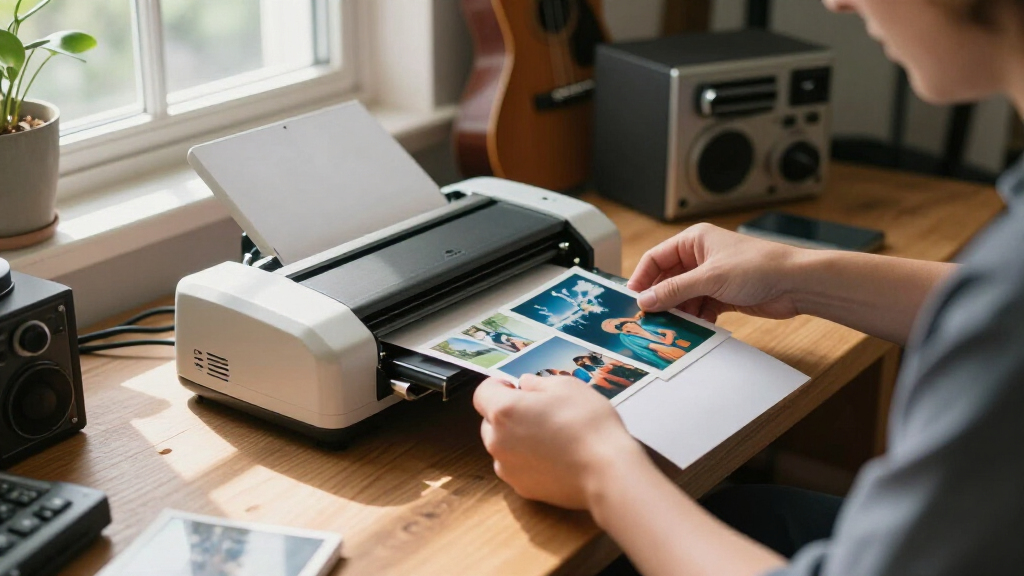
How We Picked
These photo scanners were selected based on multiple criteria relevant to typical buyers. Performance factors like optical resolution, color accuracy, and scanning speed were prioritized to identify models capable of high-quality digitization. Usability features such as ease of setup, interface, and maintenance were also considered, ensuring each scanner offers a straightforward experience. Build quality and durability played a role, especially for models intended for frequent use. Value was assessed by comparing features relative to price, and versatility was examined in terms of supported media types and connectivity options. The ranking reflects a balance of quality, usability, and price to help different types of buyers find suitable options.Factors to Consider When Choosing Photo Scanners
Choosing the right photo scanner involves considering several key factors that impact your experience and the quality of your digitized images. Understanding these elements helps avoid common pitfalls, such as overpaying for unnecessary features or selecting a model that can’t handle your specific media types. Here are the most important considerations when selecting a photo scanner:Resolution and Image Quality
Resolution determines the detail and clarity of your scanned images. For preserving treasured photos, a scanner with at least 4800 dpi is recommended, while high-end models reach 6400 dpi or more for professional-quality restoration. Keep in mind that higher resolution scans generate larger files and may slow down processing. Balance your need for detail with practical storage and workflow considerations to avoid over-investing in unnecessary specs.
Speed and Batch Scanning
If you have a large collection of photos, speed becomes a key factor. High-speed scanners with auto feeders can process dozens of images quickly, saving hours of manual work. However, these models often compromise on resolution or color depth. Conversely, flatbed scanners excel at quality but are slower, making them better suited for occasional use or high-detail projects. Match the speed to your volume needs to prevent frustration or overpaying for features you won’t use.
Media Compatibility
Consider what types of media you’ll scan—standard photos, slides, negatives, or large prints. Some scanners are optimized for specific formats, offering dedicated adapters or higher resolution capabilities. For instance, film and slide scanners often include dedicated holders and color correction features, but they tend to cost more. Confirm that your chosen model supports all your media types to avoid additional purchases or compromises in quality.
Connectivity and Ease of Use
USB is common, but wireless options like Wi-Fi or Ethernet can simplify workflow, especially for multiple users or mobile setups. User interface matters as well; touchscreen controls and bundled software improve ease of operation. Also, consider the size and weight—compact models are easier to store and move, but may lack certain features or resolution. Prioritize models that strike a balance between connectivity, usability, and portability based on your workspace and habits.
Software and Editing Features
Built-in editing tools, color correction, and dust removal can significantly enhance scanned images without external software. Some models come with advanced image processing, which is helpful for restoring old or damaged photos. However, these features often come at a higher price and may require more powerful computers. Decide if integrated editing justifies the extra cost or if third-party software can supplement basic needs.
Frequently Asked Questions
Can I scan negatives and slides with any photo scanner?
Not all photo scanners support negatives and slides. Many budget models are designed primarily for standard prints, while specialized film scanners include attachments or dedicated hardware to handle these formats. If you plan to digitize negatives or slides regularly, investing in a scanner with specific film or slide support will ensure better quality and easier handling. Otherwise, you might need to purchase separate adapters or upgrade later.
Is higher resolution always better for photo scanning?
While higher resolution captures more detail, it also results in larger files and longer processing times. For most personal use or archiving, 4800 to 6400 dpi provides excellent quality. If you’re restoring or enlarging photos for printing, higher resolutions make a difference. However, for casual digitization or sharing online, lower resolutions often suffice, saving storage space and speeding up workflow.
Should I choose a flatbed or a dedicated film scanner?
Flatbed scanners are versatile, capable of handling photos, documents, and some negatives, but may lack the resolution or color fidelity of dedicated film scanners. Dedicated film scanners are optimized for negatives and slides, providing higher detail and better color accuracy for those formats. Your choice depends on your media collection—if negatives are a priority, a dedicated film scanner is worth considering, but for mixed media, a high-quality flatbed may be more practical.
How important is software bundled with the scanner?
Bundled software can simplify scanning and enhance image quality through editing, dust removal, and color correction. Some models include comprehensive editing suites, which are valuable for restoring old photos. However, many users prefer third-party software with advanced features. If you plan to do detailed photo restoration, check the software options included before purchasing, as this can add significant value or justify a higher price.
Is portability a good feature for photo scanners?
Portability is useful if you need to scan photos in various locations or have limited workspace. Compact, lightweight models make setup easy and storage simple, but may sacrifice features like resolution or speed. If your primary need is occasional scanning at home, a larger, more capable flatbed will likely serve you better. For frequent, mobile use, a portable scanner can save time and effort despite potential compromises in image quality.
Conclusion
For general high-quality scanning of treasured photos, the Epson Perfection V550 offers the best balance of resolution, features, and value. If you prioritize speed and bulk digitization, the FastFoto FF-680W is ideal. Beginners or casual users will find the Canon CanoScan LiDE 300 straightforward and affordable. Professionals or serious restorers should consider the Epson V800 for its high resolution and advanced capabilities. Ultimately, your choice hinges on your specific needs—whether it’s high detail, speed, ease of use, or media versatility—so weigh these factors carefully before making a decision.
As an affiliate, we earn on qualifying purchases.Fall Picks
fall essentials