Choosing the right professional studio monitor speakers can significantly impact your mixing accuracy and overall sound quality. The best overall pick in this guide is the Yamaha HS5, known for its balanced sound and reliable performance. For those seeking a more detailed high-frequency response, the ADAM Audio T5V stands out with its clarity and crispness. Meanwhile, the JBL 305P MkII offers excellent value with impressive bass and broad sweet spots. As with any audio gear, tradeoffs include price, size, and tonal character, making it important to prioritize your specific needs. Keep reading for a full breakdown of these options and how to choose the best fit for your studio.

Get audio and creator gear delivered free with Prime
- Fast, free delivery on millions of items
- Prime Video, Amazon Music and more included
- Member-only deals all year
Complete the kit



Key Takeaways
- The top monitors balance accuracy with affordability, with the Yamaha HS5 leading for versatility and reliability.
- Size and power handling are key tradeoffs; larger speakers like the PreSonus Eris E7 XT deliver more bass but require more space and power.
- Sound profile preferences vary; some monitors emphasize bright highs (ADAM T5V), while others prioritize flat response (JBL 305P MkII).
- Build quality and durability are vital for long-term use, especially in professional environments.
- Room size and acoustics heavily influence monitor choice; smaller spaces benefit from more controlled dispersion models.
| Yamaha HS4 Powered Studio Monitor, Pair, Black |  | Best Compact Monitor for Limited Spaces | Packaging: Pair | Speaker Type: Monitor | Color: Black | VIEW ON AMAZON | See Our Full Breakdown |
| Yamaha HS5 Powered Studio Monitor, Pair |  | Best for Precise Mixing and Critical Listening | Speaker Type: Woofer | Power Output: 70 watts | Frequency Response: 54Hz to 30kHz | VIEW ON AMAZON | See Our Full Breakdown |
| ADAM Audio T5V Studio Monitor |  | Best Compact Nearfield Monitor for Detail | Woofer Size: 5 inches | Frequency Response: 45 Hz – 25 kHz | Amplifier Power: 50 W (woofer), 20 W (tweeter) | VIEW ON AMAZON | See Our Full Breakdown |
| JBL 305P MkII 5-Inch 2-Way Active Studio Monitors (Pair) |  | Best for Wide Imaging and Dynamic Range | Speaker Size: 5 inches | Power: 2 x 41 Watts | Inputs: XLR, TRS | VIEW ON AMAZON | See Our Full Breakdown |
| Mackie CR3.5 Studio Monitors (Pair), 3.5″ Woofers, Tone Knob, Black | 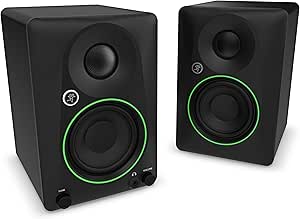 | Best Compact Monitors for Desks and Multimedia | Speaker Size: 3.5 inches | Woofer Diameter: 3.5 inches | Tweeter Diameter: 1 inch | VIEW ON AMAZON | See Our Full Breakdown |
| PreSonus Eris E7 XT 2-Way Active Studio Monitor |  | Best for Precise Mixing and Professional Production | Driver Size: 6.55 inches | High-Frequency Transducer: 1.25 inches (32 mm) silk-dome | Waveguide: EBM waveguide (100° x 60°) | VIEW ON AMAZON | See Our Full Breakdown |
| professional studio monitor speakers buying guide | Enclosure Material | Frequency Response | Speaker Size | Mounting Type |
|---|---|---|---|---|
| Yamaha HS4 Powered Studio Moni | Stainless Steel | 60 Hz – 22 kHz (-10 dB) | 4.5 inches | — |
| Yamaha HS5 Powered Studio Moni | MDF, polypropylene, silk | 54Hz to 30kHz | — | Floor Standing |
| ADAM Audio T5V Studio Monitor | Not specified | 45 Hz – 25 kHz | — | Tabletop |
| JBL 305P MkII 5-Inch 2-Way Act | MDF | — | 5 inches | — |
| Mackie CR3.5 Studio Monitors | Metal, Plastic | — | 3.5 inches | Tabletop |
| PreSonus Eris E7 XT 2-Way Acti | — | 45Hz – 20kHz | — | — |
More Details on Our Top Picks
Yamaha HS4 Powered Studio Monitor, Pair, Black
The Yamaha HS4 stands out for its compact size, making it an excellent choice for producers working in small studios or tight editing setups. Compared to larger monitors like the Yamaha HS5, it sacrifices some bass response due to its smaller 4.5-inch woofer, but it still delivers clear, accurate sound essential for mixing and editing tasks. Its multiple input options—XLR, TRS, RCA—offer flexibility, and Yamaha’s reputation for reliable, professional-grade sound remains intact. However, the limited bass and absence of wireless features mean it’s best suited for environments where space and wired connectivity are priorities. This pick is ideal for those who need accurate, space-efficient monitors without the need for extended low-end response.
Pros:- Compact size fits well into limited space setups
- Multiple input options for versatile connectivity
- Trusted brand with proven professional sound quality
Cons:- Limited bass response due to small woofer size
- No wireless or Bluetooth features
- Requires power outlet for operation
Best for: Producers and editors working in small, space-constrained environments needing accurate sound without extensive bass.
Not ideal for: Users requiring deep bass response or wireless connectivity, such as home theater setups or mobile producers.
- Packaging:Pair
- Speaker Type:Monitor
- Color:Black
- Enclosure Material:Stainless Steel
- Speaker Size:4.5 inches
- Frequency Response:60 Hz – 22 kHz (-10 dB)
- Maximum Output Power:26 W
- Input Connectivity:XLR, TRS, RCA
- Control Method:Touch
Our verdict“This monitor is perfect for those prioritizing accuracy and space efficiency in small studio environments.”
Yamaha HS5 Powered Studio Monitor, Pair
The Yamaha HS5 is designed for professionals who demand flat, detailed sound reproduction, making it a top choice for mixing engineers. Its 5-inch woofer and 1-inch dome tweeter produce a broader frequency range (54Hz – 30kHz) than the HS4, providing more low-end presence and high-frequency clarity. Compared to the JBL 305P MkII, the HS5 offers a more neutral response suited for critical listening, though it’s larger and requires more space. The bi-amplified design ensures clean, precise audio, but its size and need for a dedicated power outlet could be downsides for smaller setups. This monitor makes the most sense for those who need analytical accuracy over portability.
Pros:- Highly accurate, flat frequency response ideal for mixing
- Bi-amplified design provides clean, detailed sound
- Extended high-frequency range for clarity
Cons:- Larger footprint requires more space
- No waterproof features
- Requires balanced connections for optimal performance
Best for: Audio professionals and mixing engineers needing flat response for precise edits and mastering.
Not ideal for: Casual producers or those with limited space who prefer smaller, more portable monitors.
- Speaker Type:Woofer
- Power Output:70 watts
- Frequency Response:54Hz to 30kHz
- Woofer Diameter:5 inches
- Tweeter Diameter:2.54 cm
- Mounting Type:Floor Standing
- Enclosure Material:MDF, polypropylene, silk
- Additional Features:Bi amplification
Our verdict“This monitor is best suited for professionals who prioritize accuracy and detailed sound for mixing and mastering.”
ADAM Audio T5V Studio Monitor
The ADAM Audio T5V offers a compelling option for small studios and home setups, standing out for its high-resolution sound and wide dispersion. Its 5-inch woofer extends bass response down to 45 Hz, but for those needing deep sub-bass, pairing with a subwoofer might be necessary—a common tradeoff for its compact form. The high-resolution U-ART tweeter extends to 25 kHz, delivering crisp, detailed high frequencies that benefit critical listening. Compared to the JBL 305P MkII, the T5V’s DSP-based filters and flexible analog connections provide more precise tuning options. Its main drawback is the lack of detailed enclosure material info, and placement sensitivity can affect sound quality. Overall, this model makes sense for small rooms where detailed sound and wide dispersion matter.
Pros:- High-resolution sound with detailed high and low frequencies
- Wide dispersion creates a broad sweet spot
- Flexible connectivity options for versatile setup
Cons:- Lacks detailed enclosure material info
- Placement sensitivity can affect sound quality
- May require additional subwoofer for extended bass
Best for: Home studio owners and small control room users seeking detailed, wide-coverage sound.
Not ideal for: Producers needing extended low-end or those who prefer fully sealed enclosures for isolation.
- Woofer Size:5 inches
- Frequency Response:45 Hz – 25 kHz
- Amplifier Power:50 W (woofer), 20 W (tweeter)
- Max SPL:106 dB
- Connectivity:Multiple analog inputs
- Enclosure Material:Not specified
- Mounting Type:Tabletop
Our verdict“This monitor is ideal for small studio spaces where detailed, wide-coverage sound is prioritized over deep bass extension.”
JBL 305P MkII 5-Inch 2-Way Active Studio Monitors (Pair)
The JBL 305P MkII provides a balanced, dynamic sound with excellent imaging, making it suitable for a variety of production tasks from music to podcasting. Its dual 41-watt amplifiers power the 5-inch woofer and high-frequency driver effectively, delivering clear, punchy sound with a wide sweet spot. Compared to the Yamaha HS5, the JBL offers more room tuning features, including Boundary EQ and HF Trim, allowing for better room integration. While its size is manageable, it still requires proper placement to avoid imaging issues. This model is best for users who need a versatile monitor with strong imaging and room correction features, but those with space limitations should consider its size.
Pros:- Excellent stereo imaging and wide sweet spot
- Powerful dual 41-watt amplifiers produce dynamic sound
- Customizable room controls for better integration
Cons:- Requires sufficient space for optimal placement
- Overkill for casual or hobbyist use
- Limited bass extension without subwoofer
Best for: Producers and sound designers who need accurate stereo imaging and flexible room tuning capabilities.
Not ideal for: Small spaces or mobile setups where size and portability are critical, or users seeking maximum low-end extension.
- Speaker Size:5 inches
- Power:2 x 41 Watts
- Inputs:XLR, TRS
- Enclosure Material:MDF
- Dimensions:11.7 x 7.3 x 9.1 inches
- Peak SPL:108 dB
Our verdict“This monitor excels in environments where precise imaging and room tuning are paramount for professional results.”
Mackie CR3.5 Studio Monitors (Pair), 3.5″ Woofers, Tone Knob, Black
The Mackie CR3.5 offers a highly portable solution for small studios, desks, and multimedia setups. Its 3.5-inch woofers limit deep bass, but the included tone controls allow for some adjustment to suit different environments. Compared with larger monitors like the Yamaha HS4, it sacrifices low-end extension but compensates with a smaller footprint and easy setup, including all necessary cables and isolation pads. The touch control method may feel less tactile than physical knobs, but it suits casual or desktop use well. This monitor is an excellent choice for those who need compact, affordable audio for mixing or media playback in tight spaces.
Pros:- Compact size fits small desks and spaces
- Includes all necessary cables and isolation pads
- Adjustable tone control for customized sound
Cons:- Limited bass due to small 3.5-inch woofers
- Touch controls may be less tactile for some users
- Not suitable for outdoor or high-volume environments
Best for: Desk-bound creators, students, and multimedia users needing a space-efficient, all-in-one audio solution.
Not ideal for: Producers needing full bass response or those working in large, open spaces where sound dispersion is critical.
- Speaker Size:3.5 inches
- Woofer Diameter:3.5 inches
- Tweeter Diameter:1 inch
- Mounting Type:Tabletop
- Enclosure Material:Metal, Plastic
- Color:Black Vinyl Wrap
Our verdict“This monitor is ideal for casual listening, multimedia, and small-scale mixing in tight spaces with modest sound needs.”
PreSonus Eris E7 XT 2-Way Active Studio Monitor
The PreSonus Eris E7 XT stands out for its wide imaging and accurate sound, making it an excellent choice for mixing engineers who need to hear every detail. Compared to the Yamaha HS4, which offers a more compact footprint, the E7 XT provides a larger 6.55-inch driver that delivers deeper bass and broader soundstage. Its acoustic tuning controls allow for tailored room adjustments, while the integrated EBM waveguide ensures consistent imaging across the sweet spot. The inclusion of Studio One Prime and the Studio Magic plug-in suite adds value for producers starting out. However, its size and price may be a hurdle for casual users or those with limited space. This monitor makes the most sense for dedicated professionals or serious hobbyists who prioritize sound accuracy and customization.
Pros:- Wide imaging for accurate stereo placement
- Includes professional-grade music production software
- Adjustable acoustic tuning controls
Cons:- Relatively expensive compared to entry-level monitors
- Requires sufficient space for proper setup
Best for: Professional mixing engineers and producers requiring detailed sound for critical editing
Not ideal for: Beginners or casual hobbyists with limited space or budget constraints
- Driver Size:6.55 inches
- High-Frequency Transducer:1.25 inches (32 mm) silk-dome
- Waveguide:EBM waveguide (100° x 60°)
- Included Software:Studio One Prime and Studio Magic plug-in suite
- Frequency Response:45Hz – 20kHz
- Power Amplification:100W LF / 100W HF
- Inputs:Balanced TRS and XLR
- Dimensions:13.5 x 9.3 x 11.2 inches
- Weight:15.4 lbs
Our verdict“This monitor is ideal for professionals and serious hobbyists who need precise, wide-ranging sound with room-tailoring options.”
How We Picked
These monitors were selected based on a combination of performance, build quality, user feedback, and value for money. We prioritized models that are widely used in professional environments and offer a balanced sound profile suitable for mixing and mastering. The ranking reflects their ability to deliver accurate audio reproduction, durability, and versatility across different studio setups. We also considered factors like size, power output, and feature set to ensure a comprehensive view tailored to various user needs.| professional studio monitor speakers buying guide | Enclosure Material | Mounting Type |
|---|---|---|
| Yamaha HS4 Powered Studio Moni | Stainless Steel | — |
| Yamaha HS5 Powered Studio Moni | MDF, polypropylene, silk | Floor Standing |
| ADAM Audio T5V Studio Monitor | Not specified | Tabletop |
| JBL 305P MkII 5-Inch 2-Way Act | MDF | — |
| Mackie CR3.5 Studio Monitors | Metal, Plastic | Tabletop |
| PreSonus Eris E7 XT 2-Way Acti | — | — |
Factors to Consider When Choosing Professional Studio Monitor Speakers Buying Guide
Choosing the right studio monitor involves more than just sound quality. It requires understanding your studio environment, budget, and what specific features will enhance your workflow. The following factors will help you evaluate your options more effectively, avoiding common pitfalls like mismatched size or inaccurate frequency response.Size and Power Handling
Monitor size directly impacts bass response and placement flexibility. Larger speakers like the PreSonus Eris E7 XT produce deeper bass but take up more space. Power handling capacity ensures your monitors can operate at high volume without distortion, which is crucial for large rooms or loud mixing environments. Balancing size with your room dimensions and volume requirements helps prevent issues like overstated bass or insufficient headroom.
Frequency Response and Accuracy
For professional mixing, flat and extended frequency response is essential. Monitors that color the sound or boost certain ranges can mislead your mixing decisions. While some models emphasize brightness or bass, a true reference monitor provides a neutral tone. Be cautious of speakers that sound appealing but lack accuracy, especially if you’re aiming for mixes that translate well across various systems.
Room Acoustics and Placement
Your studio environment dramatically influences how monitors sound. Small rooms often cause reflections and standing waves, which can skew your perception of sound. Proper placement, including distance from walls and listening height, is critical. Consider monitors with controlled dispersion or those designed to minimize room interaction if space is limited. Treating your room acoustically can also improve monitor performance significantly.
Budget and Long-Term Value
Investing in quality monitors is a balance between upfront cost and long-term reliability. Cheaper models might save money initially but often lack durability or accuracy. Premium speakers tend to offer better build quality and more precise sound, which can be vital for professional work. Evaluating warranty, service, and upgrade potential helps ensure your investment remains effective over years of use.
Connectivity and Features
Ensure your monitors support the inputs you use most, whether balanced XLR, TRS, or RCA. Some models offer additional features like room correction, multiple input options, or DSP tuning, which can simplify setup and calibration. Avoid monitors with limited connectivity if your studio setup is complex. Prioritizing flexible, user-friendly interfaces can save time and reduce setup frustration.
Frequently Asked Questions
Do I need active or passive studio monitors?
Most professional studio monitors today are active, meaning they include built-in amplification. This simplifies setup and reduces the need for external amps. Passive monitors require an external power amp, which adds complexity and cost but can provide more customization for larger or more complex systems. For most users, active monitors offer a more straightforward, reliable solution, especially in smaller or home studio environments.
How important is flat frequency response in studio monitors?
Flat frequency response ensures your monitors reproduce sound accurately without coloring the signal. This is vital for mixing and mastering, where you need to hear true representations of your audio. Monitors with tailored or boosted frequencies might sound more appealing initially but can mislead your decisions, leading to mixes that don’t translate well across different playback systems.
Can I use bookshelf speakers or hi-fi speakers as studio monitors?
While some hi-fi speakers may seem similar, they often lack the flat response and detailed imaging required for professional mixing. Hi-fi speakers are typically designed to sound pleasing, which can hide issues in your mix. Studio monitors are engineered for neutrality and consistency, making them better suited for critical listening and accurate sound reproduction in a production setting.
How much should I spend on studio monitors?
The price range for quality studio monitors varies widely. Spending more generally yields better build quality, accuracy, and features. For entry-level setups, models in the $200-$400 range like the JBL 305P MkII offer excellent value. For professional-grade accuracy, options in the $600-$1000 range or higher are common. Consider your long-term needs—investing in better monitors can save time and improve your final sound.
Is room treatment more important than the monitors themselves?
Room treatment plays a vital role in how monitors sound in your space. Even the best monitors can produce misleading results if your room has reflective surfaces or standing waves. Proper acoustic treatment, combined with well-chosen monitors, creates a balanced listening environment. Neglecting room acoustics often undermines the accuracy of your monitors, making it harder to achieve professional mixes.
Conclusion
For most users, the Yamaha HS5 offers the best balance of accuracy, affordability, and reliability, making it the ideal choice for professional studios. The ADAM Audio T5V stands out for those prioritizing detailed high frequencies, suitable for more critical mixing tasks. Budget-conscious buyers will find the JBL 305P MkII provides excellent value without sacrificing too much accuracy. Beginners or small-room setups should consider models like the Mackie CR3.5 for their simplicity and size, while professionals needing high power and durability might opt for the PreSonus Eris E7 XT. Your choice depends on your specific needs, space, and budget, but understanding these differences ensures a better fit for your studio.
As an affiliate, we earn on qualifying purchases.Halloween Picks
halloween