Whole-house tankless water heaters can supply hot water on demand, but the right choice depends on your incoming water temperature, household demand, and electrical capacity. My best overall pick is the Stiebel Eltron Tempra 24 Trend, while the Rheem RTEX-24 is a strong alternative from an established brand and the APUS 27kW offers a higher-power option for homes with greater demand. The main tradeoff is between a heater’s potential flow rate and the electrical service needed to support it, especially in colder climates. Smaller 14kW and 18kW models may suit limited demand but can fall short when several fixtures run at once. Read on for the full breakdown, buying advice, and answers to common sizing questions.
Complete the kit


Key Takeaways
Power output separates the field: the 14kW models are better suited to modest or limited simultaneous use, while 24kW and 27kW options offer more capacity when the home’s electrical service and climate allow.
The Stiebel Eltron Tempra 24 Trend leads the 24kW group as the best overall pick; the Rheem RTEX-24 and Westinghouse 24kW add alternatives for shoppers prioritizing brand familiarity or Wi-Fi features.
Wi-Fi appears on several higher-output models, including the 36kW, WINTEMP 27kW, and Westinghouse 24kW. Connectivity can help with monitoring, but it does not replace proper sizing or adequate electrical capacity.
Product names and stated flow rates are not a substitute for a sizing check: actual hot-water delivery changes with incoming water temperature and the temperature rise required at the tap.
Whole-house suitability is conditional. Every electric option needs a compatible panel, wiring, and circuit arrangement; some models may work better for a smaller home or selected fixtures than for multiple simultaneous showers and appliances.


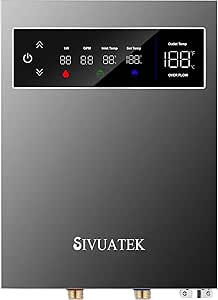


| tankless water heaters whole house | Voltage | Maximum temperature | Dimensions | Listed flow rate |
|---|---|---|---|---|
| 18kW Electric Tankless Water H | 240V | 125°F | 11 in. W x 3 in. H | 2.8 GPM |
| 14kW Electric Tankless Water H | 240V | 110°F | 12.2 in. W x 17.25 in. H | 2.3 GPM |
| APUS 27kW Electric Tankless Wa | 240V | 140°F | 17.7 x 11.4 x 3.5 in. | Up to 6.5 GPM |
| Rheem RTEX-24 24kW 240V Electr | 240V | 140°F | 17.63 in. W x 18.25 in. H x 3.5 in. D | Up to 5.9 GPM |
| 36kW Electric Tankless Water H | 240V | 140°F | 13.7 in. W x 21.5 in. H x 5.2 in. D | Up to 8.7 GPM |
| 14kW Tankless Electric Water H | 240 V | — | 14.2" H × 9.5" L × 3.1" W | — |
| 27kW Tankless Electric Water H | 240 V | 131°F | 12.2" W × 17.26" H × 2.87" D | — |
| Ranein 18kW Tankless Electric | 240 V | 140°F | 13.8" W × 18.7" H × 3.1" D | — |
| WINTEMP 27kW Electric Tankless | 240 V | 140°F | 11.1" W × 19.2" H × 4" D | — |
| Westinghouse WiFi Tankless Wat | 240 V | 140°F | 12.99" W × 17.05" H | — |
| 14kW Electric Tankless Water H | 240V | 131°F | 12.2 in W × 17.25 in H | 3.3 GPM |
| Rheem 18kW 240V Tankless Elect | 240V | 140°F | — | 4.4 GPM |
| 18kW Tankless Electric Water H | 240V | 131°F | 12.2 in W × 17.26 in H | — |
| 18kW Electric Tankless Water H | 240V | 140°F | 11.1 in W × 19.2 in H | 4.3 GPM |
| Stiebel Eltron Tempra 24 Trend | 240V | 140°F | 16.63 in W × 14.5 in H | 0.03 GPM |
More Details on Our Top Picks
18kW Electric Tankless Water Heater, Self-Modulating, 240V
I’d place this 18kW model among the more capable compact options for a small home, but not as a confident choice for heavy simultaneous use. Its listed 2.8 GPM flow rate is more useful than the 14kW model’s 2.3 GPM, yet falls well short of the APUS 27kW’s listed 6.5 GPM. That difference matters when a shower and another hot-water fixture run at once, especially in colder incoming-water conditions. The self-modulating operation and wall-mounted form keep it appealing where space is tight, and its 125°F maximum may suit ordinary household needs without providing much headroom. I’d check the electrical panel and installation requirements before buying: 240V service is mandatory, and the compact footprint doesn’t make electrical work simple.
Pros:- Listed 2.8 GPM flow rate is higher than the 14kW model’s 2.3 GPM.
- Self-modulating operation adjusts power to hot-water demand.
- Compact wall-mounted design can save installation space.
- Includes multiple safety protections.
Cons:- Limited flow compared with the APUS 27kW, making simultaneous use less suitable.
- Requires 240V service and appropriate circuit capacity, which may call for electrical upgrades.
- 125°F maximum temperature offers less adjustment range than the 140°F models.
Best for: Owners of smaller homes or apartments who want a compact electric unit for modest hot-water demand and have suitable 240V electrical capacity.
Not ideal for: Households that regularly run multiple showers or high-flow fixtures together, or buyers who need a higher maximum temperature than 125°F.
- Power:18 kW
- Voltage:240V
- Listed flow rate:2.8 GPM
- Maximum temperature:125°F
- Maximum pressure:174 psi
- Mounting:Wall-mounted
- Dimensions:11 in. W x 3 in. H
Our verdict“Choose this 18kW unit for modest demand and limited space, but look to a higher-wattage model if several fixtures need hot water at once.”
14kW Electric Tankless Water Heater, Self-Modulating, 240V
I’d treat this 14kW model as a near-fixture solution rather than a whole-house heater for a busy home. Its 2.3 GPM listed flow rate is the lowest among these five, so it is better matched to one shower or a limited hot-water draw than several fixtures running together. Compared with the 18kW model, it asks for less heating capacity but also gives up some flow; neither is a substitute for the APUS 27kW or Rheem RTEX-24 when household demand is higher. A digital display and temperature regulation make routine adjustments straightforward, while ETL and UL listings provide useful product credentials. The tradeoff is the 110°F maximum temperature and modest capacity. I’d confirm the unit’s electrical requirements and intended installation location rather than assume its compact format makes it a simple whole-home replacement.
Pros:- Digital display supports straightforward temperature adjustments.
- Self-regulating temperature control helps manage changing demand.
- ETL Certified and UL Listed according to the supplied product data.
- Wall-mounted design can fit near the fixture it serves.
Cons:- 2.3 GPM listed flow rate is lower than the 18kW and larger models in this group.
- 110°F maximum temperature is restrictive compared with models rated to 140°F.
- 240V installation may require electrical work and is not automatically a simple retrofit.
Best for: A homeowner adding hot water near a single shower, sink, or appliance, with 240V service and limited demand at that location.
Not ideal for: Families seeking one heater for multiple bathrooms or simultaneous hot-water use, or anyone needing settings above 110°F.
- Power:14 kW
- Voltage:240V
- Listed flow rate:2.3 GPM
- Maximum temperature:110°F
- Mounting:Wall-mounted
- Dimensions:12.2 in. W x 17.25 in. H
- Certifications:ETL Certified, UL Listed
Our verdict“Pick this unit for a modest, nearby hot-water load, not as the main heater for a household that uses several fixtures at once.”
APUS 27kW Electric Tankless Water Heater, 240V, Up to 6.5 GPM, Instant Hot Water
The APUS 27kW is the strongest middle ground here for buyers seeking a whole-home electric unit without stepping up to the 36kW model. Its listed 6.5 GPM flow rate gives it a substantial capacity advantage over the Rheem RTEX-24’s 5.9 GPM, while the 36kW option is listed at 8.7 GPM for homes with heavier demand. Flow figures alone don’t guarantee simultaneous performance; incoming-water temperature and household use affect what the heater can deliver. I like the practical combination of 140°F maximum temperature and 1°F digital adjustments, but its electrical demands are substantial: the supplied data calls for three 40A breakers and six 8 AWG cables. That can make installation a major project, and the indoor-only limitation narrows placement. It suits a planned electrical upgrade better than a straightforward swap.
Pros:- Listed 6.5 GPM flow rate exceeds the Rheem RTEX-24’s 5.9 GPM listing.
- 140°F maximum temperature and 1°F digital adjustment offer useful control.
- Self-modulating operation adapts heating output to demand.
- Wall-mounted design is relatively compact for its stated capacity.
Cons:- Requires three 40A breakers and six 8 AWG cables according to the supplied specs.
- Professional electrical installation may be needed, adding planning and retrofit complexity.
- Specified for indoor use in protected areas only.
Best for: Households seeking a higher-capacity electric whole-home heater, with multiple hot-water uses and an electrical panel that can support the specified installation.
Not ideal for: Owners looking for a simple replacement, homes with limited electrical service, or anyone needing an outdoor-rated unit.
- Power:27 kW
- Voltage:240V
- Listed flow rate:Up to 6.5 GPM
- Maximum temperature:140°F
- Efficiency:99%
- Electrical requirements:Three 40A breakers; six 8 AWG cables
- Dimensions:17.7 x 11.4 x 3.5 in.
- Weight:19 lb
Our verdict“Choose the APUS 27kW when its listed capacity fits your household and your electrical system can handle the installation.”
Rheem RTEX-24 24kW 240V Electric Tankless Water Heater, Gray
I’d choose the Rheem RTEX-24 for buyers who want a known brand and a clearly specified mid-to-high-capacity electric unit, rather than maximum listed flow. Its 5.9 GPM flow rate sits below the APUS 27kW’s 6.5 GPM and the 36kW WiFi model’s 8.7 GPM, so it is not the capacity leader in this group. Still, its digital thermostatic controls, 140°F maximum, and stated 99.8% efficiency make it a more fully documented alternative to the smaller 18kW and 14kW models. The supplied warranty lists five years against leaks and one year for parts. The main compromise is the electrical setup: three 40A double-pole breakers are specified, which can rule it out for panels without sufficient capacity. Its wall-mounted body saves floor space, but the installation is not a casual DIY swap.
Pros:- Listed 5.9 GPM capacity is higher than the 14kW and 18kW options.
- Digital thermostatic controls make temperature setting direct.
- 140°F maximum temperature and stated 99.8% efficiency.
- Warranty data specifies five years for leaks and one year for parts.
Cons:- Listed flow is lower than the APUS 27kW and 36kW models.
- Requires three 40A double-pole breakers, which may call for electrical upgrades.
- Professional installation is likely for homes needing new circuits or panel work.
Best for: Homeowners who prefer a Rheem-branded electric tankless unit and need more capacity than a small 14kW or 18kW model can provide.
Not ideal for: Buyers with limited electrical-panel capacity or households that need the highest listed flow available in this selection.
- Power:24 kW
- Voltage:240V
- Listed flow rate:Up to 5.9 GPM
- Maximum temperature:140°F
- Efficiency:99.8%
- Electrical requirements:Three 40A double-pole breakers
- Dimensions:17.63 in. W x 18.25 in. H x 3.5 in. D
- Warranty:5 years leak; 1 year parts
Our verdict“The RTEX-24 suits buyers who value Rheem branding and midrange capacity, provided their electrical service supports its demanding installation.”
36kW Electric Tankless Water Heater 240V WiFi Certified
For homes with several bathrooms and overlapping hot-water use, this 36kW model offers the highest listed flow in the group: 8.7 GPM, compared with 6.5 GPM for the APUS 27kW and 5.9 GPM for the Rheem RTEX-24. That makes it the capacity-focused choice, though actual output depends on incoming-water temperature and the household’s draw pattern. WiFi control adds remote temperature adjustment, a convenience the APUS and Rheem descriptions do not list. The cost of that capacity is an unusually demanding electrical installation: the product data calls for a 300A household electrical service and multiple breakers. I would verify both the panel and the installer’s requirements before selecting it; homes that only need one or two fixtures supplied are better matched to the smaller units. Its 140°F maximum also matches, rather than exceeds, the APUS and Rheem.
Pros:- Highest listed flow rate in this group at 8.7 GPM.
- WiFi control allows temperature adjustment from a smartphone.
- Wall-mounted form saves floor space for a high-capacity unit.
- ETL certification is listed in the supplied product data.
Cons:- Product data specifies a 300A household electrical service and multiple breakers.
- Installation may require substantial professional electrical work.
- 140°F maximum temperature is no higher than the APUS 27kW or Rheem RTEX-24.
Best for: Owners of larger homes, including households with several bathrooms, who need substantial simultaneous hot-water capacity and have compatible electrical service.
Not ideal for: Smaller homes, buyers replacing a heater without electrical upgrades, or households that cannot support the stated 300A service requirement.
- Power:36 kW
- Voltage:240V
- Listed flow rate:Up to 8.7 GPM
- Maximum temperature:140°F
- Maximum pressure:150 psi
- Electrical service:300A household service specified
- Water connection:3/4 in. NPT
- Dimensions:13.7 in. W x 21.5 in. H x 5.2 in. D
- Certification:ETL
Our verdict“Choose this 36kW model for a high-demand home only after confirming that its major electrical requirements are feasible.”
14kW Tankless Electric Water Heater – On Demand, 240V, 3.38 GPM
This is the most modestly sized option in this group, making it a better match for a smaller household than the higher-output WINTEMP 27kW or Westinghouse 24kW. Its stated 3.38 GPM flow rate can serve a few points of use, but simultaneous showers and other hot-water demands may exceed its capacity, particularly when incoming water is cold. The compact 14.2-inch-tall body can help when wall space is limited, and the temperature range reaches 140°F. The tradeoff is electrical readiness: the listing calls for at least 150 amps of household circuit capacity, and professional electrical work may be needed. I’d choose it for a compact home with restrained simultaneous demand, not as a high-demand whole-house solution.
Pros:- Compact 14.2-inch-tall body suits installations with limited wall space.
- Stated 3.38 GPM capacity can serve multiple modest hot-water demands.
- Temperature can be set from 86°F to 140°F.
- Description lists safety protections and stable temperature control.
Cons:- Lower stated flow than the 24kW Westinghouse and 27kW WINTEMP models.
- Requires at least 150 amps of household circuit capacity according to the listing.
- Professional electrical work may be needed, adding installation complexity.
Best for: Owners of smaller homes or apartments with one or two regular hot-water demands who want a compact electric unit and have suitable electrical capacity.
Not ideal for: Larger households that often run multiple showers or appliances at once, or homes that cannot accommodate the stated electrical capacity and installation work.
- Power:14 kW
- Voltage:240 V
- Stated flow rate:3.38 GPM
- Temperature range:86°F–140°F
- Dimensions:14.2″ H × 9.5″ L × 3.1″ W
- Water connections:1/2″ NPT
Our verdict“Choose this compact 14kW model for a smaller household with moderate hot-water demand, but select a higher-output unit for frequent simultaneous use.”
27kW Tankless Electric Water Heater 240V Whole House Gray
Among these five, this model puts the clearest emphasis on temperature feedback: its LED display shows GPM and kW, and the listing specifies control within ±1°F. That can help households monitor output as demand changes, a different priority from the Westinghouse 24kW, which stands out for its stated higher flow figure and smart-home compatibility. At 27kW, this unit is positioned for broader household use than the 14kW option, but the description does not provide a numeric maximum GPM, so I wouldn’t assume it will meet every home’s peak demand. It also requires three 40-amp breakers, which may call for panel work, and its 131°F maximum is lower than the 140°F ceilings listed for several alternatives.
Pros:- Display provides GPM and kW readings to help track unit operation.
- Listing specifies temperature control within ±1°F.
- 27kW output is a higher-capacity class than the 14kW model in this batch.
- Wall-mount design measures just 2.87 inches deep.
Cons:- Maximum temperature is 131°F, below the 140°F maximum listed for the WINTEMP and Westinghouse models.
- Requires three 40-amp breakers and may need an electrical upgrade.
- No numeric maximum flow rate is provided in the supplied specifications.
Best for: Homeowners who want visible flow and power readings with close temperature adjustment and have the electrical capacity for a 27kW unit.
Not ideal for: Buyers who need a stated high maximum GPM, a temperature ceiling above 131°F, or a straightforward DIY installation.
- Wattage:27 kW
- Voltage:240 V
- Maximum temperature:131°F
- Temperature control:±1°F
- Display:LED; displays GPM and kW
- Mounting:Wall mount
- Dimensions:12.2″ W × 17.26″ H × 2.87″ D
- Certification:ETL
Our verdict“Pick this 27kW unit if precise, visible temperature control matters more than a higher stated flow rate or a 140°F maximum.”
Ranein 18kW Tankless Electric Water Heater, Max 4.3 GPM, 240V, Whole House
The Ranein sits between the compact 14kW heater and the larger 24kW and 27kW models, with a stated 4.3 GPM maximum and a 140°F temperature ceiling. That makes its capacity claim more useful for comparison than the 27kW gray unit, whose supplied specs do not give a numeric maximum flow. It is still an 18kW electric heater, so real-world delivery depends on incoming water temperature and how many outlets run at once; the maximum figure alone does not promise whole-house performance in every climate. The wall-mounted stainless-steel unit has adjustable temperature control and an LED display, but it needs dedicated 240V circuits and careful installation. I’d favor it for a home with moderate concurrent demand, not a large household expecting several heavy draws together.
Pros:- Stated maximum flow of 4.3 GPM offers a clear capacity reference.
- Adjustable temperature control and LED display support straightforward setting changes.
- 140°F maximum temperature matches the ceilings listed for the WINTEMP and Westinghouse models.
- Wall-mounted stainless-steel construction keeps the unit relatively compact.
Cons:- 18kW output is below the 24kW Westinghouse and 27kW models in this batch.
- Maximum flow may not cover several high-demand outlets running simultaneously.
- Requires dedicated 240V circuits and professional installation may be appropriate.
Best for: Households with moderate hot-water demand that want a stated flow figure, adjustable controls, and a midrange alternative to 24kW or 27kW units.
Not ideal for: Large or cold-climate households that regularly run several hot-water outlets together, or buyers without suitable 240V circuits and a secure mounting location.
- Power:18 kW
- Voltage:240 V
- Maximum flow rate:4.3 GPM
- Maximum temperature:140°F
- Maximum pressure:130 psi
- Dimensions:13.8″ W × 18.7″ H × 3.1″ D
- Weight:7.9 kg
- Material:Stainless steel
- Certification:CSA
Our verdict“Choose the Ranein for moderate household demand when its 4.3 GPM claim fits your usage and your electrical supply supports an 18kW unit.”
WINTEMP 27kW Electric Tankless Water Heater 240V ETL Certified WiFi
The WINTEMP has the highest stated flow in this batch at 6.5 GPM, giving it a stronger published capacity claim than the Ranein’s 4.3 GPM and the Westinghouse’s 5.56 GPM. That makes it the most compelling pick here for households comparing simultaneous-use potential, though actual output still depends on incoming water temperature and demand. Its WiFi control adds remote temperature adjustment, while self-modulating operation is intended to match energy use to demand. Compared with the Westinghouse, this unit claims more flow but calls for a 200-amp household service and weighs less at 12.7 pounds. The 140°F ceiling is shared by several alternatives. Buyers should verify both electrical service and local flow needs before treating its maximum figure as enough for a whole home.
Pros:- Highest stated maximum flow in this batch at 6.5 GPM.
- WiFi control allows remote temperature adjustment.
- Self-modulating operation is designed to adjust power use to demand.
- ETL certification and a 3/4-inch NPT water connection are specified.
Cons:- Listing calls for 200-amp household service and professional installation.
- Maximum flow can still be insufficient for larger households with high simultaneous demand.
- The stated 140°F maximum may not suit buyers who need a higher setpoint.
Best for: Households seeking the highest stated flow in this group, remote temperature adjustment, and a 27kW unit that can be installed with suitable electrical service.
Not ideal for: Homes without 200-amp service, buyers seeking a low-complexity installation, or households whose peak demand exceeds what a 6.5 GPM maximum can supply.
- Power:27,000 W
- Voltage:240 V
- Maximum flow rate:6.5 GPM
- Maximum temperature:140°F
- Maximum pressure:150 psi
- Dimensions:11.1″ W × 19.2″ H × 4″ D
- Weight:12.7 lb
- Water connection:3/4″ NPT
- Safety certification:ETL
Our verdict“Choose the WINTEMP if its 6.5 GPM maximum suits your expected demand and your home has the required electrical service.”
Westinghouse WiFi Tankless Water Heater Electric, 24kW, 240V, Whole House, Gray
Westinghouse is the smart-home choice in this set, with WiFi compatibility plus Alexa and Google Home support for remote control and monitoring. Its stated maximum flow of 5.56 GPM puts it above the Ranein’s 4.3 GPM, but below the WINTEMP’s 6.5 GPM claim. At 24kW, it also falls between those models by power, which may suit a household that wants more stated capacity than an 18kW unit without moving to 27kW. The listing warns that flow varies with water pressure and temperature settings, so the maximum is not a guarantee of simultaneous whole-house supply. It is hard-wired and calls for professional installation; unlike the WINTEMP, its supplied specifications do not state a required household service size.
Pros:- WiFi compatibility includes Alexa and Google Home support.
- Stated maximum flow of 5.56 GPM exceeds the Ranein’s 4.3 GPM figure.
- 24kW output sits between the 18kW Ranein and 27kW models.
- ETL-certified wall-mount design.
Cons:- Requires hard wiring and professional installation.
- Stated flow varies with water pressure and temperature settings.
- Maximum temperature is 140°F, and the WINTEMP lists a higher maximum flow.
Best for: Smart-home households that want Alexa or Google Home control and a 24kW unit with a stated maximum flow above the Ranein’s.
Not ideal for: Buyers who need the highest stated flow in this group, want a plug-in installation, or cannot arrange hard wiring and professional setup.
- Wattage:24 kW
- Voltage:240 V
- Maximum flow rate:5.56 GPM
- Maximum temperature:140°F
- Maximum pressure:120 psi
- Dimensions:12.99″ W × 17.05″ H
- Weight:17 lb
- Mounting:Wall mount
- Certification:ETL
Our verdict“Pick the Westinghouse if smart-home control is a priority and its 5.56 GPM stated maximum fits your household’s likely demand.”
14kW Electric Tankless Water Heater 240V for Sink & Shower, Gray
My point-of-use pick in this group, this 14kW heater is better matched to one or two nearby fixtures than to a whole-house demand. Its listed 3.3 GPM flow rate can suit a sink and shower when demand is modest, but it leaves less room for simultaneous use than the Rheem 18kW or the Stiebel Eltron Tempra 24 Trend. The compact wall-mounted format and temperature setting range of 86°F to 131°F give buyers control without reserving space for a storage tank. Leakage and overheating protections are useful safeguards, though they do not simplify the electrical work: the product data calls for a 60-amp breaker, and installation may require an electrical upgrade. I’d choose it for a small home or a remote fixture, not as a default whole-house answer.
Pros:- 3.3 GPM listed flow rate suits modest demand at one or two nearby fixtures.
- Temperature control spans 86°F to 131°F.
- Wall-mounted design avoids the footprint of a storage tank.
- Leakage and overheating protections are listed.
Cons:- Limited flow makes simultaneous multi-fixture whole-house use a poor fit.
- The stated 60-amp circuit breaker requirement may call for an electrical upgrade.
- Installation can be complex for owners without electrical and plumbing experience.
Best for: Owners of small households or detached spaces who need hot water for a nearby sink and shower and have suitable 240V electrical service.
Not ideal for: Families expecting several showers or appliances to run at once, or homeowners seeking a whole-house unit without checking panel capacity and circuit requirements.
- Wattage:14 kW
- Voltage:240V
- Listed flow rate:3.3 GPM
- Maximum temperature:131°F
- Mount type:Wall
- Dimensions:12.2 in W × 17.25 in H
- Weight:6.85 kg
- Certification:ETL
Our verdict“Choose this for a small household or point-of-use setup, but look to a higher-capacity model such as the Stiebel Eltron Tempra 24 Trend for broader whole-house demand.”
Rheem 18kW 240V Tankless Electric Water Heater, Gray
Among the 18kW options here, I’d favor the Rheem 18kW for buyers who want a straightforward mid-range whole-home unit from a named manufacturer. Its 4.4 GPM listed flow rate and 140°F maximum setting give it more stated capacity and temperature headroom than the 14kW point-of-use model, while self-modulation adjusts power to demand rather than drawing full output at every moment. That does not make it a fit for every large household: simultaneous showers and other hot-water loads can still exceed its capacity, and the product data describes it as potentially insufficient for larger homes. Compared with the WiFi-enabled 18kW model, this Rheem emphasizes digital thermostatic control and copper heating elements rather than remote operation. Buyers should confirm the home’s 240V supply and demand before choosing it.
Pros:- Listed 4.4 GPM flow rate is higher than the 14kW model in this group.
- Self-modulating control adjusts power to hot-water demand.
- Digital thermostatic control supports temperature adjustment.
- Copper heating elements are specified for the unit.
Cons:- The 18kW output may not cover heavy simultaneous demand in a large household.
- Requires a 240V power supply and adequate electrical capacity.
- Lacks the WiFi control offered by another 18kW option in this group.
Best for: Households seeking an 18kW electric whole-home unit for moderate hot-water demand, especially where a familiar brand and digital temperature control are priorities.
Not ideal for: Large households with frequent simultaneous showers or homes without confirmed 240V electrical capacity; its listed 4.4 GPM does not guarantee ample output in every climate.
- Wattage:18 kW
- Voltage:240V
- Listed flow rate:4.4 GPM
- Maximum temperature:140°F
- Efficiency:99.8%
- Maximum pressure:150 psi
- Mount type:Wall
- Weight:14.8 lb
Our verdict“Pick the Rheem for moderate whole-home demand and digital control, but choose a higher-output unit if several fixtures commonly run together.”
18kW Tankless Electric Water Heater 240V Whole House Gray
This is the compact 18kW pick for buyers who need a wall-mounted whole-house unit and have limited installation space. At 12.2 inches wide, it has a narrower stated footprint than the Rheem 18kW, while keeping the same nominal wattage. The product description claims use across multiple outlets, but the supplied specs do not list a flow rate; its stated practical limit is three to four outlets simultaneously, so I would not rank it ahead of the Rheem on capacity. The 131°F maximum setting is also lower than the Rheem’s 140°F. ETL certification, an LED display, and listed high thermal efficiency add useful detail, but the requirement for two 40-amp breakers and potentially difficult installation make electrical planning central to the decision. It suits space-constrained homes with moderate demand better than high-use households.
Pros:- Narrow 12.2-inch stated width helps when wall space is restricted.
- 18kW output is positioned for whole-house use.
- LED display supports temperature setting visibility.
- ETL certification is listed.
Cons:- No flow-rate figure is provided, making capacity comparisons harder.
- The stated maximum temperature of 131°F is below the Rheem 18kW’s 140°F.
- Installation requires two 40-amp circuit breakers and may be difficult for DIY users.
Best for: Homeowners with limited wall space who want an 18kW electric unit for moderate whole-house use and can accommodate the specified breaker setup.
Not ideal for: Households needing verified high flow or frequent simultaneous hot-water use, and DIY installers who are not prepared for two 40-amp breakers and installation complexity.
- Wattage:18 kW
- Voltage:240V
- Maximum temperature:131°F
- Simultaneous outlets:Listed for 3–4 outlets
- Mount type:Wall
- Dimensions:12.2 in W × 17.26 in H
- Depth:15.87 in
- Certification:ETL
Our verdict“Choose this compact 18kW model when installation space is tight and demand is moderate, but favor the Rheem 18kW if a published flow-rate figure matters to your sizing decision.”
18kW Electric Tankless Water Heater 240V ETL Certified WiFi
For buyers who value app-based adjustment, this WiFi-enabled 18kW heater has a feature the Rheem 18kW and the compact 18kW model do not list: remote control. Its 4.3 GPM flow rate is close to the Rheem’s 4.4 GPM, but the figures still point to moderate rather than unrestricted whole-house capacity, especially when multiple fixtures operate together. A 4-inch depth makes it notably shallow, which can help in a crowded utility area, and the 140°F maximum setting matches the Rheem. The tradeoff is that the product data recommends professional installation, and its stated suitability is limited to smaller homes in mild to moderate climates. I’d put this ahead of the other 18kW options only when WiFi control and a slim profile are priorities—not when maximum household capacity is the deciding factor.
Pros:- WiFi control allows remote temperature adjustments.
- Listed 4.3 GPM flow rate is close to the Rheem 18kW’s 4.4 GPM.
- Four-inch depth suits tight installation areas.
- Includes listed child lock, LED display, and overheat protection.
Cons:- The 18kW output and 4.3 GPM listing may not meet heavy simultaneous household demand.
- Professional installation is recommended due to electrical and plumbing requirements.
- The stated fit is limited to smaller homes in mild to moderate climates.
Best for: Owners of smaller homes who want remote temperature adjustments, a shallow wall-mounted unit, and moderate hot-water capacity.
Not ideal for: Large households or homes in cold climates with several simultaneous hot-water demands, and buyers who prefer an installation approach that does not require professional help.
- Wattage:18 kW
- Voltage:240V
- Listed flow rate:4.3 GPM
- Maximum temperature:140°F
- Maximum pressure:130 psi
- Dimensions:11.1 in W × 19.2 in H
- Depth:4 in
- Warranty:2-year limited manufacturer warranty
Our verdict“Choose this model if remote control and shallow installation matter more than the slightly higher listed flow rate of the Rheem 18kW.”
Stiebel Eltron Tempra 24 Trend Electric Tankless Water Heater, 24kW, 240V
With 24kW output, the Stiebel Eltron Tempra 24 Trend is the strongest whole-house candidate in this five-product group by rated wattage. It offers more heating capacity than the 18kW Rheem and the WiFi-enabled 18kW model, giving a household more headroom for overlapping hot-water use. That advantage depends on the home’s electrical supply and incoming water temperature; the product data itself cautions that flow can be limited in very cold climates and describes the fit as one or two showers. I would verify sizing with a qualified installer rather than rely on the supplied 0.03 GPM listing, which does not align with the product’s multi-shower description. It also requires hard wiring and at least 150A electrical service, a substantial planning constraint. Buyers get digital control and self-modulation, but not an easy retrofit for every home.
Pros:- 24kW rating provides more nominal heating output than the 18kW models in this group.
- Self-modulation adjusts power use to demand.
- Digital temperature display supports direct setting checks.
- Wall-mounted body is listed at 4.63 inches deep.
Cons:- Requires hard wiring and at least 150A electrical service.
- The supplied 0.03 GPM flow-rate figure is not useful for sizing against the multi-shower description.
- The product data notes reduced flow suitability in very cold climates and limits the stated fit to one or two showers.
Best for: Homeowners seeking a higher-output electric tankless unit for a moderate-demand whole-house setup who have verified adequate electrical service and installation support.
Not ideal for: Homes with less than 150A service, owners seeking a simple DIY replacement, or households expecting high flow for multiple showers in very cold incoming-water conditions.
- Wattage:24 kW
- Voltage:240V
- Listed flow rate:0.03 GPM
- Maximum temperature:140°F
- Maximum pressure:150 psi
- Mount type:Wall
- Dimensions:16.63 in W × 14.5 in H
- Warranty:7-year leakage; 3-year parts
Our verdict“Choose the Tempra 24 Trend for higher rated output when your electrical service and climate suit it, but confirm actual flow sizing before purchase.”

How We Picked
I compared the 15 listed heaters by the factors that determine whether an electric tankless unit can serve a whole home: power output, stated flow information, controls, certifications where listed, and likely installation demands. I gave greater weight to models with a clearer fit for whole-house use and useful information for comparing capacity, while treating Wi-Fi as a convenience rather than a performance advantage. I also separated lower-kilowatt models from higher-output choices instead of implying that one size fits every household.
The ranking reflects overall fit, usability, and the usefulness of the available specifications, not a claim that every home can install every model. The 24kW Stiebel Eltron Tempra 24 Trend takes the lead as a balanced choice among the listed products; Rheem’s 24kW model and the higher-output APUS 27kW stand out for different buyer priorities. Models with limited specifications or lower output rank as more specialized picks, since buyers need to verify flow at their actual temperature rise and confirm electrical requirements before purchase.
Factors to Consider When Choosing Tankless Water Heaters Whole House
Choosing a heater for a whole home starts with your home’s demand and utilities, not the largest number on a product page. These checks can prevent a mismatch between rated output, real-world hot-water needs, and the work required to install the unit.
Size for Simultaneous Hot-Water Demand
List the fixtures you expect to use at the same time, such as two showers, a shower and dishwasher, or a sink and laundry cycle. Add their approximate flow needs, then check whether the heater can supply that combined flow at the temperature rise your home requires. A model’s maximum GPM figure may apply only under favorable conditions, so it should not be treated as a constant output. Choosing a unit based on one shower can leave the household short during busy periods. Choosing far more capacity than needed can add electrical and installation demands without solving a real problem. Use fixture-flow estimates and a qualified sizing assessment before settling on a model.
Account for Incoming Water Temperature
Tankless heaters raise incoming water to the temperature you set, so colder source water requires a larger temperature rise. That can reduce the flow a heater can deliver even when its advertised output stays the same. Homes in cold regions may need more capacity than homes with warmer groundwater to support the same number of fixtures. This is one reason a stated flow rate should not be compared without checking the conditions behind it. Ask a plumber to use local winter water temperatures when sizing the system. A heater that appears adequate based on a mild-season estimate may struggle during the coldest months.
Check Electrical Service Before Buying
Electric tankless units can draw substantial power, and higher-kilowatt models may need multiple dedicated circuits and significant panel capacity. Confirm the model’s voltage, amperage, breaker, and wire requirements against your home’s electrical service before purchase. A panel upgrade or new wiring can change the project scope, so include that assessment early rather than after delivery. Do not assume that a standard 240V connection means the heater will work with any existing panel. Have a licensed electrician verify the load and installation plan. If your service cannot support the desired output, a lower-output unit may not meet whole-house demand, making another water-heating approach worth discussing.
Decide Whether Wi-Fi Adds Practical Value
Connected controls can make it easier to check settings or monitor a heater, but they do not raise its heating capacity. Wi-Fi is most useful if remote access or status checks fit your routine and the installation location has a reliable signal. Compare the specific control functions rather than treating connectivity as proof of better performance. A simpler model may be the better purchase if you mainly need dependable temperature control and do not want another connected appliance. Keep basic operation and service access in mind, since an app should not be the only convenient way to adjust the unit. Put sizing, electrical fit, and support ahead of smart features.
Plan for Installation, Service, and Water Conditions
Tankless equipment needs suitable placement, accessible connections, and an installation that follows the manufacturer’s instructions and local code. Ask whether the chosen location allows straightforward maintenance and whether the water supply’s mineral content calls for routine descaling. Hard water can contribute to scale buildup, which may reduce performance and add service needs over time. Check warranty terms, required maintenance, and who can service the unit in your area before choosing a model. A lower-output heater that is easy to support may be a better fit than a more powerful unit with installation hurdles. Get a written installation plan that covers electrical work, plumbing changes, permits, and ongoing upkeep.
Frequently Asked Questions
Can a 14kW electric tankless heater serve my whole house?
It can serve a small home or limited hot-water demand, but the label alone cannot confirm that it will support every fixture. Its available flow falls as the required temperature rise increases, so cold incoming water can narrow its practical capacity. If two showers or a shower and an appliance often run together, compare their combined flow needs with the unit’s output under local winter conditions. The 14kW models in this lineup are better approached as limited-demand candidates than automatic whole-house solutions. Ask an electrician and plumber to confirm both capacity and panel compatibility before buying.
Will a 27kW or 36kW model work with my existing electrical panel?
Not necessarily; high output can require substantial electrical service, dedicated circuits, and wiring sized for the specific unit. The voltage listing by itself does not show whether your panel has enough capacity or room for the required breakers. A licensed electrician should review the heater’s installation manual, your panel rating, existing household loads, and the proposed circuit layout. If upgrades are needed, include that work in the project decision before choosing a model. A smaller heater is not automatically a suitable workaround if it cannot meet your hot-water demand.
How should I compare advertised GPM figures between these heaters?
Compare GPM only when you know the temperature rise used to produce the figure. A heater’s flow at a small temperature rise can be much higher than its flow when cold groundwater must be heated for a hot shower. Check the technical documentation for performance tables, then match those numbers to your local winter inlet temperature and desired outlet temperature. Also add the flow needs of fixtures likely to run together. If a listing provides only a maximum figure without test conditions, treat it as a starting point rather than a reliable whole-house estimate.
Is a Wi-Fi model a better choice than a non-connected heater?
Wi-Fi is useful if remote monitoring or control matters to you, but it does not make a heater produce more hot water. A connected 24kW or 27kW model still needs the same careful sizing and electrical review as a non-connected unit with comparable output. Check which functions the app actually offers, whether local controls remain available, and whether the installation area has dependable connectivity. If you will rarely use the app, favor capacity, service access, and electrical fit instead. Connectivity should be a tie-breaker, not the main reason to select a whole-house heater.
Should I replace my tank heater with an electric tankless unit if my panel is already full?
A full panel is a reason to pause and get an electrical assessment, not a reason to assume the swap will be straightforward. Many electric tankless heaters need substantial dedicated circuit capacity, and the required work varies by model and home. Ask an electrician to calculate the available load and price any panel or wiring changes before you commit. Compare that project scope with other water-heating options suited to your home’s utilities and hot-water demand. The right choice depends on total installation needs, not just the heater’s listed output.
Conclusion
For most shoppers comparing these electric options, I recommend the Stiebel Eltron Tempra 24 Trend as the best overall, provided a professional confirms its capacity and electrical fit. The best value depends on demand: a 14kW or 18kW model can make sense for a smaller household, but it is a poor substitute for a properly sized whole-house unit. For a premium, higher-output direction, compare the 36kW Wi-Fi model with the APUS and WINTEMP 27kW options only after checking service requirements. The best pick for beginners is the Rheem RTEX-24 for shoppers who want a recognizable brand in the 24kW class, though it still calls for professional sizing. For specific needs, choose Wi-Fi models for remote monitoring, smaller units for limited demand, and higher-output models for heavier use when the home’s electrical system can support them; confirm flow at local winter temperatures before deciding.