
If you’re looking for healthy coffee alternatives, you can try vibrant matcha, which provides antioxidants and a gentle caffeine boost, sourced sustainably to support the environment. Roasted chicory offers a warm, nutty flavor similar to coffee without caffeine, while golden milk made from turmeric and plant-based milks delivers anti-inflammatory benefits. These options are eco-friendly and flavorful, helping you enjoy your mornings responsibly. Keep exploring to discover even more ways to enjoy mindful, nourishing beverages beyond traditional coffee.
Key Takeaways
- Matcha offers a vibrant, antioxidant-rich alternative to coffee, supporting health and sustainable sourcing practices.
- Roasted chicory root provides a caffeine-free, nutty coffee substitute with eco-friendly cultivation.
- Golden milk made from turmeric and plant-based milks offers anti-inflammatory benefits and a warming beverage option.
- Herbal teas like rooibos, chamomile, and peppermint deliver naturally soothing, sustainably sourced caffeine-free choices.
- Prioritizing responsibly sourced ingredients promotes environmentally conscious consumption and healthier beverage routines.
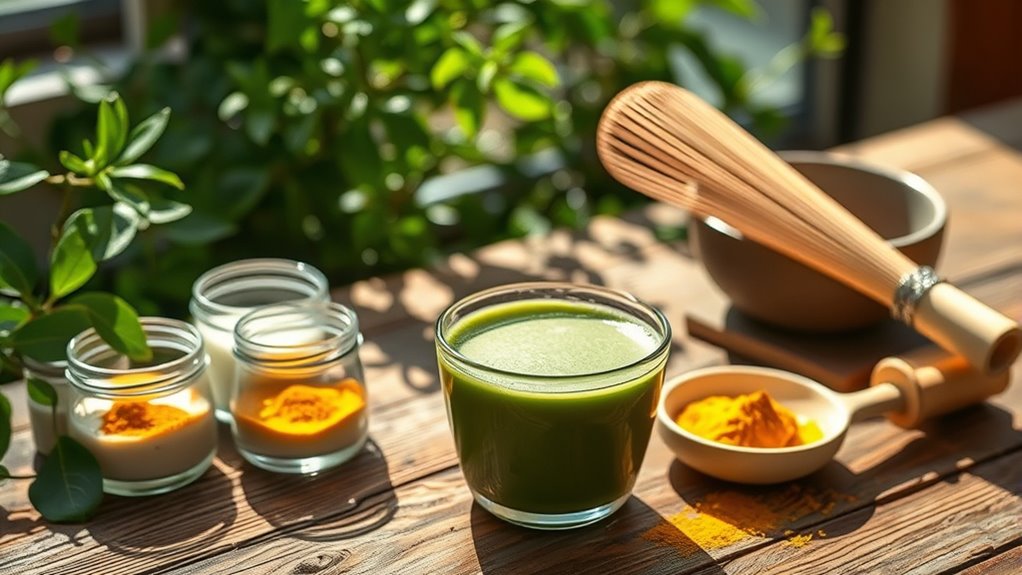
If you’re looking to reduce your caffeine intake or simply want healthier options, exploring alternatives to coffee can be a great move. One popular choice that’s gaining traction is matcha, a vibrant green tea powder known for its unique flavor profiles and health benefits. When selecting matcha, it’s important to contemplate sustainable sourcing. High-quality matcha is often produced by farms that prioritize environmentally friendly practices and fair labor conditions, ensuring you enjoy your beverage guilt-free. The flavor profiles of matcha are rich and complex, with a naturally umami taste complemented by a subtle sweetness and a slight bitterness. This makes it versatile enough to be enjoyed as a traditional tea or used in smoothies and desserts. Additionally, choosing sustainable ingredients supports environmental conservation efforts and promotes responsible consumption.
Exploring sustainable, high-quality matcha offers rich flavor and health benefits with an eco-friendly touch.
Beyond matcha, there are other plant-based options that can serve as excellent coffee alternatives. For example, roasted chicory root offers a warm, nutty flavor that closely resembles coffee without the caffeine content. Chicory is often sourced sustainably, with many farmers adopting eco-friendly farming practices, which appeals to consumers seeking environmentally responsible choices. Its flavor profile is robust yet smooth, making it a satisfying beverage on its own or as a mix-in for other drinks.
Golden milk, made from turmeric, has also become popular for its anti-inflammatory properties and comforting flavor. It’s typically prepared with plant-based milks like almond or coconut, which can be sourced sustainably. The flavor profiles of golden milk are earthy and spicy, offering a different sensory experience compared to coffee. It’s a nourishing drink that can be easily customized with cinnamon or ginger, adding layers of flavor while supporting a healthy lifestyle.
Another innovative alternative is herbal tea blends, which come in countless varieties such as rooibos, chamomile, or peppermint. These teas are often sourced from farms committed to sustainable practices, ensuring that your choice supports environmental conservation. Their flavor profiles are naturally soothing and aromatic, making them perfect for relaxing moments or a gentle morning pick-me-up.
Choosing healthier coffee alternatives isn’t just about reducing caffeine; it’s about making mindful choices that align with your health goals and values. By opting for beverages made from ingredients with sustainable sourcing and distinctive flavor profiles, you can enjoy a satisfying, nutritious drink that complements your lifestyle. These options help you break away from traditional coffee routines while still indulging in flavorful, comforting beverages.
Frequently Asked Questions
Are Matcha and Other Alternatives Suitable for Children?
Matcha and other alternatives aren’t typically child-friendly beverages, as they contain caffeine that may not be safe for children. You should avoid giving children these drinks unless they’re specifically designed for kids and labeled safe for consumption. Instead, opt for healthier, caffeine-free options like flavored water, smoothies, or herbal teas. Always consult with a pediatrician before introducing new beverages to confirm safe consumption for your child.
How Do These Beverages Impact Sleep Quality?
Caffeine sensitivity from matcha or other healthy coffee alternatives can act like a mischievous night owl, quietly disrupting your sleep. If you’re sensitive, these beverages might delay your bedtime or cause restless nights, turning your sleep into a choppy sea rather than a peaceful harbor. To safeguard your rest, monitor your intake, especially in the afternoon, and listen to your body’s signals to avoid sleep disruption.
Can They Replace Daily Coffee Completely?
Yes, you can replace your daily coffee with matcha and other healthy alternatives, but it depends on your caffeine tolerance and flavor preferences. Matcha has a lower caffeine content than coffee, helping you avoid jitters, while offering a mild, earthy flavor you might enjoy more. Experiment with different beverages to find what works best for your taste and energy needs, gradually reducing your reliance on coffee.
Are There Any Allergies Linked to These Drinks?
Ever wonder if your favorite healthy drink could cause allergies? Yes, some ingredients in matcha or herbal infusions might trigger dairy sensitivities or ingredient allergies. Always check labels for potential allergens like nuts, soy, or gluten, and consider your own sensitivities before switching. Are you prepared to identify and avoid ingredients that could cause reactions? Staying informed helps you enjoy these alternatives safely and confidently.
What Is the Best Time to Consume These Alternatives?
You should consume these healthy coffee alternatives during the morning or early afternoon to maximize their benefits. Timing considerations are key, as drinking them too late might disrupt your sleep. For ideal consumption, enjoy them about 30 minutes to an hour after waking up or between meals. This helps you stay energized without interfering with your natural sleep cycle, ensuring you get the most out of their nutritional benefits.
Conclusion
So, next time you crave that energizing boost, remember there’s a universe of healthy options beyond your usual coffee. Matcha and other alternatives can skyrocket your vigor without the crash, turning your daily routine into a ritual of wellness. Don’t settle for less when you can elevate every sip to a level of brilliance that outshines even the strongest brew. Embrace these vibrant choices and transform your mornings into a celebration of health and vitality.