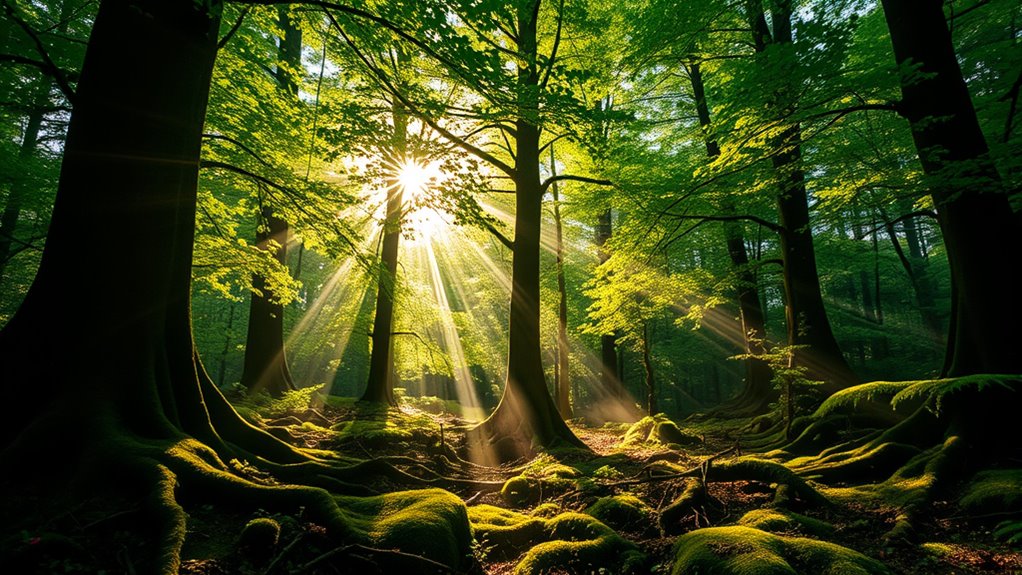

Forest bathing invites you to immerse yourself in nature’s beauty, engaging your senses to reduce stress and boost well-being. As you walk through the woods, you’ll notice vibrant greens, earthy scents, and calming sounds, fostering mindfulness and a stronger connection to the environment. This practice not only promotes mental clarity and physical health but also deepens your awareness of ecosystem importance. Keep exploring to discover how this mindful immersion can transform your health and outlook.

Get audio and creator gear delivered free with Prime
- Fast, free delivery on millions of items
- Prime Video, Amazon Music and more included
- Member-only deals all year
Key Takeaways
- Forest bathing involves mindful sensory engagement with nature to reduce stress and promote overall well-being.
- Immersion in natural environments enhances mental clarity and supports emotional healing through outdoor mindfulness.
- Regular forest bathing fosters a deeper connection to nature, inspiring conservation efforts and sustainable habits.
- The practice benefits physical health by lowering cortisol, blood pressure, and boosting immune function.
- Experiencing nature firsthand increases awareness of ecosystem importance, encouraging environmental advocacy and preservation.
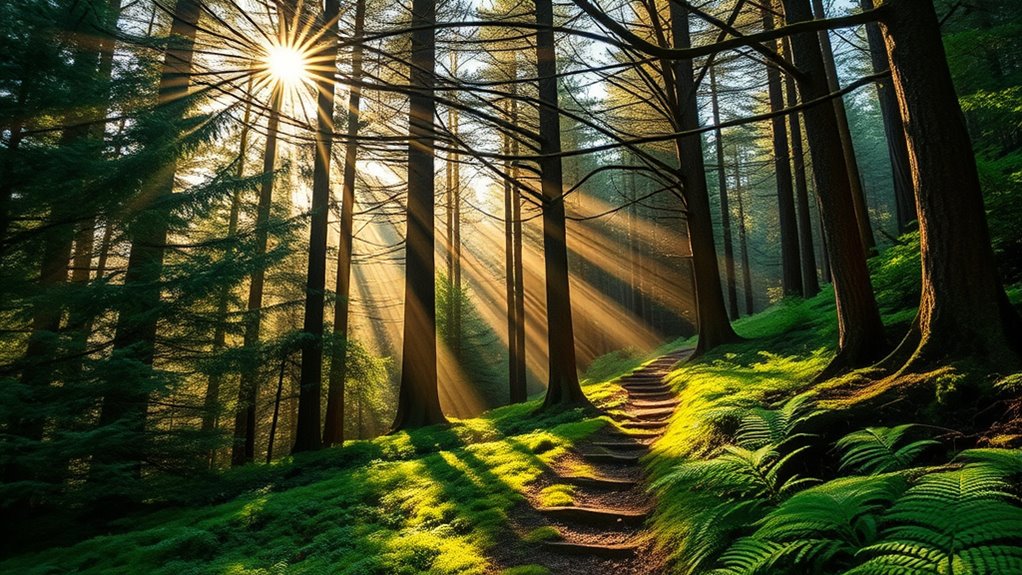
Forest bathing, also known as shinrin-yoku, is a practice that invites you to immerse yourself in the natural beauty of the woods to reduce stress and boost your well-being. As you wander through the trees, you’ll notice how your senses come alive—your eyes absorb the vibrant greens, your nose picks up earthy scents, and your ears catch the subtle sounds of rustling leaves and distant bird calls. This mindful engagement with nature fosters outdoor mindfulness, helping you disconnect from daily stresses and reconnect with the environment around you.
Engaging in forest bathing can deepen your appreciation for wildlife conservation efforts. When you spend time in natural settings, you develop a stronger awareness of the importance of protecting these habitats. Your experience becomes more than just relaxation; it becomes a personal commitment to preserving the ecosystems that support diverse flora and fauna. By observing animals in their natural habitats during your walks, you witness firsthand how fragile and essential these ecosystems are, inspiring you to advocate for conservation initiatives that ensure future generations can enjoy similar experiences.
Spending time in nature deepens your commitment to preserving vital ecosystems and supporting wildlife conservation efforts.
During your forest bath, you become an active participant in the environment rather than a passive observer. This sense of presence enhances your outdoor mindfulness—your awareness of the interconnectedness of all living things. You realize that your well-being is tied to the health of the forest, and this understanding can motivate you to adopt more sustainable habits. Whether it’s picking up litter, supporting local conservation programs, or simply respecting wildlife, your mindful presence in nature encourages a reciprocal relationship—one where you give back as much as you take.
Furthermore, the practice of outdoor mindfulness through forest bathing isn’t just about mental clarity; it also contributes to physical health. The calming atmosphere reduces cortisol levels, lowers blood pressure, and boosts immune function. As you breathe in the fresh forest air, you’re not only nourishing your lungs but also contributing to a greater awareness of your environment’s role in your health. This holistic approach makes forest bathing a powerful tool for healing and personal growth, helping you develop a sustainable connection to nature that benefits both yourself and the planet.
In embracing forest bathing, you cultivate a deeper respect for wildlife conservation and foster a mindful approach to outdoor experiences. It’s an invitation to slow down, observe, and appreciate the intricate web of life that surrounds you. By doing so, you’ll find that your time in the woods becomes more meaningful, enriching your life while supporting the preservation of these precious ecosystems.
As an affiliate, we earn on qualifying purchases.
Frequently Asked Questions
Can Forest Bathing Help Mental Health Conditions Like Depression?
Yes, forest bathing can help with mental health conditions like depression. You’ll experience nature’s impact firsthand, which promotes relaxation and reduces stress. Spending time immersed in nature can boost your emotional well-being by calming your mind and elevating your mood. Regularly engaging in forest bathing allows you to reconnect with nature, helping you manage depression symptoms and fostering a sense of peace and balance in your life.
What Is the Best Time of Day for Forest Bathing?
Think of the best time for forest bathing as catching a gentle wave—early morning or late afternoon is ideal. Seasonal variations influence this, as sunlight changes throughout the year. You want to harness the most favorable lighting, when the sun’s soft glow filters through trees, calming your mind and nurturing your senses. During these times, nature’s serenity feels most profound, helping you reconnect and rejuvenate effectively.
Are There Any Risks or Contraindications Involved?
You should be aware that forest bathing can carry risks like wildlife encounters or allergen exposure. If you’re allergic to pollen or insect bites, you might experience discomfort or allergic reactions. To stay safe, avoid times when insects are most active, and stay alert for wildlife. If you have allergies or health conditions, consider consulting a healthcare professional before engaging in forest bathing to minimize risks.
How Long Should a Typical Forest Bathing Session Last?
A typical forest bathing session lasts about 2 to 4 hours, following duration guidelines that maximize relaxation and health benefits. You should aim for 1 to 2 sessions per week, depending on your schedule and comfort. Keep in mind that individual responses vary, so listen to your body. Longer sessions aren’t always better; focus on quality and mindfulness during each immersion to truly enjoy the healing effects of nature.
Is Forest Bathing Effective for Children and Seniors?
Yes, forest bathing can benefit children and seniors by supporting child development and senior wellness. You help kids develop sensory skills and emotional resilience, while seniors experience reduced stress and improved mood. Keep sessions gentle and age-appropriate, focusing on slow walks and mindful observation. By encouraging regular nature immersion, you promote overall well-being, making forest bathing a valuable activity for all ages.
outdoor mindfulness meditation kit
As an affiliate, we earn on qualifying purchases.
As an affiliate, we earn on qualifying purchases.
Conclusion
So, next time life feels overwhelming, step outside and embrace the magic of forest bathing. Imagine nature’s embrace as a gentle healer, soothing your mind and body with every breath. Just like a secret garden waiting to be discovered, nature’s healing power is always there, ready to renew you. Don’t wait—dive into the forest’s embrace and let its tranquility wash over you. After all, isn’t true healing just a walk away?
nature sound machine for relaxation
As an affiliate, we earn on qualifying purchases.
As an affiliate, we earn on qualifying purchases.
As an affiliate, we earn on qualifying purchases.
Fall Picks
fall essentials
As an affiliate, we earn on qualifying purchases.