

Recent findings reveal that your microbiome plays a crucial role in obesity by influencing how your body processes nutrients, stores fat, and manages energy. Certain bacteria help break down carbs and produce compounds that regulate hunger and insulin sensitivity. An imbalance can boost fat storage and increase appetite, leading to weight gain. By understanding these processes, you can see how nurturing your gut health might help you better control your weight — explore more to learn how.
Key Takeaways
- Gut microbiome imbalance (dysbiosis) disrupts nutrient processing, promoting increased fat storage and weight gain.
- Certain bacteria produce fewer SCFAs, impairing energy regulation and leading to overeating.
- Microbiome composition influences hormones like ghrelin and leptin, affecting hunger and satiety signals.
- Altered gut bacteria can enhance calorie extraction from food, increasing calorie absorption and obesity risk.
- Maintaining microbiome diversity through diet and probiotics supports metabolic health and weight management.
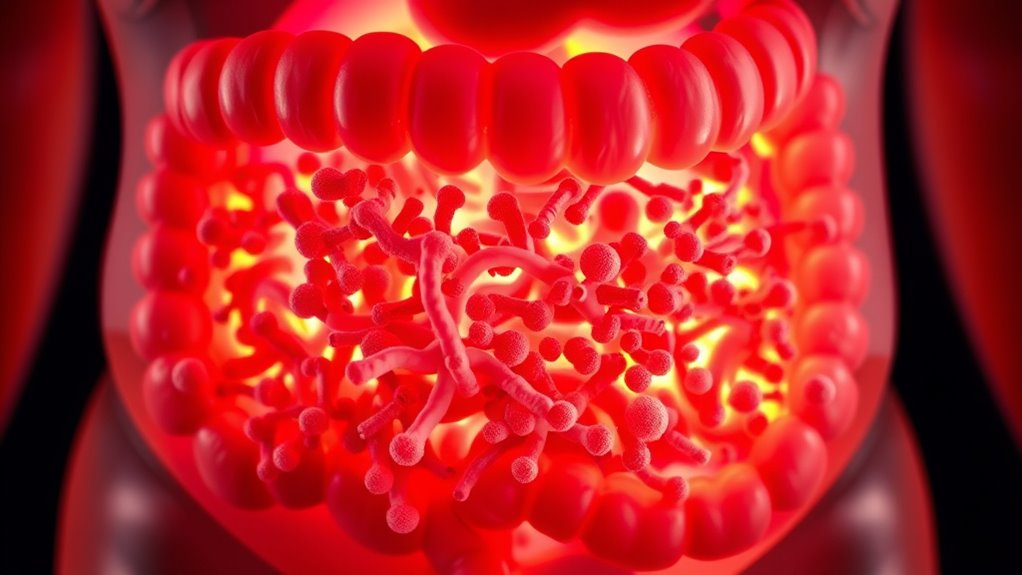
The relationship between the microbiome and obesity has gained increasing attention from researchers, revealing that the trillions of microorganisms living in your gut play a crucial role in weight regulation. Among these microorganisms, gut bacteria are particularly influential because they directly impact your body’s metabolic pathways. These pathways determine how your body processes nutrients, stores fat, and manages energy. When your gut microbiome is balanced, it helps break down complex carbohydrates, synthesize essential vitamins, and regulate fat storage efficiently. However, an imbalance—known as dysbiosis—can disrupt these processes, leading to increased fat accumulation and weight gain.
A balanced microbiome is essential for healthy metabolism and weight regulation.
Gut bacteria influence metabolic pathways in several ways. For example, certain bacterial strains are more effective at fermenting dietary fibers into short-chain fatty acids (SCFAs). These SCFAs serve as energy sources and signaling molecules that can influence appetite and insulin sensitivity. If your gut microbiome favors bacteria that produce fewer SCFAs or produces them less efficiently, your body may not regulate energy intake and expenditure ideally. This imbalance can result in increased hunger, overeating, and fat storage.
Furthermore, gut bacteria can affect how your body metabolizes and stores fats. Some bacteria promote the extraction of more calories from the food you eat, making you absorb more energy than necessary. Others influence the expression of genes involved in fat storage, encouraging your body to store excess calories as fat. This process is tied to the activity of specific metabolic pathways that regulate lipogenesis (fat creation) and lipolysis (fat breakdown). When these pathways are skewed by microbiome imbalances, your tendency to gain weight increases.
Research has also shown that gut bacteria can modify the production of hormones related to hunger and satiety, such as ghrelin and leptin. These hormones help regulate how much you eat and when you feel full. If your microbiome disrupts the normal signaling of these hormones, you may experience increased hunger or reduced feelings of fullness, contributing to overeating.
In essence, your gut bacteria are not just passive residents; they actively shape your metabolic health. By influencing key metabolic pathways, they determine whether your body efficiently manages energy or tends toward fat accumulation. Maintaining a healthy, diverse microbiome through diet, lifestyle, and possibly probiotic interventions can help keep these pathways functioning effectively, reducing the risk of obesity. Additionally, understanding how to modulate the microbiome through targeted strategies can be crucial for improving metabolic health. This complex relationship underscores the importance of nurturing your gut health as part of a thorough approach to weight management.

Physician's CHOICE Probiotics 60 Billion CFU – 10 Strains + Organic Prebiotics – Immune, Digestive & Gut Health – Supports Occasional Constipation, Diarrhea, Gas & Bloating – for Women & Men – 30ct
- Max Strength CFU: Supports digestive and gut health
- Diverse Probiotic Strains: Contains 10 high-quality strains
- Organic Prebiotics: Enhances probiotic effectiveness
As an affiliate, we earn on qualifying purchases.
As an affiliate, we earn on qualifying purchases.
Frequently Asked Questions
Can Microbiome Changes Predict Future Obesity Risk?
You might wonder if microbiome changes can predict future obesity risk. Research shows that decreased microbiome diversity and dietary influences markedly impact weight gain. By monitoring these factors, you could identify early signs of risk. Adjusting your diet to promote a diverse microbiome may help prevent obesity. While more studies are needed, understanding these connections can empower you to make healthier choices and potentially reduce obesity risk over time.
Are Probiotics Effective in Preventing or Treating Obesity?
Imagine probiotics as tiny superheroes battling obesity! While probiotic efficacy varies, they can help with microbiome modulation, potentially improving gut health and weight management. Some studies show they may aid in preventing or treating obesity, but they’re not magic pills. You should see them as part of a broader strategy, including diet and exercise. Probiotics might give you a boost, but lasting results depend on overall lifestyle changes.
How Quickly Can Microbiome Composition Change With Diet?
Your microbiome can change surprisingly quickly with diet, often within days. Dietary impact plays a significant role, as switching to high-fiber or processed foods can alter your microbial composition. However, microbiome resilience—its ability to return to a baseline after changes—varies from person to person. Consistent dietary habits promote stability, but short-term shifts are common, emphasizing how dynamic your microbiome truly is.
Does Genetics Influence Microbiome’S Role in Obesity?
You might wonder if genetics influence the microbiome’s role in obesity. Research shows that genetic markers can impact microbiome composition, revealing microbiome heritability. Your genetic makeup can shape which bacteria thrive in your gut, affecting how your body processes food and stores fat. While diet is essential, genetics also play a significant role, making some people more predisposed to obesity based on their microbiome’s inherited traits.
Are There Any Risks Associated With Altering the Microbiome?
Think of your microbiome as a delicate garden. Altering it can sometimes disrupt microbial diversity, risking instability. While targeting the microbiome holds promise, risks include reducing microbial diversity or losing beneficial microbes, which can affect your health. Maintaining microbiome stability is vital, so any interventions should be carefully managed to avoid unintended consequences like infections or metabolic imbalances. Always consult healthcare professionals before making significant microbiome changes.

Benefiber Prebiotic Fiber Supplement Powder, Unflavored, 250 Teaspoons
- Package Size: 17.6-ounce bottle of powder
- Includes: Unflavored prebiotic fiber supplement
- Appetite Support: Helps you feel fuller longer
As an affiliate, we earn on qualifying purchases.
As an affiliate, we earn on qualifying purchases.
Conclusion
Understanding the microbiome’s role in obesity shows that your gut bacteria can shape your health in powerful ways. As the saying goes, “You are what you eat,” but now you see it’s also about what your microbes do with that food. By nurturing a healthy microbiome through diet and lifestyle, you can tip the scales in your favor. Remember, tiny changes today can lead to a healthier tomorrow—like planting seeds for a better future.

Culturelle Metabolism + Weight Management with SlimBiotics® Probiotic Capsules – 30 Count – Helps Safely Manage Weight – Promotes Healthy Metabolism and Physical & Mental Energy
- Supports Weight Management: Helps safely manage weight naturally
- Promotes Healthy Metabolism: Enhances metabolic function and energy
- Contains SlimBiotics Blend: Multi-strain probiotic targeting body fat
As an affiliate, we earn on qualifying purchases.
As an affiliate, we earn on qualifying purchases.

OLLY Probiotic + Prebiotic Gummy, 500 Million CFUs, FOS, Adult Chewable Supplement for Men and Women, Peach Flavored, 30 Day Supply – 30 Count
- Probiotic + Prebiotic Blend: Supports digestion and gut health
- Heat and Sunlight Sensitivity: Keep product protected during delivery
- 500 Million CFUs: Supports digestive and immune health
As an affiliate, we earn on qualifying purchases.
As an affiliate, we earn on qualifying purchases.