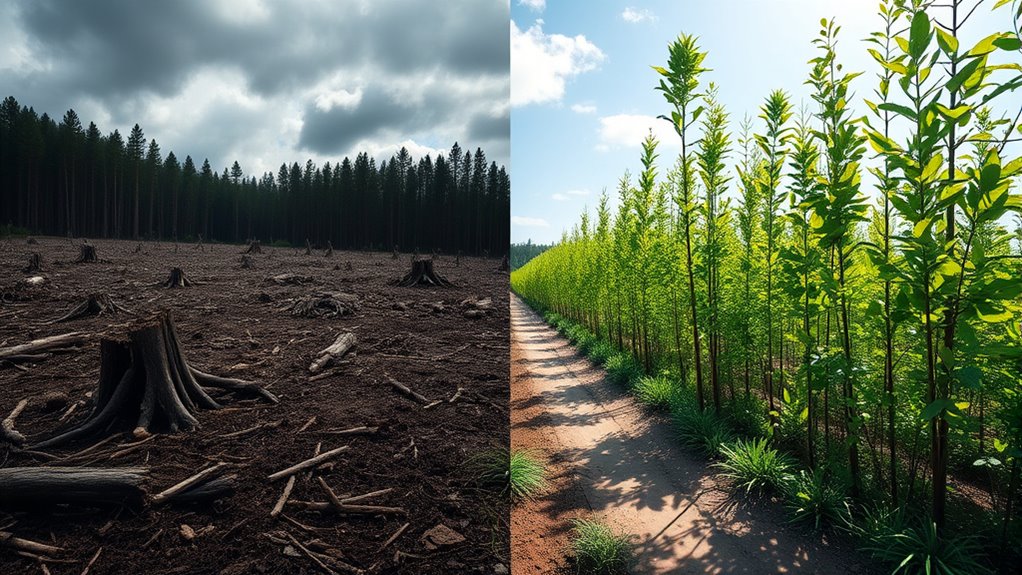

To restore forests, you need to understand the impact of deforestation caused by agriculture, logging, and urban growth, which damages ecosystems and releases stored carbon. Reforestation efforts involve planting native trees and managing lands sustainably, supporting biodiversity and climate mitigation. Protecting existing forests is essential for absorbing CO2 and stabilizing temperatures. By supporting conservation and reforestation initiatives, you help combat climate change and promote healthier ecosystems—more insights await if you continue exploring this important topic.
Key Takeaways
- Deforestation driven by agriculture, logging, and urbanization accelerates forest loss and ecosystem degradation.
- Reforestation restores ecosystems, supports biodiversity, and enhances air and water quality.
- Planting native species and sustainable practices ensure successful and environmentally responsible reforestation.
- Forest conservation maintains carbon stocks, acts as natural carbon sinks, and helps mitigate climate change.
- Collective action, policies, and community involvement are essential for effective forest restoration efforts.
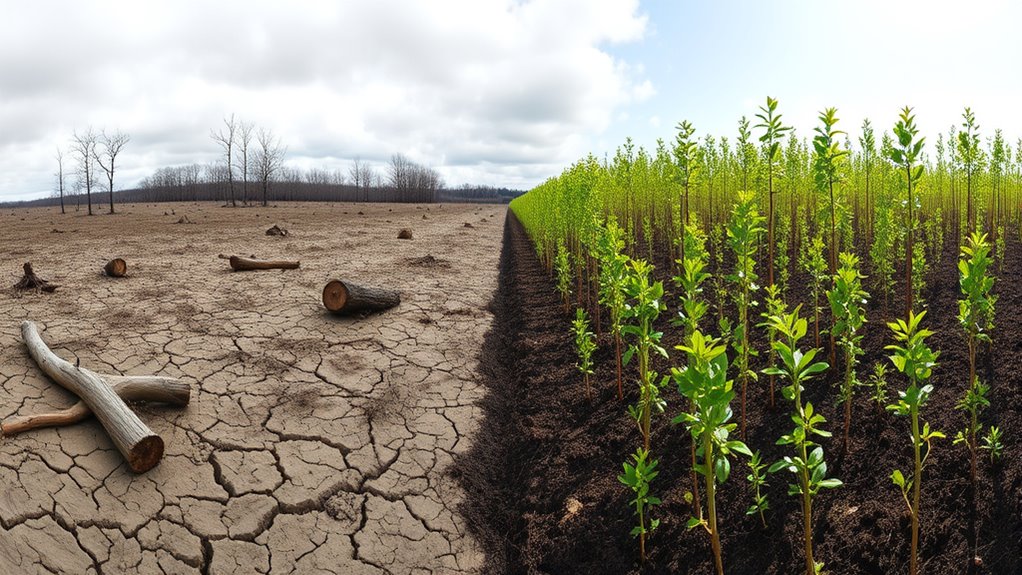
Have you ever wondered how human activities impact our planet’s forests? Every day, decisions made by industries, governments, and individuals shape the health of these essential ecosystems. Deforestation, driven by agriculture, logging, urban expansion, and infrastructure development, accelerates the loss of forests worldwide. This destruction not only diminishes biodiversity but also hampers climate mitigation efforts. Forest conservation becomes critical because preserving existing forests helps maintain carbon stocks, reducing the amount of greenhouse gases in the atmosphere. When forests are intact, they act as natural carbon sinks, absorbing CO2 and helping to stabilize global temperatures. Conversely, when forests are cleared or degraded, the stored carbon is released back into the atmosphere, intensifying climate change. So, engaging in forest conservation isn’t just about protecting trees; it’s a strategic move to combat climate change and safeguard our planet’s future.
Human activities cause deforestation, threatening biodiversity and climate stability—conservation efforts are vital to protect our planet’s future.
Understanding the importance of forests, many initiatives focus on reforestation—restoring areas where trees once thrived. Reforestation isn’t just about planting trees; it’s about restoring ecosystems and ensuring they function properly. When done thoughtfully, reforestation can help recover biodiversity, improve air and water quality, and bolster local communities‘ livelihoods. Plus, it plays a significant role in climate mitigation by increasing the number of trees that can absorb CO2. You can participate in or support reforestation projects, whether through donations, volunteering, or spreading awareness. Every effort counts because large-scale reforestation can offset emissions from deforestation and help stabilize climatic patterns. Additionally, implementing sustainable forestry practices ensures that reforestation efforts are environmentally responsible and long-lasting.
However, reforestation isn’t a simple fix. It requires careful planning to select appropriate native species, understand local ecological conditions, and guarantee the trees are maintained. Without proper management, reforestation efforts might not succeed or could even harm the environment. That’s why sustainable practices are essential—restoring forests in ways that respect local ecosystems and involve local communities fosters long-term resilience. By supporting policies that prioritize forest conservation and reforestation, you contribute to a global strategy against climate change. These efforts create a positive feedback loop: healthy forests improve air quality, support wildlife, and provide resources for local populations, all while acting as powerful tools for climate mitigation.
In the end, your choices—whether advocating for responsible forestry, supporting reforestation projects, or simply spreading awareness—can make a difference. Restoring forests isn’t just about planting trees; it’s about restoring hope for a healthier planet. Through conscious effort and collective action, you can help turn the tide against deforestation and ensure that forests continue to serve as the lungs of the Earth.
Frequently Asked Questions
How Does Reforestation Impact Local Wildlife Habitats?
Reforestation positively impacts local wildlife habitats by creating wildlife corridors, allowing animals to move safely between areas. It boosts habitat diversity, providing food, shelter, and breeding sites for various species. By restoring forests, you help maintain ecological balance, support biodiversity, and guarantee that wildlife can thrive in a healthy environment. This process not only benefits animals but also strengthens the overall resilience of the ecosystem.
What Are the Main Causes of Illegal Deforestation?
Illegal deforestation often happens because of illegal logging and land conversion, which cut into forests like a ravenous beast. You might not see it, but demand for timber, agriculture, and urban expansion drives people to exploit forests recklessly. Governments sometimes fail to enforce laws, turning a blind eye. This relentless cycle strips away essential ecosystems, threatening wildlife and climate stability, all in a rush for short-term gains.
Can Reforestation Fully Compensate for Past Forest Loss?
Reforestation can’t fully compensate for past forest loss, but it considerably helps. You can enhance carbon sequestration and promote biodiversity recovery through strategic planting. While new forests absorb carbon and restore habitats, they often lack the complexity of mature ecosystems, so complete recovery takes time. By supporting reforestation efforts, you contribute to climate change mitigation and biodiversity preservation, but recognize that some lost biodiversity and carbon storage capacity may never be fully restored.
How Do Different Tree Species Affect Reforestation Success?
You might think one tree species suffices, but diverse species improve reforestation success. Different tree species enhance resilience through varied adaptations, making forests better equipped to withstand pests, diseases, and climate change. Tree diversity guarantees the right species thrive in specific conditions, promoting healthy growth. By selecting species well-adapted to local environments, you support a more sustainable and resilient forest recovery, ultimately maximizing reforestation efforts.
What Role Do Indigenous Communities Play in Forest Restoration?
Indigenous communities play a crucial role in forest restoration through their deep indigenous knowledge and strong community involvement. You can collaborate with them to identify native species and sustainable practices, ensuring reforestation efforts are culturally appropriate and environmentally effective. By involving indigenous people, you benefit from their stewardship experience and foster local support, making reforestation projects more resilient and successful in preserving biodiversity and restoring ecosystems.
Conclusion
You might think reforestation alone can fix deforestation, but it’s more complex. Some studies suggest planting trees isn’t enough if soil quality and biodiversity aren’t restored too. Real recovery happens when you protect existing forests and address root causes like agriculture and logging. So, while reforestation is essential, it’s only part of the solution. To truly restore forests, you need a holistic approach that tackles both damage and prevention.