During summer, urban heat islands trap more heat than natural areas, making cities uncomfortably hot. Pavements, buildings, and infrastructure absorb and retain this heat, increasing temperatures and raising health risks like heat exhaustion. Green roofs and reflective pavements can help cool down your surroundings, improving comfort and air quality. If you want to discover more ways to beat the heat and make your city cooler, keep exploring how these strategies work.

Get audio and creator gear delivered free with Prime
- Fast, free delivery on millions of items
- Prime Video, Amazon Music and more included
- Member-only deals all year
Key Takeaways
- Cities trap more heat due to asphalt, buildings, and infrastructure, intensifying summer temperatures.
- Green roofs and reflective pavements reduce heat absorption and lower urban temperatures.
- Elevated urban heat increases health risks like heat exhaustion and heat stroke during summer.
- Combined cooling strategies improve air quality, comfort, and urban livability in hot weather.
- Community involvement and policy support are vital for sustainable urban heat mitigation.

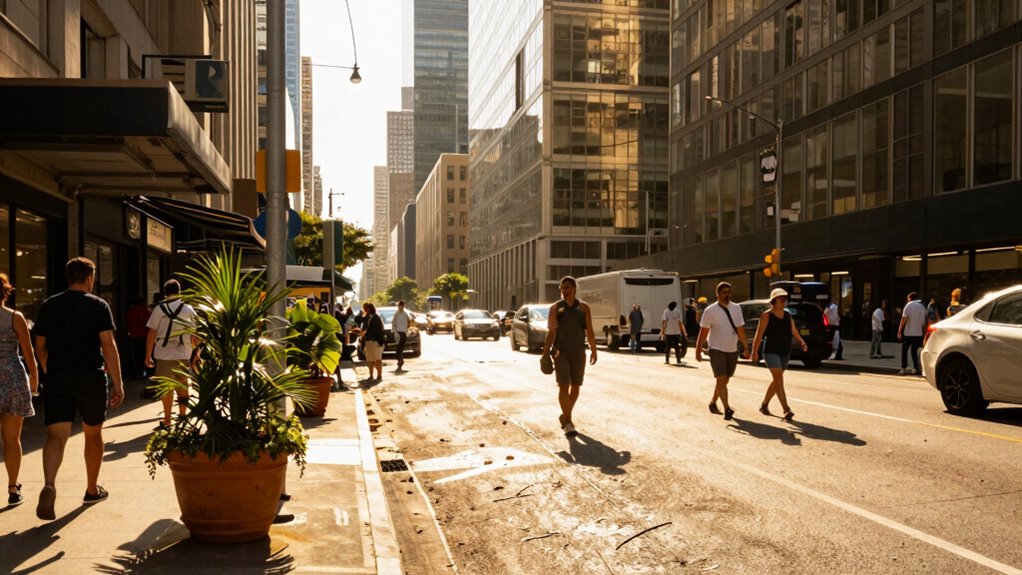
Have you ever wondered why cities feel so much hotter than surrounding rural areas? It’s a phenomenon known as the urban heat island effect, and it happens because city environments trap more heat than natural landscapes. As you walk through a city during the summer, you might notice how the pavement, buildings, and other infrastructure absorb and retain heat, raising the overall temperature. This makes summer days considerably more uncomfortable and can even lead to health risks like heat exhaustion or heat stroke.
One effective way to combat this problem is through green roof initiatives. By installing gardens or vegetative layers on rooftops, cities can reduce the amount of heat absorbed by buildings. Green roofs provide insulation, keeping indoor temperatures lower, and they also cool the surrounding air through evapotranspiration. These initiatives not only help mitigate the urban heat island effect but also improve air quality and promote biodiversity within urban spaces. As a city dweller, you benefit from these green spaces, which can offer a refuge from the scorching heat while supporting local ecosystems.
Green roofs lower temperatures, improve air quality, and provide urban refuges for people and wildlife alike.
In addition to green roofs, reflective pavement techniques offer another practical solution. Traditional asphalt and concrete tend to absorb and radiate heat, intensifying the heat island effect. Reflective pavements, on the other hand, are designed to reflect more sunlight and absorb less heat. By applying reflective coatings or using lighter-colored materials, cities can noticeably lower surface temperatures. When you walk on streets paved with reflective materials, you’ll notice they feel cooler underfoot, and the surrounding air remains less heated. These pavement techniques are relatively simple to implement and cost-effective, making them a popular choice for urban planners aiming to reduce heat stress. Incorporating reflective materials into urban design can significantly enhance the effectiveness of these strategies.
Both green roof initiatives and reflective pavement techniques work together to reduce urban temperatures effectively. As someone living in or visiting a city, you’ll appreciate the benefits — from cooler streets and buildings to improved air quality and enhanced comfort during summer months. These strategies demonstrate how urban design can adapt to climate challenges, making cities more livable and resilient. While individual actions like planting trees or using reflective materials on personal properties help, broader initiatives led by city governments are vital for creating sustainable, cooler urban environments. The more you support and advocate for these solutions, the more you’ll help shape cities that are better equipped to handle the rising temperatures of summer. Implementing urban cooling strategies can significantly improve overall city climate resilience and livability. Additionally, embracing climate-responsive urban design can further enhance these efforts and ensure long-term benefits. Engaging in community efforts and raising awareness about urban heat mitigation can empower residents to participate actively in creating cooler, healthier cities.
As an affiliate, we earn on qualifying purchases.
Frequently Asked Questions
How Does Urban Heat Affect Local Wildlife?
Urban heat considerably impacts local wildlife by causing habitat disruption and forcing species migration. As temperatures rise, animals struggle to find suitable shelter or food, leading them to move to cooler areas, which can disturb existing ecosystems. You might notice shifts in species distribution, with some animals disappearing from familiar spots while others appear in new locations, trying to adapt to the increased heat and altered conditions.
Are There Specific Cities Most Impacted by Urban Heat?
You’ll find that cities like Phoenix, Los Angeles, and Houston are most impacted by urban heat due to dense development and limited green spaces. To combat this, many are adopting green roof initiatives and reflective pavement technologies, which help reduce heat absorption and lower temperatures. These measures make a difference by cooling city environments, protecting residents, and easing the strain on energy resources during hot summers.
What Are the Long-Term Health Risks of Urban Heat?
They say “an ounce of prevention is worth a pound of cure,” and long-term urban heat exposure can harm your health. Rising temperatures worsen air quality, increasing respiratory issues, and can trigger heat-related illnesses. Over time, this stress affects mental health, leading to anxiety or depression. Staying vigilant and advocating for cooler city environments help protect your health now and in the future.
How Does Urban Heat Influence Energy Consumption?
Urban heat increases your energy consumption because you rely more on cooling technologies like air conditioners to stay comfortable. Higher temperatures make cooling systems work harder, which reduces energy efficiency and raises your utility bills. To combat this, you can adopt energy-efficient appliances and implement strategies such as shading and green roofs. These measures help lower indoor temperatures, reduce energy use, and lessen your environmental impact during hot summer months.
Can Urban Planning Reduce the Urban Heat Island Effect?
Yes, urban planning can reduce the urban heat island effect. You can incorporate green infrastructure like parks, green roofs, and tree-lined streets to provide shade and cool the environment. Additionally, using reflective surfaces on buildings and pavements helps bounce sunlight away, lowering surface temperatures. These strategies work together to create cooler urban spaces, making summers more comfortable and reducing energy needs for cooling.
As an affiliate, we earn on qualifying purchases.
Conclusion
As you walk through the city streets this summer, you can’t ignore the growing heat that seems to cling to every corner. The urban heat problem isn’t just uncomfortable—it’s a warning. What if the next heatwave is even worse? The choices you make now could determine whether the city cools down or continues to bake under the relentless sun. Stay alert—your actions might just hold the key to a cooler future.
urban heat island mitigation products
As an affiliate, we earn on qualifying purchases.
As an affiliate, we earn on qualifying purchases.
As an affiliate, we earn on qualifying purchases.
Halloween Picks
halloween
As an affiliate, we earn on qualifying purchases.