

For open-back headphones for music listening, I’d start with the Sennheiser HD 560S as the best overall fit in this lineup: it balances a spacious presentation with a practical, music-focused design. The HD 599 is a more relaxed choice for casual listening, while the HD 660S2 targets listeners who want a more refined premium option. The main tradeoffs are comfort and sound character versus isolation, along with whether a model’s power needs match your source. Open-back designs let sound escape, so they suit quiet rooms better than commutes or shared spaces. Read on for the full breakdown and help matching each pick to your listening habits.

Get audio and creator gear delivered free with Prime
- Fast, free delivery on millions of items
- Prime Video, Amazon Music and more included
- Member-only deals all year
Complete the kit


Key Takeaways
- The HD 560S is the strongest all-rounder: it puts clear, spacious music presentation ahead of specialization without the high impedance of some studio-oriented picks.
- The HD 600 and HD 660S2 reward more deliberate listening: both sit above casual entry-level choices, but their appeal depends on whether you favor a familiar reference-style presentation or a more premium upgrade.
- Source compatibility separates several contenders: the DT 990 PRO’s 250-ohm design calls for more attention to amplification than the 48-ohm DT 990 Pro X.
- Comfort and fit vary as much as sound: the on-ear Grado SR60 serves a different use case from the full-size Sennheiser and beyerdynamic models.
- Open and semi-open designs are not private listening tools: the AKG K240 is semi-open, and the lineup as a whole is best for quiet rooms where sound leakage is acceptable.
| Sennheiser HD 599 Open-Back Wired Headphones, Ivory |  | Best for Comfortable Everyday Listening | Design: Open-back, wired over-ear | Driver type: Dynamic | Impedance: 50 ohms | VIEW LATEST PRICE | See Our Full Breakdown |
| Sennheiser HD 505 Wired Open-Back Audiophile Headphones | 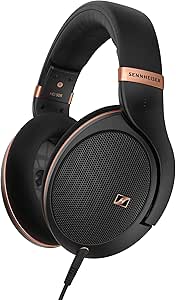 | Best for Beginners | Design: Wired, open-back, over-ear | Driver type: Dynamic | Cable length: 1.8 m | VIEW LATEST PRICE | See Our Full Breakdown |
| Sennheiser HD 660S2 Open-Back Over-Ear Wired Headphones |  | Best Premium Pick | Design: Open-back, wired over-ear | Transducers: 42 mm | Frequency details: Piano lows to 27.5 Hz; bass drums at 45–60 Hz | VIEW LATEST PRICE | See Our Full Breakdown |
| TRN Atoll Open-Back Over-Ear Headphones with 50 mm Dynamic Drivers |  | Best for Cable Flexibility | Design: Open-back, over-ear | Driver type and size: Dynamic, 50 mm | Diaphragm material: PET+PEK+PU composite | VIEW LATEST PRICE | See Our Full Breakdown |
| beyerdynamic DT 990 PRO 250 Ohm Open-Back Studio Headphones |  | Best for Studio Listening with an Amp | Design: Open-back, over-ear | Driver type: Dynamic | Impedance: 250 ohms | VIEW LATEST PRICE | See Our Full Breakdown |
| AKG K240 Studio Semi-Open Over-Ear Headphones | 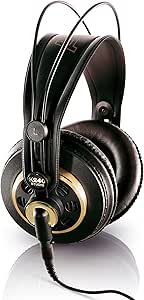 | Best Value for Studio and Casual Listening | Design: Semi-open, over-ear | Transducers: 30 mm XXL with Varimotion diaphragms | Connector: 1/8-inch stereo plug with screw-on 1/4-inch adapter | VIEW LATEST PRICE | See Our Full Breakdown |
| Sennheiser HD 560S Open-Back Wired Over-Ear Headphones |  | Best for Accurate, Spacious Listening | Design: Open-back, over-ear | Impedance: 120 ohms | Frequency response: 6 Hz to 38 kHz | VIEW LATEST PRICE | See Our Full Breakdown |
| Sennheiser HD 600 Open-Back Wired Headphones |  | Best for Dedicated Hi-Fi Setups | Design: Open-back, dynamic, over-ear | Impedance: 300 ohms | Frequency response: 12–39,000 Hz | VIEW LATEST PRICE | See Our Full Breakdown |
| beyerdynamic DT 990 Pro X Open-Back Studio Headphones, 48 Ohm, Black | 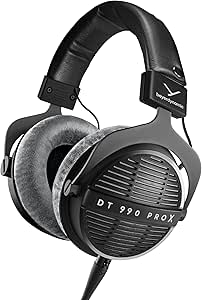 | Best for Flexible Source Compatibility | Design: Open-back, over-ear | Impedance: 48 ohms | Driver: 45 mm STELLAR.45 dynamic | VIEW LATEST PRICE | See Our Full Breakdown |
| Grado Classic Series SR60 Open-Back Wired On-Ear Headphones |  | Best Compact On-Ear Pick | Model: SR60x | Design: Open-back | Fit: On-ear | VIEW LATEST PRICE | See Our Full Breakdown |
| open back headphones for music listening | Design | Weight | Impedance |
|---|---|---|---|
| Sennheiser HD 599 Open-Back Wi | Open-back, wired over-ear | — | 50 ohms |
| Sennheiser HD 505 Wired Open-B | Wired, open-back, over-ear | 558 g | — |
| Sennheiser HD 660S2 Open-Back | Open-back, wired over-ear | 0.3 kg | — |
| TRN Atoll Open-Back Over-Ear H | Open-back, over-ear | 342 g | 64 ohms |
| beyerdynamic DT 990 PRO 250 Oh | Open-back, over-ear | 0.4 kg | 250 ohms |
| AKG K240 Studio Semi-Open Over | Semi-open, over-ear | — | — |
| Sennheiser HD 560S Open-Back W | Open-back, over-ear | 600 g | 120 ohms |
| Sennheiser HD 600 Open-Back Wi | Open-back, dynamic, over-ear | 260 g | 300 ohms |
| beyerdynamic DT 990 Pro X Open | Open-back, over-ear | 292 g | 48 ohms |
| Grado Classic Series SR60 Open | Open-back | — | — |
More Details on Our Top Picks
Sennheiser HD 599 Open-Back Wired Headphones, Ivory
The HD 599 makes the strongest case here for relaxed, extended music listening: its large over-ear cups, padded headband, and replaceable velour ear pads are designed to keep long sessions comfortable. Its open-back construction supports a natural sense of space, while the included 3.5 mm and 6.3 mm cables make it easier to connect to both portable devices and home audio gear. Compared with the more reference-focused HD 660S2, this is the more comfort-and-flexibility-minded choice, rather than the pick for listeners seeking the most specific bass details. The tradeoff is shared by every open-back option here: sound can escape and outside noise can enter. Its wired connection also limits movement, so I would skip it for commuting or noisy rooms.
Pros:- Large ear cups, padded headband, and velour pads suit long listening sessions.
- Open-back design supports natural spatial presentation.
- Includes detachable cables with both 3.5 mm and 6.3 mm plugs.
- Replaceable ear pads support upkeep over time.
Cons:- Open construction offers little isolation and lets music reach nearby people.
- Wired listening restricts movement.
- Less explicitly focused on deep-bass detail than the HD 660S2.
Best for: Home listeners who want a comfortable open-back headphone with cable options for both a phone or laptop and a stereo setup.
Not ideal for: Commuters, listeners in noisy shared spaces, or anyone who needs wireless freedom and sound isolation.
- Design:Open-back, wired over-ear
- Driver type:Dynamic
- Impedance:50 ohms
- Frequency range:12–38,500 Hz
- Included cables:3 m cable with 6.3 mm jack; 1.2 m cable with 3.5 mm jack
- Ear cushions:Replaceable velour
- Color:Ivory
- Warranty:1 year
Our verdict“Choose the HD 599 if long, comfortable home listening and flexible wired connections matter more than isolation or a reference-focused presentation.”
Sennheiser HD 505 Wired Open-Back Audiophile Headphones
The HD 505 is a straightforward entry into open-back music listening, with a sound profile described as clear through the highs and mids and controlled in the bass. Its light headband, reduced clamping force, and velour pads put comfort ahead of a snug, isolating fit, while the included adapter helps it connect to different headphone jacks. Compared with the HD 599, it gives up the choice of two included cables and offers just one 1.8 m cable; in return, its package includes a drawstring bag and adapter. The plastic enclosure is another practical compromise next to the HD 599’s listed aluminum construction. As with the other open-back models, it is best reserved for quiet rooms: it does not block surrounding sound, and its wired design is less convenient for moving around.
Pros:- Open-back design creates an airy presentation for music.
- Reduced clamping force and velour pads are suited to extended listening.
- Included adapter broadens connection options.
- Drawstring bag provides a simple way to store the headphones.
Cons:- Open construction does not isolate the listener or nearby people from sound.
- Only one 1.8 m cable is included.
- Plastic enclosure offers a less substantial material choice than the HD 599’s listed aluminum enclosure.
Best for: New open-back listeners who mostly play music from a laptop or stereo system and value a light-feeling fit and simple setup.
Not ideal for: People who need noise isolation, a longer cable, or multiple included cable lengths for different listening setups.
- Design:Wired, open-back, over-ear
- Driver type:Dynamic
- Cable length:1.8 m
- Connector:3.5 mm jack
- Included accessories:Adapter and drawstring bag
- Weight:558 g
- Enclosure material:Plastic
- Warranty:2 years
Our verdict“Pick the HD 505 for a simple, comfort-minded first open-back headphone, provided your listening space is quiet and its single cable suits your setup.”
Sennheiser HD 660S2 Open-Back Over-Ear Wired Headphones
For listeners who want music reproduction to feel spacious without neglecting the low end, the HD 660S2 is the most explicitly bass-aware option in this group. Its description pairs detailed highs and rich mids with controlled deep bass, including stated low-frequency details down to 27.5 Hz. A lightweight frame and breathable velour cushions support long sessions, while the included 6.3 mm and 4.4 mm cables, plus an adapter, make it better equipped for varied home audio connections than the HD 505’s single-cable package. That focus makes it a more specialist choice than the comfort-oriented HD 599, not a universal upgrade for every listener. It remains an open-back wired headphone, so it offers little isolation and cannot follow you around the house without cable limits.
Pros:- Sound description combines detailed highs and rich mids with controlled deep bass.
- Open-back presentation supports spacious listening.
- Lightweight frame and velour cushions are suited to long sessions.
- Includes 6.3 mm and 4.4 mm cables, an adapter, and a carry pouch.
Cons:- Open-back design allows outside noise in and sound out.
- Wired connection limits mobility.
- Its reference-oriented feature set may be more than casual listeners need compared with the HD 599.
Best for: Dedicated home listeners with compatible headphone outputs who want open spatial presentation alongside detailed mids and controlled deep bass.
Not ideal for: Listeners seeking a wireless or noise-isolating headphone, or buyers whose devices lack a suitable headphone connection.
- Design:Open-back, wired over-ear
- Transducers:42 mm
- Frequency details:Piano lows to 27.5 Hz; bass drums at 45–60 Hz
- Weight:0.3 kg
- Ear cushion material:Velour
- Included cables:6.3 mm cable, 1.8 m; 4.4 mm cable, 1.8 m
- Included accessories:6.3 mm to 3.5 mm adapter and carry pouch
- Warranty:2 years
Our verdict“Choose the HD 660S2 if you want a home-focused open-back headphone with stated deep-bass reach and more connection accessories than the HD 505.”
TRN Atoll Open-Back Over-Ear Headphones with 50 mm Dynamic Drivers
The TRN Atoll distinguishes itself with a useful package for listeners who want to switch between music and calls: it includes two detachable 2 m cables, one fitted with a microphone, plus a 6.35 mm adapter. Its 50 mm dynamic drivers, angled placement, and open-back grilles are presented as a route to spacious sound, while removable velour pads make cleaning easier. Compared with the HD 505, the Atoll offers more cable choice and a microphone-equipped option, but its specifications provide less complete guidance about its frequency range: the listing gives only 20 Hz. That makes it harder to compare its tuning on paper with the HD 660S2’s stated bass details. The open construction still rules it out for noisy environments, and a microphone cable does not make it wireless.
Pros:- Includes two detachable cables, one with a microphone.
- Angled drivers and open-back design are intended to create a spacious soundstage.
- Removable velour earpads can be taken off for cleaning.
- Includes a 6.35 mm adapter for larger headphone jacks.
Cons:- Open-back construction provides little isolation from nearby noise or sound leakage.
- The listed frequency response provides only a single value, 20 Hz.
- A 342 g weight may be less appealing to listeners prioritizing the lighter listed HD 660S2.
Best for: Home listeners who want detachable cable choices, including a microphone option, and an open design for music at a desk.
Not ideal for: Buyers who need sound isolation or want a fully specified frequency range to compare against reference-oriented headphones such as the HD 660S2.
- Design:Open-back, over-ear
- Driver type and size:Dynamic, 50 mm
- Diaphragm material:PET+PEK+PU composite
- Impedance:64 ohms
- Listed frequency response:20 Hz
- Sensitivity:98 dB
- Weight:342 g
- Cables:Two detachable 2 m 3.5 mm cables, one with microphone
- Included accessory:6.35 mm adapter
Our verdict“The Atoll suits desk listeners who value two detachable cable options, but its sparse frequency-response data makes it a less transparent choice than the HD 660S2.”
beyerdynamic DT 990 PRO 250 Ohm Open-Back Studio Headphones
The DT 990 PRO 250 Ohm is the clearest fit here for listeners whose music setup includes a headphone amplifier or audio interface. Its 250-ohm impedance is a real system requirement, not just a technical footnote: a basic portable output may not be the right match. The open-back design gives music a wide stereo image, and replaceable velour pads and an adjustable spring-steel headband suit long sessions. Compared with the HD 660S2, the DT 990 PRO comes with a longer 3 m coiled cable but fixes that cable in place and centers its stated role on studio monitoring, mixing, and mastering. The tradeoffs are clear: sound leaks freely, movement is restricted, and buyers without suitable amplification should favor a less demanding option such as the HD 599.
Pros:- Open-back design is described as producing a wide, natural stereo image.
- Replaceable velour pads and adjustable headband support longer sessions.
- Includes a 3 m coiled cable and 1/4-inch adapter.
- Studio-monitoring design suits home mixing and mastering setups.
Cons:- 250-ohm impedance makes a headphone amplifier or audio interface the better match.
- Open construction leaks sound and provides little isolation.
- Fixed cable cannot be replaced or swapped like the HD 660S2’s included cables.
Best for: Home studio listeners and music fans with a headphone amplifier or audio interface who prefer a long cable and open stereo presentation.
Not ideal for: Portable-device users without suitable amplification, people who need a detachable cable, or anyone listening near others who need quiet.
- Design:Open-back, over-ear
- Driver type:Dynamic
- Impedance:250 ohms
- Frequency response:5 Hz–35,000 Hz
- Sensitivity:96 dB
- Cable:Fixed 3 m coiled cable
- Ear pads:Replaceable velour
- Weight:0.4 kg
- Connectivity:Wired, 3.5 mm and 6.35 mm audio jacks
Our verdict“Choose the DT 990 PRO if you have suitable amplification and want a studio-oriented open-back headphone with a long coiled cable; skip it for casual portable listening.”
AKG K240 Studio Semi-Open Over-Ear Headphones
The AKG K240 Studio suits listeners who want one wired pair for music, monitoring, and spoken audio without moving to a fully open design. Its semi-open construction offers a more airy presentation than a closed headphone, while the 30 mm Varimotion transducers are intended for a broad dynamic range. Compared with the fully open Sennheiser HD 560S, the K240’s design is a middle ground, though it still leaks sound and won’t isolate you from a busy room. A self-adjusting headband and circumaural pads support longer sessions, and the long cable plus screw-on adapter make it convenient for studio gear. The tradeoff is an older-school wired setup with a 3-meter lead that can feel cumbersome away from a desk.
Pros:- Semi-open design gives listening a less enclosed character than closed-back headphones.
- Self-adjusting headband and circumaural pads are suited to extended sessions.
- Included 1/4-inch adapter supports connection to common studio equipment.
- Three-meter cable provides reach around a desk or recording setup.
Cons:- Sound can escape the earcups, so they are a poor fit for quiet shared spaces.
- The fixed, long cable restricts movement and can snag when listening away from a desk.
Best for: Home listeners and beginner creators who want comfortable, semi-open headphones for music, podcasting, and monitoring from a desk.
Not ideal for: Commuters, shared-room listeners, or anyone who needs wireless freedom or meaningful isolation from outside noise.
- Design:Semi-open, over-ear
- Transducers:30 mm XXL with Varimotion diaphragms
- Connector:1/8-inch stereo plug with screw-on 1/4-inch adapter
- Cable length:3 m (9.9 ft)
- Headband:Self-adjusting
- Ear pad fit:Circumaural
Our verdict“Choose the K240 Studio for comfortable, desk-based listening and monitoring if you can accept sound leakage and a long wired cable.”
Sennheiser HD 560S Open-Back Wired Over-Ear Headphones
The Sennheiser HD 560S is the clearest fit here for listeners who want an open, spacious presentation and a sound profile aimed at accuracy rather than a more enclosed or casual feel. Its angled drivers are designed to create a lifelike listening perspective, while the polymer-blend membrane supports controlled bass. Compared with the semi-open AKG K240 Studio, the HD 560S gives up more isolation in exchange for a fully open design; against the HD 600, its 120-ohm impedance is less demanding on the source than that model’s 300 ohms. The detachable cable and included 3.5 mm adapter add practical flexibility. Its main limitation is environmental: sound passes through the open earcups, making it a poor choice around nearby people or distracting noise.
Pros:- Open-back design supports a broad, spacious presentation.
- Angled drivers are designed for a natural listening perspective.
- Detachable cable makes replacement or storage easier.
- Included 3.5 mm adapter supports more than one common connection size.
Cons:- Open earcups provide little isolation and leak music to people nearby.
- Wired listening limits freedom of movement.
- Not water resistant, so it is unsuitable for wet or workout settings.
Best for: Home music listeners who want an open soundstage and accurate presentation from a computer, interface, or other wired source.
Not ideal for: People listening in noisy spaces or near others who need privacy, noise isolation, or a wireless connection.
- Design:Open-back, over-ear
- Impedance:120 ohms
- Frequency response:6 Hz to 38 kHz
- Driver:38 mm dynamic
- Sensitivity:110 dB
- Cable:Detachable
- Earpad material:Velour
- Weight:600 g
Our verdict“Pick the HD 560S if spacious, accuracy-focused home listening matters more than isolation or wireless convenience.”
Sennheiser HD 600 Open-Back Wired Headphones
The Sennheiser HD 600 is aimed at listeners building a dedicated home audio setup and prioritizing natural-sounding music reproduction. Its open-back design, lightweight 260 g construction, and circumaural cushions suit long listening sessions, while the detachable, Kevlar-reinforced cable offers a practical durability advantage over fixed-cable options such as the AKG K240 Studio. The key dividing line is its 300-ohm impedance: compared with the easier-to-drive 48-ohm beyerdynamic DT 990 Pro X, the HD 600 is more likely to benefit from a suitable amplifier or capable audio source. That makes it less convenient for casual phone listening, but a more natural match for a stationary hi-fi chain. Like the other open models here, it offers little protection from room noise and lets music escape.
Pros:- Open-back design is intended for spacious, natural sound reproduction.
- Lightweight 260 g construction and circumaural cushions suit long sessions.
- Detachable Kevlar-reinforced copper cable can be replaced if needed.
- Includes 1/4-inch and 1/8-inch connector options.
Cons:- The 300-ohm impedance can call for a suitable amplifier or dedicated audio source.
- Open-back construction offers limited isolation and leaks sound.
- A wired design restricts movement compared with wireless headphones.
Best for: Hi-fi listeners with a dedicated amplifier or capable audio source who want lightweight, open headphones for extended music sessions.
Not ideal for: Phone-first listeners without suitable amplification, commuters, or anyone who needs to keep music private.
- Design:Open-back, dynamic, over-ear
- Impedance:300 ohms
- Frequency response:12–39,000 Hz
- Total harmonic distortion:0.1%
- Weight:260 g
- Cable:Detachable, Kevlar-reinforced oxygen-free copper
- Connector options:1/4-inch or 1/8-inch
- Country of manufacture:Ireland
Our verdict“Choose the HD 600 for long, focused listening in an established hi-fi setup, not for casual use from an underpowered source.”
beyerdynamic DT 990 Pro X Open-Back Studio Headphones, 48 Ohm, Black
The beyerdynamic DT 990 Pro X is the practical pick for listeners who want open-back monitoring headphones without committing to the higher impedance of the Sennheiser HD 600. Its 48-ohm impedance is suited to a wider range of sources, including laptops and interfaces, and the 45 mm STELLAR.45 dynamic drivers are designed for monitoring and critical listening. A detachable 3-meter mini-XLR cable is more serviceable than a fixed lead, and the included adapter and pouch make the package easier to use across setups. Compared with the 120-ohm HD 560S, this model also offers a lower-impedance alternative, though impedance alone does not guarantee identical loudness from every device. Open earcups remain a poor match for noisy rooms, and the long cable favors desk listening over mobility.
Pros:- 48-ohm impedance supports use with a broad range of common audio sources.
- 45 mm STELLAR.45 dynamic drivers are designed for monitoring and critical listening.
- Detachable 3-meter mini-XLR cable is replaceable and offers generous desk reach.
- Velour pads, 1/4-inch adapter, and carrying pouch are included.
Cons:- Open-back design leaks sound and does not block surrounding noise.
- The 3-meter wired cable can be cumbersome for portable listening.
- Not water resistant.
Best for: Listeners and creators who want open-back monitoring headphones for a laptop, console, or audio interface without a high-impedance model.
Not ideal for: People who listen in shared or noisy spaces, need wireless use, or want headphones for wet conditions.
- Design:Open-back, over-ear
- Impedance:48 ohms
- Driver:45 mm STELLAR.45 dynamic
- Frequency response:5 Hz
- Sensitivity:97 dB
- Cable:Detachable 3 m mini-XLR
- Ear pad material:Velour
- Weight:292 g
Our verdict“Pick the DT 990 Pro X if you want an open monitoring headphone that is less demanding on sources than the HD 600.”
Grado Classic Series SR60 Open-Back Wired On-Ear Headphones
The Grado SR60 takes a different route from the over-ear models in this group: its on-ear fit and lightweight build make it the compact choice for listeners who prefer a less enveloping headphone. The open-back design is intended to keep music feeling spacious, with clear vocals and instrument separation as its focus. Compared with the over-ear Sennheiser HD 560S, the SR60 has a smaller, on-ear form rather than broad cushions surrounding the ears; that may suit listeners who dislike bulky cups, but it can create pressure on the ears during long sessions. Its simple wired setup also lacks the detachable cable found on the HD 560S and HD 600. Sound leakage and limited isolation make it best for quiet home listening, not travel or shared rooms.
Pros:- Open-back design supports a spacious listening presentation.
- Clear vocals and instrument separation are central strengths.
- Lightweight construction is less bulky than the over-ear options.
- Flexible cable is suited to ordinary wired listening.
Cons:- On-ear pads may become uncomfortable for listeners who prefer an over-ear fit.
- Open-back construction provides little isolation and lets sound pass through.
- Cable is wired, with no detachable-cable feature listed.
Best for: Home listeners who prefer a lightweight on-ear fit and want open-back music listening with clear vocals and instrument separation.
Not ideal for: People sensitive to pressure on their ears, listeners needing noise isolation, or buyers who want a detachable cable.
- Model:SR60x
- Design:Open-back
- Fit:On-ear
- Connectivity:Wired
- Color:Black
- Warranty:1 year
- Unit count:1
Our verdict“Choose the SR60 if compact, lightweight on-ear comfort matters more to you than isolation or over-ear cushioning.”

How We Picked
I ranked these headphones around their usefulness for music listening at home, weighing sound presentation, comfort for longer sessions, build and serviceability, and how demanding each model is to drive. I also considered whether a headphone’s design fits everyday listening or leans toward studio work, since a monitor-style tuning or a high-impedance connection may not suit every music fan.
The HD 560S leads for balance, while the HD 599 earns a place for listeners who prefer a more laid-back option and the HD 660S2 for those seeking a higher-end step. The HD 600, HD 505, DT 990 models, K240, TRN Atoll, and SR60 each fill narrower roles based on source demands, fit, or listening character. No model ranks highly simply for a feature count: open-back leakage, limited isolation, and compatibility with the listener’s equipment remain part of the decision.
| open back headphones for music listening | Design |
|---|---|
| Sennheiser HD 599 Open-Back Wi | Open-back, wired over-ear |
| Sennheiser HD 505 Wired Open-B | Wired, open-back, over-ear |
| Sennheiser HD 660S2 Open-Back | Open-back, wired over-ear |
| TRN Atoll Open-Back Over-Ear H | Open-back, over-ear |
| beyerdynamic DT 990 PRO 250 Oh | Open-back, over-ear |
| AKG K240 Studio Semi-Open Over | Semi-open, over-ear |
| Sennheiser HD 560S Open-Back W | Open-back, over-ear |
| Sennheiser HD 600 Open-Back Wi | Open-back, dynamic, over-ear |
| beyerdynamic DT 990 Pro X Open | Open-back, over-ear |
| Grado Classic Series SR60 Open | Open-back |
Factors to Consider When Choosing Open Back Headphones For Music Listening
Choosing open-back headphones is less about finding the widest soundstage and more about matching the headphone to your room, source, and listening habits. I’d weigh these factors before choosing a model, particularly if this is your first open design.
Match the Design to Your Listening Space
Open-back headphones allow air and sound to pass through the earcups, which can make music feel less sealed-in but also lets other people hear what you play. They are a poor match for offices, libraries, shared bedrooms, and noisy travel, even if the sound itself appeals to you. A quiet room is not just a comfort perk: outside noise can mask low-level details and push you to raise the volume. Semi-open models such as the AKG K240 still do not provide the privacy of closed-back headphones. If you need one pair for both quiet listening and public use, a closed-back alternative is the more practical compromise.
Check Power Needs Before Buying
Impedance is not a complete measure of how hard headphones are to drive, but it is a useful warning sign when paired with sensitivity and your audio source’s output. A high-impedance model such as the DT 990 PRO 250 Ohm may need a headphone amplifier to reach comfortable levels cleanly, while the DT 990 Pro X’s 48-ohm rating is a more flexible starting point. Do not assume a laptop or phone will perform equally well with every model. Check the output power of your device, especially if you listen to dynamic recordings that have quiet passages. Buying an amplifier before checking your actual listening level and source can add cost without solving a real problem.
Choose Sound Priorities, Not a Soundstage Promise
Open construction can create a more airy impression, but it does not make every headphone sound alike or guarantee accurate instrument placement. Some listeners want a neutral balance that makes recordings easy to compare; others prefer a more energetic or relaxed presentation for long playlists. Think about the music you play most and whether you want to hear tonal differences clearly or simply enjoy a comfortable, forgiving sound. A headphone suited to studio monitoring may reveal mix choices that are distracting during casual listening. If possible, compare a few sound signatures using familiar tracks rather than relying on broad claims about spaciousness.
Treat Comfort as a Fit Question
Headband pressure, earcup depth, pad material, and whether the headphones sit on or around the ears all affect comfort over a full album or longer session. The Grado SR60 is on-ear, so it is a different fit proposition from the over-ear models in this group. Clamp can ease with wear on some headphones, but it is unwise to count on that if the initial fit feels uncomfortable. Glasses, hair, and head shape can also change how pads sit and how bass reaches your ears. Favor a return policy and replaceable pads if you are unsure about long-session fit or expect to keep the headphones for years.
Pay More for a Meaningful Upgrade
A higher-end model makes sense when it improves something you can identify: comfort, tonal preference, build, or a clearer match for your source and listening routine. It may not be worthwhile if you mostly listen in noisy spaces, need wireless convenience, or cannot use the headphone comfortably. Before spending more, ask whether your current limitation is the headphone, the recording, or the source device. A premium option such as the HD 660S2 is easier to justify for a dedicated listening setup than as a first experiment with open-back sound. Entry and mid-level models can be the smarter choice when you are still learning which presentation you prefer.
Account for Maintenance and Long-Term Use
Headphones used often collect sweat, dust, and wear at the pads and headband, so parts that can be replaced may matter more over time than a small spec difference. Check whether cables and ear pads are detachable or available as replacements before making a long-term purchase. A removable cable also makes it easier to replace a damaged lead without replacing the whole headphone. Store open-back models away from dust and avoid treating them as portable gear if their exposed design and cable make that awkward. A headphone that is easy to maintain can deliver better ownership value even if it is not the most technically ambitious pick.
Frequently Asked Questions
Can I use open-back headphones in a shared room?
You can, but the people nearby may hear your music, and their conversations or other noise can leak into your listening. That makes open-back headphones a better fit for a private room or a household where sound leakage is acceptable. Lowering the volume may reduce disturbance, but it will not make the design private. If you listen beside someone who is sleeping or working, a closed-back model is a safer choice. Choose open-back headphones for the sound and comfort they offer in quiet conditions, not as an isolation solution.
Do I need an amplifier for the DT 990 PRO 250 Ohm?
Not every listener will need a separate amplifier, but the 250-ohm version is less forgiving of weak headphone outputs than a lower-impedance model. Check whether your source reaches your normal listening level without distortion or requiring the volume control to stay near its maximum. A dedicated amp may help if levels are too low or sound quality suffers at the volume you need. The DT 990 Pro X’s 48-ohm rating is a more flexible alternative if you want a beyerdynamic studio-style option and have uncertain source power. Match the amplifier to a demonstrated need rather than buying one automatically.
Should I choose the HD 560S or the HD 599 for everyday music?
Choose between them based on the presentation you enjoy and how much you value a straightforward all-round fit. The HD 560S is the stronger pick in this roundup for balanced, focused music listening, while the HD 599 is positioned as a more relaxed option for casual sessions. Neither is automatically better for every genre or listener. If you often listen critically or want one model to cover varied recordings, start with the HD 560S; if a less analytical feel is your priority, the HD 599 may suit you better. Comfort and preferred tonal balance should settle the choice.
Are the HD 600 or HD 660S2 a worthwhile step up from an entry-level model?
They can be, if you listen in a quiet space and can name what you want from the upgrade, such as a preferred sound presentation or a more dedicated listening experience. The HD 600 and HD 660S2 are better framed as choices for listeners who already know they enjoy open-back headphones than as automatic first purchases. The HD 560S offers a more accessible all-round starting point in this group. Upgrading will not fix poor recordings, uncomfortable fit, or a weak source connection. If those are your main obstacles, address them before spending more on the headphone itself.
Is the Grado SR60 a good choice if I wear glasses?
It may work, but the SR60’s on-ear fit makes comfort more dependent on how its pads press against your ears and glasses arms. Over-ear models can feel different because their pads surround the ear, though they are not guaranteed to suit every head shape either. Try to assess pressure over a longer listening session rather than judging only by a quick fit. Pad feel and positioning can change the experience, so check the available return and replacement-part options. If glasses comfort is a priority, compare on-ear and over-ear designs before choosing based on sound alone.
Conclusion
For most listeners in this roundup, I’d choose the Sennheiser HD 560S as the best overall because it balances music-focused listening with broad everyday usefulness. The HD 599 is my best value-style pick for listeners who want a more relaxed option, while the HD 660S2 is the best premium choice for a dedicated setup and a buyer who already knows what they want from an upgrade. Newcomers should start with the HD 560S or HD 599 rather than paying more before learning their sound preference. For a studio-oriented listener, the DT 990 Pro X is the more source-friendly choice than the 250-ohm DT 990 PRO; for an on-ear alternative, consider the Grado SR60. If you need isolation or plan to listen around other people, skip this open-back lineup and choose closed-back headphones instead.