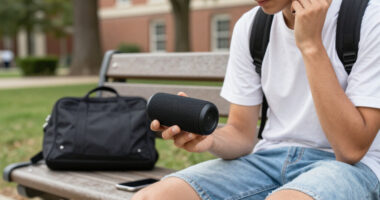
For most people who need a portable digital audio recorder for more than voice notes, the Zoom H4essential is the best overall pick in this roundup, pairing a handheld recorder format with 32-bit float recording. The Zoom H1essential is a simpler choice for portable stereo capture, while the Plaud Note Pro stands out for buyers who want AI-assisted recording features. The main tradeoff is between dedicated audio controls and recording flexibility on one side, and compact size, long advertised recording time, or transcription tools on the other. Storage capacity alone does not tell you how a recorder will sound or how easy it will be to operate. Read on for the full comparison, ranking logic, and advice for matching a recorder to your use.

Get audio and creator gear delivered free with Prime
- Fast, free delivery on millions of items
- Prime Video, Amazon Music and more included
- Member-only deals all year
Complete the kit


Key Takeaways
- The Zoom H4essential leads for recording flexibility: its 32-bit float capability makes it a stronger fit for changing sound levels than basic voice recorders, though its handheld recorder format is more involved.
- The Zoom H1essential is the simpler dedicated stereo option: it suits buyers who want a compact audio recorder without the extra complexity of a more feature-rich handheld model.
- Large memory and long recording-time claims dominate many voice-recorder listings: those traits help with extended sessions, but do not by themselves indicate microphone quality or dependable recording results.
- AI-focused devices fill a different job: the Plaud Note Pro and Pocket AI recorder target people who value transcription and note workflows more than hands-on control of recording settings.
- Several models share similar everyday features: voice activation, playback, and password protection appear across multiple options, so buyers should compare controls, connection needs, and intended use rather than choosing by capacity alone.
| Compact Digital Voice Recorder with Playback, Voice Activation, and Password Protection |  | Best for Scheduled, Private Recording | Storage: 128 GB | Recording format: WAV | Microphone: Built-in mono | VIEW LATEST PRICE | See Our Full Breakdown |
| 16GB Digital Voice Recorder with Voice Activation |  | Best for Compact Everyday Notes | Storage: 16 GB | Recording formats: MP3 and WAV | Microphone: Built-in stereo | VIEW LATEST PRICE | See Our Full Breakdown |
| Tonfarb 136GB Digital Voice Recorder with Playback |  | Best for Long Recording Sessions | Storage: 136 GB total: 8 GB built-in plus included 128 GB TF card | Recording formats: MP3 and WAV | Maximum recording bitrate: 1536 kbps | VIEW LATEST PRICE | See Our Full Breakdown |
| 64GB Magnetic Voice Recorder with Dual Microphones, USB-C and 48-Hour Recording |  | Best for Hands-Free Attachment | Storage: 64 GB | Microphones: Dual built-in microphones | Maximum recording bitrate: 3072 kbps | VIEW LATEST PRICE | See Our Full Breakdown |
| Plaud Note Pro AI Voice Recorder, Black |  | Best for Transcription Workflows | Microphones: Four built-in microphones | Microphone range: Up to 5 m (16.4 ft) | Storage: 64 GB | VIEW LATEST PRICE | See Our Full Breakdown |
| Tonfarb 64GB Digital Voice Recorder with Playback |  | Best for Long Sessions and Built-In Storage | Storage: 64 GB | Recording formats: WAV, MP3 | Maximum audio quality: Up to 1536 kbps PCM | VIEW LATEST PRICE | See Our Full Breakdown |
| Xvive XV1-R Portable Stereo Audio Recorder with 32-Bit Float Recording |  | Best Compact Recorder for High-Dynamic-Range Audio | Recording formats: WAV (32-bit float or 24-bit PCM), AAC | Maximum sample rate: 96 kHz | Microphones: Built-in X/Y directional microphones | VIEW LATEST PRICE | See Our Full Breakdown |
| Zoom H4essential Handheld Recorder |  | Best for Multisource Recording | Recording tracks: 4 | Recording technology: 32-bit float | Maximum sample rate: 96 kHz | VIEW LATEST PRICE | See Our Full Breakdown |
| HoTiyan 8GB Digital Voice Recorder with Voice Activation and MP3 Playback |  | Best for Playback-Based Study and Review | Storage: 8 GB | Recording formats: MP3, WAV | Microphone: Built-in stereo | VIEW LATEST PRICE | See Our Full Breakdown |
| EVIDA 128GB Digital Voice Recorder with Voice Activation, Playback, and Password Protection |  | Best for Maximum Built-In Storage | Storage: 128 GB | Recording formats: MP3, WAV | Recording bit rates: 128 kbps, 192 kbps, 1536 kbps | VIEW LATEST PRICE | See Our Full Breakdown |
| Pocket AI Voice Recorder with Auto Transcription, Sierra Blue |  | Best for AI Meeting Notes | Storage: 64 GB | Battery life: Up to 4 days | Connectivity: Bluetooth | VIEW LATEST PRICE | See Our Full Breakdown |
| Sunlan 16GB Digital Voice Recorder with Playback |  | Best for Simple Lecture Recording | Storage: 16 GB | Recording format: WAV | Recording bitrate: 1536 kbps | VIEW LATEST PRICE | See Our Full Breakdown |
| EVISTR L357 64GB Digital Voice Recorder with Playback |  | Best for Hands-On Recording Control | Storage: 64 GB | Recording formats: WAV, MP3 | Microphone: Built-in stereo | VIEW LATEST PRICE | See Our Full Breakdown |
| Cappsu Digital Voice Recorder with Playback, 32GB Built-In Memory |  | Best for Long Voice-Activated Sessions | Storage: 32 GB built-in | Maximum recording bitrate: 1536 Kbps | Recording modes: Continuous and voice-activated | VIEW LATEST PRICE | See Our Full Breakdown |
| Zoom H1essential Portable Stereo Recorder |  | Best for Stereo Field Recording | Microphones: Built-in X/Y stereo | Recording format: WAV | Recording technology: 32-bit float | VIEW LATEST PRICE | See Our Full Breakdown |
| portable digital audio recorder | Storage | Microphone | Weight |
|---|---|---|---|
| Compact Digital Voice Recorder | 128 GB | Built-in mono | 40 g |
| 16GB Digital Voice Recorder wi | 16 GB | Built-in stereo | 1.6 ounces |
| Tonfarb 136GB Digital Voice Re | 136 GB total: 8 GB built-in plus included 128 GB TF card | — | 97 g in description; 100 g in specifications |
| 64GB Magnetic Voice Recorder w | 64 GB | — | — |
| Plaud Note Pro AI Voice Record | 64 GB | — | 30 g (1.06 oz) |
| Tonfarb 64GB Digital Voice Rec | 64 GB | Built-in stereo | — |
| Xvive XV1-R Portable Stereo Au | microSD; supports cards up to 128 GB | — | — |
| Zoom H4essential Handheld Reco | SD card; supports up to 1 TB | — | — |
| HoTiyan 8GB Digital Voice Reco | 8 GB | Built-in stereo | — |
| EVIDA 128GB Digital Voice Reco | 128 GB | Built-in mono with noise cancellation | — |
| Pocket AI Voice Recorder with | 64 GB | Built-in | — |
| Sunlan 16GB Digital Voice Reco | 16 GB | Built-in mono microphone with noise cancellation | 35 g |
| EVISTR L357 64GB Digital Voice | 64 GB | Built-in stereo | 2.24 ounces |
| Cappsu Digital Voice Recorder | 32 GB built-in | — | 1.6 ounces |
| Zoom H1essential Portable Ster | SD card; up to 1 TB | — | 92 g |
More Details on Our Top Picks
Compact Digital Voice Recorder with Playback, Voice Activation, and Password Protection
I’d choose this recorder for situations where recording needs to start automatically or files need a basic access barrier. Its scheduled recording is a useful distinction from the Tonfarb 136GB Digital Voice Recorder, which emphasizes one-touch capture and long recording time instead. Password protection, voice activation, and a built-in speaker make this a self-contained option for notes, lectures, or routine voice capture. The listed 128GB storage and up to 30 hours of battery life also leave room for extended use between transfers. The tradeoff is that its built-in microphone is mono, so it is less suited to spatial or higher-fidelity stereo recording. Its battery is nonstandard, and the listed dimensions are broad for a device described as compact.
Pros:- Scheduled recording can start and save automatically at set times.
- Voice activation can reduce recording of silent stretches.
- Password protection restricts access to the recorder.
- Built-in speaker and USB-C support playback and file transfer.
Cons:- The built-in microphone records in mono rather than stereo.
- Uses a nonstandard battery.
- The listed dimensions are relatively broad for a compact recorder.
Best for: People who want a portable recorder for scheduled voice capture, private notes, or recurring recordings without needing stereo sound.
Not ideal for: Interviewers or field recordists who need stereo capture, and buyers who prefer a recorder with a standard, readily replaceable battery.
- Storage:128 GB
- Recording format:WAV
- Microphone:Built-in mono
- Recording modes:Voice-activated and scheduled
- Battery life:Up to 30 hours
- Connectivity:USB-C
- Display:1.4 inches
- Weight:40 g
Our verdict“Choose it for scheduled, password-protected voice recording; skip it if stereo capture or a standard battery matters more.”
16GB Digital Voice Recorder with Voice Activation
This is the most straightforward pocket option in this group for people who mainly record classes, meetings, or personal reminders. At 1.6 ounces and about 3.26 inches long, it is easier to carry unobtrusively than the heavier Tonfarb 136GB Digital Voice Recorder. Its stereo microphone and choice of MP3 or WAV also give it a more flexible capture format than the mono mssqvrv Z29. Playback tools such as A-B repeat and variable speed are useful when reviewing a lecture or language practice. The tradeoff is modest 16GB storage and a cap of 199 files, which makes file management more relevant than on higher-capacity models. Earphone playback is listed for up to eight hours, and the older Micro USB connection is less convenient than USB-C.
Pros:- Lightweight body is easy to carry daily.
- Built-in stereo microphone and MP3/WAV recording offer format flexibility.
- A-B repeat and variable playback speed help with review and transcription.
- Voice activation can reduce silent or low-volume segments.
Cons:- 16GB storage and a 199-file limit are restrictive for large recording libraries.
- Earphone playback is rated for up to eight hours.
- Uses Micro USB rather than USB-C.
Best for: Students and note-takers who want a light recorder with stereo capture and playback controls for reviewing short-to-medium recordings.
Not ideal for: People archiving long sessions without frequent file transfers, or buyers who want USB-C and extensive file capacity.
- Storage:16 GB
- Recording formats:MP3 and WAV
- Microphone:Built-in stereo
- Continuous recording:Up to 20 hours
- Earphone playback:Up to 8 hours
- USB interface:Micro USB
- Headphone jack:3.5 mm
- Weight:1.6 ounces
Our verdict“Pick this for portable stereo note-taking and convenient review controls, not for keeping a large archive on the recorder.”
Tonfarb 136GB Digital Voice Recorder with Playback
For buyers who want substantial onboard capacity and long stretches between charges, the Tonfarb stands apart from the 16GB Digital Voice Recorder with Voice Activation. Its 136GB total storage includes a 128GB TF card, and its listed battery life reaches 68 hours of continuous recording. That combination suits extended interviews, class schedules, or field notes where frequent file transfers are inconvenient. Dual noise-reduction microphones, voice activation, and one-touch recording and saving make everyday operation less fiddly, while the metal casing offers a sturdier feel than the lighter, simpler 16GB option. There are caveats: the advertised maximum of 9,775 hours applies to MP3, not high-bitrate WAV capture, and the product data gives two different weights. It is also heavier than a true pocket-first recorder.
Pros:- 136GB total capacity includes an 128GB TF card.
- Up to 68 hours of continuous recording is suited to extended use.
- Dual noise-reduction microphones and voice activation support hands-free capture.
- One-touch controls and a metal casing suit frequent portable use.
Cons:- The supplied data lists the weight as both 97 g and 100 g.
- The maximum recording-hour claim is specified for MP3 format.
- Heavier than the compact 16GB Digital Voice Recorder with Voice Activation.
Best for: Researchers, students, and interviewers who record long sessions and want generous storage with fewer charging and transfer interruptions.
Not ideal for: Buyers who prioritize the lightest carry or need a clearly stated weight and predictable recording duration at high-quality settings.
- Storage:136 GB total: 8 GB built-in plus included 128 GB TF card
- Recording formats:MP3 and WAV
- Maximum recording bitrate:1536 kbps
- Microphones:Built-in dual noise-reduction microphones
- Battery life:Up to 68 hours of continuous recording
- Connectivity:USB-C
- Display:1.44-inch LCD
- Weight:97 g in description; 100 g in specifications
Our verdict“Choose the Tonfarb for long sessions and ample storage, provided you can accept its extra weight and format-dependent capacity claims.”
64GB Magnetic Voice Recorder with Dual Microphones, USB-C and 48-Hour Recording
The defining reason to choose this recorder is its double-sided magnetic design: it can attach to compatible metal surfaces, keeping the device positioned without occupying a hand or pocket. That makes it a different kind of portable tool from the Tonfarb 136GB Digital Voice Recorder, which offers more storage and longer stated recording time but relies on conventional handheld use. This model pairs its mounting option with one-touch recording, dual microphones, noise-reduction processing, and automatic saving when the battery runs low. Its 64GB storage and up to 48 hours of recording suit routine work sessions, though they fall short of Tonfarb’s capacity and endurance figures. The magnetic feature is useful only where a suitable surface is available, and the included nonstandard battery may complicate replacement.
Pros:- Double-sided magnetic design allows attachment to compatible metal surfaces.
- One-touch recording supports quick capture.
- Automatic saving protects the current recording when battery power runs low.
- Dual microphones, noise-reduction processing, and 64GB storage support everyday voice capture.
Cons:- Magnetic mounting is useful only near compatible metal surfaces.
- Uses a nonstandard battery.
- Its 64GB storage and 48-hour recording figure are lower than the Tonfarb 136GB model’s listed capacities.
Best for: People who need to attach a recorder to compatible metal furniture or equipment for hands-free meeting, workspace, or task recording.
Not ideal for: Buyers who record in varied locations without magnetic surfaces, or who want a standard replaceable battery and the largest storage capacity.
- Storage:64 GB
- Microphones:Dual built-in microphones
- Maximum recording bitrate:3072 kbps
- Continuous recording:Up to 48 hours
- Noise reduction:2159 noise reduction solution
- Attachment:Double-sided magnetic design
- Connection:USB-C
- Headphone jack:3.5 mm
Our verdict“Pick this when magnetic, hands-free placement matters more than maximum capacity or flexible mounting.”
Plaud Note Pro AI Voice Recorder, Black
The Plaud Note Pro is the pick for people who want recordings to feed into a transcription and documentation workflow, rather than simply remain as audio files. Its four microphones are designed for in-person conversations and phone calls, while the companion features can produce transcriptions, summaries, and documents. At 30 g and just 0.12 inches thick, it is far slimmer than the Tonfarb 136GB Digital Voice Recorder, though it offers less storage and a shorter maximum recording time in its listed Enhance mode. Battery life varies by mode: up to 30 hours in Enhance and 50 hours in Endurance. The key compromise is reliance on software and an online service for its productivity features; online meetings require Plaud Desktop, and the included Starter Plan covers only 300 transcription minutes monthly. It is less compelling for buyers seeking a standalone recorder without a subscription-linked workflow.
Pros:- Four built-in microphones support in-person conversations and phone calls.
- Transcription, summaries, and document creation extend recordings into a work process.
- Slim 30 g design is easy to carry alongside a phone or laptop.
- Up to 50 hours of recording in Endurance mode and 64GB of storage.
Cons:- Online meetings require Plaud Desktop rather than the recorder alone.
- The included Starter Plan is limited to 300 transcription minutes per month.
- Less storage than the Tonfarb 136GB Digital Voice Recorder.
Best for: Professionals, journalists, and meeting-heavy users who want portable audio paired with transcription, summaries, and document creation.
Not ideal for: People who want a fully standalone recorder, avoid software-dependent workflows, or regularly exceed the included monthly transcription allowance.
- Microphones:Four built-in microphones
- Microphone range:Up to 5 m (16.4 ft)
- Storage:64 GB
- Recording time:Up to 30 hours in Enhance mode; up to 50 hours in Endurance mode
- Audio format:WAV
- Display:0.95 inches
- Dimensions:2.13 x 3.37 x 0.12 inches
- Weight:30 g (1.06 oz)
- Starter Plan:300 transcription minutes per month
Our verdict“Choose the Plaud Note Pro if transcription and summaries are central to your workflow; choose a conventional recorder for simpler, standalone audio capture.”
Tonfarb 64GB Digital Voice Recorder with Playback
The Tonfarb 64GB suits buyers who want a self-contained recorder with generous built-in storage rather than a separate memory card. One-click recording, voice activation, and scheduled recording make it flexible for meetings or unattended sessions, while file segmentation and bookmarking help organize longer recordings. Compared with the HoTiyan H-10001, it offers substantially more storage and a longer stated recording duration, but HoTiyan has a rechargeable battery and clearer battery details. Tonfarb’s specs conflict: they list a 600 mAh battery but also say it uses one AAA battery, and give both 32 hours of average battery life and up to 48 hours of use. I’d treat those figures cautiously. Its compact screen and playback tools are useful, but it is less suited to buyers who need dependable, clearly specified power details.
Pros:- 64GB of built-in storage reduces the need to manage removable cards.
- One-click recording and voice activation support quick, low-effort capture.
- Scheduled recording, segmentation, bookmarking, and A-B loop playback add useful file-review controls.
- USB 2.0 transfer and a 3.5 mm headphone jack support straightforward file access and listening.
Cons:- Battery information is inconsistent: the listing cites both a 600 mAh battery and one AAA battery.
- The stated battery life varies between 32 hours average and up to 48 hours.
- A built-in stereo microphone is less adaptable than the XLR/TRS inputs on the Zoom H4essential.
Best for: Students, meeting attendees, and interviewers who want high built-in capacity and one-button operation for extended recording sessions.
Not ideal for: Buyers who need verified battery performance or a rechargeable power source, since the battery type and runtime information conflict.
- Storage:64 GB
- Recording formats:WAV, MP3
- Maximum audio quality:Up to 1536 kbps PCM
- Microphone:Built-in stereo
- Battery information:600 mAh listed; specifications also state 1 AAA battery
- Stated continuous use:Up to 48 hours; average battery life also listed as 32 hours
- Display:1.44-inch screen
- Connections:USB 2.0; 3.5 mm headphone jack
Our verdict“Choose the Tonfarb if built-in storage and simple controls matter most, but skip it if you need unambiguous battery specifications.”
Xvive XV1-R Portable Stereo Audio Recorder with 32-Bit Float Recording
The Xvive XV1-R is the most focused choice here for portable stereo capture when sound levels may change suddenly. Its 32-bit float WAV recording reduces the need to set gain precisely, while the X/Y microphones handle levels up to 130 dB SPL and record at up to 96 kHz. That makes it a stronger fit for loud live sources than the Tonfarb or HoTiyan voice recorders, which are aimed more at speech and everyday notes. The XV1-R also works as a USB microphone with computers and mobile devices, and pre-record can help catch a moment that starts before the operator presses record. The tradeoffs are meaningful: it relies on microSD, needs two AA batteries, and has no headphone jack. Its 12-hour maximum recording time is also shorter than the longer runtimes claimed by some voice-recording models.
Pros:- 32-bit float WAV recording helps accommodate changing input levels without routine gain adjustment.
- Built-in X/Y microphones support stereo capture at sound levels up to 130 dB SPL.
- USB-C operation lets it serve as a microphone for computers and compatible mobile devices.
- Auto-record and pre-record provide useful capture options for field and event work.
Cons:- No headphone jack is listed for direct monitoring or playback.
- Requires two AA batteries and has a stated maximum recording time of 12 hours.
- Uses microSD rather than built-in storage, so a suitable card is needed.
Best for: Musicians, videographers, and field recordists who want portable stereo recording with 32-bit float capture for unpredictable volume changes.
Not ideal for: People recording long lectures or meetings who want extensive built-in storage, a headphone jack, or the longest possible battery runtime.
- Recording formats:WAV (32-bit float or 24-bit PCM), AAC
- Maximum sample rate:96 kHz
- Microphones:Built-in X/Y directional microphones
- Maximum sound pressure level:130 dB SPL
- Storage:microSD; supports cards up to 128 GB
- USB interface:USB-C, USB Audio Class 2.0; USB microphone sample rate 48 kHz
- Maximum recording time:12 hours
- Power:2 AA batteries
Our verdict“Pick the XV1-R for portable stereo recording of unpredictable or loud sources, not for all-day speech capture or headphone monitoring.”
Zoom H4essential Handheld Recorder
The Zoom H4essential earns its place by bridging handheld field recording and more involved music or production setups. Its built-in stereo microphones cover quick location capture, while two XLR/TRS inputs let users connect external microphones or instruments—an expansion path the Xvive XV1-R and the voice-focused Tonfarb do not offer. Four-track recording and 32-bit float at up to 96 kHz make it better suited to layered sources and changing performance levels than simpler meeting recorders. USB-C can connect it to a phone, tablet, or computer while it backs up to an SD card, adding flexibility for streaming and recording workflows. Spoken menu guidance and the color display support navigation, though the 2-inch screen remains compact. Two AA batteries and up to 10 hours of recording make it less compelling for long unattended sessions.
Pros:- Built-in stereo microphones and two XLR/TRS inputs support both quick capture and external sources.
- Four-track, 32-bit float recording at up to 96 kHz suits layered and changing audio.
- USB-C supports connection to compatible phones, tablets, and computers while recording to SD card.
- Spoken menu guidance and a color LCD support operation and accessibility.
Cons:- Requires two AA batteries and lists up to 10 hours of recording time.
- The 2-inch display offers limited viewing space for menus and file handling.
- Its larger input and track capabilities are less convenient than a basic voice recorder for simple note-taking.
Best for: Independent musicians, podcasters, and video creators who need built-in stereo microphones plus inputs for external mics or instruments.
Not ideal for: Lecture recorders and travelers seeking a very small, long-running device with minimal setup; its four-track features and AA power may be more than they need.
- Recording tracks:4
- Recording technology:32-bit float
- Maximum sample rate:96 kHz
- Microphones and inputs:Built-in stereo microphones; 2 XLR/TRS inputs
- Storage:SD card; supports up to 1 TB
- Connectivity:USB-C
- Recording time:Up to 10 hours
- Power and weight:2 AA batteries; 243 g
- Headphone output:3.5 mm jack
Our verdict“Choose the H4essential if you need a portable recorder that can grow from built-in stereo capture to external-mic and multitrack work.”
HoTiyan 8GB Digital Voice Recorder with Voice Activation and MP3 Playback
The HoTiyan H-10001 is aimed at people who record speech and then return to specific passages. Its A-B repeat and variable playback speed make reviewing a lecture, interview, or language lesson more practical than on the Tonfarb, whose storage and scheduled-recording features favor longer capture sessions. Voice activation and noise reduction help keep routine recordings focused, and the rechargeable battery avoids the disposable-AA setup used by the Xvive XV1-R and Zoom H4essential. The limits are clear: 8GB of storage is far less than the Tonfarb’s 64GB or EVIDA’s 128GB, and the listed recording capacity is up to 199 files. Battery life is stated as up to 20 hours recording but only up to 8 hours of playback with earphones, so frequent listening between charges may constrain its usefulness.
Pros:- A-B repeat and variable playback speed help users revisit difficult or important passages.
- Voice activation and noise reduction are tailored to speech recording.
- Rechargeable lithium-ion battery and USB file transfer simplify routine use.
- Supports both MP3 and WAV recording, plus MP3 playback.
Cons:- 8GB of built-in storage is limited beside the 64GB Tonfarb and 128GB EVIDA.
- Playback time is listed as up to 8 hours with earphones, substantially below its stated recording time.
- The 1.1-inch screen is small for browsing recordings and settings.
Best for: Students and interviewers who mainly capture spoken audio and need playback tools for repeating, slowing, and reviewing passages.
Not ideal for: People recording long events or keeping a large archive on the device, since storage is 8GB and file capacity is listed at up to 199 files.
- Storage:8 GB
- Recording formats:MP3, WAV
- Microphone:Built-in stereo
- Battery:Rechargeable 3.6 V, 300 mAh lithium-ion
- Recording time:Up to 20 hours
- Playback time:Up to 8 hours with earphones
- Recording capacity:Up to 199 files
- Connections:USB 2.0 Type B; 3.5 mm headphone jack
- Display:1.1-inch screen
Our verdict“Choose the HoTiyan for speech-focused recording that you plan to replay and study, but not for large archives or extended playback sessions.”
EVIDA 128GB Digital Voice Recorder with Voice Activation, Playback, and Password Protection
The EVIDA VR01 stands apart for buyers who want a large archive stored directly on the recorder: its 128GB capacity exceeds the Tonfarb’s 64GB and the HoTiyan’s 8GB. Selectable bit rates up to 1536 kbps, six voice-activation sensitivity levels, bookmarks, and A-B repeat give it more control over speech capture and review than a basic dictation device. It also supports password protection and USB file transfer. Compared with the Zoom H4essential, though, this is a mono voice recorder rather than a flexible multitrack unit with XLR/TRS inputs; it makes more sense for meetings and notes than music production. There are practical caveats: the microphone is mono, no headphone jack is listed, and the battery details conflict between a rechargeable battery description and a specification naming one C battery.
Pros:- 128GB of built-in storage provides the largest listed capacity among these five recorders.
- Selectable recording bit rates reach 1536 kbps for higher-bitrate WAV capture.
- Six voice-activation sensitivity levels let users adjust speech-triggered recording.
- Playback, bookmarks, A-B repeat, password protection, and USB transfer support file review and management.
Cons:- The built-in microphone is mono, unlike the stereo options from HoTiyan, Tonfarb, Xvive, and Zoom.
- No headphone jack is listed for direct monitoring or listening.
- Battery specifications conflict, describing a rechargeable battery while also listing one C battery.
Best for: Researchers, students, and professionals who record frequent speech sessions and want a large built-in archive without managing memory cards.
Not ideal for: Musicians and field recordists who need stereo capture, external microphone inputs, or headphone monitoring; the listing also leaves battery type unclear.
- Storage:128 GB
- Recording formats:MP3, WAV
- Recording bit rates:128 kbps, 192 kbps, 1536 kbps
- Microphone:Built-in mono with noise cancellation
- Voice activation:6 sensitivity levels
- Maximum recording time:54 hours
- Battery information:Rechargeable battery described; specifications also list 1 C battery
- Connections:USB 2.0; no headphone jack listed
- Weight and display:3.35 ounces; 1.5-inch screen
Our verdict“Choose the EVIDA for high-capacity speech recording and file management, but skip it if you need stereo production features or clear battery specifications.”
Pocket AI Voice Recorder with Auto Transcription, Sierra Blue
The Pocket is the pick for people who want searchable meeting notes, not just an audio file. One tap starts recording, and its AI can produce transcripts, summaries, action items, and conversation maps; you can also ask questions about recorded content. That makes it a different kind of portable recorder from the EVISTR L357, which offers more hands-on control over WAV and MP3 capture but no listed transcription tools. MagSafe compatibility supports attaching it to a compatible smartphone for hands-free use, and the stated battery life of up to four days suits extended stretches between charges. The tradeoff is that it is built around smartphone use, and some advanced tools require an optional subscription. Its listed RealAudio format may also be less flexible for buyers seeking broadly supported recording formats.
Pros:- Creates transcripts, summaries, action items, and conversation maps from recordings.
- One-tap recording suits quick meeting and conversation capture.
- MagSafe compatibility allows attachment to compatible smartphones.
- Listed battery life reaches up to four days.
Cons:- Some advanced AI features require an optional subscription.
- Designed for smartphone use rather than standalone recording.
- RealAudio is less familiar than the WAV and MP3 formats supported by the EVISTR L357.
Best for: Professionals who record meetings on a compatible smartphone and want AI transcripts, summaries, and action items alongside the audio.
Not ideal for: Musicians, field recordists, or buyers who want a self-contained recorder with conventional WAV or MP3 files and no subscription-dependent features.
- Storage:64 GB
- Battery life:Up to 4 days
- Connectivity:Bluetooth
- Microphone:Built-in
- Audio format:RealAudio
- MagSafe compatible:Yes
- Color:Sierra Blue
Our verdict“Choose the Pocket if AI-generated meeting notes matter more to you than traditional standalone recorder controls and formats.”
Sunlan 16GB Digital Voice Recorder with Playback
The Sunlan keeps the job straightforward: one-button recording, voice activation, and playback through its own speaker. Its mono microphone and noise-reduction feature are aimed at speech capture, while WAV recording at a listed 1536 kbps gives users a specified format and bitrate rather than an AI-first workflow like the Pocket. Voice activation can reduce long stretches of silence in a lecture or interview, and A-B repeat is useful for revisiting a difficult passage. At just 35 g, it is easy to carry, though it offers less recording flexibility than the stereo EVISTR L357, which adds adjustable gain and WAV/MP3 options. The Sunlan’s tradeoffs are its mono capture, 16 GB capacity, and playback time of up to seven hours. It suits basic speech tasks better than music or all-day playback.
Pros:- One-button recording makes quick capture simple.
- Voice activation can limit silent sections in recordings.
- Built-in speaker, headphone jack, and A-B repeat support convenient review.
- Compact 35 g body is easy to carry.
Cons:- Mono recording captures less spatial detail than the stereo EVISTR L357.
- Playback lasts up to seven hours.
- 16 GB storage offers less capacity than the 32 GB Cappsu or 64 GB EVISTR.
Best for: Students and interview note-takers who want a lightweight, uncomplicated recorder with voice activation and built-in playback.
Not ideal for: Musicians or users who need stereo recording, extensive manual controls, or long playback sessions away from a charger.
- Storage:16 GB
- Recording format:WAV
- Recording bitrate:1536 kbps
- Recording time:More than 30 hours
- Playback time:Up to 7 hours
- Microphone:Built-in mono microphone with noise cancellation
- Voice activation:Yes
- Weight:35 g
Our verdict“Pick the Sunlan for lightweight speech recording and easy playback, but choose a stereo model for music or broader recording control.”
EVISTR L357 64GB Digital Voice Recorder with Playback
The EVISTR L357 earns its place through a useful balance of stereo capture and manual adjustment. Its built-in stereo microphone is paired with seven recording-gain levels, so users can adapt sensitivity to quieter or louder sources instead of relying on a single preset. WAV and MP3 support also gives it more format choice than the Sunlan, whose recording is mono and WAV-only. Voice activation has seven sensitivity levels, and scheduled recording adds flexibility for planned sessions. At 64 GB, it has room for extended use, while USB-C transfers work with Windows and Mac. The compromises are a small one-inch screen and up to 32 hours of continuous recording per charge; the Zoom H1essential is a stronger fit for stereo work where 32-bit float handling sudden volume changes matters more than built-in storage.
Pros:- Built-in stereo microphone captures more spatial detail than mono recorders such as the Sunlan.
- Seven gain levels and seven voice-activation sensitivity levels allow tailored capture.
- Records in WAV and MP3 and transfers files by USB-C to Windows or Mac.
- Supports scheduled recording and playback controls.
Cons:- Continuous recording is limited to up to 32 hours per charge.
- The one-inch screen provides limited space for menus and file details.
- Unlike the Zoom H1essential, it does not list 32-bit float recording.
Best for: Interviewers, students, and field note-takers who want stereo recording, adjustable gain, and direct WAV or MP3 file transfer.
Not ideal for: Buyers who need a larger display, the simplest possible operation, or 32-bit float recording for unpredictable loudness changes.
- Storage:64 GB
- Recording formats:WAV, MP3
- Microphone:Built-in stereo
- Recording gain:7 adjustable levels
- Voice activation:7 sensitivity levels
- Continuous recording time:Up to 32 hours
- USB interface:USB Type-C
- Weight:2.24 ounces
Our verdict“Choose the EVISTR if adjustable stereo recording and flexible file formats matter more than a larger screen or 32-bit float capture.”
Cappsu Digital Voice Recorder with Playback, 32GB Built-In Memory
The Cappsu is a practical choice for buyers who want voice activation and long recording stretches without managing a memory card. Its 32 GB of built-in storage and stated recording time of up to 50 hours in voice-activated mode make it suited to lectures, meetings, and notes where silence would otherwise fill the file. By contrast, the EVISTR L357 offers stereo microphones and adjustable recording gain, making it more adaptable to varied sources; the Cappsu’s appeal is simpler one-click operation and a lighter 1.6-ounce body. USB-C charging and the included external microphone and earphone add useful flexibility. The key limitation is placement: the built-in microphone works best close to the speaker or sound source, so it is less convincing for capturing a room from a distance. Continuous recording is listed at up to 20 hours.
Pros:- Voice activation can extend recording time by pausing during silence.
- 32 GB of built-in storage needs no separate memory card.
- One-click controls and indicator feedback support quick recording.
- USB-C charging, an external microphone, and an earphone are included.
Cons:- The built-in microphone should be placed near the speaker for more balanced recordings.
- Continuous recording is listed at up to 20 hours, less than the EVISTR L357’s up-to-32-hour figure.
- No stereo microphone or adjustable gain levels are specified.
Best for: Students and meeting attendees who need a light recorder for long voice-activated sessions and prefer built-in storage over memory-card handling.
Not ideal for: People recording music, distant speakers, or group discussions who need stereo pickup or more control over microphone placement and gain.
- Storage:32 GB built-in
- Maximum recording bitrate:1536 Kbps
- Recording modes:Continuous and voice-activated
- Continuous recording time:Up to 20 hours
- Voice-activated recording time:Up to 50 hours
- USB interface:USB Type-C
- Weight:1.6 ounces
- Included accessories:USB-C cable, 3.5 mm earphone, external microphone, user manual
Our verdict“Choose the Cappsu for lightweight, voice-activated speech recording, but look to the EVISTR L357 for stereo capture and adjustable gain.”
Zoom H1essential Portable Stereo Recorder
The Zoom H1essential is the most purpose-built option here for capturing stereo sound beyond voice notes. Its built-in X/Y microphones and WAV recording suit music, interviews, video, and podcasts, while 32-bit float technology helps preserve usable audio when volume rises or falls unexpectedly. That sets it apart from the EVISTR L357, which offers adjustable gain and more built-in storage but does not list 32-bit float recording. USB-C lets the Zoom work as a microphone with computers and mobile devices, and spoken menu guidance can help users operate it without relying only on the screen. The tradeoffs are SD-card storage rather than built-in memory, two AAA batteries, and a stated digital recording time of up to 10 hours. For basic lecture notes, the lighter, simpler Sunlan may be enough; the Zoom makes more sense when sound quality and flexibility lead.
Pros:- Built-in X/Y microphones capture stereo audio without an external microphone.
- 32-bit float recording helps accommodate unexpected volume changes.
- USB-C supports use as a microphone with computers and mobile devices.
- Spoken menu guidance supports operation beyond visual screen prompts.
Cons:- Requires two AAA batteries.
- Direct recording requires an SD card, unlike the built-in storage in the EVISTR L357.
- Listed digital recording time is up to 10 hours.
Best for: Independent musicians, video makers, podcasters, and interviewers who need portable stereo recording and want 32-bit float handling for changing sound levels.
Not ideal for: Note-takers who want built-in storage, long operation without carrying spare batteries, or a recorder focused mainly on transcripts and meeting summaries.
- Microphones:Built-in X/Y stereo
- Recording format:WAV
- Recording technology:32-bit float
- Storage:SD card; up to 1 TB
- USB interface:USB Type-C
- Battery requirement:2 AAA batteries
- Digital recording time:Up to 10 hours
- Weight:92 g
Our verdict“Choose the Zoom H1essential for portable stereo production and volume flexibility, not for buyers seeking the simplest voice-note recorder.”
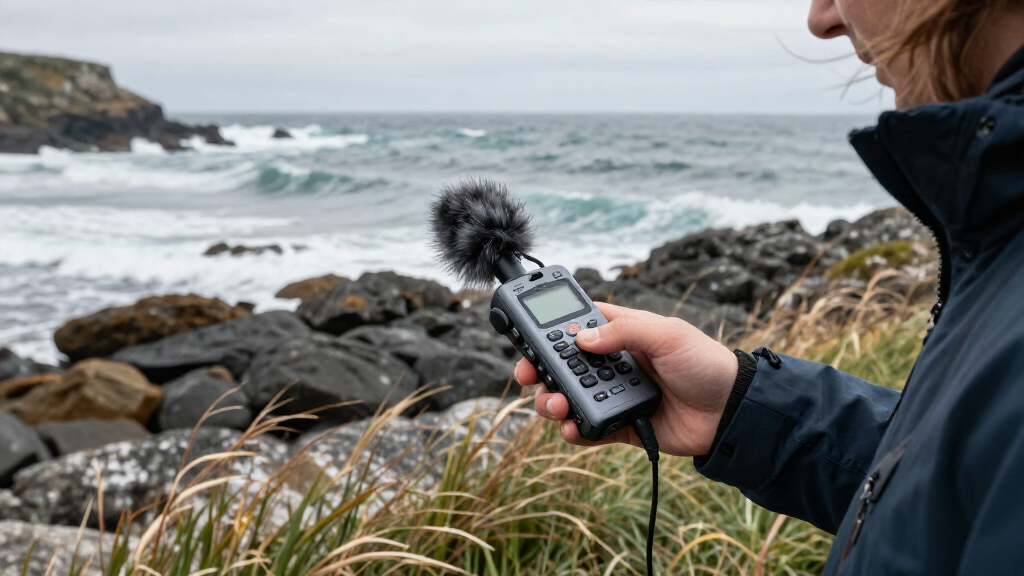
How We Picked
I ranked these portable digital audio recorders by how well their stated features serve practical recording needs: capturing speech clearly, handling different sound levels, remaining manageable on the move, and making recordings easy to access afterward. I gave greater weight to dedicated recording capabilities and useful flexibility than to headline storage figures alone. I also looked at usability features such as playback, voice activation, USB-C, and transcription tools, while treating unusually large capacity or advertised recording duration as useful only for the right workflow.
The ranking reflects the differences between product types, not a claim that every model serves the same buyer. The Zoom H4essential ranks highest for its broader recording role, with the Zoom H1essential a more direct stereo alternative. AI transcription devices and compact voice recorders rank for narrower needs: they can be a better match for meeting notes, lectures, or simple voice capture, but they are less interchangeable with a dedicated handheld audio recorder. Where product details are limited, I avoid treating an unlisted specification as a proven advantage.
| portable digital audio recorder | Microphone |
|---|---|
| Compact Digital Voice Recorder | Built-in mono |
| 16GB Digital Voice Recorder wi | Built-in stereo |
| Tonfarb 136GB Digital Voice Re | — |
| 64GB Magnetic Voice Recorder w | — |
| Plaud Note Pro AI Voice Record | — |
| Tonfarb 64GB Digital Voice Rec | Built-in stereo |
| Xvive XV1-R Portable Stereo Au | — |
| Zoom H4essential Handheld Reco | — |
| HoTiyan 8GB Digital Voice Reco | Built-in stereo |
| EVIDA 128GB Digital Voice Reco | Built-in mono with noise cancellation |
| Pocket AI Voice Recorder with | Built-in |
| Sunlan 16GB Digital Voice Reco | Built-in mono microphone with noise cancellation |
| EVISTR L357 64GB Digital Voice | Built-in stereo |
| Cappsu Digital Voice Recorder | — |
| Zoom H1essential Portable Ster | — |
Factors to Consider When Choosing Portable Digital Audio Recorders
Before choosing a recorder, decide what the recording must do after you press the button. A tool for voice memos has different priorities from one for music, interviews, or searchable meeting notes. These broader checks can help prevent a common mistake: buying the biggest memory number or longest recording-time claim without confirming that the recorder fits your microphone, file-handling, and working habits.
Match the recorder type to the sound you need
Start by separating voice recorders from handheld audio recorders. Small voice-focused models are often a practical fit for spoken notes, classes, and meetings, while stereo-oriented recorders give you a more suitable starting point for capturing music or a wider sound scene. Do not assume that a device with a large built-in microphone count will automatically suit every source; placement, room noise, and distance still affect the result. For music or unpredictable environments, prioritize recording controls and level-handling features over transcription extras. If your recordings are mostly short spoken reminders, a more advanced recorder may add bulk and setup without improving your routine.
Choose recording headroom for unpredictable volume
Recording headroom matters when a speaker may suddenly become louder or a performance has sharp peaks. A feature such as 32-bit float recording can reduce the risk of unusable level settings in some workflows, but it does not fix distant microphone placement, clipping in every part of the signal chain, or poor room acoustics. For predictable, close-range speech, a basic recorder may be entirely adequate if you can set and check levels. Buyers who record events, rehearsals, or interviews without controlling the source should give more weight to level flexibility. Think about whether you can monitor the recording as it happens; a forgiving format is useful, but it is not a replacement for good placement.
Treat storage and battery claims as workflow estimates
Built-in memory and advertised recording duration matter most when you regularly record long sessions away from a computer. They are less useful if you transfer files often, record in formats that use more space, or need backup copies during a job. Check how recordings move off the device and whether its connection fits the computer or phone you actually use. A long-duration claim may reflect particular recording settings, so leave room for variation rather than planning to use every advertised hour. For important interviews or events, plan a file-transfer and backup routine instead of relying on one recorder’s internal storage as the only copy.
Decide whether transcription is part of the job
AI transcription features can save time when you routinely turn spoken material into searchable notes, but they are not a universal upgrade to audio recording. Consider whether you need accurate source audio, searchable text, or both, and check what the workflow requires after capture. Transcription may depend on an app, a connected device, an account, or supported languages; confirm those requirements before choosing an AI-oriented recorder. If you mainly need an audio archive, a dedicated recorder may be a more straightforward tool. If you work from interviews or meetings every day, time saved during review can matter more than manual controls you rarely use.
Check controls and connections before buying
Portability is not just pocket size: it also includes how easily you can start recording, check that audio is being captured, and retrieve the file. Buttons and on-device playback can be valuable when you cannot depend on a phone or computer, while USB-C can simplify connections for compatible setups. Voice activation may reduce empty recording time, but it can miss quiet speech or react to background sounds, so it should not be treated as a substitute for checking the file. Password protection may help limit casual access, yet it does not replace secure backups or careful handling of sensitive recordings. Choose the simplest control scheme that still supports the way you record.
Pay for capability you will use, not a longer feature list
A more capable recorder makes sense when it solves a recurring problem: handling variable levels, capturing stereo sound, or reducing time spent transcribing. For occasional notes, added recording modes and workflow tools may create more decisions without a meaningful benefit. Compare the ongoing effort too: app-dependent workflows, file transfers, charging, and backups all affect day-to-day usefulness. If you record for work, reliability and a repeatable setup may matter more than a long list of modes. When uncertain, write down your three most common recording situations and select the device that handles those well rather than one that promises to do everything.
Frequently Asked Questions
Should I choose the Zoom H4essential or the Zoom H1essential?
Choose the H4essential if your recordings vary in volume or you want the additional flexibility associated with 32-bit float capture. The H1essential is the more direct option if compact stereo recording is your main need and you prefer a simpler device. Neither choice eliminates the need to place the recorder thoughtfully or check that a session is being captured. Consider whether you will make use of the H4essential’s broader role often enough to justify its added complexity. For occasional basic recordings, the H1essential may be easier to fit into your routine.
Are AI voice recorders a good choice for recording interviews?
They can be a good fit when the main goal is turning spoken interviews into notes or searchable text. They are a less direct choice if your priority is control over audio capture, stereo recording, or flexibility for non-speech sources. Before buying, check how transcription is accessed and whether the workflow depends on a phone, app, account, or supported language. Keep the original audio when possible, since automated text can mishear names, technical terms, and overlapping speakers. If sound quality is the primary requirement, compare dedicated recorders before deciding that transcription features are worth the tradeoff.
Is a recorder with more built-in storage always the better choice?
No. Extra storage helps when you record long sessions or cannot transfer files frequently, but it does not establish how well the recorder captures sound. Your recording format, session length, and backup habits all affect how much memory you actually need. A smaller-capacity device may suit you better if you regularly move files to a computer and keep organized backups. Check how easy it is to transfer recordings before prioritizing a capacity figure. For important work, a reliable backup plan matters more than keeping every session on the recorder indefinitely.
Can voice activation replace manual recording controls?
Voice activation can reduce silence in recordings, which may be useful for lectures or long stretches of speech. It can also miss quiet words, clip the start of a sentence, or react to background noise depending on the setting and environment. For interviews or other material that cannot be repeated, do not rely on it without checking that it suits your voice level and room. A manual recording with a quick playback check offers more certainty when the content matters. Treat voice activation as a convenience feature, not a guarantee that every word will be captured.
What should I prioritize for recording both meetings and music?
Look for a recorder whose capture options suit both spoken and stereo sources, rather than selecting only by meeting-oriented features such as transcription or voice activation. Consider how easily you can adjust or manage recording levels, how you will position the device, and whether the controls suit quick setup in different locations. Meeting rooms often reward clear speech capture, while music can expose limitations in level handling and the recording approach. If music is a regular use, lean toward a dedicated handheld audio recorder; if meetings dominate, a voice-focused device may be more convenient. When both matter equally, choose flexibility and test your workflow with a short sample before relying on it.
Conclusion
For the broadest mix of portable recording needs, I recommend the Zoom H4essential as best overall, especially when sound levels may change. The Zoom H1essential is my best value-style fit for straightforward stereo recording, while the Plaud Note Pro is the premium-style choice for buyers who prioritize AI-assisted note workflows. For beginners who mainly capture spoken notes, lectures, or meetings, I would start with a simple voice recorder that offers playback and familiar controls rather than a more involved handheld model. Buyers with specific needs should match the device to the task: pick an AI recorder for transcription workflows, a voice-focused model for everyday speech, and a dedicated stereo recorder for music or broader audio capture. Choose by how you will record and use the files, not by storage capacity alone.