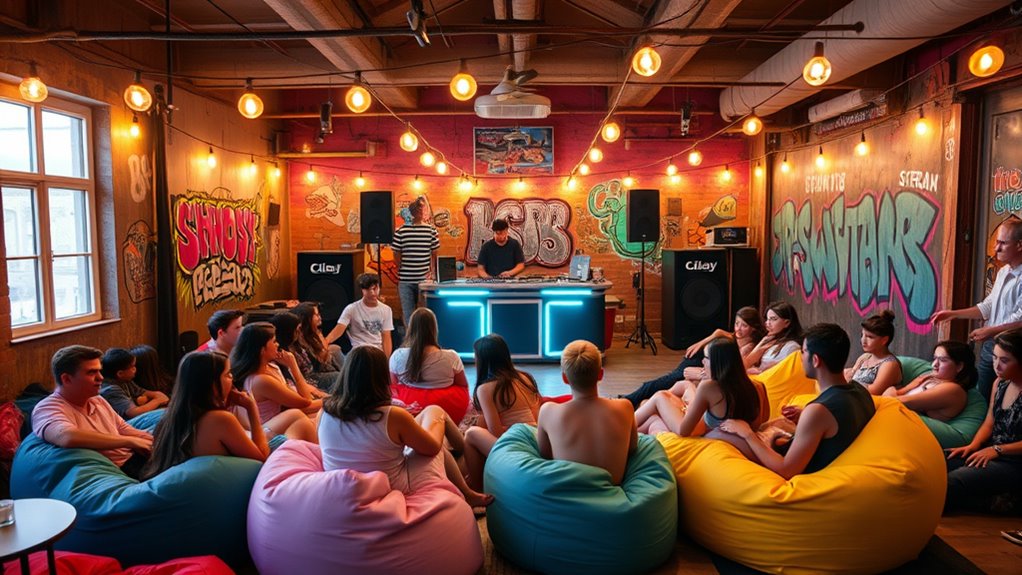

Reclaiming third spaces through teen clubs like The Den turns neglected areas into lively centers where you can connect, grow, and feel a sense of belonging. These spaces promote community involvement, boost confidence, and give teens a voice. By transforming forgotten spots into vibrant hubs, they help tackle social isolation and foster creativity. Keep exploring to see how these clubs are shaping stronger, more resilient communities and empowering youth like you.
Key Takeaways
- Teen clubs transform underused areas into vibrant, safe environments that foster connection, creativity, and personal growth.
- They serve as platforms for youth leadership, encouraging engagement and voice in community development.
- Reclaimed third spaces help combat social isolation and promote inclusion among marginalized or at-risk teens.
- These clubs offer skill-building activities, mentorship, and cultural programs to boost confidence and future readiness.
- Supporting teen clubs ensures sustainable, engaging third spaces that nurture community cohesion and youth empowerment.
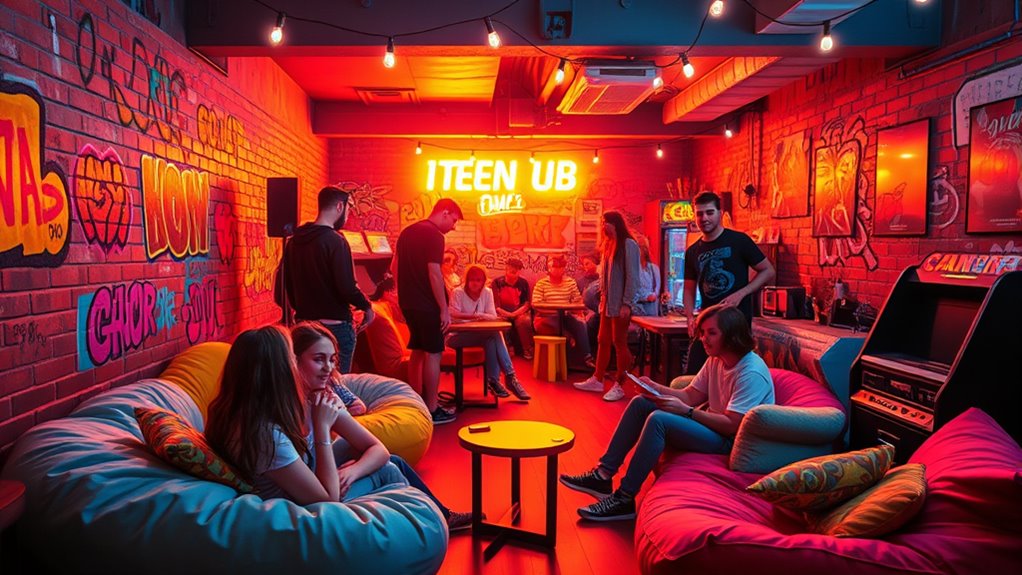
In today’s fast-paced world, third spaces—those communal areas outside of home and work—are more essential than ever. These spaces serve as indispensable hubs where you can connect, relax, and grow without the pressures of daily routines. As community engagement becomes increasingly important, creating inclusive and welcoming third spaces helps foster a sense of belonging, especially for teenagers seeking a safe environment to express themselves. That’s where teen clubs like The Den come into play, transforming overlooked or underused areas into vibrant centers of youth empowerment.
When you participate in or support a teen club, you’re actively contributing to community engagement. These clubs aren’t just recreational spots; they’re platforms where young people can develop leadership skills, explore interests, and build relationships with peers and mentors. By reclaiming and revitalizing these third spaces, you help create environments that nurture confidence and resilience in youth, giving them the tools to face challenges with a stronger sense of self. The Den, for example, offers a space where teens can gather without fear of judgment, encouraging open dialogue and collaboration. This empowerment is essential, as it helps young people see themselves as valuable contributors to their community.
Reclaiming third spaces for teens also addresses issues of social isolation and marginalization. When these areas are transformed into welcoming hubs, you provide a sanctuary where youth can feel seen and heard. This sense of inclusion fosters community engagement on a deeper level, motivating teens to take part in local events, volunteer opportunities, or leadership initiatives. The more you invest in these spaces, the more you reinforce the importance of youth voices in shaping their environment. It’s about creating a cycle of empowerment—where young people feel motivated to give back and participate actively in their community.
Transforming third spaces into welcoming hubs empowers youth, fostering inclusion and encouraging active community participation and leadership.
Furthermore, teen clubs like The Den serve as incubators for creativity and skill-building. By offering workshops, mentorship programs, or cultural activities, you help teens discover their passions and develop practical skills. This, in turn, boosts their confidence and prepares them for future success. As you see more youth taking ownership of these spaces, it becomes clear how pivotal they are for fostering long-term community growth. The more accessible and inclusive these third spaces become, the stronger their impact on youth empowerment and community cohesion.
Supporting the development of balance and coordination through engaging activities like ride-on toys or sports can further enhance a teen’s physical confidence, making these spaces even more dynamic and inclusive. Ultimately, reclaiming third spaces isn’t just about physical locations; it’s about investing in the future of your community. When you support teen clubs like The Den, you’re making a statement that young people matter—that their voices, talents, and dreams are essential to building a vibrant, resilient neighborhood. In doing so, you help create a cycle where community engagement and youth empowerment continually reinforce each other, ensuring these spaces thrive for generations to come.
teen leadership activity kits
As an affiliate, we earn on qualifying purchases.
As an affiliate, we earn on qualifying purchases.
Frequently Asked Questions
How Do Teen Clubs Impact Local Communities Long-Term?
Teen clubs like The Den boost local communities long-term by fostering community engagement and providing youth mentorship. You’ll see teens develop leadership skills, build positive relationships, and stay engaged in constructive activities. Over time, this reduces youth delinquency and strengthens community bonds. As you support these spaces, you’re helping create safer, more connected neighborhoods where young people thrive and contribute positively for years to come.
What Funding Sources Support the Sustainability of Teen Clubs?
You might think funding is hard to secure, but strong funding partnerships and grant opportunities make teen clubs sustainable. Local businesses, nonprofits, and government agencies often support these initiatives, seeing their long-term benefits. By actively seeking diverse funding sources and building relationships, you can guarantee your teen club thrives. Remember, consistent engagement and demonstrating positive community impact attract ongoing support, making your club a lasting resource for youth.
How Do Teen Clubs Address Diverse Cultural Backgrounds?
You can see that teen clubs promote cultural inclusivity by celebrating different traditions, languages, and customs. They guarantee community representation by featuring diverse leaders and organizing events that reflect various cultural backgrounds. By actively listening to teens’ experiences and incorporating their voices, these clubs create a welcoming environment where everyone feels valued and understood, fostering mutual respect and understanding across different cultural groups.
What Safety Measures Are Implemented in These Third Spaces?
You walk into the club, feeling energized yet safe. These spaces prioritize youth empowerment by implementing strict safety protocols, like trained staff, secure entry, and mental health support. While the vibrant atmosphere inspires creativity, clear rules guarantee everyone’s well-being. This balance fosters trust, allowing teens to express themselves freely while feeling protected—turning the club into a true third space that nurtures growth and safety simultaneously.
How Can Parents Effectively Encourage Teens to Participate?
You can encourage teens to participate by highlighting positive peer influence and staying involved through open communication. Show genuine interest in their activities and listen to their concerns, which fosters trust. Your active parental involvement demonstrates support, making them feel valued. Emphasize the benefits of engaging in third spaces like the Den, such as friendship building and skill development, helping your teen see these clubs as positive, safe environments.
youth mentorship program books
As an affiliate, we earn on qualifying purchases.
As an affiliate, we earn on qualifying purchases.
Conclusion
As you see these teen clubs revitalizing third spaces, you realize they’re more than just hangouts—they’re shaping futures. But what happens when these spaces vanish, replaced by empty storefronts or digital screens? Will the next generation find the same sense of belonging? The answer isn’t clear yet, and that’s what makes this fight so urgent. Because reclaiming these spaces might just determine whether our teens thrive or fade into anonymity.
teen creative workshop supplies
As an affiliate, we earn on qualifying purchases.
As an affiliate, we earn on qualifying purchases.
community space furniture for teens
As an affiliate, we earn on qualifying purchases.
As an affiliate, we earn on qualifying purchases.