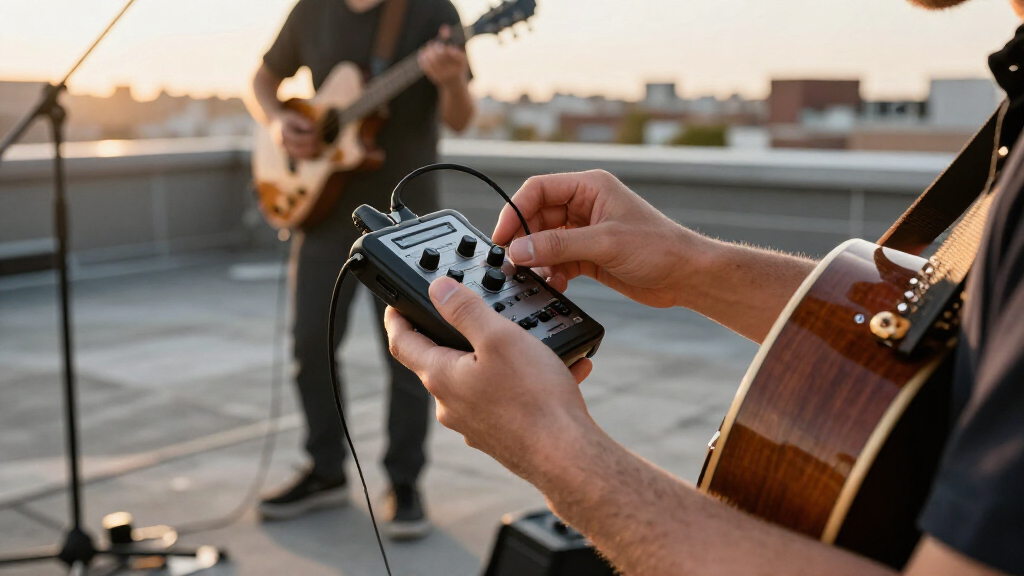
For most musicians, I’d start with the Zoom H4 Essential: its built-in stereo mics and external inputs make it a flexible choice for recording rehearsals, demos, and more. The Zoom R4 stands out for musicians who want multitrack recording and hands-on production, while the Zoom H1 Essential is a simpler, more compact pick for quick stereo captures. The main tradeoff is between portability and room to connect microphones or instruments, alongside the choice between straightforward recording and multitrack control. Bundle versions may add useful accessories, but they do not change the recorder’s core capabilities. Read on for the full comparison and guidance on choosing a recorder for the way you make music.

Get audio and creator gear delivered free with Prime
- Fast, free delivery on millions of items
- Prime Video, Amazon Music and more included
- Member-only deals all year
Complete the kit


Key Takeaways
- The H4 Essential is the strongest all-rounder in this lineup: it offers more connection flexibility than the H1 Essential while staying focused on portable recording.
- The R4 is the most music-production-oriented choice: its multitrack workflow, effects, and rhythms suit building arrangements away from a computer, but it is less of a simple point-and-record recorder.
- The H1 Essential is the straightforward entry point: its stereo microphones and compact format favor capturing ideas and rehearsals, while its limited input options make it less adaptable for external-mic setups.
- The H6 Essential and H2 Essential serve different expansion needs: the H6 is aimed at larger input demands, while the H2’s distinct microphone configuration gives musicians another approach to capturing a sound field.
- Several listings are bundles or close variations of the H1 Essential: accessories such as a case, windscreen, tripod, or lavalier mic can change convenience, but buyers should compare the included gear rather than assume a different recorder.
| Zoom H1 Essential Recorder for Musicians, Podcasters & Content Creators |  | Best for Beginners | Microphones: Built-in X/Y stereo microphones | Recording format: WAV | Recording technology: 32-bit float | VIEW LATEST PRICE | See Our Full Breakdown |
| Zoom H1 Essential Recorder Bundle with Case, Windscreens & Tripod |  | Best Ready-to-Record Bundle | Microphones: Built-in X/Y microphones | Recording technology: 32-bit float | Recording format: WAV | VIEW LATEST PRICE | See Our Full Breakdown |
| Zoom H1essential Handy Recorder Bundle with Lavalier Microphone, 32GB microSDHC, Windscreen, Batteries, and Accessories |  | Best for Musicians Who Also Record Vocals | Built-in microphones: X/Y microphones | Recording technology: 32-bit float | Microphone operation mode: Mono | VIEW LATEST PRICE | See Our Full Breakdown |
| Xvive XV1-R Portable Stereo Audio Recorder with 32-Bit Float, X/Y Microphones, WAV/AAC Format, USB Microphone, Auto Record, for Musicians, Podcasters, Filmmakers |  | Best for Loud Sources | Microphones: Built-in X/Y microphones | Maximum sound-pressure level: 130 dB SPL | Recording technology: 32-bit float | VIEW LATEST PRICE | See Our Full Breakdown |
| Zoom H4 Essential Handheld Recorder for Musicians, Podcasters & Filmmakers |  | Best for Multitrack Sessions | Track capability: 4-track recording | Microphones: Built-in stereo microphones | Recording technology: 32-bit float | VIEW LATEST PRICE | See Our Full Breakdown |
| Zoom H6 Essential Handheld Recorder for Musicians, Podcasters & Filmmakers |  | Best for Multi-Mic Sessions | Recording: 6-track, 32-bit float | Inputs: 4 XLR/TRS inputs | Microphone system: Interchangeable mic capsules; built-in microphone form factor | VIEW LATEST PRICE | See Our Full Breakdown |
| Zoom R4 Multi-Track Recorder for Musicians with 2 XLR/TRS Combo Inputs, 32-Bit Float, Stereo Bouncing, Built-In Microphone, Effects, Rhythms, Battery Powered, USB Audio Interface |  | Best for Songwriting on the Go | Recording: 4-track, 32-bit float | Inputs: 2 XLR/TRS combo inputs | Microphone: Built-in stereo microphone | VIEW LATEST PRICE | See Our Full Breakdown |
| Zoom H1 XLR 2-Channel Recorder for Filmmakers, Musicians & Podcasters |  | Best Compact Recorder for External Mics | Recording quality: 32-bit float, up to 96 kHz | Inputs: 2 XLR/TRS combo inputs | Additional input: 3.5 mm stereo input | VIEW LATEST PRICE | See Our Full Breakdown |
| Zoom H1 Essential Stereo Handy Recorder with 32-Bit Float, X/Y Microphone, Record to SD Card, USB Microphone, Portable | | Best Lightweight Stereo Sketch Recorder | Microphone: Built-in X/Y stereo microphone | Recording format: WAV | Recording: 32-bit float, up to 96 kHz | VIEW LATEST PRICE | See Our Full Breakdown |
| Zoom H2 Essential Handheld Recorder for Musicians, Podcasters & Filmmakers |  | Best for Flexible Built-In Mic Patterns | Microphones: 3 built-in microphones | Recording patterns: 9 selectable patterns | Maximum resolution: 32-bit float, up to 96 kHz | VIEW LATEST PRICE | See Our Full Breakdown |
| portable audio recorders for musician | Headphone jack | Weight | Power | Microphones |
|---|---|---|---|---|
| Zoom H1 Essential Recorder for | 3.5 mm | 92 g | 2 AAA batteries | Built-in X/Y stereo microphones |
| Zoom H1 Essential Recorder Bun | 3.5 mm | — | 2 AAA batteries | Built-in X/Y microphones |
| Zoom H1essential Handy Recorde | 3.5 mm | — | — | — |
| Xvive XV1-R Portable Stereo Au | None | — | — | Built-in X/Y microphones |
| Zoom H4 Essential Handheld Rec | 3.5 mm | 243 g | 2 AA batteries | Built-in stereo microphones |
| Zoom H6 Essential Handheld Rec | — | 450 g | 4 AAA batteries | — |
| Zoom R4 Multi-Track Recorder f | 3.5 mm | 9.6 ounces | 4 AA batteries or USB-C | — |
| Zoom H1 XLR 2-Channel Recorder | — | 6.4 ounces | 2 AA batteries | — |
| Zoom H1 Essential Stereo Handy | None listed | 3.2 ounces | — | — |
| Zoom H2 Essential Handheld Rec | — | 6.72 ounces | — | 3 built-in microphones |
More Details on Our Top Picks
Zoom H1 Essential Recorder for Musicians, Podcasters & Content Creators
The Zoom H1 Essential is the simplest entry point here for musicians who want to capture rehearsals, song ideas, or acoustic performances without setting up a separate microphone rig. Its built-in X/Y stereo microphones give a useful sense of space, while 32-bit float recording helps preserve loud and quiet passages without requiring constant level adjustments. Spoken menu guidance also makes basic operation more approachable than a recorder with a more involved input setup. Compared with the Zoom H4 Essential, this H1 is lighter and less complicated, but it does not offer the same four-track flexibility or external-input options. The tradeoff is a focused, battery-powered recorder rather than a small recording hub: it needs two AAA batteries and lacks wireless connectivity. Its USB microphone mode adds a practical option for calls and streaming.
Pros:- Built-in X/Y microphones capture stereo performances without extra setup.
- 32-bit float recording reduces the need to adjust levels during changing performances.
- Spoken menu guidance helps beginners operate the recorder.
- USB microphone mode supports computer-based streaming and calls.
Cons:- Two AAA batteries need replacing or replenishing for extended recording.
- No Wi-Fi or Bluetooth for wireless file transfer or control.
Best for: Musicians new to portable recording who want a straightforward handheld for rehearsals, songwriting ideas, and stereo room capture.
Not ideal for: Players recording several instruments or microphones at once, since the H1 Essential is more limited than the four-track Zoom H4 Essential.
- Microphones:Built-in X/Y stereo microphones
- Recording format:WAV
- Recording technology:32-bit float
- Storage capacity:Up to 1 TB
- USB interface:USB Type-C
- Headphone jack:3.5 mm
- Power:2 AAA batteries
- Recording time:Up to 10 hours
- Weight:92 g
Our verdict“Choose the H1 Essential for simple, portable stereo capture; choose the H4 Essential if your music sessions need more tracks and inputs.”
Zoom H1 Essential Recorder Bundle with Case, Windscreens & Tripod
This bundle makes the most sense for musicians who want to take an H1 Essential straight into a room, rehearsal space, or outdoor session with a few placement and wind-protection options included. The flexible tripod can hold the recorder near an instrument or point it toward a group, while the foam and furry windscreens address different recording conditions. The core recorder retains 32-bit float recording and X/Y microphones, so its capture approach is similar to the standalone Zoom H1 Essential; the difference is the added field kit, not extra recording capability. That makes this a better fit for changing locations than for musicians who already own a stand and windscreens. The small listed screen may make navigation less comfortable, and the bundle still requires two AAA batteries. Skip the extras if your recording setup is already stocked.
Pros:- Includes a protective case for carrying the recorder between sessions.
- Foam and furry windscreens offer options for indoor and outdoor recording.
- Flexible tripod supports hands-free placement near instruments or performers.
- 32-bit float recording and X/Y microphones provide the same convenient core capture approach as the standalone H1 Essential.
Cons:- Two AAA batteries are required and are not included.
- The 0.96-inch listed screen is small for detailed menu navigation.
- Included accessories may add little value for buyers who already have similar gear.
Best for: Songwriters and small ensembles who record in different rooms or outdoors and need a basic stand, case, and wind protection in one kit.
Not ideal for: Musicians who already own a tripod, case, and windscreens, or who need multiple external inputs rather than a compact stereo recorder.
- Microphones:Built-in X/Y microphones
- Recording technology:32-bit float
- Recording format:WAV
- Included accessories:Protective case, foam and furry windscreens, flexible tripod
- USB interface:USB Type-C
- Audio connection:3.5 mm audio
- Headphone jack:3.5 mm
- Power:2 AAA batteries
- Dimensions:5.38 × 2.12 × 1.14 in
Our verdict“Pick this bundle over the standalone H1 Essential when you need its included placement and wind-protection accessories, not a different recorder.”
Zoom H1essential Handy Recorder Bundle with Lavalier Microphone, 32GB microSDHC, Windscreen, Batteries, and Accessories
This H1essential bundle is aimed at musicians whose recording needs extend beyond pointing a handheld recorder at an instrument. The included lavalier microphone gives them another way to capture a close vocal or spoken introduction, while the 32GB microSDHC card and batteries make the package more session-ready than the standalone H1 Essential, which lists storage capacity but does not include these bundle items. The H1essential’s X/Y microphones and 32-bit float recording suit spontaneous rehearsal and performance capture, with the supplied windscreen adding some protection when recording away from a treated room. The listing also specifies mono operation, which may limit some workflows; buyers should not assume the bundle’s lavalier setup replaces a dedicated stereo or multi-input rig. For broader instrument recording, the Zoom H4 Essential offers more tracks and input flexibility, but is a less compact solution.
Pros:- Lavalier microphone adds a close-miking option for vocals and spoken content.
- Includes a 32GB microSDHC card and batteries for a more ready-to-use kit.
- Built-in X/Y microphones support quick capture of instruments and room sound.
- 32-bit float recording reduces the need for precise gain setup before a take.
Cons:- Listed mono operation may not suit musicians who need a stereo workflow for every recording.
- The included 32GB card provides less capacity than the 1TB maximum listed for the standalone H1 Essential.
- Battery life may be limiting during frequent or extended sessions.
Best for: Solo musicians who want a portable recorder for instrument ideas and close-miked vocals, with a card and basic accessories included.
Not ideal for: Stereo-focused performers or groups needing several independent microphone and instrument inputs; consider a more capable multitrack recorder instead.
- Built-in microphones:X/Y microphones
- Recording technology:32-bit float
- Microphone operation mode:Mono
- Included storage:32GB microSDHC
- Included microphone:Lavalier microphone
- Headphone jack:3.5 mm
- Audio interface:1/4-inch audio
- Included accessories:Windscreen, batteries, and accessories
Our verdict“Choose this bundle for a compact instrument-and-vocal kit with storage and batteries included, but look to the H4 Essential for more expansive multitrack sessions.”
Xvive XV1-R Portable Stereo Audio Recorder with 32-Bit Float, X/Y Microphones, WAV/AAC Format, USB Microphone, Auto Record, for Musicians, Podcasters, Filmmakers
The Xvive XV1-R is a strong match for musicians recording forceful sources such as drums, amplified instruments, or energetic rehearsals: its built-in X/Y microphones are specified to handle up to 130 dB SPL, and 32-bit float recording gives more room for unpredictable level changes. It also records up to 96 kHz and can serve as a USB microphone, so it can move between portable capture and computer-based work. Compared with the Zoom H1 Essential, the XV1-R lists a higher maximum sound-pressure level and a longer 12-hour recording time, but it is less convenient for monitoring: there is no headphone jack. That omission matters when checking placement or listening for unwanted noise during a take. Its stated storage limit is 128GB, and two AA batteries are required, so long sessions call for planning.
Pros:- X/Y microphones are specified for sources up to 130 dB SPL.
- 32-bit float recording helps handle wide and unpredictable dynamics.
- Supports recording up to 96 kHz.
- Up to 12 hours of recording time and USB microphone functionality support flexible sessions.
Cons:- No headphone jack for direct monitoring during recording.
- Storage is listed as limited to 128GB.
- Requires two AA batteries, which need to be managed for longer sessions.
Best for: Drummers, amplified-instrument players, and musicians recording loud rehearsals who want high SPL handling and USB microphone capability.
Not ideal for: Musicians who need to monitor recordings through headphones while capturing, or who need storage beyond the listed 128GB limit.
- Microphones:Built-in X/Y microphones
- Maximum sound-pressure level:130 dB SPL
- Recording technology:32-bit float
- Maximum sample rate:96 kHz
- Recording format:WAV
- Storage capacity:Up to 128GB
- USB interface:USB Type-C
- Battery life:Up to 12 hours
- Headphone jack:None
Our verdict“Choose the XV1-R for loud sources and longer portable sessions if direct headphone monitoring is not part of your recording routine.”
Zoom H4 Essential Handheld Recorder for Musicians, Podcasters & Filmmakers
For musicians who need more than a stereo sketch, the Zoom H4 Essential earns its place with four-track recording and a mix of built-in microphones and external input options. That flexibility can help capture a room while also recording connected sources, making it more useful for layered rehearsals or small live setups than the Zoom H1 Essential. Its 32-bit float recording, USB-C connection, color LCD, and spoken menu guidance add practical support for recording and computer workflows. The cost of that extra capability is physical and operational: at 243 g, it is heavier than the 92 g H1 Essential, and its two AA batteries need attention during longer sessions. The listed dimensions also suggest a less pocket-friendly device. Choose it when extra tracks and inputs matter; if you mainly want quick stereo capture, the smaller H1 is the simpler carry.
Pros:- Four-track recording supports more involved music sessions than a basic stereo handheld.
- Built-in microphones and external input options accommodate different capture setups.
- 32-bit float recording helps manage changing performance levels.
- USB-C connectivity, a color LCD, and spoken menu guidance support computer use and operation.
Cons:- At 243 g, it is heavier than the 92 g Zoom H1 Essential.
- Two AA batteries require planning for longer recording sessions.
- Its larger listed dimensions make it less convenient for pocket carry than a compact stereo recorder.
Best for: Solo artists and small groups recording layered rehearsals, instruments, or external microphones who need more than a two-microphone stereo capture.
Not ideal for: Musicians who prioritize a very light pocket recorder for quick song ideas and do not need multiple tracks or external inputs.
- Track capability:4-track recording
- Microphones:Built-in stereo microphones
- Recording technology:32-bit float
- Recording format:WAV
- Storage capacity:Up to 1 TB
- USB connection:USB
- Headphone jack:3.5 mm
- Power:2 AA batteries
- Weight:243 g
Our verdict“Pick the H4 Essential when four-track capture and external inputs justify carrying a larger recorder; stick with the H1 Essential for simple stereo notes.”
Zoom H6 Essential Handheld Recorder for Musicians, Podcasters & Filmmakers
The H6 Essential is the strongest fit here for musicians recording several sources at once: its four XLR/TRS inputs and six-track recording give a small ensemble room to capture separate parts rather than relying on a stereo mix. 32-bit float helps manage sudden volume changes, while interchangeable mic capsules add options for rehearsals or room sound. Unlike the more songwriting-focused Zoom R4, the H6 is better suited to external microphones and multi-mic setups; the R4 counters with built-in rhythms and a more compact format. The H6 can also serve as a USB interface, which helps it fit into a home-recording workflow. The tradeoff is its 450 g weight, four-AAA power requirement, and a feature set that may take time to learn.
Pros:- Four XLR/TRS inputs support multi-microphone and instrument recording.
- Six-track 32-bit float recording accommodates changing performance levels.
- Interchangeable mic capsules add flexibility for room and stereo capture.
- Can function as a USB audio interface.
Cons:- At 450 g, it is heavier than compact options such as the Zoom H1 XLR.
- Requires four AAA batteries, adding power planning for mobile sessions.
- Its extensive controls and features may challenge beginners.
Best for: Bands and musicians who need multiple mic or instrument inputs for rehearsals, live takes, and small ensemble sessions.
Not ideal for: Solo musicians seeking a light, simple sketch recorder, or anyone who wants rhythm patterns built into the recorder.
- Recording:6-track, 32-bit float
- Inputs:4 XLR/TRS inputs
- Microphone system:Interchangeable mic capsules; built-in microphone form factor
- Connectivity:USB; can function as an audio interface
- Storage:SD cards
- Power:4 AAA batteries
- Battery life:Up to 18 hours
- Weight:450 g
Our verdict“Choose the H6 Essential when separate tracks and multiple external inputs matter more than low weight and simple operation.”
Zoom R4 Multi-Track Recorder for Musicians with 2 XLR/TRS Combo Inputs, 32-Bit Float, Stereo Bouncing, Built-In Microphone, Effects, Rhythms, Battery Powered, USB Audio Interface
The Zoom R4 makes the most sense for musicians who want a portable sketchpad with more than just a stereo take. Its four-track recording, stereo bouncing, built-in stereo mic, effects, and more than 80 rhythm patterns support layered song ideas without a separate drum machine. Compared with the Zoom H6 Essential, it offers fewer external inputs, but its songwriting tools make it more self-contained for developing a track. The H6 is the better match when recording a group through several microphones; the R4 favors overdubbing and arranging with a compact setup. Two XLR/TRS inputs handle external sources, and USB-C power gives you an alternative to batteries. The tradeoffs are a more involved interface and limited storage-capacity detail in the supplied specifications.
Pros:- Four-track recording and stereo bouncing support layered song sketches.
- More than 80 rhythm patterns provide accompaniment without separate gear.
- Built-in stereo microphone allows quick idea capture.
- Runs on four AA batteries or USB-C power.
Cons:- Two combo inputs offer less simultaneous external-mic capacity than the Zoom H6 Essential.
- The multi-track and effects workflow may take time for beginners to learn.
- The provided specs do not state supported SD-card capacity.
Best for: Songwriters who want to layer vocals or instruments, try built-in rhythms, and develop arrangements away from a computer.
Not ideal for: Ensemble recordists who need more than two external mic inputs or musicians who want a very simple one-button stereo recorder.
- Recording:4-track, 32-bit float
- Inputs:2 XLR/TRS combo inputs
- Microphone:Built-in stereo microphone
- Creative tools:Effects and more than 80 rhythm patterns
- Storage:SD cards; capacity not specified
- Power:4 AA batteries or USB-C
- Headphone jack:3.5 mm
- Weight:9.6 ounces
Our verdict“Pick the R4 for portable songwriting and overdubbing, but choose the H6 Essential if your sessions need more external inputs.”
Zoom H1 XLR 2-Channel Recorder for Filmmakers, Musicians & Podcasters
The Zoom H1 XLR is a compact choice for musicians who already own microphones and need a straightforward way to capture two channels. Its two XLR/TRS combo inputs and separate 3.5 mm stereo input make it more adaptable to external sources than the built-in-mic-only Zoom H1 Essential. The H1 Essential is lighter and geared toward quick stereo recording; this XLR model is the better fit for a pair of microphones or other compatible sources. 32-bit float recording at up to 96 kHz helps preserve takes when performance levels change, and SDXC support up to 1TB suits longer sessions. In exchange for that input flexibility, you give up the simplicity of an integrated stereo microphone setup. Its small screen and reliance on two AA batteries also call for some practical planning.
Pros:- Two XLR/TRS inputs accommodate external microphones and instruments.
- A 3.5 mm stereo input adds another source connection.
- 32-bit float recording supports takes with unpredictable levels.
- SDXC support up to 1TB provides room for extended recording.
Cons:- Two combo inputs limit its usefulness for larger ensembles compared with the Zoom H6 Essential.
- The small screen can make detailed monitoring and setup less convenient.
- Two AA batteries may need replacement during extended mobile use.
Best for: Solo musicians, duos, and mobile recording creators who need two external mic or instrument inputs in a small recorder.
Not ideal for: Players who want an all-in-one stereo mic for room recordings, or those who need more than two XLR/TRS inputs.
- Recording quality:32-bit float, up to 96 kHz
- Inputs:2 XLR/TRS combo inputs
- Additional input:3.5 mm stereo input
- Headphone output:3.5 mm stereo jack
- Storage:SDXC cards up to 1TB
- Power:2 AA batteries
- Battery life:Up to 10 hours
- Weight:6.4 ounces
Our verdict“Choose the H1 XLR when portability and two external inputs matter more than built-in stereo-mic convenience or multi-mic capacity.”
Zoom H1 Essential Stereo Handy Recorder with 32-Bit Float, X/Y Microphone, Record to SD Card, USB Microphone, Portable
For musicians who mainly want to capture a rehearsal, riff, or room sound without connecting external microphones, the Zoom H1 Essential keeps the setup light and direct. Its built-in X/Y stereo microphone records WAV audio at up to 96 kHz, while 32-bit float recording reduces the need to adjust gain before an unpredictable take. At 3.2 ounces, it is far easier to carry than the multi-input Zoom H6 Essential, though it cannot match that model’s flexibility for recording several sources separately. It also connects by USB-C to computers and mobile devices, making it useful beyond standalone recording. The supplied specs list no headphone jack, a significant limitation for musicians who need to monitor while playing, and the stated 120-minute recording time is restrictive for longer sessions.
Pros:- Very light 3.2-ounce body is easy to carry to rehearsals.
- Built-in stereo microphone captures quick ideas without extra gear.
- 32-bit float and recording up to 96 kHz suit changing musical levels.
- USB-C compatibility supports use with computers, tablets, and smartphones.
Cons:- No headphone jack is listed, limiting direct monitoring while recording.
- The stated digital recording time is 120 minutes, short for extended sessions.
- Its built-in-mic approach is less flexible than the Zoom H1 XLR for external sources.
Best for: Musicians who want a very light recorder for quick stereo practice takes, melodic ideas, and room recordings.
Not ideal for: Players who need headphone monitoring, long uninterrupted sessions, or XLR inputs for external microphones.
- Microphone:Built-in X/Y stereo microphone
- Recording format:WAV
- Recording:32-bit float, up to 96 kHz
- Maximum SPL:120 dB SPL
- Connectivity:USB-C
- Headphone jack:None listed
- Digital recording time:120 minutes
- Weight:3.2 ounces
Our verdict“Choose this H1 Essential for lightweight stereo idea capture, not for monitored or multi-microphone recording.”
Zoom H2 Essential Handheld Recorder for Musicians, Podcasters & Filmmakers
The Zoom H2 Essential suits musicians who want more ways to record with built-in microphones, rather than carrying a set of external mics. Its three microphones and nine selectable patterns offer more capture arrangements than the fixed stereo approach of the Zoom H1 Essential, which is simpler and lighter. With 32-bit float recording up to 96 kHz, the H2 is designed to handle changing performance levels without repeated gain adjustment; it can also record to an SD card while serving as a USB microphone. That flexibility makes it a useful middle ground between a pocket stereo recorder and the input-heavy Zoom H6 Essential. It does not replace the H6 for separate XLR microphone tracks, however. The supplied information also gives no dimensions, and two AA batteries are required.
Pros:- Three built-in microphones and nine patterns provide several recording perspectives.
- 32-bit float recording up to 96 kHz helps accommodate variable performance levels.
- Can record to SD card while connecting to computers or mobile devices as a USB microphone.
- Supports SD cards up to 2TB.
Cons:- Built-in microphones do not offer the separate XLR input capacity of the Zoom H6 Essential.
- Requires two AA batteries, which are not included.
- Dimensions are not specified, and durability for rough field use is not detailed.
Best for: Musicians who record solo performances, changing room arrangements, or multiple listening directions with a built-in-mic recorder.
Not ideal for: Bands needing separate XLR tracks, or buyers who need published dimensions and a ruggedness profile before choosing a field recorder.
- Microphones:3 built-in microphones
- Recording patterns:9 selectable patterns
- Maximum resolution:32-bit float, up to 96 kHz
- Connectivity:USB
- Recording media:SD card
- Supported card capacity:Up to 2TB
- Battery life:Up to 20 hours
- Weight:6.72 ounces
Our verdict“Choose the H2 Essential when adjustable built-in mic patterns matter more than external inputs or the H1 Essential’s simpler stereo setup.”
How We Picked
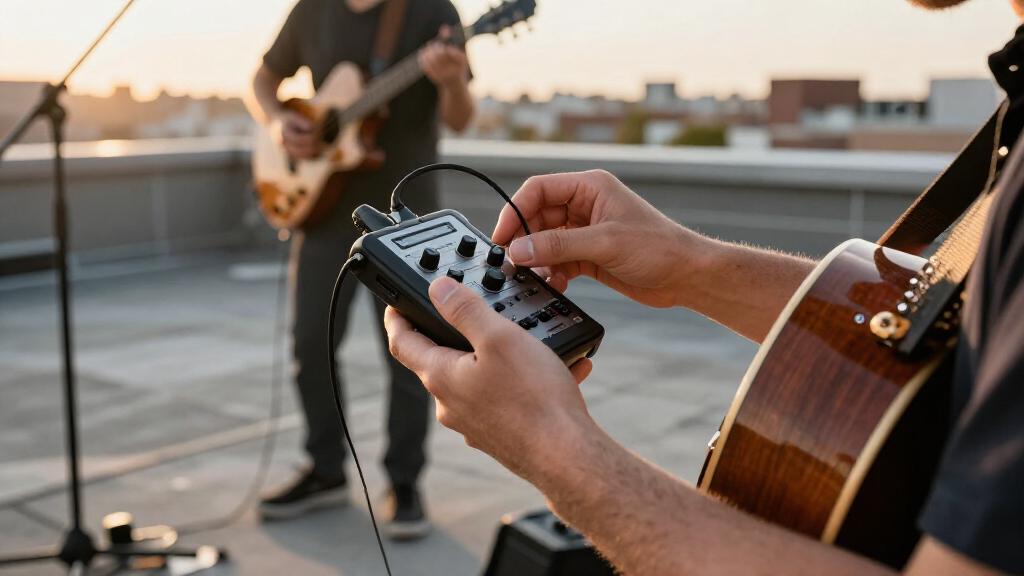
I ranked these recorders around how well they serve musicians away from a studio: capturing practice, rehearsals, live performances, songwriting ideas, and instrument or vocal parts. I weighed the recording workflow, built-in microphone usefulness, external input options, portability, and the practical value of features such as 32-bit float recording, multitrack capability, and USB microphone operation. Those features matter only when they solve a real recording need; a musician making quick stereo notes may gain more from simplicity than from extra tracks.
The order favors versatility for common musician use, then gives specialized tools their place where they better suit a specific workflow. That puts the H4 Essential ahead as a flexible general-purpose recorder, while the R4 ranks highly for musicians who want to create multitrack arrangements without a computer. Compact H1 models score well for ease and portability but rank lower for input flexibility; bundle versions are distinguished by accessory utility, not treated as separate performance upgrades. The Xvive XV1-R, H1 XLR, H2 Essential, and H6 Essential are judged by how their particular formats and connection choices match narrower recording tasks.
Factors to Consider When Choosing Portable Audio Recorders For Musicians
Choosing a portable recorder starts with the recording you need to bring home, not the longest feature list. I’d decide how many separate sources you need, whether you want to record with built-in microphones, and how much editing or mixing you expect to do later. These broader tradeoffs can prevent buying either an under-equipped recorder or a more involved one that slows down quick musical ideas.
Choose Between Stereo Capture and Separate Tracks
A stereo recording can suit a rehearsal, a room performance, or a fast capture of a songwriting idea. Separate tracks give you more control if you need to balance vocals and instruments independently after recording. A common mistake is buying for an imagined full-band session when most recordings will be quick stereo takes. The opposite mistake is expecting a single stereo file to provide the mix control of multitrack recording. Count the sources you regularly record at once, then leave some headroom for the occasional extra musician or microphone. If your sessions involve arranging parts on the recorder, prioritize a multitrack workflow rather than simply adding microphone inputs.
Match Inputs to Your Instruments and Microphones
Built-in microphones are convenient for capturing a room or placing a recorder near a performance, but they cannot replace every close-miking setup. External inputs matter when you want to connect a vocal microphone, instrument output, or other dedicated source. Check the connections you actually use, including whether you need combo inputs or a simpler XLR-oriented layout. Do not assume a recorder with more inputs automatically fits your setup; the input type and recording workflow matter just as much. Musicians who mainly record acoustic instruments may favor quick built-in stereo capture, while amplified or multi-mic sessions call for more connection flexibility. Buying extra inputs you rarely use can add complexity without improving everyday recordings.
Treat 32-Bit Float as Headroom, Not a Substitute for Setup
32-bit float recording can offer more flexibility when adjusting recorded levels later, which is useful when performance volume is hard to predict. It does not fix a poor microphone position, unwanted room noise, or a distorted source before the signal reaches the recorder. Musicians should still place microphones thoughtfully and listen for clipping or background sounds during setup. For a quiet practice room, a simpler recording format may be entirely adequate. A frequent buying error is choosing by bit-depth claims alone while overlooking microphone placement, input needs, or file workflow. Put this feature high on the list if loud, unpredictable performances are common, but do not treat it as a cure-all.
Decide Whether You Want a Recorder or a Portable Production Tool
A handheld recorder is built around capturing sound quickly, while a multitrack unit can support a more deliberate process of layering and shaping parts. Effects, rhythms, and bouncing can help a musician sketch arrangements without opening a computer. Those tools can also add steps if all you want is a clean recording to edit elsewhere. Think about where you prefer to make creative decisions: during the session, on a computer later, or a mix of both. If you need a reliable capture device for rehearsals, prioritize direct operation and fast access to recording. If you want to turn a portable unit into a songwriting workspace, a production-focused layout may justify its greater learning curve.
Plan for Placement, Power, and Accessories
Where the recorder sits can matter as much as which recorder you buy. A stand or tripod can hold a consistent position, while a windscreen can help when recording outdoors or near moving air. A case protects the device in a gig bag, but accessories do not expand the recorder’s core recording abilities. Check how the unit is powered and whether your usual sessions make battery changes practical. Bundles can be useful when they include accessories you would otherwise need, though a lavalier microphone may not suit every musical setup. Avoid paying attention to bundle size alone; match each included item to a real recording situation.
Choose for the Recording You Repeat Most
It is tempting to buy for the biggest session you might ever record, but a recorder that is quick to set up may serve more often. List your common jobs: capturing solo practice, recording a full rehearsal, documenting a live set, or building layered demos. Then identify the one limitation that would frustrate you most, such as too few inputs or a lack of independent tracks. If portability matters, include the recorder and accessories in the space you are willing to carry. If the device will stay on a desk or sit in a studio bag, connection options may deserve more weight than compact size. Choosing around repeat use usually gives a better fit than chasing the broadest spec sheet.
Frequently Asked Questions
Is a stereo handheld recorder enough to record a band rehearsal?
It can be enough when your goal is a reference recording of the whole room rather than a polished, separately balanced mix. Place the recorder where the instruments and vocals blend naturally, and check that the loudest sections do not overwhelm the capture. A stereo file is quick to manage, but it limits how much you can change individual sources afterward. If you regularly need to rebalance vocals, drums, or instruments, choose a recorder and workflow that capture separate tracks. The right choice depends on whether the rehearsal recording is for memory and feedback or for a finished demo.
Should I choose a recorder with built-in microphones or external inputs?
Built-in microphones make it easier to capture ideas, acoustic performances, and room sound without packing extra gear. External inputs help when you need a specific microphone or want to connect more controlled sources. Some musicians benefit from both, since built-in mics cover spontaneous recording while inputs support planned sessions. Before choosing, list the microphones and instruments you already own and check how you intend to connect them. A recorder with inputs you cannot use may be less useful than a simpler model that fits your actual setup.
Does 32-bit float recording mean I can ignore recording levels?
No. It can provide more flexibility for adjusting levels in post, especially when performance volume varies, but it cannot restore sound that was distorted before reaching the recorder. Room noise, microphone placement, and source quality still shape the result. I’d treat 32-bit float as added protection for unpredictable sessions, not permission to skip a sound check. Listen to a test take when the situation allows, particularly before recording a live performance. Good placement and a clean source remain important regardless of format.
When is a multitrack recorder a better choice than a handheld stereo recorder?
A multitrack recorder makes more sense when you want to record or build parts separately and adjust their balance later. It can also suit musicians who prefer to sketch arrangements directly on a portable device. A stereo handheld is usually simpler when the aim is to capture a room performance or a quick idea as one file. Think about the editing you want after the session: if you expect to change individual parts, separate tracks can save frustration. If you rarely mix and value speed, the additional workflow may not pay off.
Are recorder bundles worth choosing over the recorder alone?
A bundle is worthwhile when its accessories solve a real problem in your recording routine. A case can help protect a recorder in transit, and a stand or windscreen can improve placement options in specific settings. A lavalier microphone is more specialized and may not be the right tool for recording instruments or an ensemble. Compare the included accessories with what you already own, and check that they suit your intended use. If the extras would stay unused, a recorder-only listing may be the cleaner choice.
Conclusion
For the broadest mix of built-in stereo capture and external-source flexibility, I’d choose the Zoom H4 Essential as the best overall. The Zoom H1 Essential is my best fit for beginners and musicians who want a compact, straightforward way to record ideas; the similar H1 bundles make sense when their included accessories match your setup. For a portable songwriting and arrangement workspace, the Zoom R4 is the best choice for multitrack needs, while the Zoom H6 Essential is the premium pick for buyers whose sessions call for greater input capacity. The H2 Essential and Xvive XV1-R suit musicians seeking a different stereo-recording approach, and the H1 XLR is worth a look when its connection format fits your sources. I’d make the final call by matching your usual recording task to the input and track workflow you will actually use.
Fall Picks
fall essentials
As an affiliate, we earn on qualifying purchases.